
Midwest Video Poetry Fest reveals sweepingly collaborative, cross-disciplinary depths
The fourth annual short film and live performance event returns to Arts + Literature Laboratory on October 14 and 15.
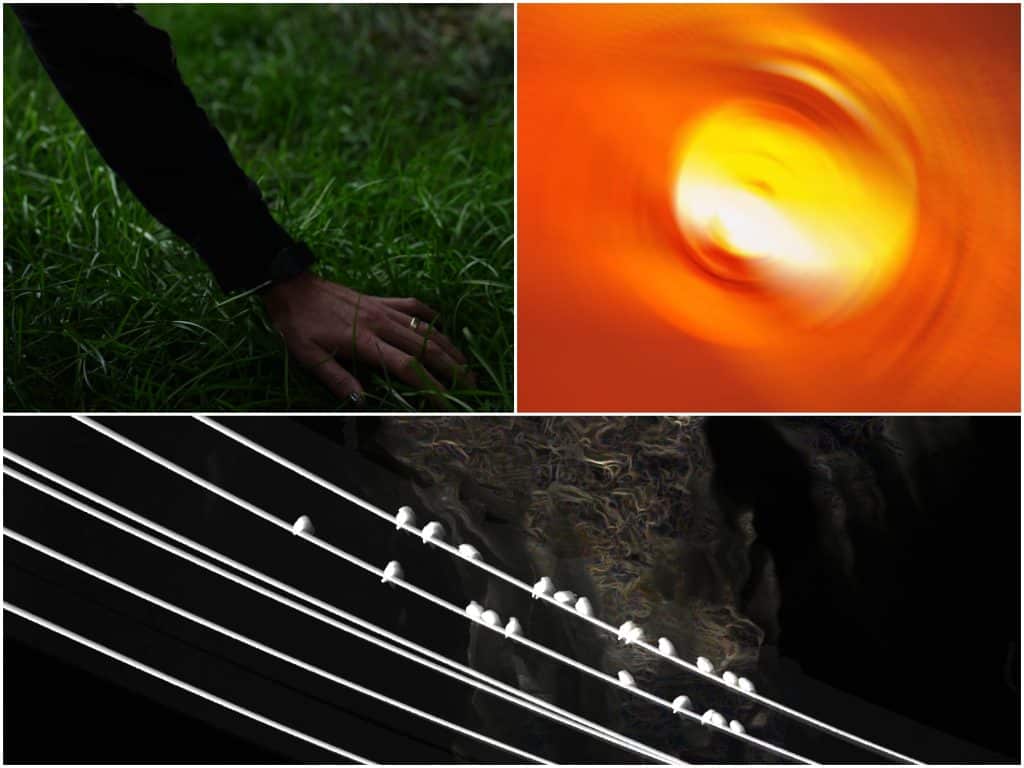
The fourth annual short film and live performance event returns to Arts + Literature Laboratory on October 14 and 15.
The humidity has finally dispelled, and we’re smack dab in the middle of the short-lived, but ever-crisp autumn season—always a piquant one that coincides with the peak of Madison arts events. Heaps of them glide past our eyes like burnt umber leaves falling from bur oak trees. This stirring simile of a plentiful blur also anticipates the fourth annual Midwest Video Poetry Fest, which returns to Arts + Literature Laboratory for two evenings this weekend: Saturday, October 14, and Sunday, October 15, both at 7 p.m. Tickets are $5 at the door.
In addition to 29 narrative, documentary, and experimental short films scattered across a pair of programs (13 on Saturday night and 16 on Sunday), both days’ schedules will lead with live collaborations between local writers and video artists (many of whom are also teachers of their respective disciplines). On October 14, poet Dana Maya joins videographer Aaron Granat; additionally, poet Cynthia Marie Hoffman teams up with Hinckley Productions Creative Director Natalie Hinckley. October 15’s series of shorts will be preceded by a live multimedia collaboration between poet Quan Barry and video artist Chele Isaac, co-produced by Jack Kellogg.
These partnerships vary thrillingly, from the improvisatory to fully pre-prepared. Granat and Maya have committed to the former, without finalizing anything ahead of time. However, they met several times in person before moving to virtual means to formulate a few conceptual themes, which include spiritual acts of observation and the sacred service of caregiving. “This way, the work has no hierarchy,” Granat tells Tone Madison via email. “[Maya and I] are on an even playing field, and our collaborative relationship has generated the creative output.”
On the other end of the spectrum, Hinckley and Hoffman have assembled a more precisely synchronized presentation. Hinckley’s naturalistic visuals gradually move from the diurnal to nocturnal—a body interacting with a creek bed, beloved animals in close-up, long blades of grass—and fluidly bring to life a handful of Hoffman’s poems (including “If You Have Grown Unrecognizable To Yourself,” “Float,” “Ruminate,” “Beasts,” and “Intrusive”).
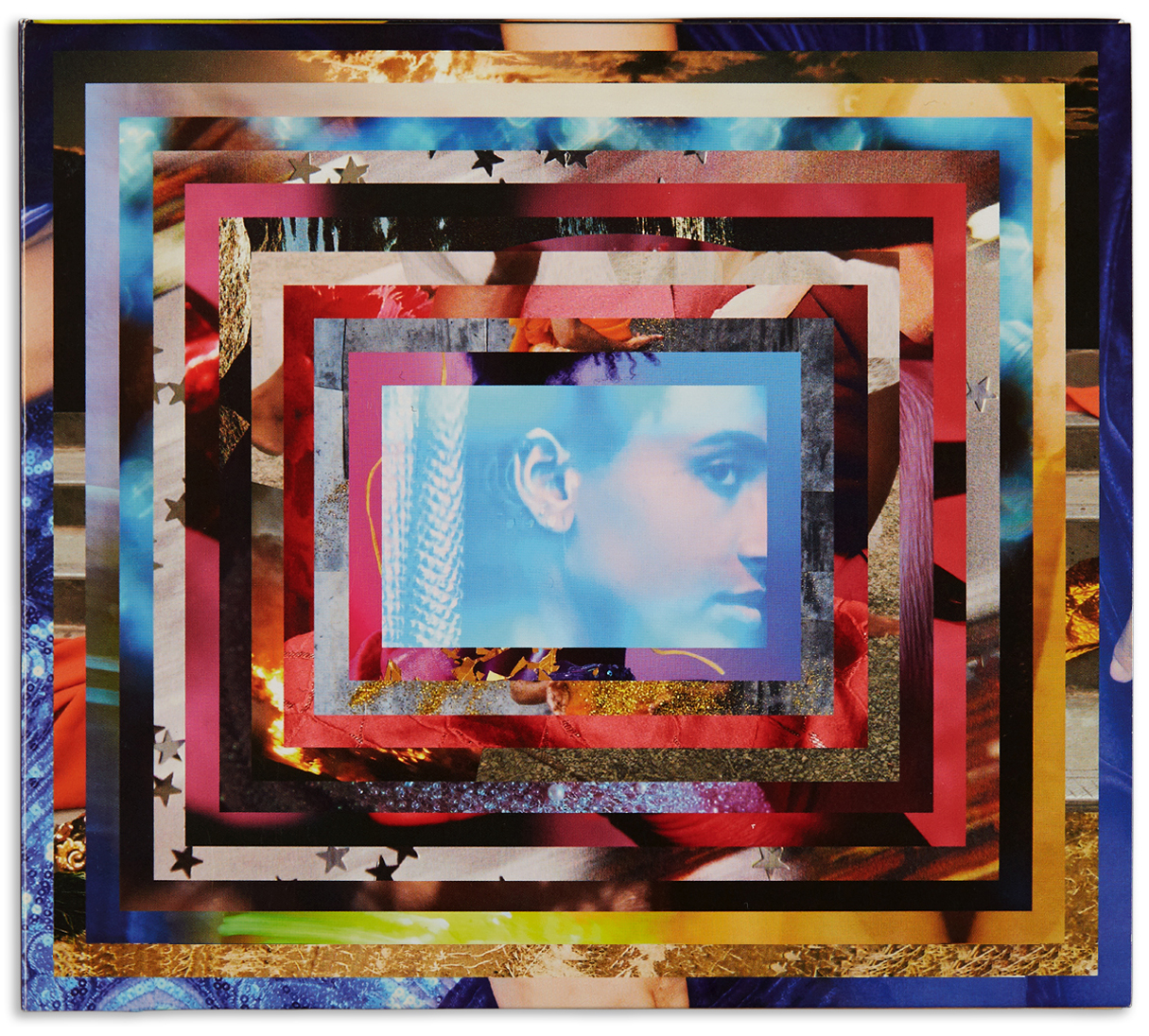
Isaac and Barry find synergy somewhere in-between those collaborative modes. It was important to Isaac to “respond to rather than illustrate” Barry’s poem, “Rough Air,” from a recently published collection, Auction. “The visuals reflect what I am feeling as I read the thoughts and reflections of [an] itinerant traveler,” Isaac elaborates via email. A few teaser stills render existential uncertainty through perspectives inside/outside an aircraft in flight across a frozen tundra. Others capture radiant color bursts and experimental collagist framing—recalling Lawrence Azerrad (LADdesign)’s album art for Esperanza Spalding’s 12 Little Spells—as digital video shifts from the literal to the fantastical. The approach is one Isaac hopes attentive viewers “will find curious and even a little darkly humorous.”
The remaining films from around the world, curated by festival managing director Genia Daniels, are tailored with a slightly sharper regional eye than in prior years, as she notes in a press release. The first night’s loose personal journal-essay theme includes the sweet reminiscence of Madison-based Michelle Marie Kelley’s Davenport, a 90-second cutout animation tribute to her grandmother and the haven that was her lime-green pull-out couch.
Milwaukee’s Gabriella Cisneros is also featured on the first night. She abstractly adapts Oliver Burkeman’s text Four-Thousand Weeks in an original work, Gaps. This meditation on the gaps between the ideal and the actual(ized) confronts the facts of finitude in our human lives. The amalgamated deliberations on time between Burkeman’s words and Ciseneros’ fragmented, but incredibly composed clips of morning routine recall the slice-of-life cinema of Richard Linklater, like Jesse’s off-the-cuff speech in Before Sunrise (1995).
Many of the films in this year’s festival are cross-disciplinary collaborations that involve a video artist adapting a piece of writing that has resonated with them. But nearly an equal number feature a writer adapting their own work to the cinematic medium. The second night’s loose theme of human impact on the natural world includes Montreal-based Daniel H. Dugas’ two-minute Permacrisis. Dugas laments man-made impacts on the environment as “things [are] running hot,” showing species of birds slowly incinerating from the inside. From illustrations in Biodiversity Heritage Library’s ornithology books, animated smoke billows from their bodies and beaks.
New York-based Tiffany Jiang translates Natural Disasters for the screen as well, a found-footage short charged with superimposed juxtapositions of home movies and stock footage of landslides, droughts, wildfires, etc. The digital collisions force viewers to reckon with the devastations brought on by global warming, particularly our most vulnerable populations. It’s a subject that’s pierced the heart of extensive academic writings, and Jiang manages to accessibly frame the dread of reality and personal sentiment in just over four minutes.
While these themes occupy the artists’ attention, pervading a plethora of the shorts, some also thrive with an unexpected vibrancy that exists slightly outside the boundaries of “video poetry.” For example, Matthew Thompson’s The Racist Bone candidly captures a three-minute piece of prose written and read by Cornelius Eady about a movie theater experience in Rochester, New York. And from Australia, Leila Honari’s Flying Carpet renders a marching line of migratory seabirds in a psychedelic phenakistiscope structure without any accompanying text or spoken word.
Altogether, these selections in concert with the dynamic of live collaborations showcase a sizable scope of talent from Wisconsin to the far-flung corners of our world (a world that is, in many of their views, in dire straits). Their voices are the microcosms of the macrocosm, expressions of the universal human experience as it exists localized; and, like those involved with the Midwest Video Poetry Festival itself (Daniels and founder Rita Mae Reese), they possess a deep-rooted love of observant, cross-disciplinary art forms.
We can publish more
“only on Tone Madison” stories —
but only with your support.
Author
Related Articles
Continuity and expressive experimentation in the 2026 Wisconsin Film Festival
Eight writers share their initial insights on the eight-day extravaganza, April 9 through 16, across UW campus and Madison.
The Cardinal Bar’s Cuban film series invites local support for Madison sister city
Cine Cubano bridges interest in Cuban cinema with the cultural exchange and aid mission of the Madison-Camagüey Sister City Association.
Three video artists tap into personal histories in the 150 Artists x 150 Years exhibition
Chele Isaac, Toby Kaufmann-Buhler, and Aaron Granat reveal the creative depths of their works, which are on display through February 28 at Central Library.