
In the panic-stricken everyday of 2026, comforting sights on the horizon have assumed greater significance. To regard a future that’s familiar and yet open to exciting possibility is something the Wisconsin Film Festival has been offering Madisonians on silver screens across UW campus and the greater city since its inception in 1999.
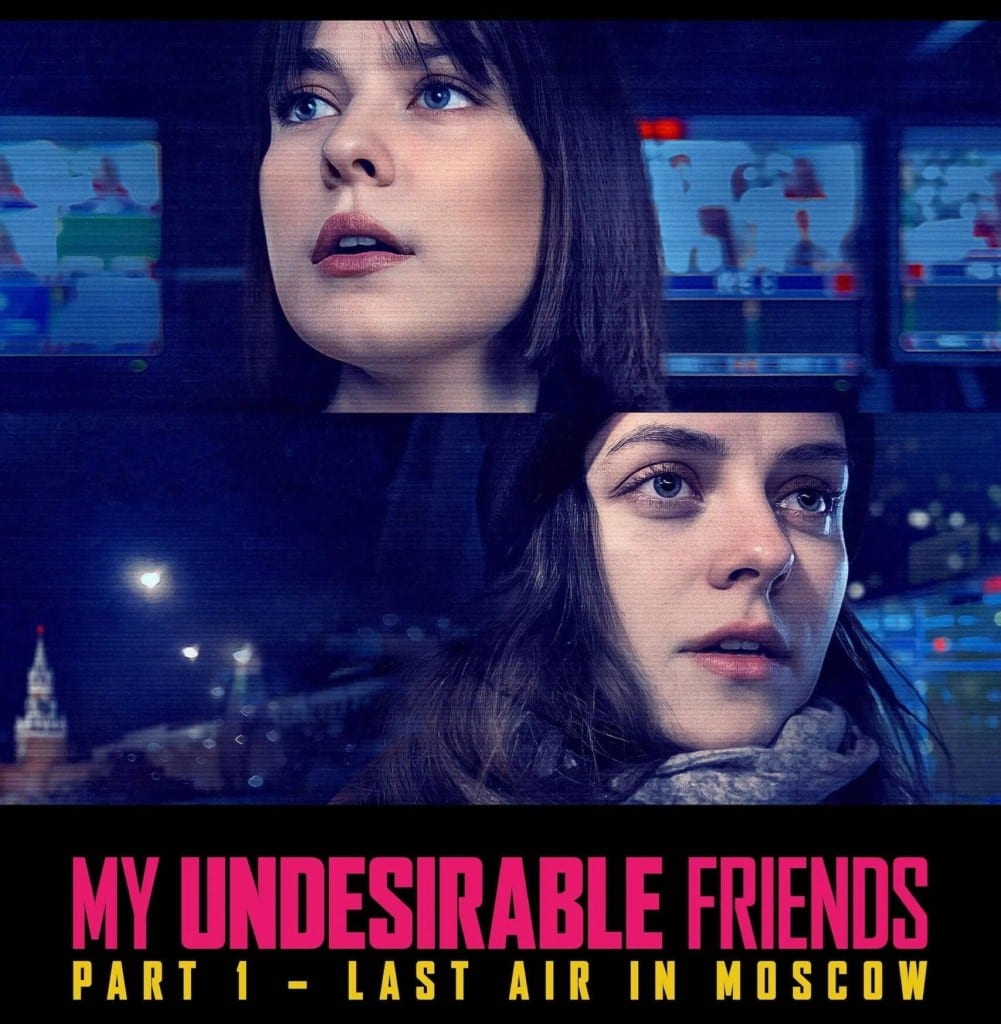
Returning to the same venues as the past couple years on campus, at Bartell Theatre, Barrymore, and Flix Brewhouse, this year’s 28th iteration boasts 135 total selections—from the massive 324-minute documentary (and Tone Madison favorite) My Undesirable Friends: Part I – Last Air In Moscow to friend of Tone Madison Vincent Mollica’s two-minute experimental animation “amuse-bouche” Bob, Paul… Byrd And Pete Go To The Movies—and runs the usual eight days this spring: Thursday, April 9, through Thursday, April 16. Tickets are $12 each, plus tax and fees (so, $14.30).
Art Director Christina King has combined the design philosophies that shaped the past two covers: last year‘s geometric orange, red, and blue pop art inspired by Josef Albers as well as the prior year‘s arching lines that made up the streamlined floral pattern of lily white and light sky blue on a sun-yellow background.
The 2026 branding is busier but a little softer, and features a multi-colored salmon-olive-pale yellow-slate blue-chamoisee ribbon divided into oblong rectangles, parallelograms, and triangles. It’s twisted into an interpretive maze-like shape, and complemented on the guide’s other 31 pages with labeling ticker-tapes and elongated header banners cleverly printed backwards on the guide’s even-numbered pages.
Further resembling strips of celluloid, King writes to Tone Madison via email that the continuous ribbon design “traces the restless energy of the creative process: layered, imperfect, and in motion.” The tape’s materiality and “adhesive quality evokes revision and reconfiguration, where nothing is final, and embraces experimentation and celebrates the beauty of coming together.”
While the Festival is sticking to a satisfying consistency in the venues, the programming, and the visual identity, it’s fun to see something new in a first-ever live recording of the Blank Check podcast co-hosted by Marie Bardi-Salinas, JJ Bersch, Ben Hosley, and Griffin Newman after their presentation of Babe: Pig In The City (1998) at the Barrymore on Saturday, April 11.
The Wisconsin film footprint seems larger than ever, too, which is a fortuitous sign as it connects to recent news about tax-credit incentives and the establishment of a film office in the state. Significant representation can be seen in the five feature-length films with Wisconsin’s Own ties—including the Golden Badger-winner And Then I Knew ‘Twas Wind and Nathan Deming‘s Winter Hymns—in addition to the five other regionally affiliated short-film programs.
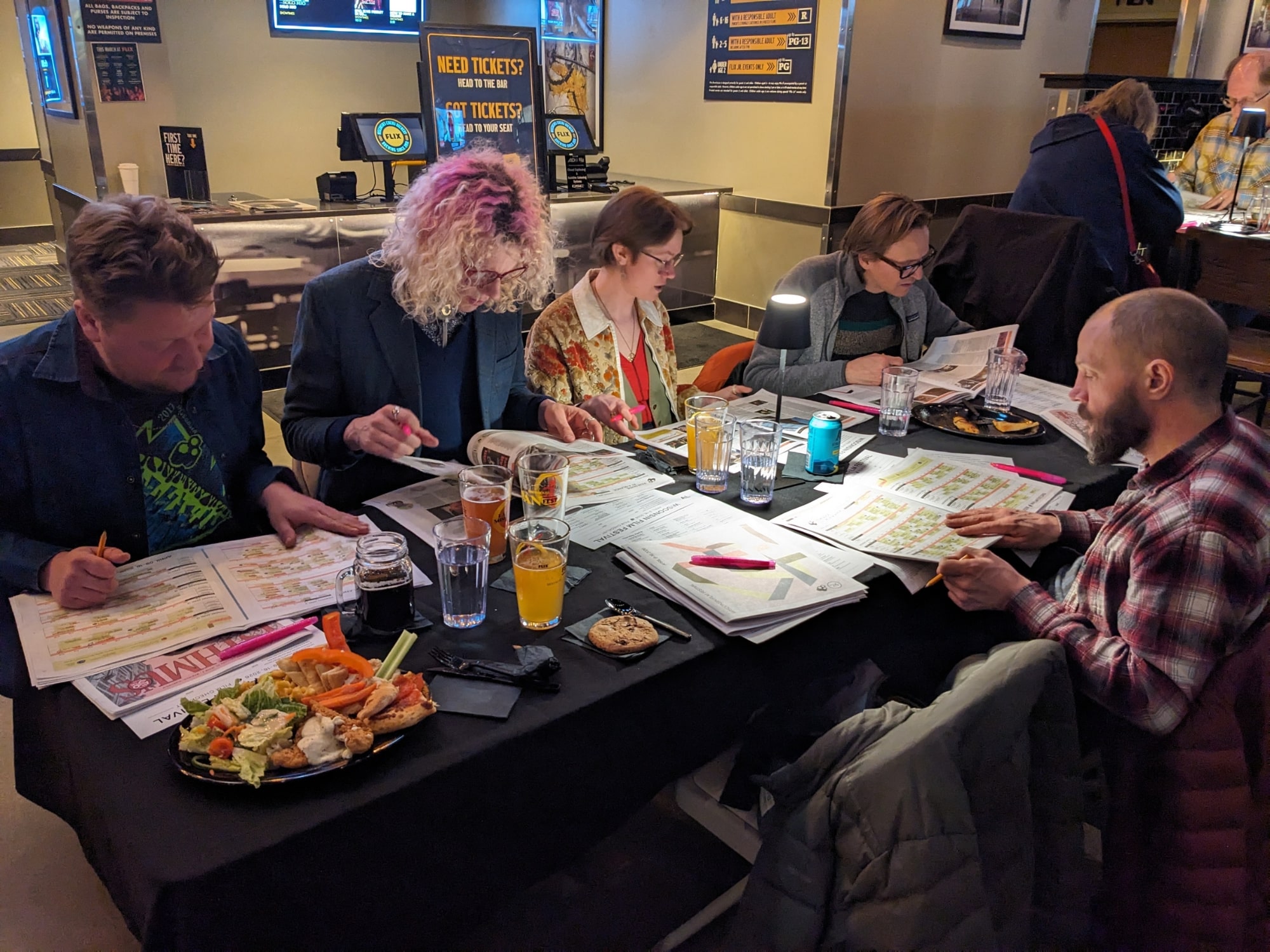
Below you’ll see what eight of our writers found inspiring (or absent) in the pages of the 2026 Wisconsin Film Festival guide. We hope this extended compilation preview provides an interesting, if scattered glimpse at how each of us processes the scope and depth of the best film festival in Wisconsin. Even if you are only intending to sample one or two things during the April weekend, may your experience offer a hopeful pleasure that reminds you of the potential for better days, and the collaborative power of art through community. —Grant Phipps, Arts Editor
Editor’s note: Any film referenced without a parenthetical year is a brand-new premiere; otherwise, release years are listed.
Sara Batkie
This year I had the immense privilege of serving on the Golden Badger Jury. In addition to being able to watch many excellent Wisconsin’s Own films up for consideration, I also get my own festival pass. So, for the first time since I started attending the Festival, I am going hog wild and seeing as much as I possibly can. Luckily this year’s calendar offers a bounty of riches to choose from.
I was particularly excited to see Blue Heron, The Blue Trail, and Calle Málaga in the schedule. All received strong praise out of the festivals they premiered in, and their apparent close attention to female protagonists both young and old are a big draw for me. I was also thrilled to see Israeli filmmaker Nadav Lapid’s Yes in the lineup. The incendiary way it takes his home country’s sins to task sounds likely to make it a divisive screening on par with Radu Jude’s 2024 Festival offering Do Not Expect Too Much From The End of The World. Speaking of, Jude has a new work featured as well—Kontinental ’25. I understand some viewers may have soured on him for his use of AI in his recent Dracula adaptation, but I remain warily curious what his latest provocation has to say to audiences.
Part of the fun of perusing the schedule is seeing what pops out that is completely new to me. In that sense, The Currents, Do You Love Me, and Short Summer are three female-directed films whose writeups caught my attention for their reportedly unique approaches to both narrative and documentary storytelling. And it’s always good to leave some room for spontaneous surprises once the Festival actually starts.
Even with a schedule this sprawling, there were some heartbreaking omissions for me. I was hoping for screenings of Ildiko Enyedi’s Silent Friend, Lucretia Martel’s documentary Landmarks, and especially Annapurna Sriram’s Fucktoys, which as far as I’m aware, still doesn’t have a distributor despite making a big splash at SXSW 2025. But programming is hard! And there are myriad reasons why something didn’t make it in. Hopefully their mentions here will mean they appear in future UW Cinematheque Premiere series (wink wink, nudge nudge).
Lastly, I just want to call out the three Golden Badger winners, and all the Wisconsin’s Own screenings this year. We really did have a tough decision to make among many worthy potential honorees. While I’m looking forward to audiences getting a chance to discover And Then I Knew ‘Twas Wind, Jia, and Shaggy’s Big Break, I hope all the features and shorts find receptive viewers. There’s so much incredible talent out there, much of it in our own backyard, and that’s one of the things that makes the Wisconsin Film Festival so special.

Edwanike Harbour
It is officially the greatest time of year again, when the 2026 Wisconsin Film Festival is fast approaching. The First Look at the Fest on March 4 sold out this year, so hopefully we will see an immense turn out on campus in addition to Flix Brewhouse. As usual, there is a broad selection of narrative features, documentaries, animated features, and experimental films, but I’m definitely excited about a few standout selections:
Opening night tends to start with a crowd-pleasing comedy and this year’s selection is Poetic License. Directed by Maude Apatow (Judd Apatow’s progeny), the film follows two friends, portrayed by Cooper Hoffman and Andrew Barth Feldman, who fall in love with the same older woman (Leslie Mann) who is auditing their poetry class. The humor does not develop into a raucous farce per se, but more of an understated take on how people may get trapped under the weight of obligations rather than forge their own path through life. A packed house at the Barrymore usually promises to be a good time.
Michaela Coel stars in Steven Soderbergh’s latest enigmatic thriller The Christophers. She plays a struggling artist solicited to produce forgeries of stolen artwork. Ian McKellan promises her a cut of the money but, as one might guess in a Soderbergh film, all is not what it seems. Fans of Black Bag, Soderbergh’s spy thriller from 2025, should take note.
In a literal Chicken Run, Hen uses no CGI to depict a hen that escapes from a factory farm, narrowly dodges encounters with predators and hazards only to be swept up into even greater danger. Seeing a film from the perspective of a runaway chicken sounds like a truly unique experience.
Precocious children always make for interesting comedies at the Festival (Riddle Of Fire from 2023, Dancing Queen from 2024, Gasoline Rainbow also from 2024), and Mipo O’s How Dare You? will certainly keep this tradition going. Inspired by Greta Thunberg’s enduring condemnation at the United Nations, Kokoa decides she wants to take up eco-activism and enlists the help of her crush Haruto, and another suitor Yushi to spread awareness about their cause. This will be a good family-friendly entry for those looking to bring the kiddos to something besides the “Short and Sweet” series, which are always a delight.
Other gems this year include My Undesirable Friends: Part I – Last Air In Moscow. A riveting look at independent Russian journalists who disobey an order to provide disclaimers in their work after being targeted as “foreign agents.” It is a five-and-a-half-hour epic achievement in cinema that will be hard to see on the big screen later.
Author Daniel Kraus (Partially Devoured, Angel Down) will be present on Sunday, April 12, to discuss a restored 35mm of Romero’s zombie progenitor Night Of The Living Dead. This film leaves a lasting legacy with its social commentary on America’s sociopolitical landscape in the ’60s, and Kraus will discuss the cultural significance in addition to his personal take on the subject. This year has something for all cinephiles, so grab your grids and make your selections!
Lance Li
John Boorman’s Exorcist II: The Heretic (1977) on Sunday, April 12, is my most anticipated from this year’s Festival. Critic Dave Kehr thinks it’s “a much more interesting film than the original” and a “sort of a blend of Minnellian baroque and Buñuelian absurdity.” Pauline Kael says it has “a visionary crazy grandeur (like that of Fritz Lang’s loony Metropolis)” and “a swirling, hallucinogenic, apocalyptic quality”—”winged camp.”
Blatty and Friedkin’s original The Exorcist (1973) is one of those boogey-boogey trash items that insists on pooh-bah religiosity with a poker face and never admits to its trashiness. It should play like a campy send-up of itself given how fundamentally silly it is, but Blatty is a man of God and he wants you to know it. You can read all about its “battle between good and evil” in his interviews, if you can skip his pet subjects like demonic possession and communicating with the dead, which he no doubt believes in. If The Heretic upsets him and the fans, then it’s good enough for me.
Critic Mike D’Angelo gave Soderbergh’s The Christophers (Monday night, April 13, at Flix Brewhouse) modest praise and compared it to last year’s Blue Moon. Ian McKellen, like John Hurt, is one of those English actors who can take a moth-eaten sow’s ear and make a silk purse out of it, enliven it with grace and temperament, and give his role depth of feeling and texture. He can give a two-hander stage material like this the focus and personality it needs, which is a rare gift that cinephiles tend to take for granted.
Michael Almereyda’s Nadja (1994)—Friday night, April 10, at the Cinematheque, Monday night, April 13, at Flix Brewhouse—is “most enjoyable,” says Leonard Maltin, “but the stylish visuals sometimes swallow up the story.” It “works much better as a dreamy mood piece with striking poetic images and as a semicomic appreciation of a few quintessential low-budget actors than as straight-ahead storytelling”, says Jonathan Rosenbaum. I’d like to pretend that the David Lynch cameo’s the only thing I’m after, but anyone who’s studied under Manny Farber and seemed to have internalized the “termite art” mindset probably shouldn’t be underestimated.
Paul Morrissey’s Spike Of Bensonhurst (1988) on Saturday night, April 11, came about two decades after his first Andy Warhol films. It’ll be a revelation how much he has (or hasn’t) changed since. And if you’re a pre-Code nut like me, you can’t go wrong with Barbara Stanwyck in Shopworn (1932) on Saturday, April 11 (as part of a “Grinde-house Double Feature“). Maybe the strongest, most commanding actress to grace the ’30s screen, she was already a force to be reckoned with in William Wellman’s Night Nurse (1931) and Frank Capra’s underrated The Miracle Woman (1931) and The Bitter Tea Of General Yen (1933) from the same period. Tom Palazzolo’s cinéma vérité films (under “Love It/Leave It: Tom Palazzolo’s America“) and Henry King’s original Stella Dallas (1925) in the same Sunday slot? Tough choice indeed.

Grant Phipps
The first thing that caught my attention in the advance PDF version of the guide wasn’t a film selection, but rather the crossword puzzle on the flip side of the cover. Written and designed by UW alumni Tom Yoshikami and Erica Hsiung Wojcik, the themed crossword is a terrific sort of novelty addition for the fervid festivalgoer who’s likely carrying around a folded newsprint copy of guide—a time-tested activity to kill a few minutes during meal breaks in a four-film day, or while waiting in line and resisting the urge to doomscroll on that brick in your jacket pocket.
On occasion I’ll notice my friend JoAnne completing crosswords on her lap right before a campus screening is about to start, and so I know she’ll appreciate this one. …I, myself, instinctively started completing this one, coincidentally with the adjective for 28 across: “slow,” like my preferred feature-length cinema pacing. See: the disparate sun-kissed and disillusioned vibes of Nastia Korkia’s Short Summer and Pacific Northwestern awe of Darius Mackenzie’s Golden Badger-winner, And Then I Knew ‘Twas Wind, finely framed by Sara Batkie in her juror write-up (page 31).
The programming this year seems so full, even overwhelming (laudatory). Countering last year’s more broadly contained run-times and abundance of short-film programs, this year returns to Artistic Director Mike King’s preference for “progressive” cinema in a handful of films that exceed 150 minutes (though, no Dry Leaf, which I had crossed my fingers for). Julia Loktev’s vital 324-minute documentary about fearless, independent Russian journalists, My Undesirable Friends…, has to be the longest film the Fest has shown in the past 15 years, and will be my first taste this year. Ready to settle in at the Bartell from late morning through early evening.
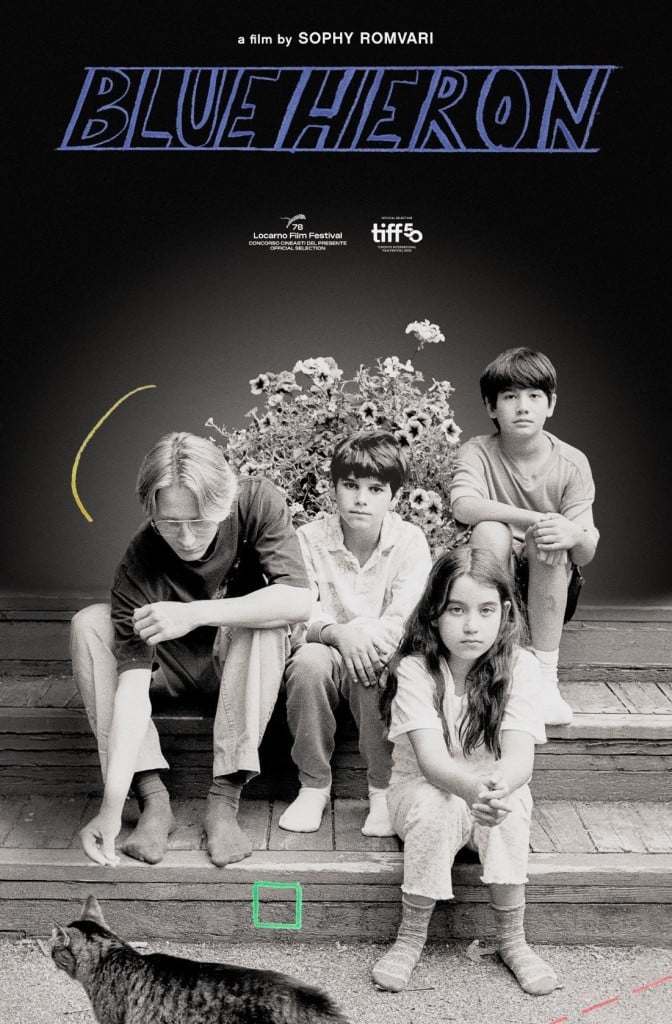
Earnestly, my most anticipated film is Sophy Romvari’s Blue Heron, and I’d self-proclaim to be its biggest booster. I’ve been championing the artistic breadth and depth of Canadian cinema throughout this decade. Romvari’s short (auto)biographical documentaries, which I discovered through Criterion Channel, are so moving; and I’m curious to see how her familial experience informs the vision for this first proper narrative feature. It has the potential to be a sleeper hit (or the runaway hit given astounding ticket sales).
The Festival appears to be ringing in a new tradition with the isolated mid-week campus screening amid the Flix Brewhouse run from Monday through Thursday Not only that, but the Chicago-based Haley Fohr (Circuit des Yeux) will be playing a live score to F.W. Murnau’s original Nosferatu (1922) in the same spirit as Claire Rousay’s to The Bloody Lady (1980) last year at the Cinematheque’s usual venue, 4070 Vilas Hall.
This collaborative event carries a more deeply personal meaning, as Fohr and her backing band graced the cafeteria halls of Union South’s The Sett during the 2018 Film Fest’s Friday night. I remember skipping over there to hear glorious arrangements from my still to-date favorite CdY record, Reaching For Indigo. My advice would be to drop everything to be there, or wait in the “rush” line, and expect Fohr to use her incredible four-octave vocal range in addition to guitar to evoke the ethereal beauty and eeriness of the immortal paradigm of German Expressionism.
In the past couple years, I’ve been lukewarm on the closing night offerings (especially the trend of double-booking premieres), but the early screening of New Queer Cinema icon Gregg Araki’s I Want Your Sex is pretty damn thrilling, and I wouldn’t want to send things off any other way. I suppose I do lament the lack of a new 4K restoration of his most beloved Mysterious Skin (2004) on the schedule, but perhaps the programmers are saving that one for the fall.

Lewis Peterson
I’ll start with the title that actually made me a little giddy when I saw it in the program: We Are The Shaggs. The last time Ken Kwapis came to the Film Festival in 2023, I saw that he had a Shaggs biopic in the works with Elsie Fischer attached. I’m assuming whatever research was being prepared for that film morphed into this documentary. As someone who was in a few bands in my early 20s despite not knowing how to play any instrument, I’ve always found The Shaggs to be inspiring. I’m looking forward to a crowd of confused old people at this one.
The other thing that jumped out immediately is the Fest’s heavy emphasis on very long films, with two screenings each of My Undesirable Friends: Part I – Last Air In Moscow, Sholay, I Only Rest In The Storm, and Winter Hymns. I’m utilizing the marathon training I got at the Owen Kline Presents weekend at Cinematheque (February 27 through March 1) by attending all of these this year. Glad they added that second Winter Hymns screening after the first one went to rush-only, so I can make that work!
There are quite a few things on my radar that have played at bigger festivals: Blue Heron, The Currents, Kontinential ’25 (I got a poster for Do Not Expect Too Much From The End Of The World two years ago when it played WFF and it’s one of the first things I see every morning), Late Fame, John Early’s simultaneously comedic and sincere melodrama Maddie’s Secret, the return of my fave Hong Sang-soo with What Does That Nature Say To You, two appearances by Charli XCX in Erupcja and I Want Your Sex.
I’m glad to see two films from new distribution company 1-2 Special in the Festival. I wasn’t aware of them until maybe a month ago, but they are coming out of the gate very strong with A Poet, two Radu Jude films (Dracula and Kontinential ’25), Erupjca, Christian Petzold’s Miroirs No. 3 (a little bit of a surprising omission from the Festival given how much Petzold is a Mike King favorite), and Silent Friend.
The Festival has picked quite a few restorations that I’ve seen in the last few years and liked quite a bit: Bo Widerberg’s socially conscious crime thriller Man On The Roof (1976), Soviet sci-fi Dead Mountaineer’s Hotel (1979), and Nadja (1994)—David Lynch must make an appearance at the Wisconsin Film Festival even if it’s only a one-scene cameo.
But it’s also heartening to learn about a film’s existence for the first time by reading through the guide. Deaf, Lucky Lu, Romería, and The Furious are all screenings I’ll be attending. It’s also encouraging to see the return of perennial festival guests Rita Belda and Jonathan Hertzberg. Of course I have to recommend ghoststory, which opens the Wisconsin’s Own Horror And Sci-Fi Shorts program, directed by Four Star staff member and “Wisconsin Film Festival veteran” Alex Jacobs and starring Four Star staff member Luke Chamberlain!

David Boffa
As with my recs last year, I think it’s really worth checking out singular cinema experiences if at all possible. Two that caught my eye this year include screenings of George Miller’s Babe: Pig In The City (1998) and F.W. Murnau’s original Nosferatu (1922).
The screening of Miller’s followup to the first (and better received) Babe movie (1995) is notable for the live podcast of Blank Check that will take place after the film. Though the podcast has expanded its scope somewhat in recent years, the basic premise is to look at films of directors who were given figurative “blank checks” to do a project following a particular early success. Babe: Pig In The City—from the guy who gave us the Mad Max franchise—feels like fertile ground for discussion.
The Nosferatu screening is noteworthy for the live score accompaniment by Circuit des Yeux. I’ve only seen a handful of films with live musical scores, but every experience has been rewarding. If you struggle with early silent films (which can be understandable for modern audiences), a live score is probably the best way to find an accessible entry point.
Both the above screenings will be impossible to repeat, given their live components. In some ways, that’s very much outside our usual definition of the cinema, which is inherently not a live, staged production. But it’s that expansion of what cinema can be that makes these screenings so exciting and worth experiencing.
My other recommendations include a number of smaller films that will almost certainly not see broad theatrical releases. At the top of my list are several new documentaries whose personal touches and connections feel like a welcome reprieve from the current wave of AI enshittification slop: Agatha’s Almanac (dir. Amalie Atkins), a handcrafted character study of a nonagenarian living in rural Manitoba; Do You Love Me (dir. Lana Daher), an archival exploration of Beirut’s modern history; and Remake (dir. Ross McElwee), about the filmmaker grieving his son’s premature death from an opioid overdose.
This last film is McElwee’s first since his 2011 Photographic Memory, in which the filmmaker interrogated his relationship with his son who was still alive at the time. McElwee explores the personal through the camera lens like no other filmmaker, and I imagine his portrait of what is an unthinkable loss will be as moving, compelling, and idiosyncratic as any of his other films.
Finally, I’m really excited to see that Canadian filmmaker Sophy Romvari’s Blue Heron will be screening. (It’s also very exciting to see that many others in this group are just as keen to check it out.) I’ve been a fan of Romvari’s documentary shorts for years, especially Norman Norman (2018), In Dog Years (2019), and Still Processing (2020). Her feature debut—a semi-autobiographical story about a Hungarian family in 1990s Canada—feels like both a natural outgrowth of her previous work and an exciting new direction for a filmmaker with an immediately recognizable cinematic voice.
Jason Fuhrman
There really is nothing like the sheer ecstatic rush of opening the Wisconsin Film Festival guide for the first time every year and discovering which movies the programmers have handpicked to share with us from around the world. Naturally, this year’s lineup exhibits the usual adventurous spirit, vibrant diversity, and impeccable taste that make the Fest such a significant cultural event.
Upon digesting the 2026 guide from cover to cover in a single sitting, I immediately identified 10 must-see selections. A vivid look at the fractured interior world of a traumatized Argentine artist and designer, Milagros Mumenthaler’s The Currents jumped out at me for its comparisons to the films of Lucretia Martel and Todd Haynes’ Safe (1995), which I saw earlier this year in a 35mm print at Cinematheque on a particularly harsh winter evening.
Dead Mountaineer’s Hotel (1979), a bizarre, shape-shifting, Soviet-era Estonian sci-fi thriller written by the team who furnished the script for Tarkovsky’s Stalker (1979), sounds exactly like the kind of hidden gem I tend to seek out at the Festival. I Want Your Sex, a return to form for ’90s queer indie film icon Gregg Araki, feels like one of the more exciting closing night selections in recent memory. After seeing Romanian provocateur Radu Jude’s nihilistic satire of capitalism and internet culture—Do Not Expect Too Much From The End Of The World—at the 2024 WFF, I am eagerly anticipating his latest effort, Kontinental ’25—a dystopian, existential black comedy.
As a general rule, I will watch anything that Willem Dafoe is in. The Appleton, Wisconsin native stars as a forgotten New York poet “rediscovered” by a group of eccentric young artists in Kent Jones’ Late Fame, which was adapted from Arthur Schnitzler’s recently discovered 1895 novella of the same name. Fun fact: the Austrian author’s 1926 novella Traumnovelle (Dream Story) provided the source material for Kubrick’s final film, Eyes Wide Shut (1999), a psychosexual odyssey also set in New York City. (With Greta Lee appearing opposite Dafoe as a vampish theater actress in Late Fame, this definitely seems promising.)
British-Nigerian filmmaker Akinola Davies Jr.’s semi-autobiographical feature debut, My Father’s Shadow, takes place over the course of a single day against the turbulent political landscape of Lagos in 1993. This richly textured, atmospheric drama parallels another Festival selection about fathers and sons during a period of unrest—László Nemes’ first feature in seven years, Orphan. An ultrarealistic coming-of-age fable set in the aftermath of the brutally suppressed Hungarian uprising of 1956, it promises to be every bit as shattering and starkly beautiful as Nemes’ 2015 Holocaust drama Son Of Saul, which I will never forget seeing at the former Sundance Cinemas 608.
Likewise, Nastia Korkia’s Short Summer—described in the guide as something of a companion piece to Elem Klimov’s legendary antiwar film Come And See (1985)—offers an impressionistic, dreamlike portrait of an idyllic childhood summer in the Russian countryside, but set against the backdrop of the Second Chechen War. This sounds like a breathtaking, unforgettable sensory experience.
I have wanted to see Nadja (1994) ever since I learned of David Lynch’s cameo in the movie as a morgue attendant years ago. Needless to say, the new 4K restoration of Michael Almereyda’s deadpan surrealist neo-noir vampire film was a pleasant surprise for me. While I assumed that Lynch would be included in this year’s Fest in one way or another, I honestly did not expect this.
Other highlights of the guide for me include François Ozon’s fresh adaptation of The Stranger, Albert Camus’ existentialist classic about “the nakedness of man faced with the absurd,” in the writer’s own words, and Julia Loktev’s urgent documentary epic My Undesirable Friends: Part I – Last Air In Moscow. Clocking in at five hours and 24 minutes, this has to be the longest film ever screened at the Festival. At first I balked at the prospect of starting the first full day of moviegoing with such a hefty investment of time. But when I saw the trailer, I realized that I could not pass up the opportunity to see this extraordinary portrait of Russian dissident journalists under siege.
Throughout the years, the programmers have continually challenged me, opened my eyes, and encouraged me to broaden my horizons with their bold, uncompromising vision. As the official slogan of the 15th annual Wisconsin Film Festival states, “Film. Farther.”

Ian Adcock
Another great festival line-up! I’m glad to see the Fest doing more live events. Circuit des Yeux has been taking a “more goth” (her words) turn with her last album Halo On The Inside, so she’s a perfect choice to accompany the classic vampire film, Nosferatu.
I tend to be lukewarm on documentaries, but there are so many intriguing options this year— We Are The Shaggs, Public Access (revisiting the wild world of NYC public access TV), profiles of legendary director Yasujirō Ozu (The Ozu Diaries) and cantankerous rock critic Robert Christgau (The Last Critic)—that I may overcome my crankiness about the form.
I watched The Exorcist II: The Heretic (1977) fairly recently and thought that it doesn’t deserve its bad reputation. It’s a heretical sequel… it’s right there in the name! Hopefully David Kittredge’s documentary Boorman And The Devil can help change some people’s minds about one of John Boorman’s most infamous flops. Sandwiched between Zardoz and Excalibur in his filmography, it’s proof Boorman was one of the most fearless risk-takers in 1970s mainstream cinema.
The restoration I’m most excited to see on the schedule is Ramesh Sippy’s Sholay (1975). Blending colorful musical numbers with hyper-violent action sequences and goofball buddy comedy, it’s a truly delightful film that deserves its reputation as one of the greatest Bollywood films. The recent restoration includes several missing scenes, including the original ending deemed too violent by Indian censors. The version I watched on streaming last year had a re-recorded soundtrack and smoking warnings that popped up every time a character lit a cigarette, so I’m looking forward to watching Sholay as Sippy intended: in a theater full of people booing every time iconic mulleted villain Gabbar Singh appears onscreen.