
The sights and shape(s) of the 2025 Wisconsin Film Festival
Seven writers size up the programming patterns in the eight-day celebration of movies, which runs April 3 through 10 across UW–Madison campus and beyond.
Seven writers size up the programming patterns in the eight-day celebration of movies, which runs April 3 through 10 across UW–Madison campus and beyond.
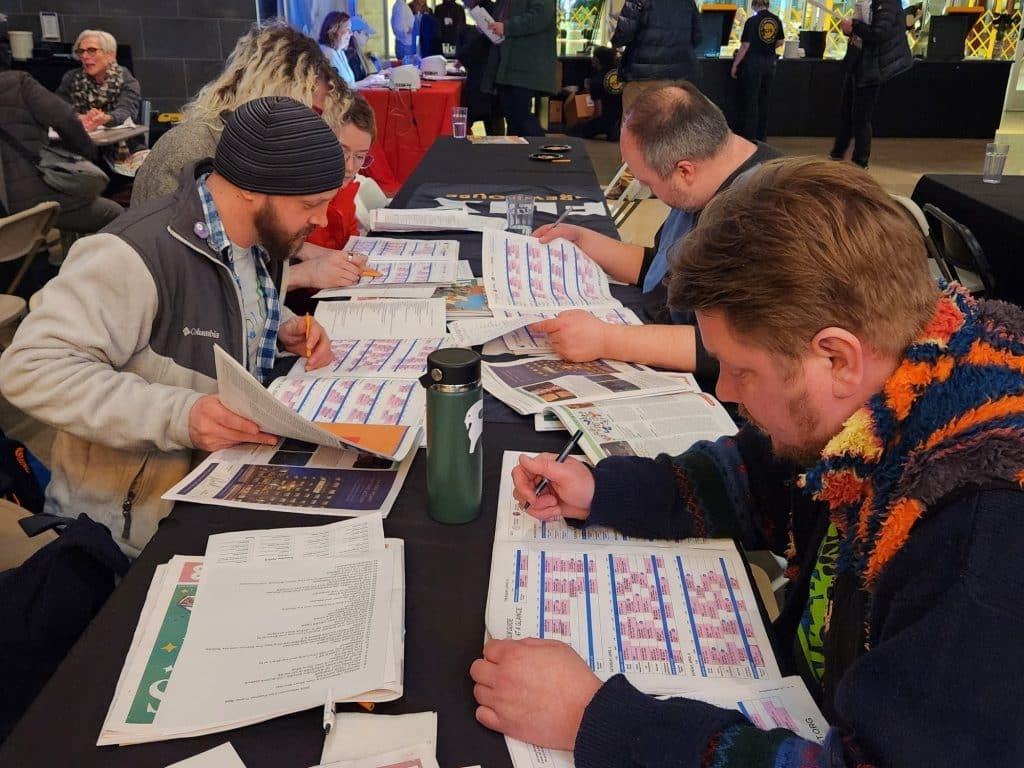
It’s that time of year again, when we try to find phrases that aren’t cliché to express the giddiness in expectantly turning the pages of the annual Wisconsin Film Festival (WFF) guide. Whether that initially happened with a paper copy on a table at Flix Brewhouse, during last week’s First Look at the Fest event, or on a screen at home—tapping/clicking to zoom in and out in a PDF viewer—it is a thrill to behold the embarrassment of cinematic riches that the programming team has been whipping up on the down-low.
This past week, seven of Tone Madison‘s film contributors skimmed and scrutinized the guide to assemble a brighter collective picture of the festival’s nearly 90 programs—and close to double that number of total films.
For the first time this decade, the festival is remaining at the exact same venues as the prior year’s run (not to mention nearly mimicking the 2024 dates of the first through second Thursday: April 3 through April 10) with some fine-tuned adjustments. The lone opening night feature finds a home at the Barrymore on Madison’s east side. Weekend dates, Friday through Sunday, continue at the Barrymore and also sprawl from campus corners to the Bartell Theatre. And the final four days, with one exception, are contained to three Flix Brewhouse theaters (and a fourth theater for two 3D screenings) at the East Towne Mall.
The festival lineup, though, boasts a few unpredictable turns. Most visibly, a handful of striking short-film rarities programs (in addition to the other handful of purely Wisconsin-centric shorts programs) have seemingly supplanted last year’s plethora of epic-length features that exceeded two and a half hours.
Additionally, graphic designer Christina King’s cover art for the guide, which evolved from four-dozen moon phase-like circles with shared, alternating colors to the minimalist pop art of the printed copy, is a marked contrast to 2023’s decadent dessert cake. Yet, in keeping with some of the aforementioned aspects that have carried over from 2024, King’s design this year complements her previously bright, streamlined floral and spring-themed graphics.
Inspired by the geometric abstraction of German artist Josef Albers, King says she wanted to create something that feels like it’s up for interpretation in the way the best films of the festival are. The sparsely concentric orange, red, and blue squares that converge upon three solid-black circles in the center of the cover deconstruct the Wisconsin Film Festival’s isometric brand logo (as does the trans pride-colored flip side). Within lower quadrants of the guide’s pages (see: the spread of 4 and 5 as well as 18 and 19), King’s eye gets a little more playful in terms of color patterns, as she explores and translates elements of her original cover concept.
Beyond all these initial visual glimmers and aspects of the festival’s identity, though, we hope this extended preview is a window into everyone’s processes of selection, and how a film or program one writer may have missed entirely is someone else’s most anticipated. Or, maybe even more so than in the past, an affirmation that we’re all just kind of wonderfully, artistically in sync.
Please see https://wifilmfest.eventive.org/films for the complete list, ticket availability, and pricing information. —Grant Phipps, Film Editor

Editor’s note: Any film first listed without a parenthetical year is a new premiere; otherwise, release years are stated.
My number one most anticipated movie of the year, not just of the Wisconsin Film Festival, happens to be the opening night selection: Friendship. It features America’s favorite flustered yelling guy, Tim Robsinson, in his first big-screen leading role. After that, the next title that I looked for in this year’s guide is David Cronenberg’s latest, The Shrouds. Other films on my radar that I’m happy to see in this year’s festival are By The Stream (I’m on the record as having the goal of watching every Hong Sang-Soo movie), Ramon Zürcher’s The Sparrow In The Chimney, Alex Ross Perry’s Pavements, and Lorcan Finnegan’s The Surfer (starring the still-greatest actor in the world, Mr. Nicolas Cage).
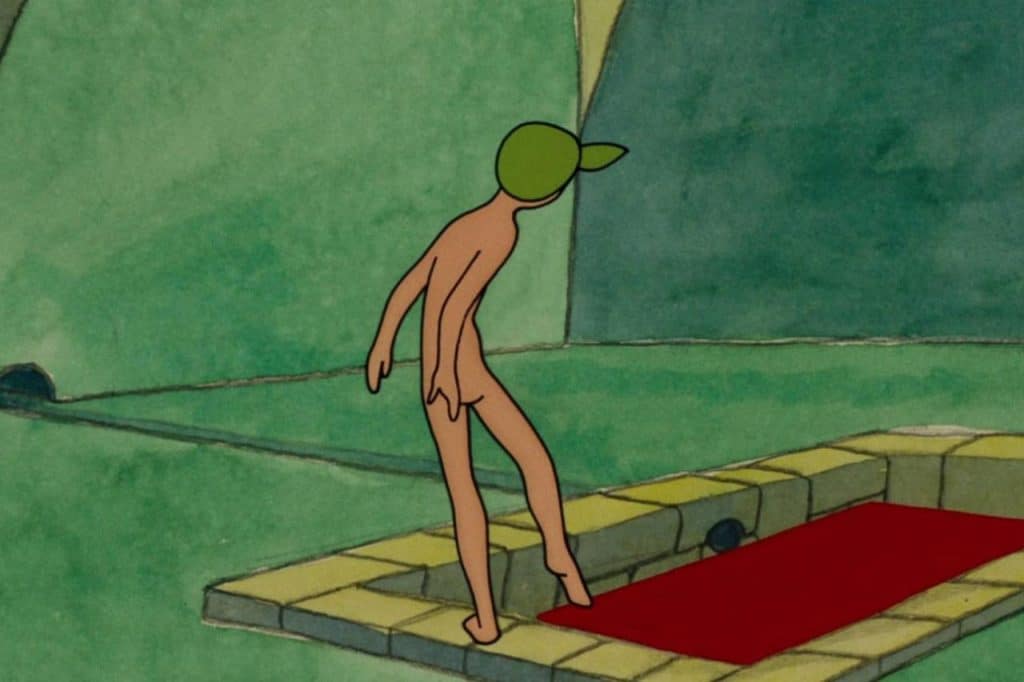
Another title I was aware of but wasn’t expecting to see in the festival (because its Blu-ray debut is supposed to be this week) is The Bloody Lady (1981), a Slovakian animated retelling of the legend of Elisabeth Báthory with a live score(!) by experimental musician claire rousay. After serving on last year’s Golden Badger Jury with Julian Castronovo (and watching his short films), I’m also very curious to see Debut, Or Objects Of The Field Of Debris As Currently Catalogued, his first feature (I had to stop myself from saying debut…).
I’m happy to see returning guests of the festival and UW Cinematheque: Fun City Editions curator Jonathan Hertzberg will introduce the 1980 rock chronicles Breaking Glass and Times Square, Sony’s Rita Belda will present The Glass Wall (1953), all-timer chronicler of teen angst Tim Hunter will accompany his own films Tex (1982) and By Kevin Thomas (as part of the “Critics & Cineastes” program), film festival stalwarts Bob Furmanek and Jack Theakston of the 3D Film Archive presenting It Came From Outer Space and The Glass Web (both from 1953), and prolific screenwriter and UW–Madison alum David Koepp returns with his 2009 directorial effort Premium Rush.
The Barrymore’s Saturday programming also deserves some special attention for being bookended by two films that have been actively suppressed and aren’t likely to be available outside of the festival anytime soon: the original 1992 version of Meet The Parents, which was the basis for the Ben Stiller and Robert De Niro franchise (part of the sale of the concept involved an agreement that this version would never be shown theatrically on released on any home video format) and Cocksucker Blues (1972), Robert Frank’s documentary about The Rolling Stones. The Stones themselves have pushed back against it for painting them in an accurately unflattering light. These are, of course, the latest in the Wisconsin Film Festival’s tradition of showing extremely hard-to-find repertory films like Nothing Lasts Forever (1984), The Astrologer (1975), John Paisz’s Crimewave (1985), and The World’s Greatest Sinner (1962).
The festival is also continuing another tradition by continuing to shed light on political conflict and repression worldwide, but which feels especially resonant with the political freefall that seems to be speeding towards a hard place faster by the day. And the closing night selection, Middletown, highlights the importance of independent journalism (a message I’m sure Tone Madison readers can get behind).
I spent my first hour with the guide without internet access (after an AT&T outage fried my modem/router gateway), squinting at improperly zoomed PDF pages on my 6″ phone screen. I began reading in vertical columns out of the intended alphabetical order. An accidentally modern surrealist approach to surveying a precisely arranged guide, maybe, and in some ways necessary to slightly shake up the normally magnified study of letters A-B at the start. I was jumping from letter A, to C, to F, down to W on the left-hand side. And then scrolling up from the right-hand section of the last page, letters Y and Z, then back to W.
This year’s selections remained shrouded in more mystery than in the recent past; I tried to guess a couple titles back in February, but didn’t end up seeing either of them. Though, I could’ve easily missed them in my haphazard scrolling and squinting. …Wait, did I? No, but I had to double-check. The festival crew slyly subverted expectations with a page-six mention of baseball in artistic director Mike King’s affective blurb to David Fortune’s Color Book, thus priming me to believe that my most anticipated microbudget sports comedy Eephus (dir. Carson Lund) would also turn up in the “Es.” And yet, (“A” for) absent. Another feature wholly consumed by baseball essentially assumed its place in the “Js”: Just A Bit Outside: The Story Of The 1982 Milwaukee Brewers.
If the programming of 2023 and 2024 seemed spiritually adjoined and aligned somehow, in my mind and in reality, I noted a slight shift for 2025. Secret screenings have been scrapped, for one. Instead, an anomalous single screening mid-week (Wednesday) at UW Cinematheque— traditionally a time when the festival has vacated the campus area for theatrical venues to the east or west. Most dramatically, in browsing to and fro, I observed the exclusion of epic-length films and a starker emphasis on short-film programs of all shapes and shades—from the typically local mix of intriguingly peculiar narratives (Relationship To Patient stood out) and elucidating docs (Golden Badger-winner Gigiigemin Baaga’adoweyang), to documentary and experimental retrospectives (of Heather McAdams and Shirley Clarke). There’s even a longer triptych for younger audiences (“The Long and Short of It“). For those who appreciate cinema deep cuts and more unclassifiable fare that would otherwise bypass the Madison area, I think this move only proves the Wisconsin Film Festival’s adaptability and one-of-a-kind identity.
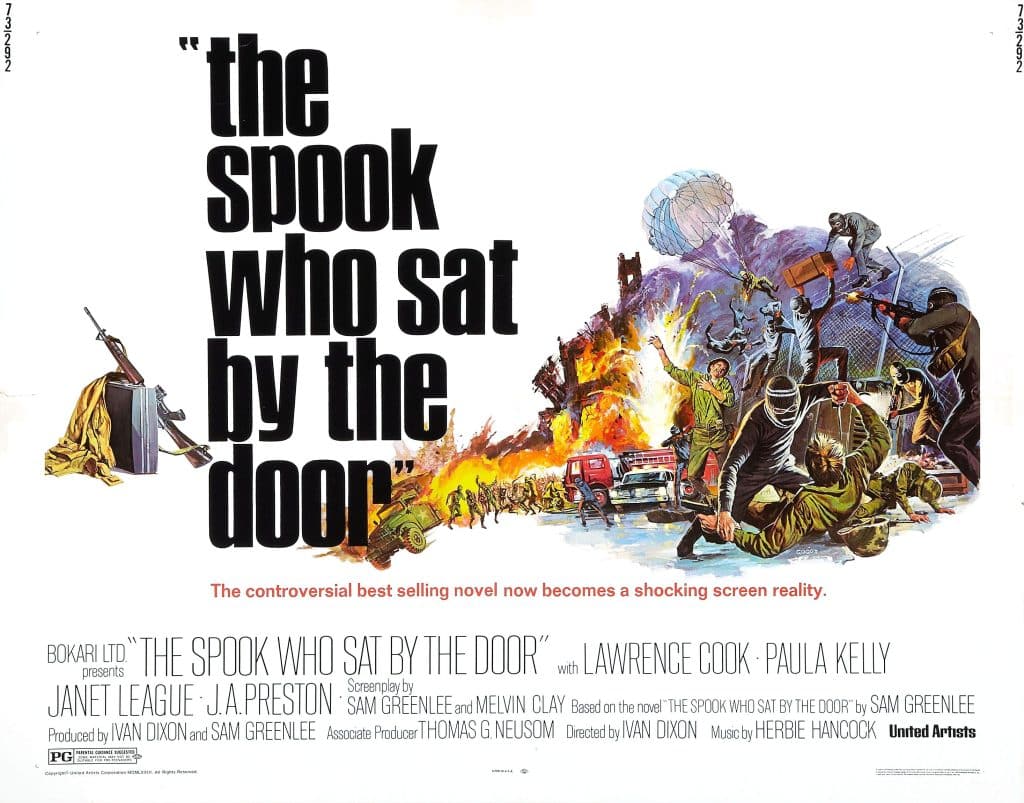
Additionally, if my first scan of the digital pages pushed me to a realization, it’s that this year might be the one when I curb my typical auto-prioritizing of new narrative features. There are so many special repertory presentations (on celluloid, to boot). Last Juneteenth, I sat down at home with one of Malcolm X’s reported favorite films, Nothing But A Man (1964). I was curious to see more work from its leading man, Ivan Dixon. And in July, I actually rented the 20-year-old DVD of his 1973 New Hollywood political satire, The Spook Who Sat By The Door, but didn’t get around to watching it. This year the film festival is offering the opportunity to not only watch it on 35mm in 4070 Vilas, but also to listen to the children of director Dixon and novelist/co-screenwriter Sam Greenlee talk about their fathers’ visions and legacies.
Oh, speaking of lineage, and if there’s one international narrative I’m happy to see (at the end here), it’s… Happyend (not to be confused with that awkward 2018 Haneke film) by Ryuichi Sakamoto’s son, Neo Sora.
There is literally nothing I look forward to more every year than the Wisconsin Film Festival. I’m always eager to have my nerves rattled, buttons pushed, beliefs challenged, and eyes opened. The annual eight-day extravaganza of moviegoing has never failed to astonish and inspire me. According to the slogan of the 12th annual Wisconsin Film Festival in 2010, “It changes you.”
Of course the 2025 edition of the festival promises to offer cinephiles the same curatorial acuity as previous years, and I could hardly contain my deep excitement as I avidly studied the guide. The selections that first jumped out at me include: The Shrouds, David Cronenberg’s latest techno-surrealist meditation on the intensity of human frailty and decay, and a new 4K restoration of Jean-Luc Godard’s contradictory neorealist musical A Woman Is A Woman (1961). The festival is also presenting “Thinking in Motion,” a rare screening of eight short films by New York dancer and experimental filmmaker Shirley Clarke, Gazer, an independent 16mm paranoid neo-noir thriller by first-time director Ryan J. Sloan, and Bogdan Mureșanu’s The New Year That Never Came—described in the guide as “a Romanian version of Paul Thomas Anderson’s Magnolia.“
David Lynch’s 1992 prequel to his groundbreaking avant-garde television series, Twin Peaks: Fire Walk With Me will also be presented at the Chazen. I figured there would be something related to Lynch this year because of the iconic artist’s recent passing, but I honestly did not expect this. I’ll never forget watching a glorious 35mm print of the film at the Cinematheque in 2017 right after the third TV season of Twin Peaks concluded. That was a peak transcendent cinematic experience for me, and I can’t wait to re-enact it next month. As a bonus for die-hard Lynch fans, the Chazen’s Collections Viewing of prints Lynch created at Tandem Press will be on display immediately following the screening. This feels like a wonderful way to honor the visionary director’s memory and explore his unique relationship with Madison. (And it should function as a nice interlude between films.)
The festival programmers consistently excel at presenting a broad array of films from around the world and throughout history, while also emphasizing timely and relevant selections that capture the cultural zeitgeist. I couldn’t help but notice several stories about refugees and immigrants, such as Anywhere Anytime, A Short Film About Kids (presented in conjunction with Yasmeen’s Element), The Glass Wall, Souleymane’s Story, and Why My Dad Loves (which won a Golden Badger Award this year). I’m particularly interested in Souleymane’s Story, a propulsive portrait of an undocumented Guinean immigrant navigating the labyrinthine streets of Paris. This year’s festival also features a handful of films from the State of Palestine or about Israeli-Palestinian relations, including Thank You for Banking with Us! and Happy Holidays.
I’m definitely intrigued by Happyend—a visually striking dystopian drama about youthful resistance to fascism in near-future Tokyo directed by Neo Sora, the son of Ryuichi Sakamoto. Ivan Dixon’s The Spook Who Sat By The Door also sounds really interesting. (This revolutionary fiction film from 1973 about the first Black CIA agent was initially suppressed and nearly lost forever.)
One other selection that caught my eye is an archival 35mm print of Starship Troopers (1997), Paul Verhoeven’s hyperviolent, subversive sci-fi satire of war, xenophobia, and nationalism. A couple of years ago, I attended a repertory screening of Starship Troopers at Flix Brewhouse that was paired with special craft beers and a multicourse themed dinner. The highlight of the event for me was when a recruitment video for the U.S. Air Force unironically played just before the movie began. As much as I’d love to see Starship Troopers again, and on 35mm, it would be difficult to top that viewing.
My favorite time of year is quickly approaching with the 27th (!!!) Wisconsin Film Festival. The anticipation of this week has me giddy as if I was a kid waking up to get my first Barbie Corvette™. This year promises to have as much diversity of programming and what are sure to become festival fan favorites. Here is just a small preview of what audiences can look forward to this April:
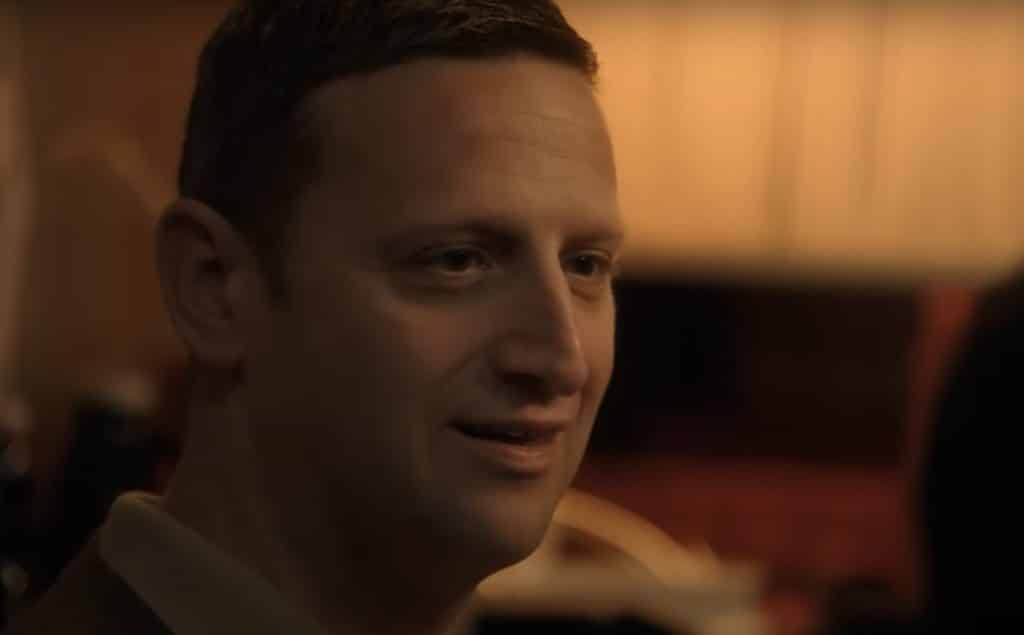
Opening night starts with a banger. Friendship features Tim Robinson as Craig Waterman, a sort of suburban everyman who goes about his ho-hum life with a handful of acquaintances, but no solidified friendships. A package delivered to the wrong address leads to a happenstance meeting with his hip neighbor Austin (Paul Rudd). The two strike up a fast bromance along with some of Austin’s friends. However, Craig’s clinginess and insecurities get the better of him, and Austin wants to distance himself from Craig. Sadly, “no” is not a complete sentence in this instance, as Craig continues his unhinged attempts to stay in Austin’s life. Fans of The Banshees Of Inisherin (2022) may love this entry, as it depicts the intricacies and travails of male friendships.
A little-known fact about UW–Madison is that it is home to the first PhD program in Buddhist studies in the U.S. We also have the only Royal Thai Pavilion in the continental states, at Olbrich Botanical Gardens. The Dalai Lama has made a few trips to campus over the years. Ed Bastian’s documentary The Dalai Lama’s Gift looks back on the Dalai Lama’s first trip to Wisconsin, in 1981. The film showcases interviews from those involved with the erecting of a temple at what would become the Deer Park Buddhist Center near Madison, the Dalai Lama, and a Professor of Tibetan Buddhism at UW–Madison. Highlights include the profound impact Buddhism has had on the lives of that community in addition to the millions of Buddhists all around the world.
For animation fans, there is a treasure trove of entries that are typically housed in the festival’s family-friendly “Short and Sweet” programming. However, this year, there are a number of animated features that are not part of that series. Director Claude Barras has truly mastered the art of stop-motion storytelling as evidenced by his film My Life As A Zucchini (which screens at the 2017 Wisconsin Film Festival). In Savages, the follow-up, a young girl named Keria living in Borneo discovers an orphaned baby orangutan and names him Oshi. Oshi leads Keria and her cousin on a trip to a village in the jungle where she finds a mega corporation trying to use the land for profit, much to the dismay of the indigenous people already settled there. My Life As A Zucchini is an emotional gut-punch, and Barras does not spare the young audience from some of the cruel realities of life. He explores these like colonization and exploitation for profit. Visually, this will be quite a delight for festival-goers.

This will be my third year as both a volunteer and attendee at the festival, and I’m excited to be part of the scrum of Madison film fans again. It’s such a joy to be among this community and hear what other people have been enjoying throughout the week. There have been many times when I’ve added something to my personal watchlist after chatting with attendees in screening lines, and I expect the same will happen this year.
Trying to work out a film-going schedule around my volunteer shifts is an art form that I’ll probably never master, and there’s already been a few heartbreaks in that regard (hopefully I’ll catch you on your theatrical run, The Shrouds!), but that’s all part of the fun. Even for those of us who like to have a solid plan, it’s good to leave some room for improvisation.
The film I was most excited to see in the guide was Alex Ross Perry’s Pavements. His previous rock and roll film Her Smell (which locally premiered at the 2019 Wisconsin Film Festival) is one of the most underrated of the 2010s in my opinion, so I’m curious to see what his return to that world holds. Word was strong out of the fall festivals where this unconventional documentary about the band Pavement appeared last September and October. And though I fall squarely in the millennial generation rather than Gen X, I’m a fan of the band, which feels like an atypical but inspired choice for a biopic. Ross Perry’s apparent mixing of documentary and narrative is also very intriguing, and makes me hopeful that his film won’t follow the textbook music movie beats.
There’s a rich and varied list of repertory screenings this year. I don’t envy those of us having to make the choice between seeing Twin Peaks: Fire Walk With Me (1992) and The Spook Who Sat By The Door (1973) on Saturday, April 5. I’m also looking forward to seeing Godard’s A Woman Is A Woman (1961) and Shanghai Blues (1984) on the big screen. I hadn’t heard of the latter before spotting it in the guide; it’s never been available on U.S. home media so it feels like an especially rare treat to be able to watch a 4K release of it.
Lastly, I’m looking forward to checking out some of the Wisconsin’s Own programs, particularly the experimental shorts block on Friday evening. As exciting as it is to see all the buzzed-about films from festivals, there are many local filmmakers doing vital and provocative work. It’s wonderful that the festival offers plentiful opportunities to showcase and celebrate them as well.

In the dotted Mirrorland landscape of this year’s Wisconsin Film Festival guide, I have gazed long and seen many splendors. I am most hopeful at the prospect of walking to the Barrymore on a crisp spring night, buying a box of popcorn and laughing my cheeks off at Friendship, a movie starring comedy legend and earworm implanter Tim Robinson (of I Think You Should Leave and Detroiters). I am immediately worried that I won’t have the stamina to secure a ticket (or three) to this sought-after, opening-night, A24-production extravaganza, which is fine. It’s the way the mirror cracks and crumbles sometimes when scoping out films in the WFF guide; you cannot see every film that interests you, but you sure as all hell can try!
I smiled big and stupid when I saw Tex and Times Square side by side in the guide. I watched both in quick succession a few years ago after reading Michele Tea’s apocalyptic novel Black Wave, where Tex star and heartthrob-to-many, Matt Dillon provides a bit of respite to the weary protagonist, and essay collection Against Memoir, where Tea spends time recounting how she found freedom and inspiration through various punk media touchstones including Times Square. Go see both to look backwards at a rosy ‘80s core projection of teenage grit and gusto.
It feels silly not to draw out (although I’m absolutely sure a few Tone contributors will as well) the fact that Twin Peaks: Fire Walk With Me (1992) is playing during the fest (“I’m not going to talk about Judy”). If you missed his wake at the Crucible in late February, this is your time to collectively mourn the loss of the late, great David Lynch with a group of people people that have probably seen the film previously at least three times. If you really want to feel something, I’d recommend that you get lunch somewhere on State Street before the 1:15 p.m. showing, buy two cookies and a Coke and eat them really quickly right before the film starts (no food or drink is allowed inside of the Chazen venue).
If you’ve checked out the 2025 WFF guide front to back and then backwards and upside down and you’re still just not sure where to land your weary, blue-light-tired eyes, remember what we said in the 2020 version of our preview (to a festival that was unfortunately cancelled in person): “it’s fun to watch something entirely different from your normal recycle of media titles. Dare to believe that there are some really good titles out there that algorithms won’t find and won’t be on streaming services anytime soon, or ever.”
There’s no wrong way to do a film festival. It’s great to see as much as you can, but not everyone is built for running from venue to venue to squeeze in multiple screenings a day for several days in a row. (Also, many of us have jobs.) If you’re looking to narrow things down a bit, I’d suggest some film experiences that will not be easily replicated outside the festival.
One of the clearest examples of this is the screening of The Bloody Lady (dir. Viktor Kubal), which will feature a live accompaniment by claire rousay. I will bet dollars to donuts that this will not be something coming to your local AMC any time soon. A festival is the perfect place for this sort of singular audiovisual experience, even (or especially) if 1980s Slovakian animation is not your usual fare.
The 2025 WFF will also provide a chance to see a pair of critical failures from the 1990s that have since been rightly reevaluated. I encourage anyone with even a passing interest in David Lynch to check out Twin Peaks: Fire Walk With Me (1992) at the Chazen Museum of Art. The Chazen will also feature prints by Lynch created at UW–Madison’s Tandem Press. UW Cinematheque will screen Paul Verhoeven’s Starship Troopers (1997) in an archival 35mm print—a rarity in today’s cinema landscape. Verhoeven’s films are only improving with age, as much for their prescience as for the satire that many viewers missed early on.
In the spirit of sharing some new films that I’m excited to see I’ll mention the following:
→ By The Stream (dir. Hong Sang-soo) for what is almost certainly a slow, grounded antidote to most modern American cinema.
→ The New Year That Never Came (dir. Bogdan Mureșanu) for an example of just how great contemporary Romanian cinema can be. Based on what I’ve seen coming out of Romania in recent years, including Întregalde (dir. Radu Muntean) at the 2022 WFF, I’ve got high hopes for this one.
→ Apple Cider Vinegar (dir. Sofie Benoot) for those of us who love essay documentary films (there are dozens of us!), which can be a hard sell in the documentary landscape.
Unfortunately, one film we won’t be seeing at this year’s festival is No Other Land (dirs. Basel Adra, Hamdan Ballal, Yuval Abraham, and Rachel Szor), about the forced displacement of Palestinians in the occupied West Bank by the Israeli military. Despite gathering a host of accolades since its premier at the 2024 Berlin International Film Festival (including, most recently, an Oscar) the documentary has yet to secure an American distributor—which says a lot about the implicit boundaries of free speech in contemporary cinema in this country. I was hoping I might catch a screening of No Other Land at this year’s WFF—alas, it is not to be. I won’t pretend to know all the challenges that go into selecting films for the WFF, but it is encouraging to note that several other Palestinian films will be on offer this year: Happy Holidays (dir. Scandar Copti), Thank You For Banking With Us! (dir. Laila Abbas), and the short A Short Film About Kids (dir. Ibrahim Handal).
We can publish more
“only on Tone Madison” stories —
but only with your support.
Authors



Related Articles
The Cardinal Bar’s Cuban film series invites local support for Madison sister city
Cine Cubano bridges interest in Cuban cinema with the cultural exchange and aid mission of the Madison-Camagüey Sister City Association.
Three video artists tap into personal histories in the 150 Artists x 150 Years exhibition
Chele Isaac, Toby Kaufmann-Buhler, and Aaron Granat reveal the creative depths of their works, which are on display through February 28 at Central Library.
Video: Sizing up local screening events and prominent performances of 2025
A chat with Josiah Wampfler at OCA Media about our favorite movie-going experiences and acting roles of last year.