
Young Shakespeare Players builds a collective culture of trust in timeless storytelling
The young actors troupe hosts free performances of “A Midsummer Night’s Dream” the first two weekends in August at their Playhouse on the near-west side.
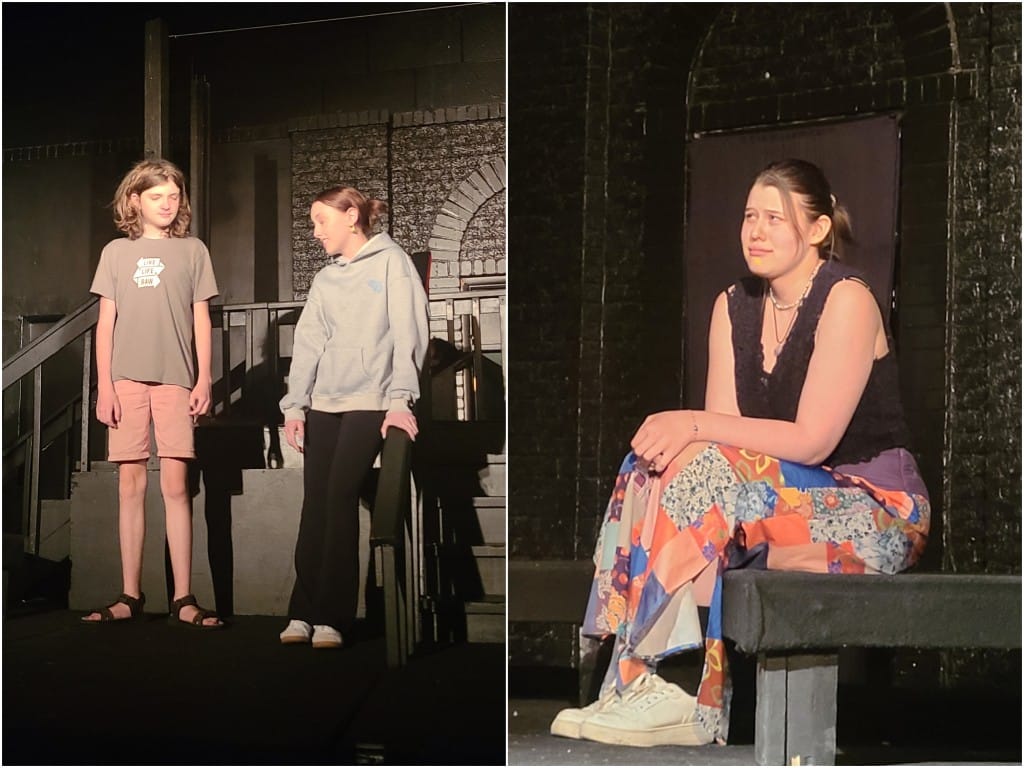
On a humid July day on the near-west side of Madison, a young actor tiptoes across an illuminated stage as another actor lies motionless, as if asleep. “This is he, my master said, despised the Athenian maid,” Stanley Zalesk, 11, who is portraying Puck, declares. He peers down at the slumbering Lysander (Walter Heuring, 15) before squeezing an imaginary flower’s juice, a powerful love potion, onto his eyelid. Its spell sets off the chain of mischief and romantic chaos at the heart of Shakespeare’s late 16th century comedy, A Midsummer Night’s Dream.
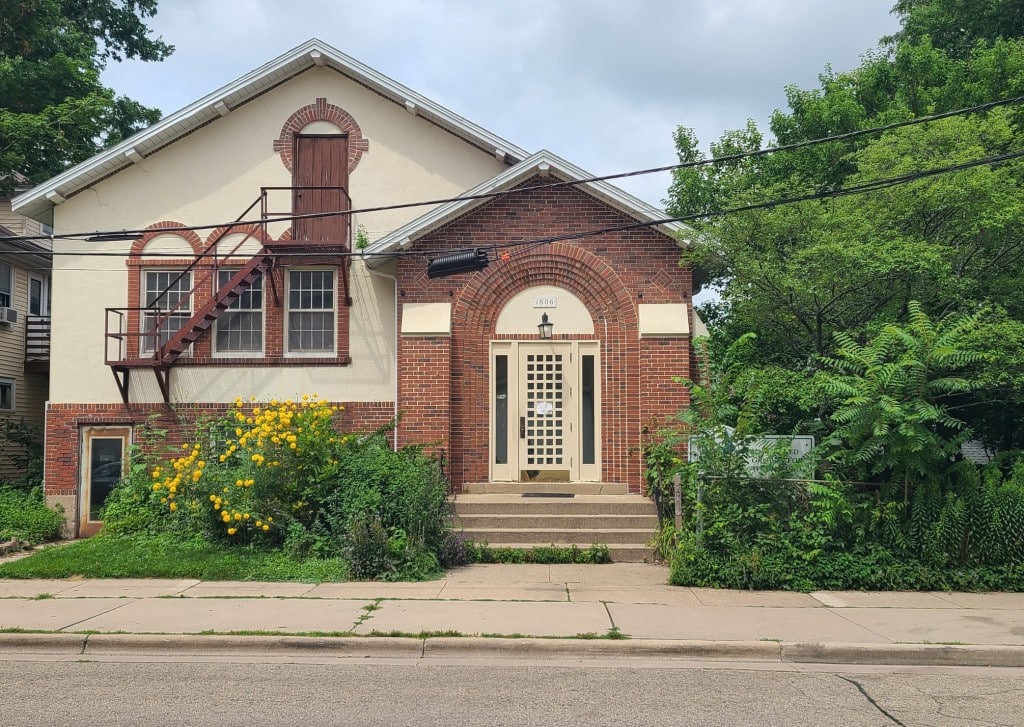
Known for producing stagings of Shakespeare and Shaw, Young Shakespeare Players (YSP) recruits young people aged seven to 18 in every role, from star-crossed lovers to scheming monarchs. The troupe of over 30 actors opens their latest production in early August, with the premiere on Friday, August 1, at 6 p.m. at the YSP Playhouse at 1806 West Lawn Ave. Subsequent performances are scheduled for August 2, at 6 p.m., August 3 at 1 p.m., August 8 and 9 at 6 p.m., and a closing performance on Sunday, August 10, at 1 p.m. Admission is free.
Co-led by Zavier Alexander, 18, an Intern Director, and Thomas Mulholland, 25, YSP’s Associate Director, A Midsummer Night’s Dream‘s production doesn’t follow a top-down model, nor do any of their others. Alexander and Mulholland serve more as facilitators than traditional authority figures, guiding the overall shape of the production while keeping the rehearsal space open and collaborative.
“Every single one of the kids is a part of the directing process,” explains Alexander. “We run small sections that we have kind of cut out throughout the play, and then at the end, all the people who were in the scene sit on stage while people in the audience give comments on the scene.” This process, Alexander says, “gives everyone a chance to really share ideas with each other and collaborate on this production, so we’re all a big part of directing the show.”
YSP’s spirit of collaboration extends to the way actors engage with the language of Shakespeare. For YSP’s actors, understanding the text starts with what they affectionately call “the tapes,” a series of audio recordings created by YSP’s late founder Richard DiPrima. These recordings provide a line-by-line analysis of each play they produce, explaining vocabulary, dramatic context, and offering basic performance notes. This provides a kind of scaffolding that supports intense personal engagement with Shakespeare’s original text.
Two of the three actors Tone Madison interviewed for this production—Walter Heuring, 15; Rey Nevenskaya, 16; and Kalki Sankaralingam, 9—mentioned the tapes as essential. “Every single line is explained,” says Nevenskaya, who portrays Helena. The tapes help actors make meaningful connections with their characters. “Once you understand what you’re saying, you do get that freedom of expressing what you want in these lines,” Nevenskaya says.
Even the youngest cast members use the recordings. Sankaralingam, who portrays Titania, is new to YSP and to Shakespeare. “The only Shakespeare I knew before was, ‘Romeo, Romeo, wherefore art thou Romeo’,” Sankaralingam says. She credits the recordings for enabling her to become comfortable with the play’s language.
In addition to comprehending the lines, the actors must memorize them, too. Sankaralingam notes Titania’s “big speech—It’s like, a page long,” she says, showing me her script of printed pages, with Titania’s lines highlighted. All actors at YSP use printed scripts, part of the company’s effort to keep rehearsals focused and screen-free. Sankaralingam explains how she tackles the work of memorizing this speech: “For the start, I kind of just read it once, and then I’ll try and memorize that. And then, the part that I did memorize, I say that a bunch of times to kind of get it in my head. And then I just repeat every line.”
For Heuring, one challenge with this year’s production is playing a new personality, that of Lysander. “Earlier on in the play, I was kind of thinking that this is going to be a slightly more difficult character,” he says. “Most of the roles I’ve been playing recently [with YSP] are really funny—people who are really dumb and think they’re really smart.” This is Heuring’s second time acting in A Midsummer Night’s Dream: he previously played the role of Bottom, the weaver who is magically given the head of a donkey through a fairy’s mischief. On his current role, Heuring says, “I do feel I’ve gotten better at it since the start. The comments that people give are really helpful for a character type that I’m not used to playing.”
The payoff for all this careful study and shared leadership isn’t just in the final performance; it’s in the sense of ownership the cast feels over their work, and in the friendships that grow from a culture of mutual trust and collective storytelling. That spirit of trust and shared discovery carries through to the audience. For all the work that goes into understanding the language and shaping the production together, the ultimate goal is simple: to tell a good story and welcome the audience into the timeless world they’ve built.
“We have the plot written out [in the program] so that people can follow along and know what’s happening,” Alexander says, adding how this helps make the play’s language accessible. “It’s not a mystical language that’s incomprehensible. It takes time and practice to learn, but it can be very easily attained by young children,” he says. “Everyone should be able to learn the classics.”
Whether they know the play by heart or they’re hearing Shakespeare for the first time, audience members often discover that the Early Modern English language isn’t as intimidating as it might seem, and that its humor and emotion still land. “Don’t doubt yourself when you come to see Shakespeare,” Nevenskaya advises, “because eventually your brain will kind of just click, and you’ll start understanding at a certain point.”
By the time Lysander wakes and the lovers’ confusion begins to unfold, even I, an observer of an early rehearsal, was right there with them: laughing, leaning in, and following every twist. What might seem at first like complicated language becomes something lively and clear when filtered through the voices of students who’ve spent their summer not only learning Shakespeare, but bringing it to life. At YSP, the magic isn’t just in the fairies or the potions of the translated material; it’s in the way these young actors make centuries-old stories feel fresh, funny, and entirely their own.
We can publish more
“only on Tone Madison” stories —
but only with your support.
Author

Related Articles
“Boy Apparition” finds queer liberation by challenging normative constructions of masculinity
mk zariel’s chapbook coaxes us to the edges of our imaginations, and is infused with the undercurrent of love that is necessary to keep going.

The Cardinal Bar’s Cuban film series invites local support for Madison sister city
Cine Cubano bridges interest in Cuban cinema with the cultural exchange and aid mission of the Madison-Camagüey Sister City Association.

Small Bites: How I make bread
Meditating on the process, flour, flavor, time, and place.