
What the federal antitrust lawsuit against Live Nation and Ticketmaster could mean for Madison
Does anything drastically change if Live Nation is found to be at fault?
Does anything drastically change if Live Nation is found to be at fault?
The United States Department of Justice, joined by 30 states (including Wisconsin), filed a long-anticipated antitrust lawsuit against Live Nation and its subsidiary Ticketmaster—collectively known as Live Nation Entertainment—on Thursday, May 23. They’re suing to break up the companies’ partnership, alleging an unfair monopoly that violates state and national antitrust laws and has resulted in a deleterious effect on the music industry.
Not even a page into the complaint, the authors note Live Nation’s boasts of being the “largest live entertainment company in the world,” the “largest producer of live music concerts in the world,” and “the world’s leading live entertainment ticketing sales and marketing company.” The authors then immediately follow with the acknowledgement that not only are those statements inarguably truthful, but that Live Nation’s outsize position within the entertainment industry occurs “to the detriment of fans, artists, venues, and competition.”
Then, in a section beginning on page 49, the suit states the following:
124. In 2018, Live Nation acquired yet another “Biggest Competitor Threat” in rival promoter, Frank Productions. Frank Productions owned four theaters and clubs in Wisconsin—one of which competed with a Live Nation-operated venue. When its owners looked to transition the business to new ownership as they stepped back, Live Nation jumped at the opportunity to take another edge competitor off the board, and out of the hands of any other potential buyer.
125. Live Nation used this acquisition, in part, to convert Frank Productions’ venues to Ticketmaster. Frank Productions previously selected other primary ticketing service providers over Ticketmaster because it had “a difficult time wrapping their head around why they would do business with a company [Live Nation/Ticketmaster] who will be in direct competition with them in their home market.” Recognizing that Frank Productions venues’ ticketing contracts were set to expire not long after the acquisition, Live Nation acquired the company and then flipped the venues to exclusive Ticketmaster contracts.
126. Live Nation also acquired Frank Productions’ subsidiary, National Shows 2—yet another firm listed as a “Competitor Threat.” National Shows 2, which promoted over 350 shows per year in the United States, was one of a small number of competitors to Live Nation in the Nashville region after Live Nation bought AC Entertainment, the acquisition described infra ¶ 122, in 2016.
Madison-based Frank Productions is one of several acquisitions the lawsuit details in its efforts to illustrate how Live Nation expanded its dominance over multiple facets of the concert business. Live Nation has been aggressively buying up local and regional promoters and ticketing services around the world for years now. Frank Productions is one of the country’s largest concert promoters in its own right. Some Frank executives vocally criticized Live Nation after it struck a 2014 deal with the owners of the Orpheum, giving Live Nation exclusive booking rights at the State Street theater. Four years later, this noteworthy holdout became a subsidiary.
The mention of the Frank Productions deal in the lawsuit is a major challenge to those who’ve tried to downplay the significance of the acquisition, or who’ve tried to portray it as a net benefit to musicians and fans. Tone Madison reached out to Frank Productions for comment for this article, and received no response.
Since Live Nation’s acquisition of Frank Productions in 2018, members of Madison’s music community and the press have raised questions about how a multinational conglomerate seizing local control would impact the local venue landscape. But, as Tone Madison publisher and editor-in-chief Scott Gordon recently pointed out during a segment with WORT’s Faye Parks, small local clubs and mid- and theater-size venues tend to address different needs for local music communities while contending with distinct challenges. As Gordon puts it, “Independent local venues and promoters and independent local niche scenes, generally, in Madison operate under these conditions of neglect that don’t have a lot to do with the larger corporate world. But of course, it’s also not really in Frank Productions interest to operate in a ghost town.” And while the presence of those differing venue sizes can be mutually beneficial to a certain degree, they tend to exist in vacuums, with each designed to serve separate purposes.
Yes, bands that typically play bars the size of Mickey’s Tavern will occasionally get tapped as a local openers for a touring bill that passes through town at one of the Live Nation-owned and -operated venues (High Noon Saloon, the Sylvee, the Majestic, Breese Stevens Field, and the Orpheum), but those instances have seemed to be the exception rather than the norm of late. It’s not uncommon to overhear local musicians discussing the relative improbability of booking prospective slots at these venues, while also acknowledging the business practices that complicate those decisions. Just about everyone is aware that there are levels to any music landscape that exists in a minor or major market, and the higher the level, the more barriers to entry.

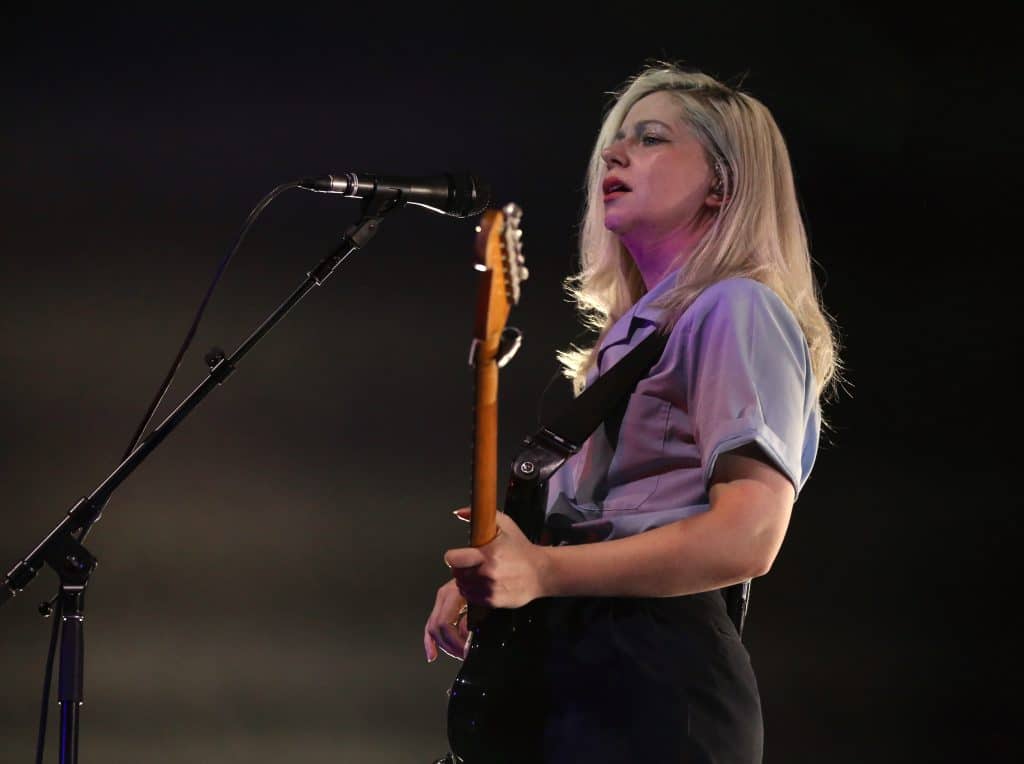
Shows at those venues can still stand to be a fun time, especially when explicitly focusing on the act of watching a good band. I’ve personally never had a notably bad experience at High Noon Saloon—consistently one of the best-sounding venues in Madison—and I’m greatly looking forward to at least three shows happening there in the next month (Melt-Banana, Cloud Nothings, and Pedro The Lion). Soul Glo and Mannequin Pussy recently put on one of the most memorable shows I’ve seen all year at the Majestic. Alvvays were a delight at the Sylvee in late April.
But I could have done without the venues’ recently introduced cashless system. I could have done without audiences being forced into covert fee stacks that only populate at the end-stage of their online purchases. I could have done with a less corporate touch. I bemoan the fact that a parent company whose general consumer practices I find to be predatory is profiting off of these bands, whose options were effectively limited to “play a Live Nation venue or don’t play Madison.” And, in each instance, I remind myself that there’s no ethical consumption under capitalism, but still hope a few of those venues eventually will return to more locally-minded control. And that a few of them would return to putting greater emphasis on uplifting local talent. (I truly can not express enough how much I’m looking forward to Kevin Willmott’s Gamma Ray Bar establishing its own reputation, which will likely benefit from Willmott’s accumulated experience with Frank Productions.) As with all things, there is a balance, and finding a workable center of gravity is the trick.
A number of contextual circumstances—inflation, health and safety measures, the practices of late-stage capitalism, etc.—have exacerbated the gap between how venues of respective sizes function. And with the upper-end venues feeling more class-stratified and isolated than ever, Live Nation stands accused of playing an integral role in shaping that divide via national- and state-level misconduct. Much of this alleged misconduct has come at the direct expense of their customers via machiavellian sales tactics (going exclusively cashless, the introduction of dynamic pricing, and “additional fee” stacks that sometimes exceed 30% of the base ticket price), though Live Nation insists other factors are at play. A number of attorneys general, the DOJ, and musician advocacy groups have not found those arguments to be convincing.
But what happens in the extremely unlikely event that the courts do order a breakup of Live Nation? Does anything noticeably change in local markets? Yes… and no. Live Nation would leave behind a massive ownership void that would likely be resumed by the companies, like Frank Productions, that it aggressively shepherded into its shadow. There would probably be a downscaling of fees and some operational practices, potentially even staff cuts. A few politically-minded artists would be more inclined to play venues they’d previously avoided over ownership concerns. A few venues might be forced into difficult financial situations and teeter on the brink of closure without the backing of an enormous, deep-pocketed parent company. (At this time it is unclear how the company’s existing money would be distributed but the authors of the suit did make efforts to ensure that enough financial relief would be directed towards affected markets to “restore competitiveness.”)
But a number of the perceived divides may remain intact. It’d still be difficult for a smaller band to book a bigger stage. Ticket prices would still have inflation-based adjustments. Maybe there would be some behind-the-scenes developments reminiscent of the merch cut saga that took years to materialize into an artist-friendly solution that nonetheless still raised genuine concerns.There are a host of potential trade-offs that merit genuine consideration. There is also the legitimate concern that the damage has already been done: promoters Live Nation owns have a direct line-of-sight to what tactics generate the most income. Those promoters could simply choose to extend those policies in the event they reabsorbed sole ownership.
More likely than not, if allowed to proceed, the legal battle would extend and splinter for multiple years, resulting in a decision that dissolves the partnership but allows the two base companies to remain, largely unpenalized outside of the split, with much of its prior ownership agreement intact. Sure, there would likely be limitations on how directly and frequently Live Nation and Ticketmaster could work together going forward. But with the very real threat of a second Trump administration—which would be poised to resume its reputation as one of the most corporate-centric in history—lingering on the horizon, it is far from certain that the lawsuit would be receiving the backing necessary to continue. And currently that lawsuit is only in its infancy, which ultimately amounts to a highly-publicized formal request for a jury trial.
Still, it’s interesting to consider and contend with some of these potential outcomes. They raise broader questions about the show-going experience and its various evolutions in the contemporary climate. Especially when it comes to Madison, where Live Nation has asserted dominance.

It’s also worth zeroing in on Wisconsin Attorney General Josh Kaul’s assertions that Live Nation has acted unlawfully in accordance with Wisconsin’s state regulations, singling out the “Unlawful contracts; conspiracies” sub-section of Wisconsin’s “Trusts And Monopolies” laws. If the company is found guilty, this would constitute a Class H felony and give credence to the broader pattern of anticompetitive practices the suit is alleging. It would be one in a string of other state-level felonies that the lawsuit alleges Live Nation has committed.
It’s a specificity that points to the heart of the suit: this is overwhelmingly focused on Live Nation’s executive-level business practices. Yes, audience members played a part in drumming up support for this particular legal action, but, if successful, the effects of the suit would likely take a considerable amount of time to be noticed by the show-going public, even after any potential legal conclusion.
In the interim, there will be a referendum in the court of public opinion on whether or not Live Nation has acted in good faith. Public perception of the ticketing and promotional giant already seemed to be at an all-time low, with Live Nation’s catastrophic failure in managing the online ticket-buying functionality for Taylor Swift’s Eras tour playing a significant part. It’s a reputation that’s also been decreasing among their booked talent, with many acts claiming they didn’t know they had the option to opt out of dynamic pricing. (Live Nation’s hesitance to be fully transparent with what is and isn’t allowed in terms of pricing options is a common through-line in recent stories and seems to be at direct odds with the company’s suggestion that “real solutions” to some of these issues is outside the bounds of its control and/or influence.)
As of now, Live Nation is in a precarious position: its public perception has taken a skewering, it’s being sued by the DOJ and over half of America, yet it retains a disproportionate amount of control in the live event industry. (Seriously, just name-search the company on a social media platform and scroll down for a few minutes to see the breadth of its battering when it comes to how general audiences are feeling.) Audiences, musicians, and venues are working with it because they have no choice. The alternatives are exceedingly few and far between. And that’s no accident. Live Nation’s foothold is so resoundingly well-established because of the company’s well-documented history of aggressive purchasing—there’s a reason why the company’s earned comparisons to Walmart (and it’s not just because Live Nation appointed a Walmart executive to a seat on its Board of Directors). Frankly, given the company’s transparent desire to seize as much market control as possible, it’s surprising that it has taken as long as it has for this lawsuit to come to fruition.
So, again, will anything change? It’s far, far too early to say. All audiences can do at this point is turn the tables and make their voice be the one that’s amplified above the ruckus. Even if Live Nation Entertainment escapes unscathed—outside of the barbs being leveled at them with increasing velocity by their own customers—their practices aren’t above criticism. Legal pressure and customer pressure may differ in scope, but they can both make a legitimate difference. That’s something to keep in mind as this all plays out, for better or worse.
We can publish more
“only on Tone Madison” stories —
but only with your support.
Author

Related Articles
Madison acts rivetingly ring in 2026
Five local bands offer new songs and projects, and capture a hopeful feeling in the new year.
Achieving a broader focus through music photojournalism in 2025
The fourth installment of our live music photo essay series centers a more personal vantage point.
Tone Madison’s favorite records of 2025
A celebration of 20 local releases that defined the year.