
The splenetic slapstick and severe stakes of “Anora”
Sara Batkie and Edwanike Harbour discuss the twists and turns of Sean Baker’s latest award-winning dramedy.
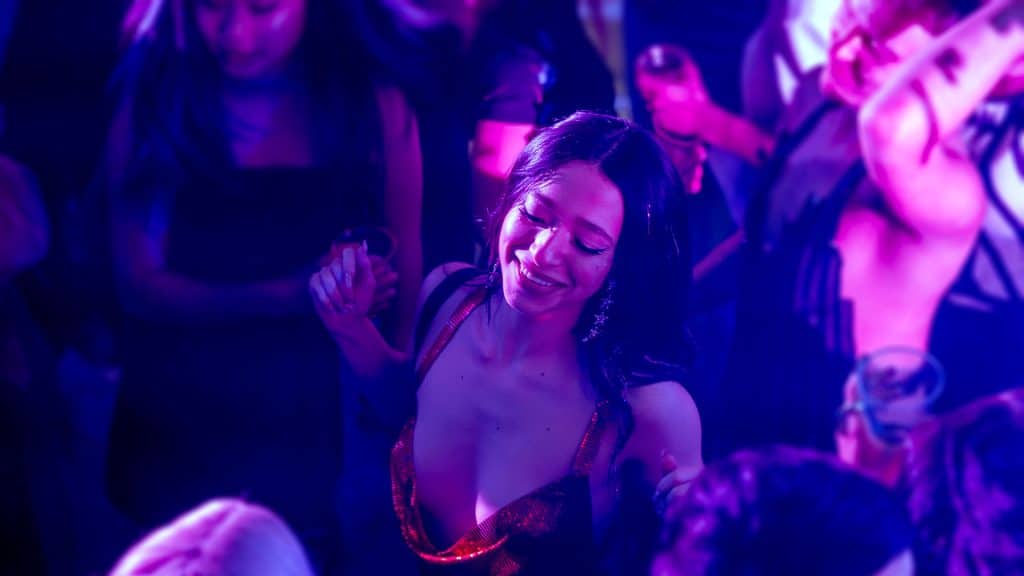
Sara Batkie and Edwanike Harbour discuss the twists and turns of Sean Baker’s latest award-winning dramedy.
In our “Cinemails” column, two writers exchange viewing notes on a recent theatrical or streaming experience and/or dig into something more broadly philosophical about the movies.
When Tone Madison last caught up with filmmaker Sean Baker in October 2022, he teased a new project, and concluded that he wasn’t “going too much bigger, intentionally, because we’ve noticed—even though we sometimes beat ourselves up about it—the limitations lead to things we could never have dreamt of.” To put it mildly, that has been proven true with his latest film, Anora (2024), which won the Palme d’Or at the Cannes Film Festival this past May. It’s the first American work to secure that top prize since Terrence Malick’s The Tree Of Life in 2011.
Anora, which Baker described in the aforementioned conversation as being “in his wheelhouse,” continues his penchant for nonjudgmental depictions of modern-day sex work, with a tragicomic twist. Promos might condense the synopsis to a sort of Pretty Woman (1990) or Cinderella story, but Baker pulls in all sorts of influences, from Italian screwball sex comedy to Altmanesque ensemble drama to home invasion. Each of these influences tonally colors this distorted whirlwind honeymoon-fantasy that descends into a wild-goose-chase abduction.
The film is also a star-making turn for Mikey Madison, who plays the titular character, a stripper at Brighton Beach club, HQ. Poised and proficient in the Russian language, Anora is introduced to young, immature playboy Ivan “Vanya” (Mark Eidelstein). Taken into the lap of luxury, Anora rides high in Vanya’s Brooklyn penthouse, catering exclusively to his whims and desire for company, and even falling for him—that is, until his family catches wind of their spontaneous Las Vegas elopement.
Vanya’s obscenely wealthy parents abroad send in a few out-of-their-element local Russian and Armenian henchmen to get a grip on the situation and stop the “mess” that Vanya has blithely thrown himself into. And what starts as a euphoric escape in manic montages takes a momentary turn into a pseudo-thriller with more long takes, as Baker steadies his hand for darker, richer commentary on class divide and gender dynamics.
In mid-late November, writers Sara Batkie and Edwanike Harbour traded some notes in a new “cinemail” column about their theatrical experiences with the film, with particular focus on Mikey Madison’s portrayal of Anora, as well as their expectations and comparisons to Baker’s other films of the past decade. They also semi-seriously ponder the film’s impact on changing Gen Z’s perspective of on-screen sex.
As of the date of publication, Anora is no longer playing in Madison-area theaters. But definitely look out for its return before the year’s end as awards season momentum builds. [Marcus Point first revived it for one screening per day starting on Friday, December 13.] —Grant Phipps, Film Editor
Sara Batkie to Edwanike Harbour
subject: Anora
So, Anora arrived in Madison in early November riding a tidal wave of buzz. It won the Palme d’Or at Cannes, which hasn’t been awarded to an American director since Terrence Malick back in 2011. Its per-screen haul has been one of the biggest of the year. Its Rotten Tomatoes score—as dubious a measurement of quality as that can be—sits at 96%. And it’s been widely tapped by awards prognosticators to get a slew of nominations in the coming months, particularly for Mikey Madison’s breakout lead performance. I’ve been a fan of Baker since I saw Tangerine in theaters in the summer of 2015 but this feels like a big leap for him, not just in the sense that it’s reaching his widest audience yet but in terms of the ambition and scope of the film.
Its focus on sex work, and demystifying and destigmatizing it, remains of a piece with his earlier films and the ecstatic craft that was so evident in The Florida Project (2017) and Red Rocket (2021) feels invigorating moment to moment. While his earlier work was more grounded in a docufiction style, here he takes much bigger swings, situating viewers in a sort of hyperreality that allows him to play within genres as disparate as conventional rom-coms like Pretty Woman and talky Cassavetes-esque domestic dramas. That said, at 139 minutes, Anora can seem a bit unwieldy. I think that’s purposeful on Baker’s part, and it’s an aspect of the film that I enjoyed. I found its unpredictability bracing, and was perhaps more willing to be forgiving of some meandering in the middle because of it. But I can understand some viewers coming out of it feeling like they’d been taken for a ride not dissimilar to the one Ani is forced on, where it’s a lot of flash and bang with ambiguous reward.
I’m curious, Edwanike: as someone who went into Anora mostly blind, what were your initial impressions of the film? Did you have certain expectations and if so, did it meet them or did the tonal whiplash between its fairy tale first act, screwball abduction comedy second act, and subdued, even melancholy, coda fall flat for you?

Edwanike Harbour to Sara Batkie
re: Anora
Admittedly, I did have some preconceived notions of how much I would enjoy the film based on my love of Baker’s The Florida Project and Red Rocket. I do see that he has a penchant for deconstructing sex work and humanizing sex workers in a way that they have not been in more traditional cinema. I have to say I might have fallen for the hype, as I did with Longlegs earlier this year. When a recently released film has so much buzz, it raises my expectations unattainably high, and I need to remind myself about this each time.
I definitely enjoyed this film throughout the first act. In the opening sequence, I liked watching Ani picking and choosing her clients. Baker depicted the behind-the-scenes work of the Brighton Beach strip club, the nightly squabbles between employees, and the initial encounter between Ani and Vanya took place. The second act tonally shifted in a way that, in reality, after seeing all of Baker’s previous work, I should have seen coming. But I was invested in where the relationship was going so I had to go along for the ride as well. In terms of the ambiguous reward, though, it reminds me of what Todd Phillips was trying to do with Joker: Folie À Deux. The gritty truths of life often outweighs any fairy-tale ending many are hoping for. For instance, fans of the first film were rooting for the Joker, the fantasy they had made up in their minds. There is no Joker in that world; it’s just Arthur Fleck, a broken man who had to fantasize about who he wanted to be to escape from his dismal reality where the winners of the world (powerful, influential, rich) continue to win in the end.
Performance-wise, Mikey Madison is probably looking at quite a few nominations in the upcoming months. I am primarily familiar with her in FX’s Better Things but was very impressed with her transformation into a New York stripper. She had been imprinted in my mind as a sulking, snarky teenager, so seeing her reborn as a streetwise stripper turning tricks on the side gave her some more depth. What were your thoughts here?
Sara Batkie to Edwanike Harbour
re: re: Anora
I also know Madison from Better Things, where she was either the least or second-least annoying daughter, depending on the episode. IMDb informs me I would have seen her in Once Upon A Time… In Hollywood (2019) as well. Maybe I didn’t recognize her there because she gets set on fire, a fate she is blessedly spared in Anora. For me, her performance is the key to the whole film, and what tied the two seemingly disparate halves together. One thing that both she and Baker are careful to develop is that Ani is great at her job. This isn’t remotely the same thing as enjoying it, and there are moments that make clear sex work comes with as much drudgery and shitty bosses as any other gig employment. But she has an emotional intelligence and ability to read people that serves her well in those scenes you mention when she’s selecting and entertaining clients. Baker often lingers on Ani’s face during these times, especially once she meets Vanya. She’s bemused, even kind of touched, by his lack of sexual prowess, as much as she’s seduced by the lifestyle he offers as the devil-may-care son of a Russian oligarch. A lesser film might have settled for depicting Ani as the one who lucked out in this relationship, but both Madison and Baker know she brings far more to the table than the people around her, Vanya included, realize.
Ani is also someone who is used to taking care of herself, which is what she spends most of the film’s second half doing once Vanya abandons her with his goony handlers. This part of the film reminded me a lot of Uncut Gems (2019), with its splenetic physical comedy and haphazardly effective violence. I laughed a lot, particularly during an extended sequence involving an interrupted baptism and considerable property destruction (including perhaps my favorite delivery of the word “No” in recent memory). But it’s also stressful to watch, and that’s because Baker and Madison have done the work of setting up the stakes for Ani. Before, she was exuberant to the possibilities of life, but now she’s hardening herself to its inevitabilities—the gritty realism you alluded to. I’ve seen a few reviewers question whether she really loves Vanya, which to me is a bit beside the point, though I’d be curious to know where you land on that. I think she’s stubborn and more than a little prideful. Like a lot of young people, she’s ill-equipped to handle the embarrassment that comes with bad decisions. But she has dignity, too, and it would be cruel to simply dismiss her as a gold digger.
I guess what I’m getting at is that, while I’ll grant that Ani is a bit thinly drawn on paper, I don’t think Madison’s performance bears that out. She imbues her with a depth that I think we’re really only scratching the surface of. There’s an insistence on maintaining a private inner world that she doesn’t allow most people access to. It’s the bargain that makes sex work tolerable for many. The final moments reflect this in fascinating ways. I won’t spoil the specifics, but for an act that probably takes up less than a minute of screentime, the actors involved exhibit a huge range of emotions. I’ve seen other viewers asking—mostly on Letterboxd—if Ani “wins” or “loses,” which strikes me as a bit reductive. The overwhelming sense I got was that she’s simply exhausted. But I’d love to hear your thoughts on this. And how do you feel Anora fits in overall with the other films of 2024 so far? Are auteurs back? Will this inspire Gen Z to finally embrace onscreen sex???
Edwanike Harbour to Sara Batkie
re: re: re: Anora
Indeed, I also remember that fateful scene in Once Upon A Time… In Hollywood. Between that and Madison’s recent entries, she has definitely presented herself as having quite a range as an actress and I am excited to see what the future holds for her. The lap dance scenes were striking to me in the monotony of the work, the mindless grinding on some lonely stranger, the conveyor belt of quick gratification for the client, not the sex worker. Ultimately, it is work after all. At the same time, she uses those skills you mention to make that person feel like they are the center of the universe for a prorated amount of time.
Baker masterfully juxtaposes questions of wealth/poverty and social class into the film as Vanya is presented as this child of privilege that has never had to live with the consequences of any decisions. The son of Russian oligarchs, he sees people and relationships as tools for him to use and enjoy. Even as Ani is being abducted by his family’s goons for hire, she repeatedly mentions that she is in a real relationship with Vanya. And at this point, Ani clearly feels that she is his equal. As the situation progresses, she begins to see how Vanya’s social class really sees and feels about her.
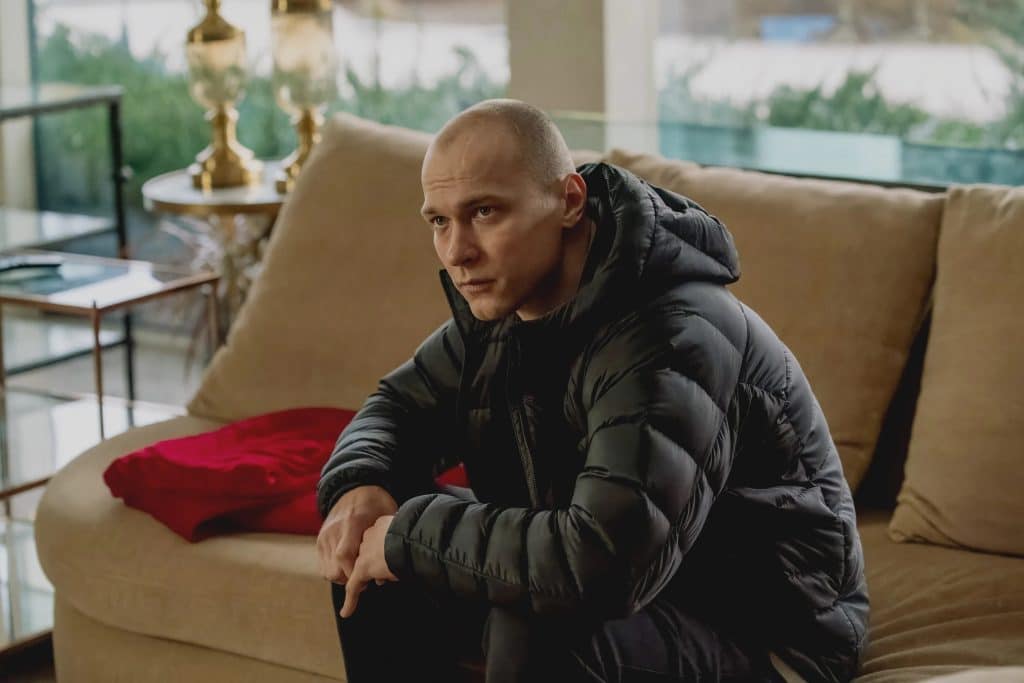
Even through connecting herself to Vanya, I don’t see Ani as a gold digger either. Frankly, I believe she grew to love him. It wasn’t just that she saw dollar signs. Without spoiling the final few minutes, I don’t think that range of emotional responses would have been present without some true, bonafide feelings for Vanya. I do think that, despite the horrible things she says to the most relatable Igor (Yura Borisov) throughout their encounters, there is a mutual sense of belonging or even being seen as an equal. He may not be able to casually offer four-karat diamond rings like Vanya, but he offers her a comfort much deeper than any amount of money. I also don’t think it’s really a matter of winning or losing when she never truly had Vanya to begin with.
I am not sure if this film will be the one to make Gen Z lose their aversion to on-screen sex. For some of them, it might make it worse! The themes of the film run so much deeper, so I’d like to think they will be able to appreciate some of the other portrayals and concepts involved. I feel that it definitely should have been considered for the Palme d’Or (which it won) as it is daring in its scope and takes more risks in a world of reboots and remakes. Sean Baker is well on his way to becoming an auteur and has laid the groundwork for amplifying his voice amongst other directors of his generation. There are not many right now who can follow suit, sadly to say. We’ll see what Greta Gerwig (who, as Cannes Jury President, actually announced Anora‘s Palme d’Or win) or Emerald Fennell can pull off in the next few years, but no one has Baker’s kind of momentum. There are a few more awards-season entries I am looking forward to this year, but Anora is easily in my top five of 2024.
We can publish more
“only on Tone Madison” stories —
but only with your support.
Authors


Related Articles
One movie meditation after another: toiling through 2025
Nine writers processed these trying times through cinema, at the theaters and at home.
“Liking This Angle” finds artistic inspiration in degrees of the edit
Nicholas R. Wootton’s experimental short, featuring sculptor Christina A. West, premieres at Art Lit Lab as part of Project Projection on January 21.
Evaluating tenderness and depth of family dynamics in “Sentimental Value”
Grant Phipps and Lance Li argue in favor of and against the artistic framework of Joachim Trier’s latest psychological family drama.