
Small Bites: Soup season is Aleppo pepper season
This mild and fruity spice adds a light kick to any wintertime dish and is available locally.
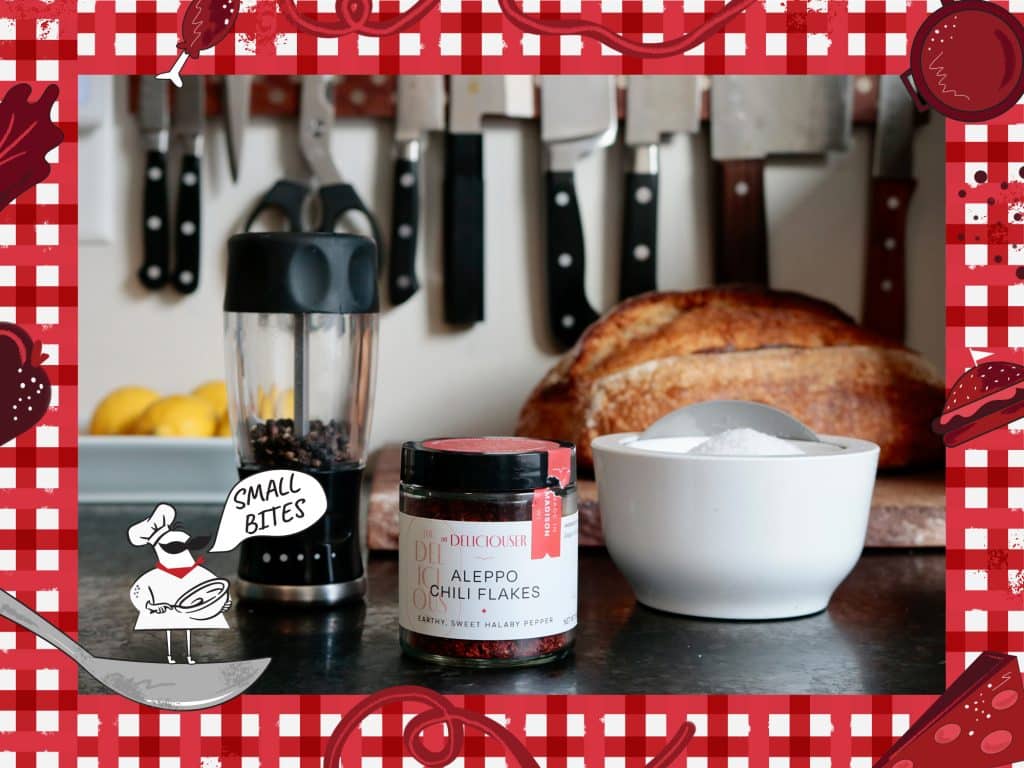
This mild and fruity spice adds a light kick to any wintertime dish and is available locally.

This is our newsletter-first column, Microtones. It runs on the site on Fridays, but you can get it in your inbox on Thursdays by signing up for our email newsletter.
Welcome to “Small Bites,” a new column about exploring the broader world of food and drink in Madison through approachable and specific experiences.
The moment the air outside drops to a light chill, food publications everywhere start scrambling to deliver the news: it’s soup season. Like most greeting card holidays (or coffee chain seasonal drink launches), soup season isn’t a real marker of time as much as it is a cultural invention designed to create community amongst the people who reside in cold climes. Our Upper Midwest ancestors might have gathered at the feed store to discuss threshing plans for before the freeze; our equivalent is gathering at the local grocery and chatting up the needed ingredients for a curried squash bisque with friends we bump into on our journey.
For me, soup season is more than just eating hot broth because I’m cold. It’s an excuse to make big pots of hearty food that can sustain our household for days. As we roll into the deep freeze hibernation zone (DFHZ) each year, conservation of movement is key: Buddy, if you think I’ve got the energy to cook different meals every night when the high is -8ºF, well, you’re overestimating my abilities. And thank you, that’s very kind that you think so highly of me.
You can really go in any direction with soup—the aforementioned curried squash, a rich lentil stew, pasta e fagioli—and know that, overnight in the fridge, the flavors will meld and improve as it sits. At the same time, there’s something about the freshness of a just-made steaming pot that gets lost in the reheat: that, my friends, is where Aleppo pepper comes in.
Named for the region in which this variety of a chili was first cultivated, Aleppo pepper is a dried-and-flaked spice made from Aleppo (otherwise known as halaby) peppers grown in the Mediterranean. While its roots are from Aleppo in Syria, ongoing war and conflict in that area has seen most production moved to Turkey. And while it might look like the stuff you see in a shaker at a pizza joint, Aleppo pepper is its own thing.
“Unlike common crushed red pepper, Aleppo pepper does not contain seeds which helps reduce the overall heat level and brings the dried fruit flavor forward,” says Patrick O’Halloran, chef, partner, and spice curator for The Deliciouser, a new spice company based in Madison. “The peppers should be sun dried, with consistent flake size, and a hint of salinity and oil content. The flavor profile should be bright with notes of ripe red fruit and sun dried tomato with just a hint of salinity and mild heat.”
The signature mild heat and fruity flavor quality is what makes Aleppo pepper a staple in our house, taking its position on our stove-adjacent spice rack next to the salt cellar and pepper grinder. O’Halloran loves to use Aleppo pepper in all the egg dishes he cooks, and it was actually a sprinkling on top of a fried egg sandwich at a breakfast spot in Chicago that first introduced me to Aleppo pepper’s unique burst of flavor. While O’Halloran also suggests Aleppo pepper as a perfect partner for feta cheese, hummus, baba ganoush, tomatoes, cucumbers, and olive oil, he also points out that it’s a great finishing spice to add a pop to pizzas, salads, and pasta dishes as well.
I love the way Aleppo pepper adds dimension to whatever I’m about to eat—a simple Emeril-style bam over a just-baked Sicilian pie brings brightness, sweetness, and a perfect amount of heat to cut through the rich oil-fried crust. A pinch added while you’re frying garlic for a pasta dish makes your scented olive oil taste three-dimensional with a rounder, fuller flavor profile. And who can forget soup?
Aleppo’s mildness means it’s best added as a finishing spice rather than a long-cooking one, so as I dish out my third bowl of whatever-I-made-three-days-ago soup for a cozy, work-from-home lunch, I’m always sure to sprinkle a little right over the top. It immediately revitalizes the soup’s flavors, adding heat, mild sweetness, and most of all, brightness. In this way, Aleppo pepper feels less like a spice and more like an alchemical tool: it has the power to transform whatever you’re about to eat into something dynamic and exciting. And in the midst of soup season, where dreary days passing are marked by the number of bowls piling up in your sink (similar, perhaps, to school kids marking days of a calendar until summer break), the addition of Aleppo pepper to any soup adds excitement to your day—even if it’s just a mild, sweet, and fruity version of excitement.
What I really love about Aleppo pepper, however, is how democratizing of a spice it can be. Cooking takes time, energy, practice, and an investment in tools and ingredients, and I’m always fascinated by the little shortcuts that can elevate just about any dish. One of my goals with this column is to find ways to make truly transformational eating experiences approachable for all, and the near-universal utility of Aleppo pepper makes it the perfect subject to kick things off. So next time you’re out and about and looking for ideas to make your game-day chili stand out, consider grabbing a jar of Aleppo pepper: you might be surprised just how much a dash can boost anything you’re cooking, even a roasted cauliflower or roasted broccoli side dish.
Personally, I’ve been using The Deliciouser’s Aleppo pepper at home. It has a lovely sheen and retains a bit more heat than some cheaper ones I’ve tried in the past. We snagged a jar at the northside Willy Street Co-op for around $10, and it will usually last us about two to three months—or slightly less during soup season. O’Halloran suggests avoiding versions of Aleppo pepper that seem too dry and flaky and include seeds—that’s likely a sign that the peppers weren’t processed in the traditional way, and likely won’t have the same punch. I’ve also really liked Penzeys Spices Aleppo Pepper, which is available at some local grocery stores and local Penzeys stores, and I also enjoy The Spice House’s Aleppo Pepper, which we used to buy more often when we lived in Chicago. On the whole, Aleppo pepper is a slightly more expensive pepper flake, but since you’re just using it in bits and bobs, a little goes a long way.
And with that, it’s almost lunchtime here at the Small Bites HQ (aka my kitchen). I’ve got some pasta e fagioli heating on the stove, and you better bet my fingers are just itching to get to pinching that lovely, sweet, lightly spicy Aleppo pepper over the top.
We can publish more
“only on Tone Madison” stories —
but only with your support.
Author

Related Articles
Small Bites: How I make bread
Meditating on the process, flour, flavor, time, and place.

Small Bites: The moral cost of meat
How a bad dream prompted more intentional eating in the new year.
Small Bites: How much garlic is too much garlic?
With “double the garlic” dominating social media, it’s time to reevaluate your recipes.