
Small Bites: How I would fix Madison dining
Going out on Sundays and other thoughts on building a more sustainable food city.

This is our newsletter-first column, Microtones. It runs on the site on Fridays, but you can get it in your inbox on Thursdays by signing up for our email newsletter.
“Small Bites” is about exploring the broader world of food and drink in Madison through approachable and specific experiences.
My partner and I have a problem. As the weekend wears on though the bliss of a rudderless few days, we face the blunt structure of Monday morning, hammering its way backward into our Sunday afternoon. Sunday afternoon demands laziness on its own: it’s the time for lying back in the grass in the shade by a lake or taking a nap on our couch through the third quarter of a basketball game. But Sunday afternoon comes with a caveat. It’s a last gasp of freedom before the yoke of the workweek settles back onto my laptop-postured shoulders. Or is it?
Throughout most of my life, Sunday afternoon has been a precursor to Sunday evening, when I’d take a chance to mosey out for one more easy dinner at the bar of a nice restaurant, maybe a cheeky burger and a cocktail at the neighborhood pub, maybe some bulgogi or hot pot across town. Except, well, Madison struggles with the concept of Sunday evening: many restaurants are closed, or at least, close too early.
When I first started writing for Tone Madison, it offered a way to process my move to a new city. I’d been through Madison many, many times over the years, and after spending most of my adulthood in Chicago, I knew I was in for some mild culture shock. I wasn’t quite ready, however, for how drastically COVID-19 would affect Madison’s food scene. Places that were heralded as late-night faves struggled to fill their seats during peak dinner hours.
I remember landing at the bar of Morris Ramen in 2018, being truly amazed at how well the bowl in front of me evoked the ramen I ate in Japan. When the space finally reopened in 2021, it was clear that diners would no longer be elbow-to-elbow jockeying for space until the late evening at their counter. Morris Ramen closed in February 2024. Of course, there are many circumstances that lead to a restaurant’s closure, but with a combination of Covid-cautious diners (including myself), a take-out forward push from delivery services, and people just used to being home, restaurants have suffered greatly in the last few years.
I can’t fault people for not going out to eat. Madison’s food costs in general have risen dramatically, and housing costs in the area remain at record highs. Still, COVID-19 presents itself as a dangerous contagion amongst Dane County’s immunocompromised population. After five years of being Covid-free, I finally caught it last December; I tested positive for three weeks and was essentially flat on my back the whole time. My partner and I started dining maskless more frequently since last summer, though, weighing the risks for ourselves against a desire to experience our community and the greater world on a plate. As always, in my life, food remains a priority. We avoid crowded spaces unmasked, go out to eat on less busy days, and do our best to balance our risk of exposure when possible.
Which brings me back to Sunday night. There are always options. We were able to swing by Double 10 Hot Pot at the edge of Willy Street recently, and enjoyed an easy dinner at Sol’s on the Square a few weeks back. There’s always the bar at Mint Mark, or if we’re feeling fancy, Fairchild. It’s not impossible to find food, but it is disheartening to see how dead most of these restaurants are on a Sunday evening. It makes you understand why some places choose to be closed. You can’t make and serve food for patrons when they just aren’t there.
I often think about this April 2024 Instagram post from Lola’s shortly after they opened. “It’s usually pretty easy to get a table (or spot at the bar) on Sundays and weekdays…and especially before 6 p.m. and after 8 p.m.,” the post reads. They’re clearly pushing people to stop by outside of prime dining hours on Friday and Saturday, when wait times could be up to an hour. The raw data suggests that there are enough Madison patrons to support new restaurant openings—they just all decide to go out at the same time. And now Lola’s is no longer open on Sundays.
It’s difficult squaring how I see Madison with Madison’s perception of itself. That is to say, I see a city with world-class dining, walkable urban density (at least in many areas if not the whole city), and a greater metropolitan population of around 700,000 that keeps growing every year. At times, it feels like Madison wants to remain a small town that operates on small-town principles. Having spent time in Bloomington, Indiana, at the tail end of the aughts, I can guarantee you that Madison is not the small, agriculture-adjacent town it thinks it is.
When we talk about sustainability in terms of food, we’re often looking towards the environmental impact of farming. But a big part of sustainability is having a reliable consumer base: it doesn’t matter how excellent your organic produce and cage-free eggs are if you don’t have a buyer for them. We don’t often consider the idea of sustainability in restaurants being tied to an active consumer base, but a restaurant without customers is just a business losing money. And I don’t want to live in a Madison losing its dining experiences to frictionless delivery apps. Even if you’re ordering from an independently run local restaurant, that money isn’t necessarily going to them.
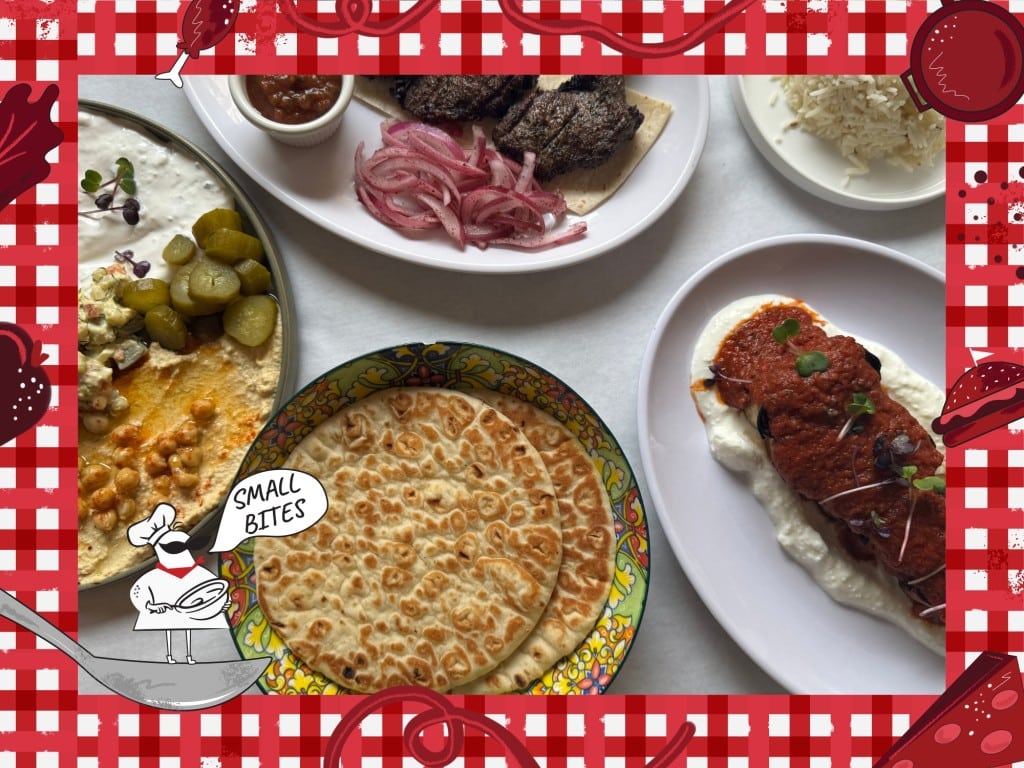
All hope is not lost. It’s easy to build a great food culture in a city just by going out more often, especially during non-peak hours. If you struggle to get into Ahan for dinner, go at 8 p.m. on a Wednesday. Skip an evening out on Friday, when Madison’s drinking culture is at its ugliest, and pick a new spot to try on Sunday evening instead. Get a full spread at Silk Road, a dosa at Ama Kitchen, or noodles at Hutong. Or pick a neighborhood spot and start a new routine. Let people learn your name. Make Girl Dinner Thursday a habit and tip five percent more than you normally would.
One small change in dining habits would have a massive impact. If even a quarter of Madisonians added one or two more nights out during the week, that would mean around 65,000 more meals for Madison’s nearly 1,500 total restaurants. After all, nearly a quarter of you don’t even go into work at an office on Monday morning anyway—so what’s keeping you at home?
I love Madison. I truly do. There’s no other city like it on earth. But it’s my love for this city that makes me want more for us. I want us to have the opportunities for a city of our size. I don’t think I have the power to fix the housing crisis, but I do have the ability to encourage you to help fix our dining. And hopefully, it works. I guess I’ll see when you wave to me across the bar on a Sunday night. I’ll be the one eating a Caesar salad and fries.
We can publish more
“only on Tone Madison” stories —
but only with your support.
Author

Related Articles
Small Bites: How I make bread
Meditating on the process, flour, flavor, time, and place.
Small Bites: The moral cost of meat
How a bad dream prompted more intentional eating in the new year.
Small Bites: How much garlic is too much garlic?
With “double the garlic” dominating social media, it’s time to reevaluate your recipes.