
Small Bites: Cooking while disabled
Rebuilding kitchen habits for good days and bad days alike.

This is our newsletter-first column, Microtones. It runs on the site on Fridays, but you can get it in your inbox on Thursdays by signing up for our email newsletter.
“Small Bites” is about exploring the broader world of food and drink in Madison through approachable and specific experiences.
Within the first year of my MS diagnosis, I ended up in Urgent Care three times after slicing into my fingers trying to cut bread. A different person might have learned their lesson after the first time, but I was dealing with something new: I couldn’t feel my fingertips anymore. Years of kitchen work in my teens taught me how to curl my fingers back into a claw, allowing my knuckles to guide the flat of the knife down through whatever I was cutting. Without knowing where my fingertips were, I had no idea how to repeat the proper grip. The third trip didn’t require stitches, just a butterfly bandage and some gauze wrap to keep it tight while it healed. I didn’t get a scar from the ordeal, but I am, however, permanently changed by it: I now cut my bread differently than I used to.
In general, I’m lucky. Aside from the loss of sensation in my fingertips, I don’t really have any lasting physical symptoms. Multiple sclerosis is a disease that comes in bursts. First, your body is triggered into producing antibodies. Then, those antibodies attack the protective coating around your spinal cord, optic nerve, or brain. This damages your neurosystems, messing with balance, muscle stability, and control. As the attack subsides, some or all of your muscle control comes back. If you’re diagnosed early, you can take preventive drug therapies that keep these relapsing attacks from occurring outright. That doesn’t mean you’re out of the weeds. Some nerve damage can be permanent. For instance, my sight never returned to my right eye after optic neuritis. But who needs depth perception when you have good knife skills with proper safety techniques? Wait a minute.
People with a chronic illness usually suffer from what’s referred to as “fatigue.” It’s a bit of a loaded word, in that it’s commonly used as a synonym in casual conversation for “tired” or “worn out.” Fatigue, however, is more complex than needing a respite every few hours. When I last described my symptoms to my neurologist, she just nodded along politely as I rattled off fatigue’s greatest hits: brain fog, weakness in limbs, tiredness, extreme contraction and tightness of limbs, digestion issues, muscle soreness that wakes you up at night, etc. A light bout of fatigue puts me on the couch for the night. A more strenuous fatigue spell knocks me on my ass for two days, minimum. There’s no real predictor for what triggers fatigue, but after four years of noting symptoms, I can safely say that seasonal allergies or rapid barometric pressure shifts seem to set things off. The other night, a massive downpour blew through the city at 4 a.m., and I spent the rest of the day in a near-trance state, unable to do much but stare at the TV with my face half smashed into the pillow, my good eye peeking just over the upholstery.
Fatigue is the true enemy of my kitchen ambitions. On bad days, I’m not able to keep myself steady and focused enough to do any real cooking. On moderate days, it’s just easier not to. Those are the days when I’m staring at my laptop for two or three hours, wondering why I was only able to eke out a single email before realizing I needed to take a break. Technically, I was well enough to fold laundry, so I did. I also emptied the dishwasher and cleaned up the kitchen. I could probably make a grilled cheese or boil some pasta, but why not treat myself if I’m sick?
Four years ago, my fatigue was less frequent but more intense. These days, fatigue comes and goes in smaller waves, but as my allergies have ramped up in their fury, so has my fatigue. It doesn’t help, either, that climate change has led to more aggressive, quicker appearing thunderstorms than in the past. All said? I can’t be ordering pizza up to three nights a week, even if I deserve a treat.
Living with a disability means living through symptoms. I basically feel like dirt when I wake up every morning, making the question of the day “just how much like dirt do I feel?” around mid-morning. That truth doesn’t usually settle in until around 9:30 a.m. at the earliest, after I’ve had my coffee and breakfast and started on the meat of the daily routine. Most days, I push on through. Some days I can’t. The middle ground, however, depends on how much pity I might feel for myself. I’ve spent many miserable afternoons on my couch, moving files, organizing to-do lists, entering data points, and formatting text, only to declare myself unfit to cook less than an hour later. Lately, I’ve been forcing myself through that barrier, pivoting to recipes I have memorized and feel confident I can execute with one eye tied behind my back. It works. Maybe I’m not quite making Caesar salad with hand-breaded, shallow-fried chicken cutlets, but I can at least pull together a sausage and broccolini pasta.
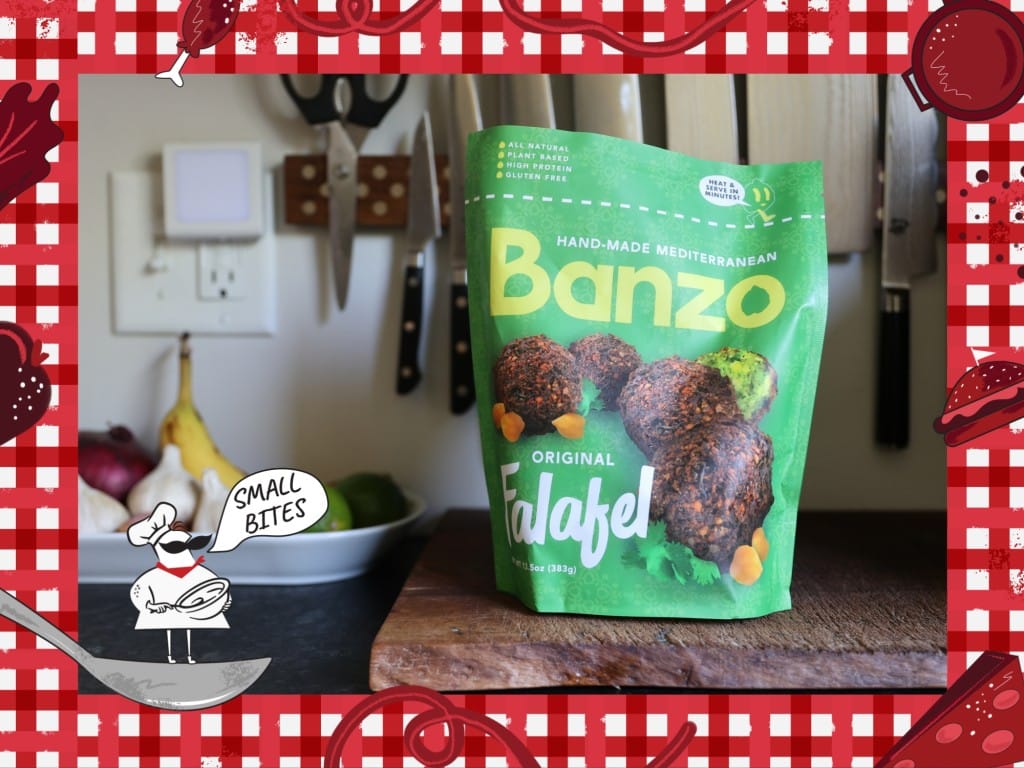
I’ve started perusing the freezer section more and more, as well, and getting through the week often looks like Banzo frozen falafel in the toaster oven. While I love a frozen pizza or a “how is this still frozen in the middle” bean burrito, those meals aren’t great to shoehorn into your least mobile days. Frozen falafel, however, can quickly be tossed into the “air fryer” setting of the convection oven on our counter, and from there it’s easy to pull out some greens or slice up some red cabbage. Hell, it’s easy to make a quick tahini sauce with a little water, lemon, salt, and garlic. All you need otherwise is a flatbread and some pickles. To some degree, that process might be as involved as anything else, but it takes up less brain power. I’m not looking to employ some technique or not: I’m just building accoutrements around the star of the plate: falafel.
It’s odd going from confidently slinging three pizzas in a 900ºF oven to trying to shove a fistful of Goldfish crackers into my mouth while every muscle in my body burns with the same intense heat of that pizza oven. But some days are good and some days are bad. Some days, I’m snatching 90 pounds worth of kettlebells over my head eight times in a row. Some days, I’m letting the ingredients for a cassoulet go another day in the fridge. Having a chronic illness means I constantly have to pivot, but it also means I have to decide each day just how bad it is. Either way, good day or bad, I can probably make it through if I have falafel in the freezer.
We can publish more
“only on Tone Madison” stories —
but only with your support.
Author

Related Articles
Small Bites: How I make bread
Meditating on the process, flour, flavor, time, and place.
Small Bites: The moral cost of meat
How a bad dream prompted more intentional eating in the new year.
Small Bites: How much garlic is too much garlic?
With “double the garlic” dominating social media, it’s time to reevaluate your recipes.