
The semi-improvised parameters of “Inertia Follies” engender its subtly and radically transformative scenes
The avant-garde performance-art showcase, which involves six local artists, runs for a final weekend—November 20 through 23—at Broom Street Theater.
Before the main event, an inviting, pedagogical foreword: “The difference between performance art, theater, and dance is a thin threshold. But I like to begin with the idea that dance is expression, theater is representation, and performance art is exactly who you are.”
If you’re new to traditions of experimental theater, Inertia Follies director (or “facilitator” as she prefers) Chelsea Gaspard will share that quote with the audience, one which she’s borrowed from the workshop texts of this is a PERFORMANCE school in Lincolnville, Maine. It couldn’t be more applicable to hear than when sitting in Madison’s preeminent black-box Broom Street Theater (1119 Williamson Street).
Gaspard’s 50-minute show, an anthology assembled through six semi-improvised scenes, is billed as “a night of avant-garde performance art,” with contributions from an equal number of Madison-based artists—Andrieu Todd and SiLas Be, Kate Wydeven, Malcolm McCanles, Spenser Wise, and Gaspard herself. Running four days every week so far this month, Inertia Follies will see a final weekend from November 20 to 23. Broom Street Theater artistic director Maria Dahman will lead a special talkback with the performers after the 7:30 p.m. show on November 21. Tickets are pay-what-you-can for all dates.
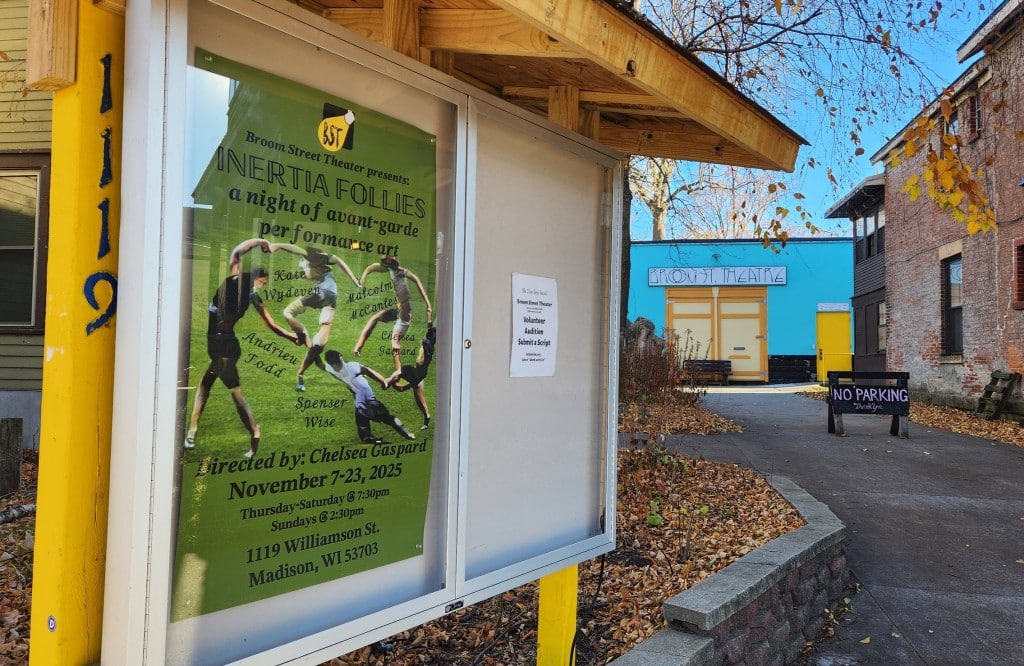
Loosely inspired by the Ziegfeld Follies theatrical revue of the early-to-mid 20th century (and related film from 1945), Gaspard’s curated production gives space to absurdist comedy, poised silent and sound-synced interpretative dance, performative anxiety-nightmares manifest, and digital media-era psychological horror. It’s actually the second incarnation of the show under the ironic Inertia heading, which began a few years ago as movement and expression workshops when Gaspard was living in Los Angeles. The impulse to combine forms with a sense of play was “born out of a desire to express myself and also help people in my community find the tools they need to express themselves,” she writes in an email to Tone Madison.
After moving to the Midwest during the summer of 2024, Gaspard knew she didn’t want to “let this movement fizzle away,” and researched possible spaces for a revival. She cold-emailed Dahman, and met with her shortly after to pitch the show. “[The original Inertia] was very DIY art world and nightlife meeting, whereas this is more of the art world meeting with the theatrical space,” Gaspard tells Tone Madison in an in-person conversation.
While the version of Inertia ultimately differs here at Broom Street (as this run does not involve a poet and a drag queen), Gaspard and her fellow artists’ devotion to uninhibited free expression prevails. A majority of the performances capture something unifying and unshakably queer that gestures towards the deep-rooted ideology of performance, especially how the definition of that word has transformed, conjuring the social-media age’s inexorable addictions. Choreographies in minimalist to maximalist costumes reach for themes of personal transformation and “facing the underbelly of the self,” Gaspard says, extending my initial perceptions of the show’s themes.
Inertia Follies stabs at the edges of a sickly reality with an existential specificity, creating a lived atmosphere that’s both recognizably present and out of time. The sequential rhythms of the show are intermittently anxious and contemplative but persistently thrilling. Credit that to Gaspard’s guiding belief in the show’s improvised components as “living and breathing and shifting.”
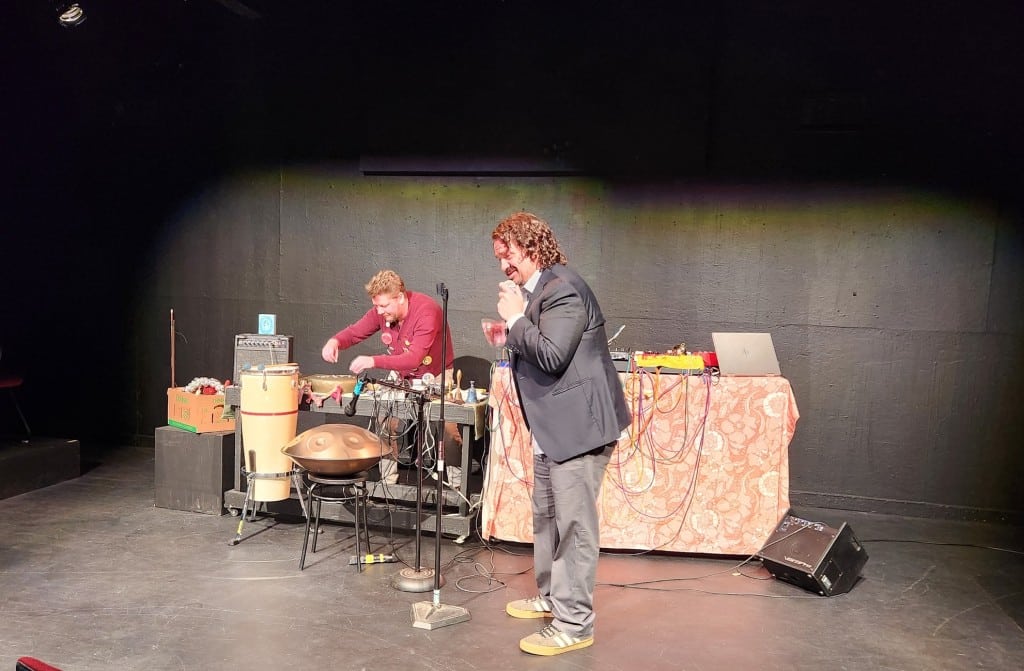
At the top, Andrieu Todd and SiLas Be collaboratively offer a take on the bygone era of talk-show grandiloquence that is gradually fading into the recesses of network television history. In a candid conversation with Tone Madison, Be talks about the process of creating 11 different variations on their central idea of a special holiday-themed routine that is divorced from the gaudy glamor of American traditions like Halloween and Thanksgiving. The performance I attended happened to be on National Button Day (November 16). Both Todd and Be subverted their assumed roles of host and musical sidekick, respectively, by tossing out remarks about “button hubris,” intentionally flat ad-libbing, and sharply strange personal anecdotes (reading the tea leaves, or buttons, as it were). The end result compellingly builds upon what Todd was attempting in early 2024 with the short-lived Amalgam variety show at the old Communication space on Milwaukee Street.
By contrast, Kate Wydeven’s performance is wordless and without any accompanying sound, as she gracefully moves about the stage in a semicircle, shedding articles of clothing that are knotted together and coiled around her body like a bedsheet ladder. In her artist statement, Wydeven writes that her emotions are “memorialized by the clothing that I wore throughout my journey.” While her appearance in the show is quite brief, the transfixing ritual is powerfully contextualized as a respite from the more outré and confrontational contortions of Malcolm McCanles to immediately follow.
McCanles’ two consecutive, distinctive performances take us through stages of birth and (humiliation as) death. The first almost serves as a kind of Biblical tale of motor-skill development, which then transitions into a fetal state of imprisonment through screen addiction and sexual dependency. Their concluding segment is sort of like a more perverse version of Todd and Be’s opening act—a peak Adult Swim-era vaudevillian fever dream of a doomed stand-up comic’s crowdwork. McCanles captures something truly disturbing about the insatiability of our drive for external validation stemming from our most destructive internalized urges.
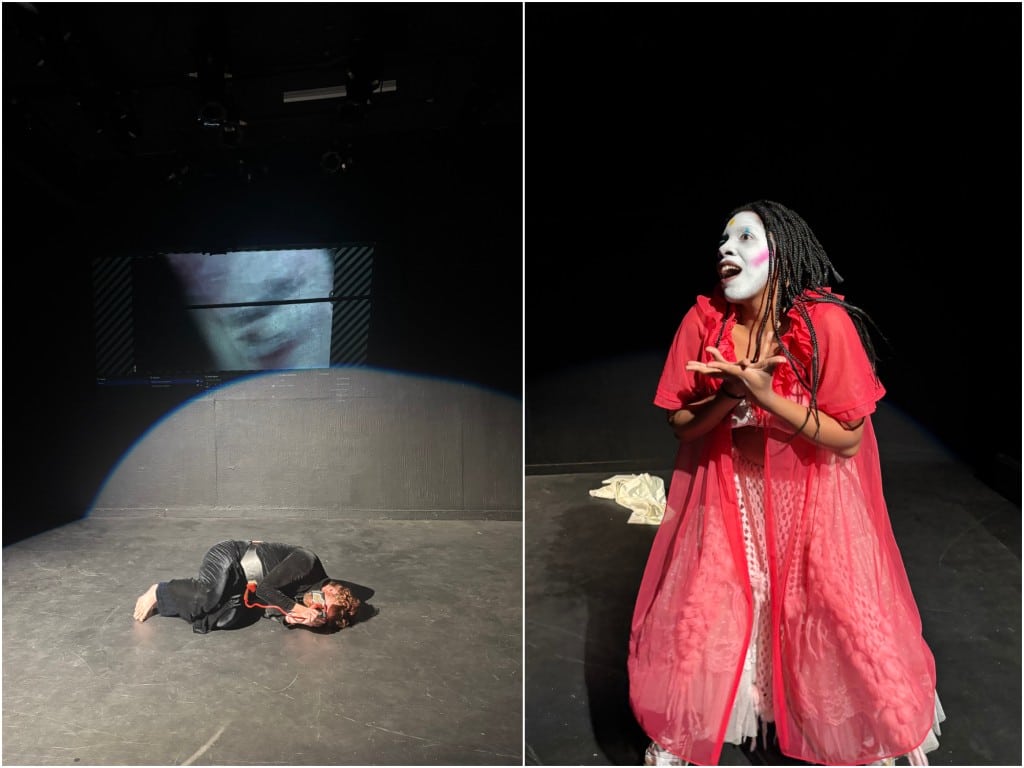
The final two pieces in the show play off of McCanles’ former narrative on human evolution and habituation. Spenser Wise’s Mother Is A Metaphor For Madness is spiritually similar, yet more abstract, plunging further into psychological aspects of stunted growth that have mutated the flesh. It’s a “multimedia exorcism of a generational curse,” they write in their artist statement. Wise lays curled on the stage, and fitted with an elongated, curved red umbilical cord presumably fashioned out of tape, tubing, and wire. At the end of the cord, they’ve mounted a smartphone to live-stream a warped image of themselves onto the wall above. A pre-recorded loop of voices layer into a disorienting mantra, and Wise’s movements become more spastic before settling on a more pleading pose, a bloody prayer. From beginning to end, this performance feels the most cinematic by design, and evoking some of the medium’s most indelible imagery from the past quarter-century, particularly in the J-horror genre.
Lastly, Gaspard’s segment Molting In A Saturn Shell quells the lingering, unsettled aura in the room. She utilizes a diverse array of influences, from Kabuki, to pantomime, to more modern interpretative dance in creating a more purely movement-based piece. Emerging from a white-sheet cocoon, Gaspard’s fluid gestures attempt to harmonize with the textured sonic phases of a pre-recorded track by Mickey van Seenus, which incorporates field-recordings of the natural world as well as samples from house music and funk carioca. It’s as spiritually upbeat as it is trance-like, and even a tad whimsical.
Putting Inertia Follies together for Broom Street Theater required about a month of rehearsals, Gaspard reveals, but her intuitive “desire to create and perform and express outside the institution” pushed her to commit to revitalize this performance project. In Madison’s evolving landscape “dominated by the gleam and signage of institutions,” as I wrote just a few weeks ago about local filmmaking, it is increasingly imperative to preserve spaces that allow for radical and more discernibly subtle experimentation. Like the house venue Common Sage and DIY collective of Communication (now at 1741 Commercial Avenue), Broom Street Theater is strengthened by opening its doors to Madison transplants like Gaspard to build community without creative barriers or transactional hurdles. And—as the aforementioned quote goes—the people who comprise the core of Inertia Follies can find, through their own movements and expressions within the space, exactly who they are and can be as creatives.
We can publish more
“only on Tone Madison” stories —
but only with your support.
Author
Related Articles
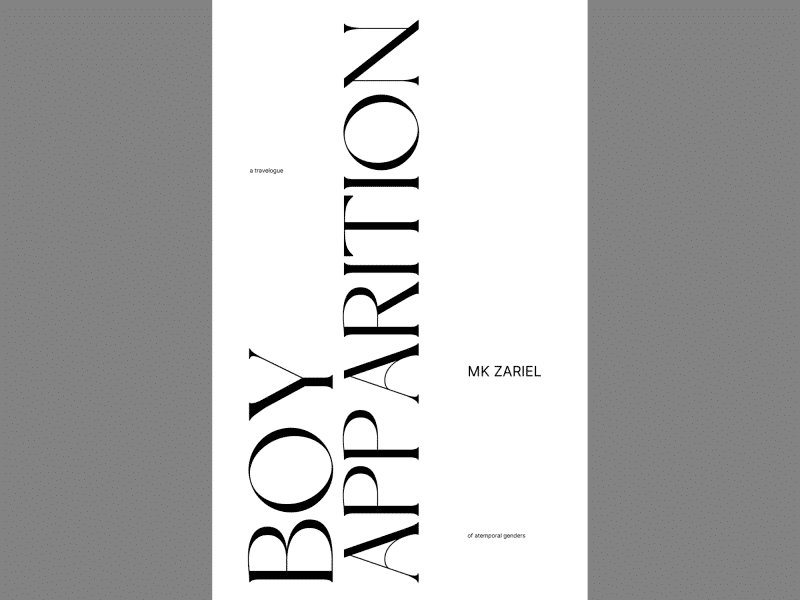
“Boy Apparition” finds queer liberation by challenging normative constructions of masculinity
mk zariel’s chapbook coaxes us to the edges of our imaginations, and is infused with the undercurrent of love that is necessary to keep going.
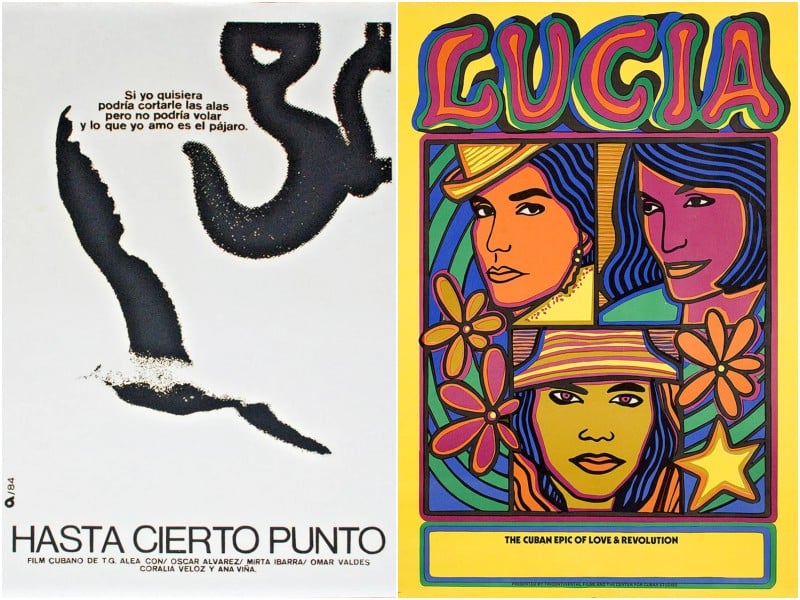
The Cardinal Bar’s Cuban film series invites local support for Madison sister city
Cine Cubano bridges interest in Cuban cinema with the cultural exchange and aid mission of the Madison-Camagüey Sister City Association.
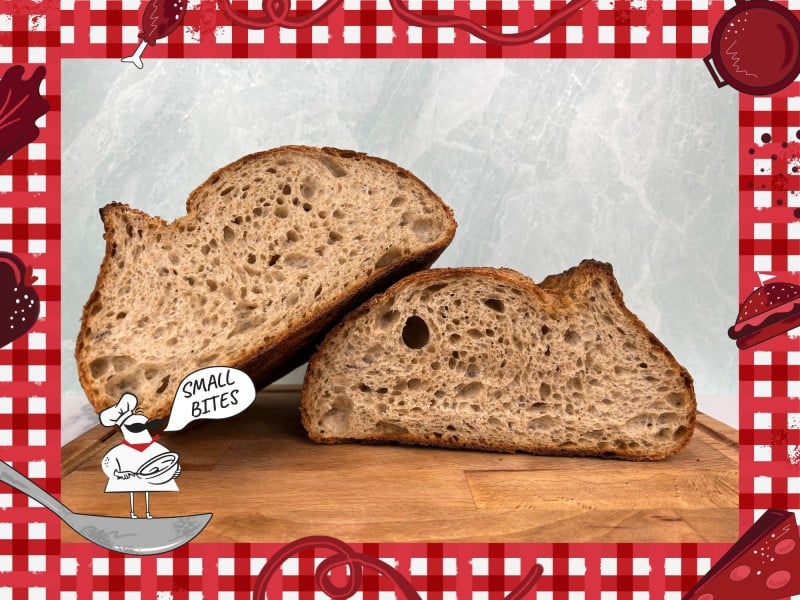
Small Bites: How I make bread
Meditating on the process, flour, flavor, time, and place.