
Pleasure Practices with Sami Schalk: The pleasure of endings
Celebrating what has passed, and looking forward to the future.
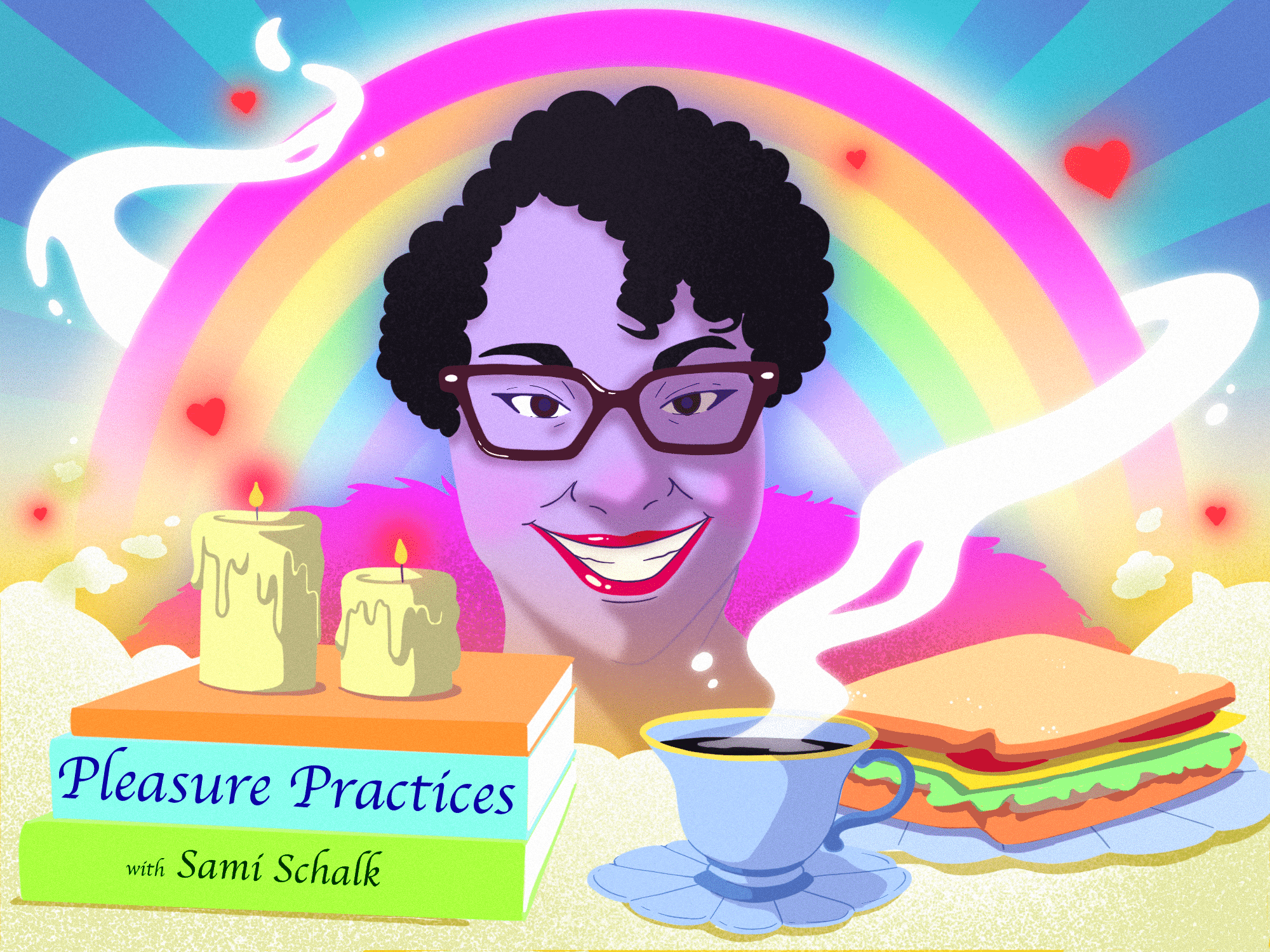
Celebrating what has passed, and looking forward to the future.

This is our newsletter-first column, Microtones. It runs on the site on Fridays, but you can get it in your inbox on Thursdays by signing up for our email newsletter.
Happy June, dear readers. June is my favorite month because it’s a triple threat: my birthday month, Pride month, and the start of summer (my favorite season). I know I missed you all last month and I wish I had been able to write something, but frankly, there wasn’t a lot of pleasure for me in May. Instead, I was experiencing a lot of trauma, harassment, and harm caused by the police, my employer, and right-wing conservative groups. The pleasure I experienced last month was contained to the private realm of healing, receiving care, and resting deeply—occasionally from the comfort of my friends’ homes I escaped to in order to avoid being in Madison. It was not pleasure I could easily write about in the moment.
But I am back this month to say goodbye. This will be my last “Pleasure Practices” column for Tone Madison. I had discussed ending the column earlier this year to make some space for my new book projects during my upcoming sabbatical, but my recent experience with police violence has accelerated my timeline for wrapping up this series.
I began “Pleasure Practices” at the end of 2020. The column became my way to both practice and share pleasure activism with the world as I explored—both personally and professionally through research—what this concept could do for movement and liberation work. “Pleasure Practices” became my self-imposed life homework, to intentionally think about and engage in pleasure in ways that were simple, often cheap/free, and accessible to a wide range of folks. I hope it will remain an enjoyable resource for folks to return to as needed and has inspired at least some of you to seek out and protect pleasure for yourself and others as a part of your liberation practice.
Writing this column has certainly made me walk the walk, so to speak, as a pleasure activist and as a person living with depression who’s continually re-evaluating how to value and center pleasure in healthy, ethical, transformative ways. For that I am deeply grateful. But for this month, this final “Pleasure Practices with Sami Schalk,” I want to talk about the pleasure of endings, of letting go.
When good things end, often our response is a sort of mourning or lamenting, wishing they could continue forever, unchanged. But as the beloved, brilliant and prescient Octavia E. Butler wrote in her 1993 novel Parable Of The Sower, “The only lasting truth is change.” I was never the person crying at graduation because I was going to miss high school or college. Rather, I was celebrating completing those phases of my life and excitedly looking forward to my future.
When I performed in a live recording of the audio series In Love And Struggle in New York City last December, after the final performance, despite wishing we could do more, I tried to focus on taking in the gift of such an incredible, rare experience. If we can think of endings—even ones we don’t choose for ourselves—as openings, opportunities, new paths for new directions, then perhaps we can embrace the pleasure of those possibilities, allowing ourselves to have robust hope in imagining what is to come. The thing about pleasure and joy is that they do not exist outside of ourselves. They are internal, renewable resources that we can learn to access even in the midst of sadness, pain, trauma, and loss, to remind ourselves of our aliveness and our capacity to feel good, even in the smallest ways.
So, as I end “Pleasure Practices,” I hope you remember that your pleasure matters, and remember that your commitment to practicing pleasure can and must continue beyond the little suggestions of this column to inform all that you do. When you model this in the world, it inspires others to do the same. A world where we actually value, encourage, and protect pleasure (our own and others’) is ultimately a world free of police, free of genocide, free of war, free of violence in all forms. Pleasure activism is not the solution to the problems of our world, but it is an ethos, a politic, and a practice that can inform our values and approaches to ending the many oppressions and harms that we must collectively fight. I hope the archive of this column will remain an enjoyable resource for folks to return to as needed and that reading it has inspired you to seek out and protect pleasure for yourself and others as a part of your liberation practice.
Thank you to all the badass bitches who took the time to read this column for over three years, more than 40 pieces in total. Thank you to Scott, Christina, and everyone at Tone Madison who has worked on editing these pieces. It’s been a pleasure. 💜
We can publish more
“only on Tone Madison” stories —
but only with your support.
Author

Related Articles
From the archives: It’s been a pleasure
A tribute Dr. Sami Schalk’s exploration of pleasure as activism.
Pleasure Practices with Sami Schalk: Alone time
Making time to just be.
Pleasure Practices with Sami Schalk: Pleasure in the wake of increasing global crises
Leaning into simple pleasures to feel more alive.