
Leaning into simple pleasures to feel more alive.
Welcome to March, readers. While, typically, this is when I complain about how Wisconsin winter lasts too long, climate change has given us frighteningly early spring temperatures. I had deeply mixed emotions as I sat outside in 70-degree weather last month, knowing temperatures were going to drop below freezing that night. I admit, in this time of intense climate crisis, genocide, and war in Palestine, Congo, Sudan, and elsewhere…it has been hard to lean into pleasure without guilt, and without feeling like everything I do is complicit in the suffering of others, human and non-human. While pleasure activism recognizes this tension and includes calls for those of us with class, race, gender, sexuality, ability, and nationality/citizenship privilege to work to ensure and protect the pleasure of marginalized and oppressed people…what that looks like in practice can be hard to envision.
I certainly don’t have all the answers. On Twitter, not long ago, a Tone Madison reader referred to my piece on making gifts—specifically my $10 clay earring kit from Target—as “oblivious,” stating that, in a time when corporate profits are rising, I was encouraging people to waste money on things that would just end up in the trash. I took umbrage with what felt like an ungenerous, cynical reading of my work, especially given I listed local and small businesses to support and wear the earrings I made regularly.
Nonetheless, it is true that our pleasure practices exist within systems of privilege and oppression, sometimes simultaneously complicit and resistant. I think my issue with this kind of interpretation of this Pleasure Practices series (and of pleasure activism more generally) is that such critiques feel like obvious truisms that aren’t productive in terms of offering alternatives. They rely on negative effects to function, to shut/tear down more than creating alternatives and building anew. And frankly, in a world filled with violence—in a world where, as a fat Black queer disabled woman, I am regularly subjected to harassment for existing, let alone for making intimate aspects of my life public on social media and in my writing—I don’t have much patience for this kind of approach that seems to take anger at systems out on convenient proxies.
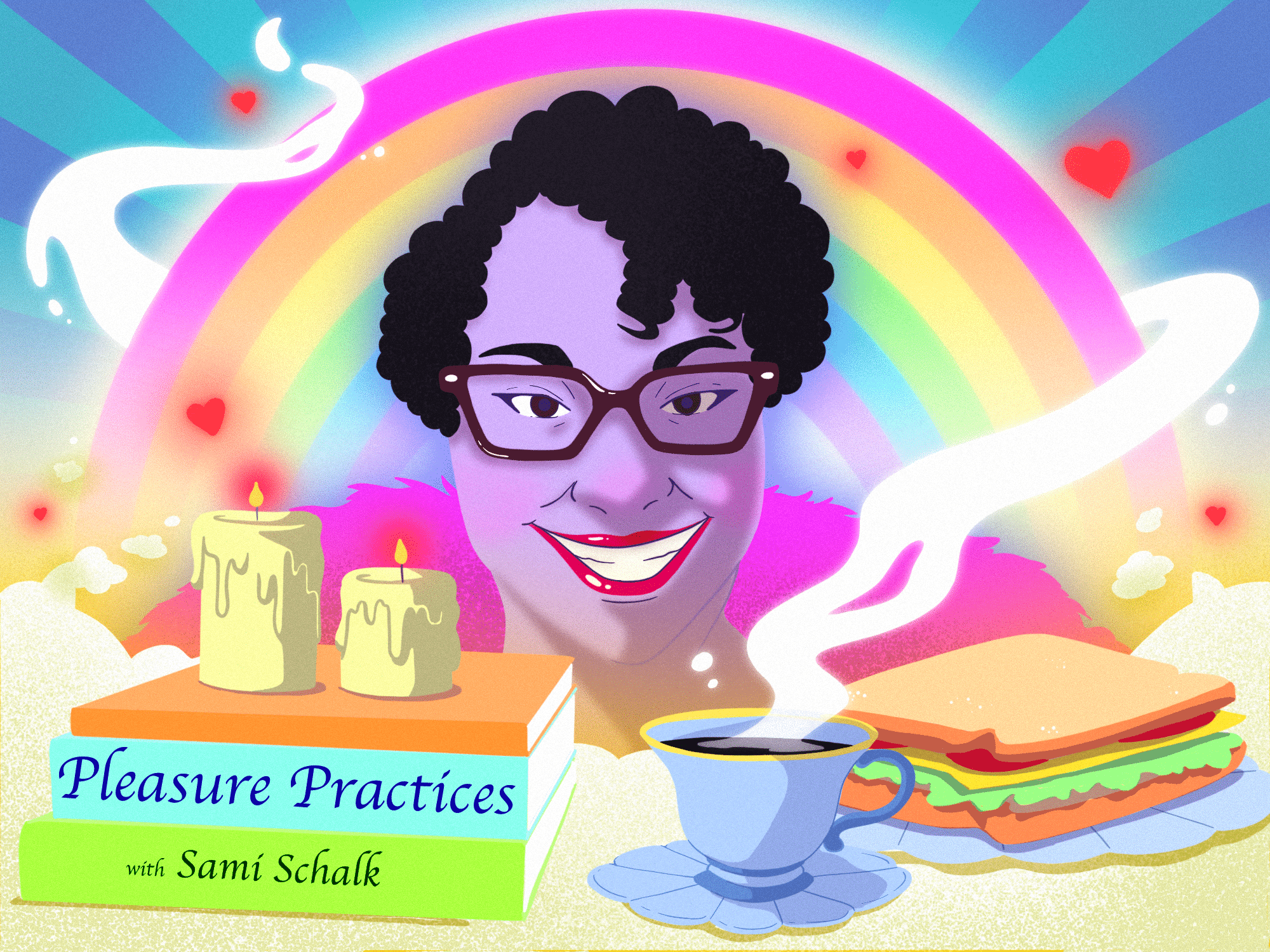
I have been sitting for a while with where to take “Pleasure Practices with Sami Schalk.” This month marks the 40th column in this series. I am still a pleasure activist who believes that pleasure is a powerful, political necessity for liberation. I am still a person who loves to write and share ways to make space for pleasure and joy in our lives, especially those of us who live at the intersection of multiple oppressions. I am also a person experiencing deep sadness and rage for the people of Palestine, Congo, and Sudan as well as for Nex Benedict and my trans loved ones. Learning to find pleasure (which, for me, is the root of my aliveness and a source of hope that fuels my ability to carry on) is a lifelong task that in some ways gets easier and, in other ways, does not. If, as I have repeatedly emphasized in this column, pleasure is the experience of deep satisfaction, where do we find satisfaction in the wake of global crisis and upheaval? How do we carry on?
One way might be to go back to basics; return to simple pleasures: a long hug with a friend, re-reading our favorite book, moments in the sunshine, the new signs of spring plant life outside, sitting beside the water, sharing a meal with loved ones, taking naps…
This month, I encourage you to go back to a pleasure practice that you have previously enjoyed, but haven’t engaged in a while. I encourage you to experience pleasure in a way that renews you, that doesn’t refuse the hard feelings, but lets them in alongside the joy.
Let your pleasure remind you what it feels like to be not just alive, but to be in touch with your aliveness. Then, let that aliveness fuel you to fight not only for the safety, freedom, and pleasure of you and yours, but for the safety, freedom, and pleasure of those you may never know, never see. I believe that pleasure expands our capacity to feel, including our capacity for compassion and understanding. That might make me oblivious to some, but it is the only way I know how I keep on fighting alongside each and every one of you badass bitches. Until next time. 💜
Editor’s note: This story has been updated to correct a reference to a reader comment. The initial version of the story stated that the comment used the word “delusional.” The correct word was “oblivious.” A reference to the potentially ableist implications of the term “delusional” has accordingly been removed.