
One movie meditation after another: toiling through 2025
Nine writers processed these trying times through cinema, at the theaters and at home.
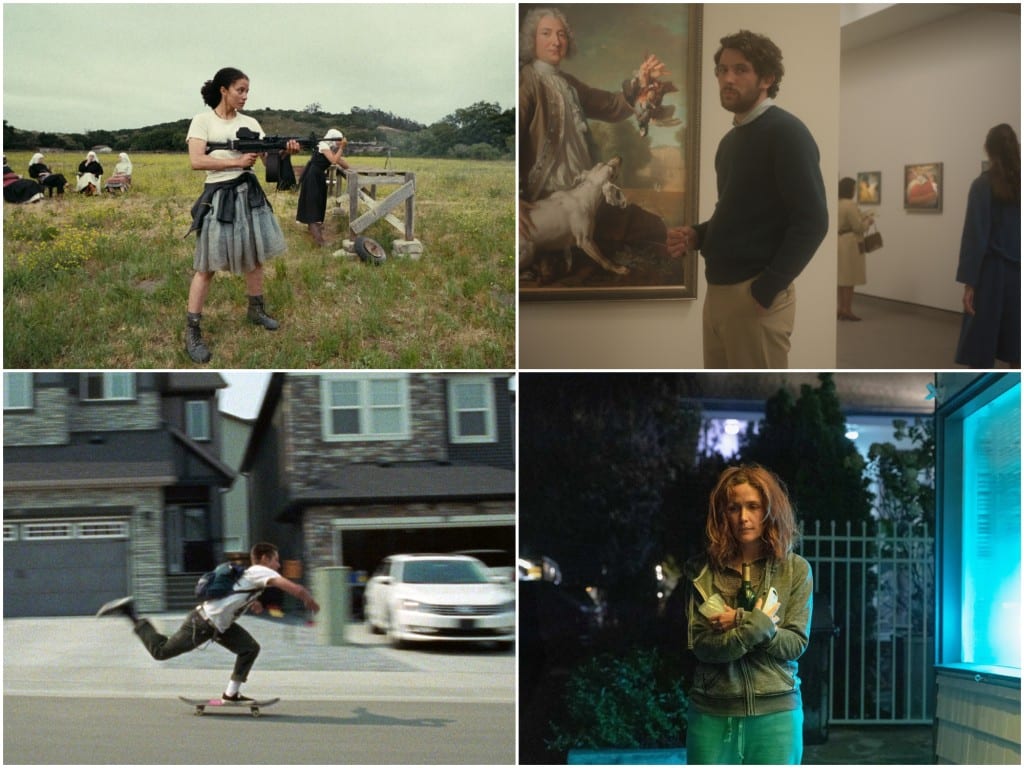
Life often felt overwhelming under the torrent of nauseating national news in 2025, and that has only turned for the worse in recent weeks. Tone Madison‘s film team acknowledges the valuable reprieve of the cinematic medium, and many of those same contributors would also argue the old truism that the movies offer a means to process this point in history, in the way that art can shine a light on a path forward.
Everyone who pitched in to this year-end reflection—Lewis Peterson, Edwanike Harbour, Sara Batkie, Jesse Raub, Lance Li, David Boffa, Jason Fuhrman, and Hanna Kohn—deserves my thanks for prompting me to think more about the role of film and how we all engage with it a quarter of the way through the new century. Their meditations stand apart from the predictably basic list-making that has populated social-media feeds and other publications in December through early January. Of course it’s fun and rewarding to compile favorites, but we’re substantively reveling in the untidy, thrilling, and expansive stories of moviegoing and movie-discovery experiences.
Below, you’ll read about what nine of us have been mulling over these past 12 months, from the value of physical media, themes that emerged in our viewing habits, new Madison screening events, how the theatrical experience could further transform by the end of the decade, and calls for a dedicated art-house venue in the downtown area that isn’t the UW Cinematheque (which, of course, receives a surfeit of appreciation).
Cinema might be on unstable ground, but if the 2025 year brought any encouraging news at home, it’s that Wisconsin finally established a film office and production tax-incentives for filmmakers, which took effect on January 1 of this year. Previously, Wisconsin was one of only four states without an office and one of 13 without those incentives. We hope to check in with a few first-time and seasoned filmmakers alike who are working through productions in Wisconsin in 2026. Until then, please enjoy this hearty compendium. —Grant Phipps, Film Editor
Lewis Peterson
By far number-one movie of the year for me:
Resurrection (dir. Bi Gan)
The remainder of my top 10 in alphabetical order (including 2024 movies that weren’t available locally until 2025):
- Dangerous Animals (dir. Sean Byrne)
- Familiar Touch (dir. Sarah Friedland)
- If I Had Legs I’d Kick You (dir. Mary Bronstein)
- The Maiden (dir. Graham Foy)
- One Of Them Days (dir. Lawrence Lamont)
- Paying For It (dir. Sook-Yin Lee)
- Rats! (dirs. Carl Fry and Maxwell Nalevansky)
- The Room Next Door (dir. Pedro Almodavar)
- Sentimental Value (dir. Joachim Trier)
Older movies I watched in 2025 that made me feel insane and therefore alive (in alphabetical order):
- Butcher, Baker, Nightmare Maker (1981, dir. William Asher)
- The Ceremony (1971, dir. Nagisa Oshima)
- Crime Hunter: Bullets Of Rage (1989, dir. Toshimichi Okawa)
- The Devil At Your Heels (1981, dir. Robert Fortier)
- Hider In The House (re-watch but just came out on Blu-ray) (1989, dir. Matthew Patrick)
- I Married A Strange Person! (1997, dir. Bill Plympton)
- Lustmord (1987, dir. Hisayasu Sato)
- Proof Of The Man (really only the fashion show during the opening credits but the rest of the movie is still good even if it fits together a little too neatly) (1977, dir. Junya Sato)
- Rubber’s Lover (1996, dir. Shozin Fukui)
- School In The Crosshairs (re-watch but just came out on Blu-ray, left me with the feeling that something good might happen) (1981, dir. Nobuhiko Obayashi)
My conclusion from this second list is that I react most strongly to Japanese pervert movies. I guess I knew that about myself but hadn’t been confronted with that fact in quite this way before.
All of the aforementioned movies were watched either in theaters or on DVD / Blu-ray. I only streamed a handful of things—The Chair Company, season two of The Rehearsal, Grand Tour, The Girl With The Needle, and Best Wishes To All. Anything I streamed I either watched with my roommate or bought with credits accrued from Fandango from buying theatrical tickets, and I always felt vindicated in shunning streaming because the movies would buffer a lot. Maybe Fandango At Home is just not a particularly good platform, I don’t know, but I was mostly just using it because it didn’t cost me anything.
This year, Four Star celebrated its 40th anniversary. We hosted a few parties for that, got to reconnect with some former staff members and owners, and got a decent amount of press. We also started doing screenings at the Bartell Theatre and Lola’s Sidecar Lounge, and even co-presented a screening of Videoheaven at UW Cinematheque.
Our first screening of the year was in June for a double bill of Matt Farley’s Local Legends (2013) and the local premiere of Local Legends: Bloodbath with Farley appearing in person and performing music in between the movies. It was something I had been hoping to do since late 2024. If nothing else, I caused this song to be written. Once we had established contact with the Bartell and determined we could get people to show up, we were invited back to participate in their already-scheduled film programming. I tried to focus on independent films that weren’t likely to come here otherwise, like Joe Meredith’s short films Variant (2020), Variant II (2023), and Ataraxia for Halloween. We also did Looking For Mr. Goodbar (1977) as part of their pre-Christmas programming block, which maybe wasn’t as well attended as I would’ve liked, but those in attendance were attentive to the movie. We also had local actor/writer (and one-time Tone contributor) Dave Durbin share his knowledge and personal connection to the film after the screening.
We were also approached by Lola’s to do some weekday screenings, and quickly settled on “music movies” as the overall theme of those screenings. Thus far, we’ve done Reservoir Dogs (1992), Choose Me (1984), Phantom Of The Paradise (1974), and Morvern Callar (2002). Once word got out that we had been doing screenings around town, we were approached by more venues who are now interested in hosting screenings, so we plan to ramp up our presence in non-traditional theatrical venues in addition to returning to the aforementioned spots in 2026. The first will be at Nottingham Cooperative on Friday, January 23, at 7:30 p.m., with trans indie horror works by Vi Williams and Thomas Hildestad, and Dylan Mars Greenberg.
Overall, the state of the film industry seems dire just as the state of the world seems dire. The forced infiltration of AI bullshit into every aspect of society is getting harder to avoid. It seems like some indie filmmakers are trying to use AI tools to comment on how stupid it all is, like Radu Jude’s Dracula and Fuck My Son. But at the same time, it seems like there are more filmmakers who will just use it as a cost-cutting measure. In particular, seeing clearly AI-generated pictures over the closing credits of Dead Mail instantly evaporated any goodwill I had toward the movie. Seemingly “indie” distributors like Mubi and A24 are taking money from questionable sources. The people with ownership over studios with long and significant histories like Warner Bros. seemingly despise movies. At least we’re finally getting Coyote Vs. Acme in 2026? Current feeling is something like this. Keep going.
Edwanike Harbour
I agree with Lewis wholeheartedly that the state of the film industry is in peril. As of this writing, Netflix has indeed acquired Warner Bros., HBO, and HBO Max. The entire experience of going to a movie theater, selecting my seat, and the mad rush I get when the lights turn down low is what I look forward to on a weekly basis. I fear those experiences might become few and far between in the future. This isn’t to say that I don’t stream movies at home, but this is increasingly the format that people are relying on. For those of you reading this, kindly visit Lewis (and Robert, Alex, Luke, and Asher) at Four Star Video before choosing to stream whenever possible!
Last year was an exceptionally good year for both mainstream and indie releases. My top 10 are as follows:
- Sentimental Value (dir. Joachim Trier)
- Bugonia (dir. Yorgos Lanthimos)
- Eddington (dir. Ari Aster)
- Train Dreams (dir. John N. Smith)
- Marty Supreme (dir. Josh Safdie)
- One Battle After Another (dir. Paul Thomas Anderson)
- Sorry, Baby (dir. Eva Victor)
- Weapons (dir. Zach Cregger)
- The Long Walk (dir. Francis Lawrence)
- Die My Love (dir. Lynne Ramsay)
There were a few Cinematheque screenings that I did not make it to and a few entries I have yet to see, but I suspect No Other Choice, It Was Just An Accident, and/or The Secret Agent would squeeze their way onto my list. While I did enjoy Predator: Badlands, I wouldn’t say it was in my top 10. It was a very fun discount Tuesday at Marcus experience that kept me engaged despite not being a huge fan of the Predator franchise.
One standout comedy for me was For Worse, which screened at the Wisconsin Film Festival. Quite frankly, based on audience reaction alone, it should have been the festival opener. Written, directed, and starring Amy Landecker, it’s an uproariously funny look at a middle-aged woman, Lauren, trying to put her life back together after a divorce and a journey to sobriety. Relatively successful in other aspects of her life, she decides to take a risk and join an acting class led by the ever-reliable Gaby Hoffmann. Lauren meets a man in the class several years her junior but decides to engage in an intimate relationship with him. Not relying on romantic comedy tropes or pitfalls, Landecker manages to flesh out this story with humor and some pathos that makes for one of the more effective comedic entries of last year.
This coming year, I am looking forward to Digger, Obex, The Death Of Robin Hood, and Disclosure Day based on trailers alone. I am sadly not looking forward to the next 28 Years Later entry (what the hell, Danny Boyle?!). After watching one of the best-edited trailers I have seen in years, my expectations were quite elevated for 28 Years Later. But the film fell apart after the opening scene with its middling plot and laughable dialogue. I was in no way expecting a remake of the original, but Boyle’s take got so far away from the original spirit of the franchise, it was almost unwatchable.
I absolutely want to see some indie screenings have longer runs, but I know that is not likely to happen. There were a few times last year when I had to make a judgment call that night whether to see something if I noticed it would probably be leaving the theater the next day. Naturally, these same films were sometimes streaming within the next week, but that is not my preferred way to see them. I am eternally grateful there is still an outlet for film exhibition here and will try to go to the cinema even more this year, if that is humanly possible.
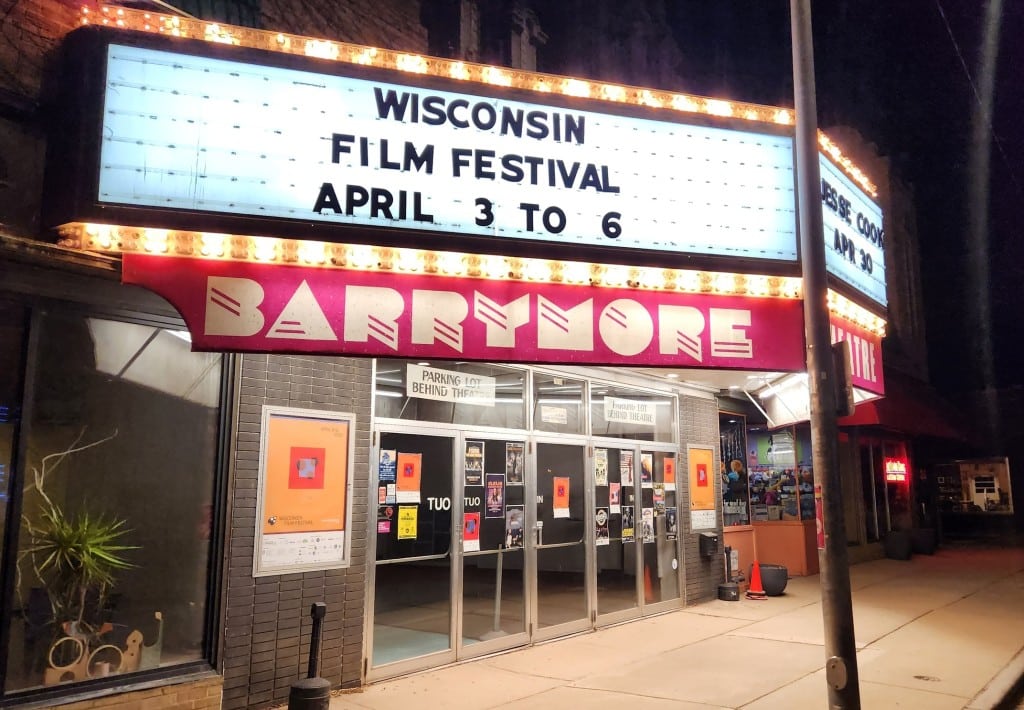
Grant Phipps
During the winter months, inspired by the “Totally Wired” Factory25 set of early Nathan Silver films, I set out to check off a number of English-language microbudget works that I had missed out on since I was a regular at Micro-Wave Cinema Series between 2014 and 2018. Can’t say I got too far—I only viewed those somewhat arbitrarily-tagged films sporadically, not methodically—but I did finally watch Ronald Bronstein’s gritty mumblecore cringe-comedy Frownland (2007) in the months leading up to his wife Mary’s surreal, anxiety-inducing hit with If I Had Legs I’d Kick You; and the skin-crawling aesthetic overlap and artistic marriage has produced some of the more subversive films of this century, even if the pair aren’t aiming to be prolific as directors. (Though, as a co-writer with Josh Safdie, Ronald is.)
This microbudget initiative impelled me early in the year to watch multi-hyphenate Kit Zauhar’s feature debut, Actual People (2021), and two of her early shorts Helicopter (2016) and The Terrestrials (2018)—which feature some incredibly rich writing that I yearned for dearly during the movie calendar year (more on that later).
The headline, though, is my developing commitment to exploring the history of cinema through short films, which spun out from the microbudget goal, and became my highlight of 2025. I watched just shy of 150 shorts (that were new to me). From assisting filmmaker and animator Jamie Griffiths in programming a block / showcase of experimental animated shorts at Mills Folly Microcinema in May, to presenting and premiering Margot Budzyna’s Deuce with Carson Lund’s Eephus at the Bartell Theater in July, my love of cinema was bound up with shorter works. Maybe that shouldn’t be so startling considering my exasperation last year about the general uptick of runtimes for so many feature films. We need good editors! More than ever.
In addition to more personal connections I forged with Griffiths and Budzyna, I took to several of the Heather McAdams films projected on celluloid as part of the Wisconsin Film Festival (notably: Holiday Magic, 1985). And I was thrilled to stumble upon the newly released Zoltán Huszárik shorts on Blu-ray (two of the best I’ve ever seen: Elegia, 1965, and Capriccio, 1969). I also got acquainted with Blake Barit’s experimental work through the years (as I got more acquainted with him personally). Other standouts included narrative and avant-garde work by Zeinabu irene Davis, Hugo Ljungbäck, Bingham Bryant, Kim Gok and Kim Sun, Kurt Kren, Shirley Clarke, Bianca Caderas and Kerstin Zemp, Grace Mitchell, and Britany Gunderson (the latter two based in Wisconsin).
On the whole, if I assess the general year in cinema, it was a bit lackluster. Too many films rang hollow or failed to land; I don’t know if that’s because I attempted to watch a few more “mainstream” premieres or if it was simply an overarching phenomenon. But I saw so many 💣(not to steal from Leonard Maltin here); and I can’t think of a year in recent memory when I rated multiple films with one-and-a-half stars, and just as many at one star. And then there’s the dreadful Happy Gilmore 2.
Perhaps the emergent theme for features is the failed attempts at reviving and rebranding the romantic comedy for the modern era. My god, did both men and women utterly collapse under the genre scaffolding, with grossly heteronormative and inert dramatic arcs that either came across as sensationalist, conservative propaganda masquerading as “progressive” coupling (Chad Hartigan’s The Threesome) or unbearably noncommittal “satire” with absent subtext (Celine Song’s Materialists). I have not seen Splitsville or Oh, Hi!, which lean more into the subgenres of screwball and black comedy, respectively. So maybe I just picked the wrong pair. But I’m so weary and wary at this point, and I feel like we aren’t actually teaching younger screenwriters how to establish lively, functional dialogue attuned to filmic rhythms (it’s just… perfunctorily there) and craft characters who are believable or at least entertaining in their quirky contradictions.
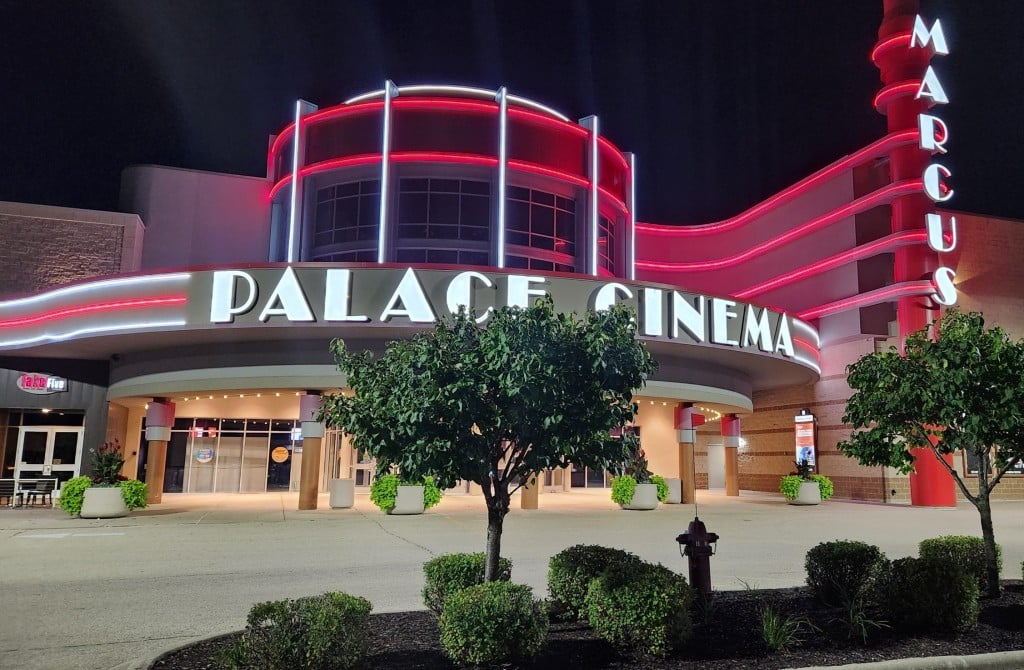
On a brighter note, I was pleased to engage with alternative programming that popped up around Madison in 2025. I made a small effort to contribute to that, with some support from the team at the Bartell Theatre and Kyle Westphal at Music Box Films. And I hope it’ll be possible to bring something else to the Bartell in 2026 that didn’t work out this past November. As Lewis mentioned, Four Star also found an intermittent home for various screenings there in the fall. Audiences in the area (and, for my first time, in Chicago at AMC NewCity and the Siskel Center) also encouraged me. While I may bemoan the quality of some of the things I watched… basically everywhere, I can only think of the anniversary run of Shin Gojira (2016) at Marcus Palace when audience behavior became distressingly distracting.
Maybe some of that can be attributed to sparser attendance and dwindling audience numbers, at least outside of a few select events that I ignored. This doesn’t bode well for the late-year developments about the attempted acquisition of Warner Bros. by Netflix (who have curtailed or eliminated theatrical windows for many of their productions) and then the Oscars moving to YouTube in a few short years. Seems like our media-monopoly overlords want everything to become thought of as “content” so they can falsely reclaim the concept of monoculture. A depressing realization, if the impending AI “slopalypse” doesn’t already scare me. In the past year, music critic Anthony Fantano has kept up with this as it relates to the music industry (and Spotify); now I just need to find a resource for AI’s measurable and impending impact on Hollywood.
If I have any parting words, it’s that I think we all need to appreciate the late Jeff Baena’s filmography more; after his tragic passing a year ago in January, I couldn’t believe how much Joshy (2016) spoke to me. Here’s a film that, on the surface, has all the trappings of a stereotypical bromance or peak Apatow-era comedy, but it’s really one of the most sobering meditations on grief that I’ve seen from an American film in the past decade. I’ll cherish that discovery forever. It missed Madison, too, 10 years ago, and it’s overdue for a public screening.
Top five shorts and features of 2025:
- Deuce (dir. Margot Budzyna)
- Gemini (dir. Jamie Griffiths)
- Your Mailbox Is Full (dir. Allie Viti)
- The Meaningless Daydreams Of Augie & Celeste (dir. Pernell Marsden)
- A Brighter Summer Day For The Lady Avengers (dir. Birdy Wei-Ting Hung)
- Familiar Touch (dir. Sarah Friedland)
- The Maiden (dir. Graham Foy)
- One Battle After Another (dir. Paul Thomas Anderson)
- Happyend (dir. Neo Sora)
- The Mastermind (dir. Kelly Reichardt)
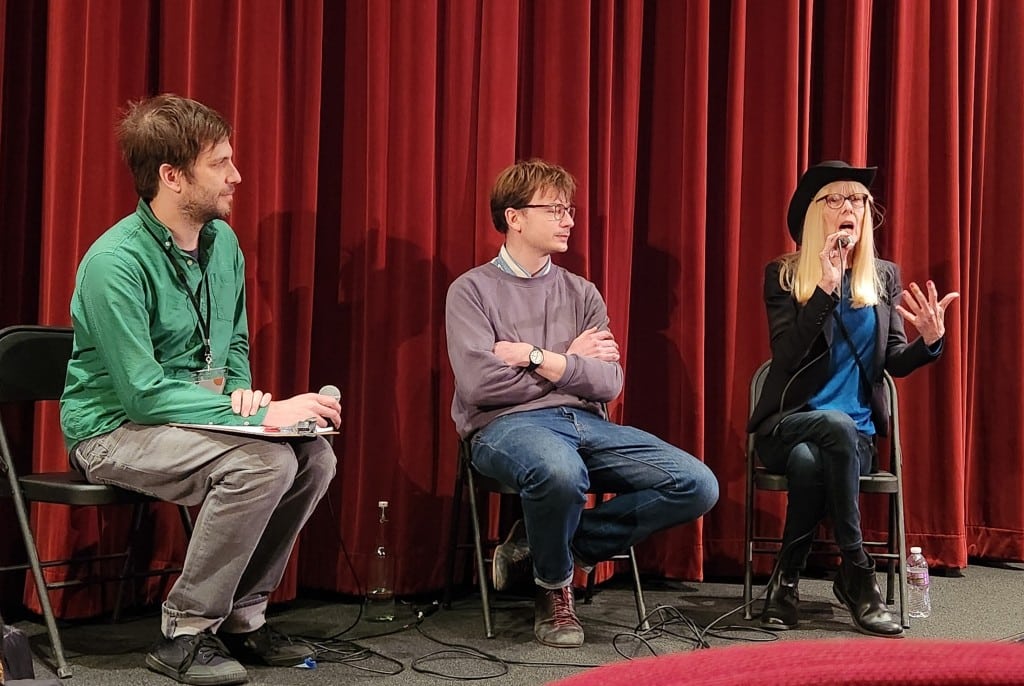
Sara Batkie
I’m a fairly stringent Letterboxd logger, so I can say with certainty that I saw 304 films over the course of last year. That’s up from 2024, when I saw 239. This was obviously a mix of theatrical, streaming or physical rentals, and old films and new. There were several re-watches but the majority were new viewings. I’m not really sure what this data says about me and my habits, except that dating someone who also watches a lot of movies has exponentially increased my own intake.
I echo the pessimism, if not defeatism, that I’m seeing in a lot of my fellow contributors here, at least as regards the precarity of theater-going in the future. I just saw a headline where even a megastar like Leo DiCaprio is fretting about movie theaters possibly going the way of jazz clubs—niche environments for die-hards (if it’s any consolation, Leo, seeing One Battle in IMAX was the highlight of my cinema-going year.) I hope that’s not the case since the sort of films I generally like to watch would probably end up being the studio casualties. But based on the handful of jazz clubs I’ve been to, they’re also venues that invite conversation and community, things that assigned seats at the multiplex will always be lacking. As long as the screens aren’t any smaller, I’m open to it, is what I’m saying.
As far as overarching themes in the films of 2025, anxiety over the current political state was omnipresent, even in period pieces like The Secret Agent or The Mastermind. But even films that weren’t overtly about or engaging with politics had threads of anxiety running through them. If I Had Legs I’d Kick You, one of my favorites of last year, is a bracing immersion into modern motherhood that makes child-rearing seem like both a miracle and a curse. Comedies like Splitsville (which, fwiw Grant, I found to be much more cinematic and complex than The Threesome or Materialists) and Friendship grappled with relationship or relationship-adjacent concepts like polyamory and the “male loneliness epidemic” in ways that made my stomach curdle as much as they made me laugh out loud. On the gentler side, films like Eephus and Familiar Touch managed to find the happy medium between melancholy and grace while exploring fears of aging and becoming obsolete, anxiety-inducing topics for us all. These were all films I saw theatrically, whether at AMC, UW Cinematheque, or as part of the Wisconsin Film Festival, and I was grateful to watch them on big screens with enthusiastic crowds.
In all, I’d say I had a pretty good film-watching year. I was introduced to several slashers I probably wouldn’t have seen otherwise (the original 1974 Black Christmas: surprisingly great!) I got to see The Apartment (1960), my favorite film of all time, on the big screen (thanks to Vidiots in Los Angeles) I continue to be indebted to the Cinematheque for its screenings of hard-to-find stuff like Dream Of Light and Murdering The Devil, and to Four Star Video for having basically anything you could want. I’m excited to continue patronizing both in 2026, and to also try and get my Criterion Channel watchlist down to a reasonable number (fingers crossed it will be under 100 by this time in 2027).
Jesse Raub
I have to admit: I’m terrible at seeing new releases while they’re still relevant, but it was truly something special to catch One Battle After Another in IMAX. Or at least, the movie itself was something to revel in. The theater-going experience, well, that’s another story. Madison went another year without a standard, public-facing movie theater anywhere near its city center. And while I was raised on driving out to gigantic suburban multiplexes for half-full viewings of whatever was on, my time in Chicago spoiled me. Whether it was crying my eyes out at Lady Bird (2017) at a rowdyish Logan Theater screening (complete with old-school sloped seating) or crying my eyes out at Little Women (2019) at the magnificent Music Box Theater (wait a minute… sensing a theme here), there’s just something electric about a room full of people sharing the same experience. Comedies get bigger laughs, drama gets bigger gasps, and horror elicits louder shrieks and shouts. I would have loved to feel more kinetic energy during the One Battle After Another showing, but alas, not even the ocean waves of asphalt during the final car chase could bring energy to the mostly empty theater.
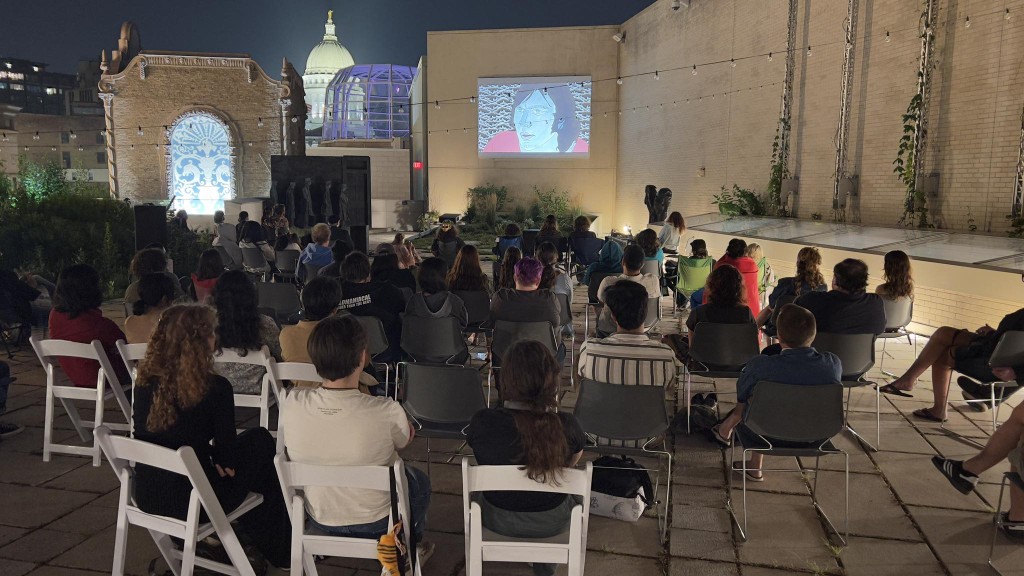
That’s why I loved catching The Secret Agent during a special preview at the UW Cinemateque in December. Not only was the humble screening room full, but it was also packed. Tone Madison co-founder Scott Gordon and I grabbed a nearby slice of pizza before walking over (thank you, urban density), and by 6:40 p.m., they had locked the doors—Scott and I only just squeaked in on some folding chairs near the back. The screening was incredible—to start, director Kleber Mendonça Filho recorded a special UW-only intro to the film, letting the audience know that he was inspired to make this movie from his time perusing Brazil’s historical archives and records while in Paris during Bolsonaro’s presidency. But he also mentioned that the screening was organized on invitation from Kathryn Bishop Sanchez, professor of Spanish & Portuguese at UW–Madison. And, as the movie unfolded, small cultural references (a specific food on the table, music being played on the radio, certain streets) would elicit a small response from a row just off to my right.
It was a magical experience to see people react fondly to memories of Brazil during a movie that was asking audiences to remember Brazil in a fond light. The Secret Agent is a movie about memory, diversity, and the care and understanding humans should share with each other. Seeing it in a crowded theater with an audience responding immediately and notably to that message was truly what cinema-going is all about.
Lance Li
Best of 2025, in preferential order:
- Splitsville (dir. Michael Angelo Covino): my biggest regret of the year is not having done this Lubitschian screwball featherweight item the justice it needs and deserves.
- Lurker (dir. Alex Russell)
- One Battle After Another (dir. Paul Thomas Anderson)
- Blue Moon (dir. Richard Linklater)
- Happyend (dir. Neo Sora)
- Caught Stealing (dir. Darren Aronofsky)
- Dreams (dir. Dag Johan Haugerud)
- Drunken Noodles (dir. Lucio Castro)—criminally underrated
- Is This Thing On? (dir. Bradley Cooper)
- Trifole (dir. Gabriele Fabbro)
Honorable mentions:
- Pink Floyd: Live at Pompeii (1972, dir. Adrian Maben) [remaster & IMAX re-release]
- Roofman (dir. Derek Cianfrance)
- Souleymane’s Story (dir. Boris Lojkine)
- The Fire Inside (dir. Rachel Morrison)
- Marty Supreme (dir. Josh Safdie) and If I Had Legs I’d Kick You (dir. Mary Bronstein)—a tie between the Bronsteins (pun intended)
My single favorite moviegoing experience this year was Footlight Parade (1933, dirs. Bubsy Berkeley and Lloyd Bacon), with a witty, tough apple pie Joan Blondell and a sharp and bullish young Jimmy Cagney, whom I was lucky enough to catch at New York’s Film Forum, and to share my rapture with a full house (though probably half were thrice my age). That would be followed by Shanghai Blues (1984), Peking Opera Blues (1986), Les Enfants Terribles (1950), Sans Soleil (1983), One Hour with You (1932), The Storm Within (1948), Pat Garrett And Billy The Kid (1973), An Actor’s Revenge (1963), Phantom Of The Paradise, The Furies (1950), The Girl Can’t Help It (1956). Among the experimentals: Levitt-Agee-Loeb’s In The Street from 1948 (though I much prefer the silent, newsreel-speed Library of America version to the slower piano print), Bruce Baillie’s Quick Billy (1971), Kenneth Anger’s Scorpio Rising (1963) and Eaux d’Artifice (1953), Ken Jacobs’ (RIP) Tom, Tom, The Piper’s Son from 1969 (hell to sit through, but what a piece of work). All these were, I’m afraid to say, in New York (over my semester breaks), except the Lubitsch and the Peckinpah, thanks to UW Cinematheque and the Wisconsin Film Festival.
I’m a little ashamed for having endorsed so many “trivial,” “frivolous” titles this year, having usually more room for artsier stuff in the past (my top film of 2024 was Do Not Expect Too Much From The End Of The World, and in 2023, Geographies Of Solitude), but 2025’s bigwigs were also much drearier than in the past. Sinners was a dog, though watchable; Sentimental Value was too manicured; The Testament Of Ann Lee barely edges out Bugonia and Eddington for the year’s prize of most ear-splitting kahuna; It Was Just An Accident and The Mastermind were genuine disappointments coming from Panahi and Reichardt; garbled Mickey 17 and No Other Choice got too busy making silly faces; The Phoenician Scheme doesn’t trouble itself with anything more than “ideas” and make-up; pushy Marty Supreme drums up everything it gets its hands on; Die My Love has Jennifer Lawrence dance herself to a padded cell—a lady on fire, but for real this time; Sorry, Baby makes you sorrier for seeing it than having to go to church; unlike all the above, the miserable Friendship and Urchin have no redeeming virtue; having been forewarned, I also spared myself the agonies of having to suffer through Hamnet and Train Dreams. Among the ones I feel sorry to have missed: The Ballad Of Wallis Island, Eephus, Anemone, By The Stream, and Invention (dir. Courtney Stephens).
Aside from occasionally revisiting a favorite stored on my hard drive, I saw everything in the theaters, though if I really loved something I’ll get it downloaded as soon as I can, and play it over and over and over. I can be obsessive. (I don’t have a streaming service, and I wouldn’t care to; I do have a few discs lying around, but sadly I don’t have the players so they’re merely decorations.) To go with that, I’ve read (and logged on Letterboxd) a ton of James Agee and Manny Farber in my own time, and they’re a pleasure to get through, perhaps more pleasure than most movies I’ve sat through this year.
To go off of what Lewis has said, “indie” distributors like Mubi and A24 have carved out a considerable portion of the market for themselves over the past couple years. In this business, when you’re in the money—counterintuitive as it may seem—you don’t take up more risks. On the contrary, you shun them. Among the major releases that A24 put an effort in publicizing—and their budgets are getting bigger, their looks getting fancier—they’re all to varying degrees of “flashy,” self-consciously virtuosic, and filled with “eat the rich” and she-tragedy platitudes.
Hollywood also used to profit off selling teen angst in the ’50s, counterculture and revolution in the ’60s, and defeatism and cynicism in the ’70s, only now the films barely even try to make a dent in the discourse. I don’t want this to turn into a rant on where I think film is heading or what today’s filmmakers are getting wrong—one issue is a film-school overemphasis on technique over texture and dramaturgy (which is also why writers and actors are increasingly getting sidelined in conversations and, inevitably, undervalued). Another is the shift in the mass culture landscape towards anime, streaming shows, and video games (which, not unlike Broadway after the death of vaudeville, leaves film increasingly to a relatively specialized and art-conscious audience), and it puts film in a sort of conundrum: in the past, art films and popular “entertainments” have a codependent relationship, where they informed each other how they looked and sounded and what attitudes they carried and so forth; now, what will become of film art with the utter death of popular films? Of that I have only too much to say, with too many qualifications to add, and too little spirit in me to sound off in any satisfying way.
David Boffa
My favorites of 2025, in no particular order:
- One Battle After Another (dir. Paul Thomas Anderson)
- Resurrection (dir. Bi Gan)
- Caught By The Tides (dir. Jia Zhangke)
- Weapons (dir. Zach Cregger)
- Bugonia (dir. Yorgos Lanthimos)
- The Mastermind (dir. Kelly Reichardt)
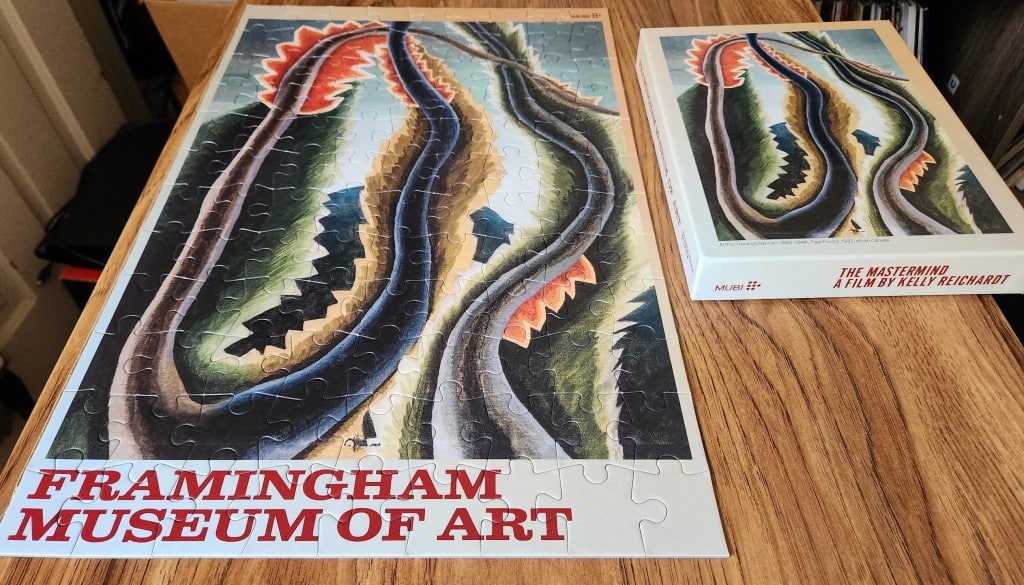
There is some really great stuff happening in the local film scene, but unfortunately 2025 also really drove home what we are lacking in Madison—specifically, a dedicated art house movie theater showing smaller films and international releases. I had really hoped to see Kelly Reichardt’s The Mastermind in theaters, but its screening in this area was in the blink-and-you-miss-it window. Ultimately, I ended up catching it on streaming when Mubi premiered it in mid-December.
The same happened with Bi Gan’s Resurrection, which is playing in theaters across the country now—but not in Madison. It will screen at UW Cinematheque in early February, which is wonderful (and they are an amazing resource), but a one-off screening is not the same as having several showtimes, across multiple days, to choose from. Before I was able to secure a screener for Resurrection in advance of the Cinematheque showing (for review purposes), I was trying to decide between driving to Chicago or Minneapolis to catch it in a theater. Those are lovely cities—and Minneapolis, in particular, can use all our support at the moment—but why can’t we get this in Madison? There’s something incongruous to me about living in a city of nearly 300,000 people and occasionally feeling like the cinema landscape is more akin to living somewhere a tenth the size.
All this is to say that 2025, more than any previous year, I really felt the loss of Sundance Cinemas (which became AMC) at Hilldale. And sadly I don’t see a world where we ever get something like that back, given the state of the theatrical world at the moment (though I’d love to be wrong).
On a more positive note, there were some really special local (and yes, one-time) screenings. Arts + Literature Laboratory had a showing of the documentary A Photographic Memory (dir. Rachel Elizabeth Seed) featuring a Q&A with the director. The Bur Oak hosted a screening of 1982’s Koyaanisqatsi (dir. Godfrey Reggio) featuring a live soundtrack by the band Disaster Passport that was an absolute blast.
I also kept up with a few showings at my group’s bad movie night. This is an occasional gathering at a friend’s house to watch movies that lack mainstream critical defenders, to put it generously (previous gems included 1990’s Troll 2 and 2012’s Fateful Findings by the incomparable Neil Breen). This year we enjoyed gems like 1984’s The Ice Pirates (dir. Stewart Raffill), a film so unhinged it defies easy explanation or classification, and 1993’s Surf Ninjas (dir. Neal Israel), which contains far less surfing than you might expect.
And I did have some fun theatrical experiences, though all were well outside the city proper at the AMC in Fitchburg. I won’t list all of them (see the above list for some of my favorites), but I will note that Weapons (dir. Zach Cregger), while maybe not my absolute favorite film of the year, was an absolutely delightful surprise that far exceeded my expectations. It was also a rare instance of a mystery film that—for me—truly stuck the landing. Plenty of filmmakers can build suspense and confusion; very, very few can deliver an ending with such satisfaction as happens in Weapons.
So, maybe not the best year of movies, but with some highs that are just about as good as it gets in a theater.
Jason Fuhrman
My first watch of 2025 was Se7en (1995) in IMAX. Seeing David Fincher’s relentlessly grim, cutting-edge neo-noir thriller on a gigantic screen may have been a somewhat intense way to kick off the year. But I had only seen the movie once 30 years ago and I didn’t even remember most of it. I couldn’t pass up the opportunity and in retrospect, that experience really set the tone for the rest of the year—as much of the movie’s imagery left me literally open-mouthed in shock.
While the state of both the world and the film industry felt increasingly dire in 2025, I continued to seek refuge from the horrors in the warm embrace of the cinema. For me, moviegoing is not so much an escape from reality as a way of processing and engaging with it, while connecting with other cinephiles and submitting to an artist’s vision in the darkness and silence of a sacred space. Going to see movies regularly on the big screen at an appointed time and place makes me feel more human and enables me to look at the world from perspectives other than my own (which seemed more vital than ever in 2025).
The myriad opportunities to see eclectic repertory selections, new international features, and challenging indie fare at the Cinematheque were undoubtedly good for my soul this past year. As usual, I attended as many screenings at 4070 Vilas Hall and the Chazen Museum of Art as I possibly could (approximately 76 out of 105). I had so many memorable experiences that I don’t even know where to begin. For one thing, I finally saw several classics that I had been patiently waiting for years to catch on the big screen—e.g., The Wages of Fear (1953), The Wild Bunch (1966), The Battle Of Algiers (1966), The Umbrellas Of Cherbourg (1964), The Passion Of Joan Of Arc (1928), Pickpocket (1959), Coffy (1973), Cleopatra Jones (1973), and Amadeus (1984).
Elem Klimov’s brutal, otherworldly antiwar epic Come And See (1985) was every bit as visceral and devastating as I had expected. The Criterion Collection DVD has been collecting dust on my shelf since 2020 because I just couldn’t bring myself to watch it alone at home. I’m certainly glad I waited to see it with an audience. Similarly, watching a new 4K restoration of the original “roadshow version” of Francis Ford Coppola’s Apocalypse Now (1979) was a revelation.
I was pleased to revisit some old favorites last year, particularly Peter Weir’s Picnic At Hanging Rock (1975)—one of the most haunting, poetic, and gorgeous movies ever made—and William Friedkin’s pulse-pounding existential adventure film Sorcerer (1977), which first blew me away more than a decade ago at Union South. And seeing a newly struck 35mm print of Fellini’s 8½ (1963) felt like a religious experience. The print was restored from the original camera negative without any digital intermediary. Fellini’s shimmering, dreamlike imagery looked so pristine and vibrant that I literally couldn’t believe my eyes. It was magic.
One of the biggest Cinematheque surprises was actually at the Chazen Museum of Art in a new 4K restoration of No Fear, No Die (1990), an early film by the great Claire Denis about two Black immigrants who run an underground cockfighting ring for a white French gangster. The trailer for the re-release is one of the coolest things I have ever seen and somehow I was not even aware that this film existed.
The passing of David Lynch in early January came as a shock to me and left a huge void in the world. I am deeply grateful to the programmers at the Cinematheque for showing several of his works throughout the year as a tribute to him. Among the highlights were Mulholland Dr. (2001) on 35mm and a program of six experimental short films (along with an episode of Twin Peaks), followed by in-person discussions with Mary Sweeney, Lynch’s former partner in life and in art.
In addition to my rigorous attendance at 4070 Vilas Hall, I made every effort to keep up with new releases at AMC Fitchburg, Flix Brewhouse, and Marcus theaters. I also embarked on a couple of cinematic adventures out of town. Park Chan-wook’s visually ravishing, razor-sharp satire of contemporary corporate culture, No Other Choice, was one of my most highly anticipated films of the year. Although it was slated for theatrical release on Christmas Day, I soon realized that this was limited and that the film would probably not come to screens in Madison until January. When I found out about a special one-day-only advance IMAX screening at the AMC in Mayfair Mall, I knew I had no other choice but to take a trip to Wauwatosa. (I just couldn’t wait to see it.)
My favorite film of the year by far was One Battle After Another, which I ended up seeing a total of four times—twice in IMAX, once on a standard screen, and once in VistaVision at the historic single-screen Vista Theater in Los Angeles—one of only four movie theaters in the world able to project the film in the vintage celluloid format. Although each viewing was special in its own way, the latter one was a cinephile’s dream come true. Like Brady Corbet’s The Brutalist, One Battle After Another was shot in VistaVision—an experimental widescreen format that was invented to use a larger portion of the 35mm camera negative, resulting in a higher quality image. However, OBAA was the first film to be projected in that format in 60 years. I went to a packed 10:30 a.m. screening on a Sunday, and it was glorious. The lobby also contained a glass display case with memorabilia and actual props from the production (including the portable DNA testing kit, a copy of Thomas Pynchon’s 1990 novel Vineland, a Sisters of the Brave Beaver sweatshirt, and a few small beers).
Furthermore, I contributed in my own small way to shaping the local cinematic landscape in my capacity as the curator of Cinesthesia, a monthly alternative film series at the Central branch of Madison Public Library. Last year was the second full year of programming since the pandemic, and attendance was consistently higher than ever. I feel like I have really carved out my niche in Madison’s film community, while offering unique cinematic experiences that stimulate discussion and dialogue. My first screening of 2025 was David Cronenberg’s 1991 adaptation of William S. Burroughs’ hallucinatory, so-called “unfilmable” 1959 landmark novel, Naked Lunch. I have always endeavored to challenge my audiences and help broaden their horizons with this series. The fact that so many different people came out to see such a bizarre film in a public space and genuinely enjoyed it convinced me that I am on the right track. For me, that was a quintessential Cinesthesia experience and the collective effervescence of that event carried through the entire year.
My top 10 favorite feature-length films of 2025:
- One Battle After Another (dir. Paul Thomas Anderson)
- It Was Just An Accident (dir. Jafar Panahi)
- On Becoming A Guinea Fowl (dir. Rungano Nyoni)
- Sentimental Value (dir. Joachim Trier)
- Die My Love (dir. Lynne Ramsay)
- No Other Choice (dir. Park Chan-wook)
- The Secret Agent (dir. Kleber Mendonça Filho)
- Warfare (dir. Ray Mendoza and Alex Garland)
- Souleymane’s Story (dir. Boris Lojkine)
- After The Hunt (dir. Luca Guadagnino)

Hanna Kohn
My least favorite movie watching experience of 2025 was when I threw on Robin Williams: Come Inside My Mind on HBO Max early one cold February morning when sleep would not come. I woke up on the couch to a frozen pane from the documentary and a feeling of confusion and panic when my boyfriend explained that my car had been stolen after he left it warming up a few yards from where I had dozed off in the pre-dawn darkness.
During the first round of dispatching the news of my disappearing vehicle to friends, family, and various people at work, I felt compelled to share what movie I had been watching just before the incident had occurred, driven by some strange pang to humanize this weird and terrible thing that just happened to me. After telling the story what felt like too many times, I stopped including the details of what documentary I happened to be watching moments before the incident; it didn’t scale well to the climax of the story, even though to me, it somehow felt important.
Somewhere between seeing Mickey 17 at Marcus Palace Cinema in Sun Prairie and Dune: Part Two back on my couch again, I found my car a few blocks from my house on my way into work. There was my sports utility vehicle, parked unassumingly in a lot with shreds of plant material strewn across the backseat and the keys left locked inside on the floor in front of the driver’s seat. Being that I had signed my vehicle title over to my insurance company a few days before (at their urging) and received a payment comparable to the value of the car, it was officially no longer mine. After alerting non-emergency dispatch, I used my spare key fob to unlock the car and grab a crate, some CDs and a few other sundries and went on my way to work, leaving the car to be towed to some impound lot. What followed a few days later was a rapt re-viewing of a VHS of Point Break (1991) and a tidal wash of relief.
I was motivated to head to the theatre a few more times in 2025 including Friendship at the Wisconsin Film Festival for laugh-out-loud-in-a-crowd catharsis, predictable but exciting jump scares at Final Destination Bloodlines, and a fun but confusing watch of Spike Lee’s Highest 2 Lowest.
I oscillated between active and passive avenues for mining films to watch: scrolling through available titles on Netflix after watching nightly episodes of One Piece and leading myself to offerings like In Defense of A Married Man (1990) and Ghosting: The Spirit of Christmas (2019), going to a branch of Madison Public Library to pick up holds and browse the seasonal displays and shelves for interesting titles to add to my watchlist, or firing up Gregg Araki “comfort watch” titles in my physical media collection like The Living End (1992), White Bird In A Blizzard (2014), or Splendor (1999).
Notable changes for me in 2025 included splurging on a YouTube Premium account to watch more content from channels with short documentary-style films without a barrage of advertisements and becoming more aware of how much film review and analysis content had infiltrated my “TikTok For Your Page.” In the later portion of the year, I watched creator after creator on TikTok addressing “freak cinema” with mentions of Cronenberg’s legacy, Babygirl (2024), and a resurgence of fandom for James Spader, which encouraged me to check out Secretary (2002) from the library and read Mary Gaitskill’s Bad Behavior, which includes the short story that the film is based on. TikTok also brought me a reminder of how much of a sucker I am for music x film fan edits like: PinkPantheress x Heat (1995), Aphex Twin x Under The Silver Lake (2018), and Kendrick Lamar x The Wrong Trousers (1993).
I am hopeful that the future of cinema in Madison includes me taking more acquaintances and self-proclaimed film enthusiasts to see screenings at UW Cinematheque. So many people talk to me about wanting to see more cool stuff in the theater but have never been to a screening at 4070 Vilas Hall. Maybe I feel a level of penance will be brought upon my soul for initiating more people into that space after falling asleep during so many screenings there as a tired and confused Communication Arts student, or maybe I’ll end up making a new friend. Either way, I know that sharing a moviegoing experience with another person still feels like the first time that I watched The Neverending Story (1984) on the floor of my friend’s living room: it gives you something back that you never even knew that you had lost.
We can publish more
“only on Tone Madison” stories —
but only with your support.
Authors



Related Articles
Continuity and expressive experimentation in the 2026 Wisconsin Film Festival
Eight writers share their initial insights on the eight-day extravaganza, April 9 through 16, across UW campus and Madison.
The Cardinal Bar’s Cuban film series invites local support for Madison sister city
Cine Cubano bridges interest in Cuban cinema with the cultural exchange and aid mission of the Madison-Camagüey Sister City Association.
Three video artists tap into personal histories in the 150 Artists x 150 Years exhibition
Chele Isaac, Toby Kaufmann-Buhler, and Aaron Granat reveal the creative depths of their works, which are on display through February 28 at Central Library.