
Melodramatic emotions in your Heart aren’t a Sin at UW Cinematheque
The musicals “Victims Of Sin” (1951) and “One From The Heart Reprise” (1982/2024) screen at 4070 Vilas Hall in new restorations on February 9 and 10.
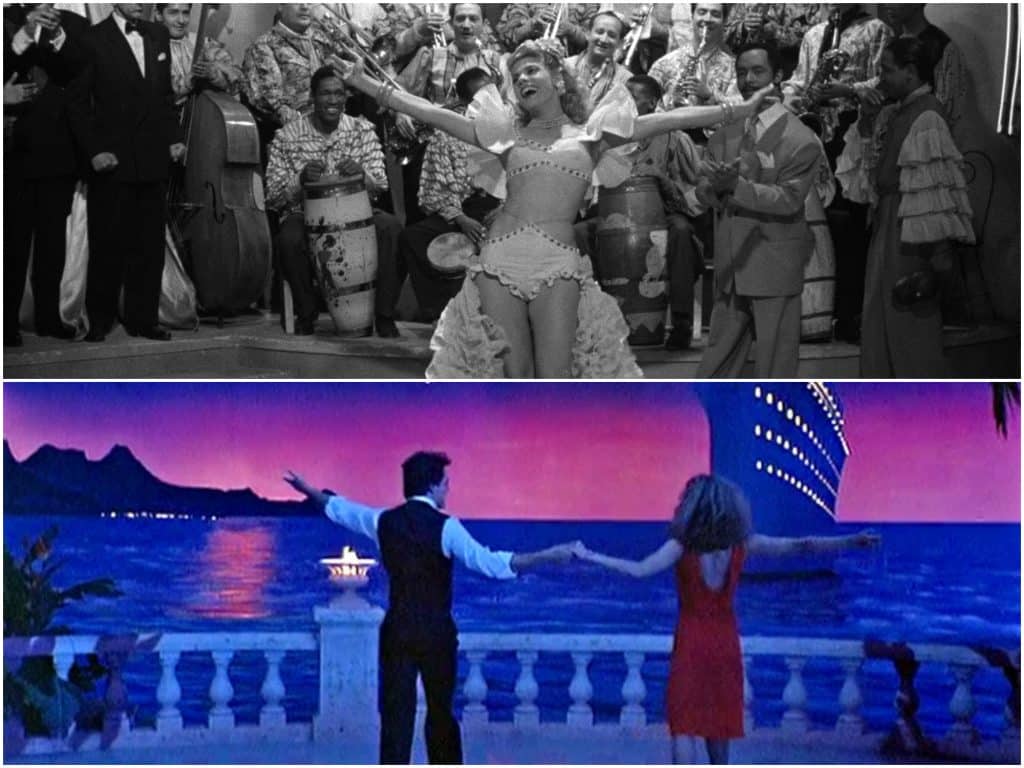
The musicals “Victims Of Sin” (1951) and “One From The Heart Reprise” (1982/2024) screen at 4070 Vilas Hall in new restorations on February 9 and 10.
Dating back to the advent of sound, the musical melodrama is one of the longest running genres that taps into the fantastical potential of the movie medium. This weekend, on Friday, February 9, and Saturday, February 10, at 7 p.m., UW Cinematheque is offering two iterations of that tradition in Emilio Fernández’s Victims Of Sin (1951) and Francis Ford Coppola’s One From The Heart Reprise (1982/2024).
Victims Of Sin opens at the Cabaret Changó, a Mexico City dancehall where the morally loose can indulge in a bit of song and dance. In comes Rodolfo (Rodolfo Acosta), an amoral pachuco gigolo, who strides in on the beat of the mambo. Women fawn all over him. The film’s true hero, Cuban singer Violeta (Ninón Sevilla), emerges from behind a curtain to join the already-in-progress floor show. Despite the protests of cartoonishly cheap club owner Don Gonzalo (Francisco Reiguera), the more established Rita (Rita Montaner) takes Violeta under her wing.
After the first of Victims Of Sin‘s many musical numbers, Violeta silences the naysayers. She demonstrates a heart of gold by rescuing an abandoned baby from a trash can. This virtuous act sets off a series of increasingly elaborate twists, which demonstrate the difficulty and necessity of living purely in a lurid world. (But don’t worry, the wild ride wraps up with an easy-to-understand moral.)
Both Sevilla and Montaner were already established stars from their stage shows as well in the rumberas subgenre—though this marked Sevilla’s first collaboration with former revolutionary turned actor and director, Emilio Fernández. This film showcases the newly emerging Afro-Caribbean music that was developing in Mexico City at the time.
One From The Heart Reprise is Francis Ford Coppola’s latest tinkering with one of his past films, which have included The Cotton Club Encore (1984/2017) and The Godfather Part III (1990/2020) in recent years. One From The Heart was originally intended to be a smaller film as a sort of cooldown from the years-long on-location production of Apocalypse Now (1979). But Coppola decided to create an artificial version of one of the most artificial places in America, Las Vegas, on a soundstage; along with his perfectionism that caused severe schedule delays, it all ballooned the budget from $2 million to $25 million. It eventually bankrupted Coppola and Zoetrope Studios.
The film follows Franny (Teri Garr) and Hank (Frederic Forrest), a couple who are seemingly on the verge of breaking up on the Fourth of July (which also happens to be their anniversary). They each go out separately and end up meeting exotic foreigners (Raul Julia and Nastassja Kinski), who they hope will whisk them away to something more exciting than petty domestic arguments.
Coppola makes many bold and, at times, baffling artistic decisions beyond the facsimile Vegas, namely having the two leads in a musical not sing and be slightly dull and inarticulate. In lieu of the leads’ voices, the soundtrack mostly consists of duets of songs written by Tom Waits, performed by Waits and Crystal Gayle, as a sort of inner monologue or vague commentary on their emotional state. The film’s Altmanesque overlapping dialogue is ill-suited to the man who once described film-directing as “one of the last truly dictatorial posts left.” Most upsetting, though, is the choice to give Harry Dean Stanton a perm.
However, even a relative misfire from a master like Coppola is bound to land among the painted stars. The new restoration and edit, cut down to 93 minutes from the 107-minute version of some home video releases, is undeniably visually dazzling and sure to impress on the big screen. It’s hard not to admire a guy who has literally gone for broke multiple times in his career to be able to realize his vision (most recently selling off his Napa Valley vineyards and other assets to finance the upcoming Megalopolis). Even though the whole may not totally coalesce, the ambition of its parts is more than worth the time.
We can publish more
“only on Tone Madison” stories —
but only with your support.
Author

Related Articles
The Cardinal Bar’s Cuban film series invites local support for Madison sister city
Cine Cubano bridges interest in Cuban cinema with the cultural exchange and aid mission of the Madison-Camagüey Sister City Association.
Three video artists tap into personal histories in the 150 Artists x 150 Years exhibition
Chele Isaac, Toby Kaufmann-Buhler, and Aaron Granat reveal the creative depths of their works, which are on display through February 28 at Central Library.
Video: Sizing up local screening events and prominent performances of 2025
A chat with Josiah Wampfler at OCA Media about our favorite movie-going experiences and acting roles of last year.