
Jan Levine Thal’s inner and outer theatrical lives
Ahead of the October 10 Broom Street premiere of her latest play, “Head On A Silver Platter: In Defense Of Salome,” the playwright shares her creative process and storied career.
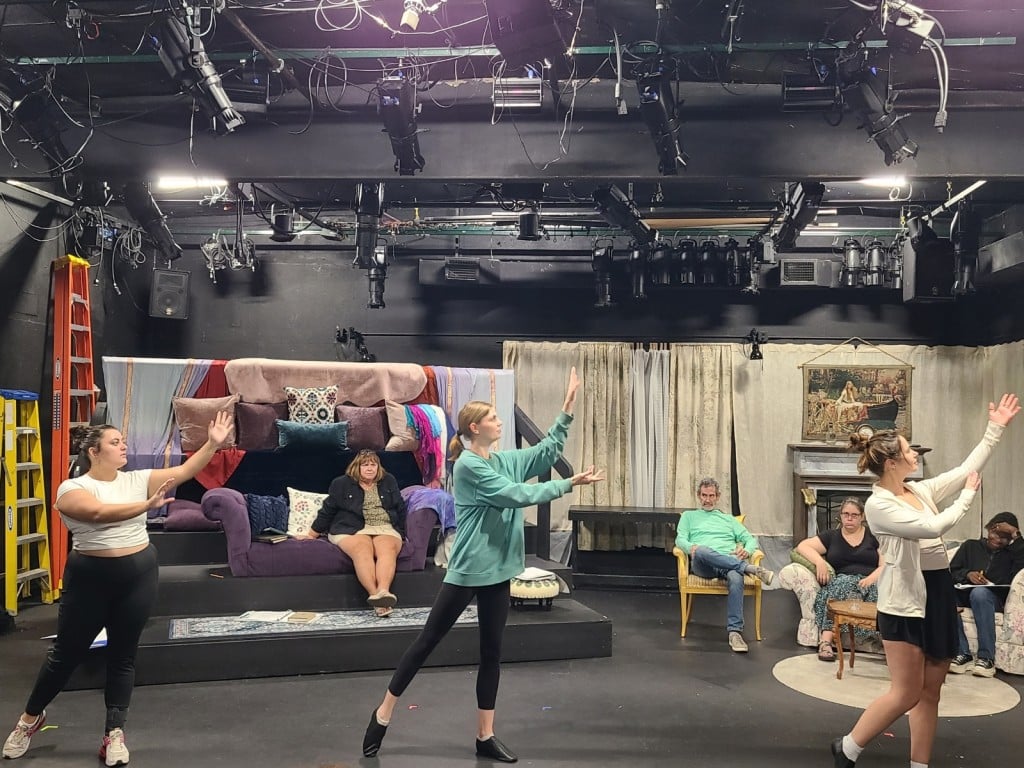
For decades, Jan Levine Thal has been a familiar name in Madison’s theater community. A playwright, director, producer, and former Artistic Director of Kathie Rasmussen Women’s Theatre, Levine Thal’s plays have been staged by local companies such as Broom Street Theater, StageQ, and Mercury Players. This fall, Levine Thal returns to Broom Street, where her newest play, Head On A Silver Platter: In Defense Of Salome, premieres on Friday, October 10, and runs through Sunday, October 26.
One characteristic of Levine Thal’s work that I have come to appreciate is her commitment to centering women’s stories. As a playwright, Levine Thal consistently features complex female protagonists. Examples include Fake Mom (2019), a satirical look at gender roles, family dynamics, and relationships; and Overprint (2024), a romantic comedy about the story of a widowed mother juggling the challenges of college-aged kids and a precarious publishing job, all while caring for a parent with dementia. Levine Thal also wrote and directed several short pieces for The Fabulous Crone Show, a multi-year production for Positive Aging Theatre and Company, which featured plays by and about older women.
Even in works where she has only attached her name as a director, Levine Thal brings a feminist sensibility to theater that highlights women’s voices and perspectives. Allison Fradkin’s Lady Balls is a short play featuring women athletes exploring their queer identities during World War II; Alex Goldberg’s Guellen, Kansas is a one-act play that discusses unexpected pregnancy, and centers questions about reproductive rights and abortion access; and Betty Diamond’s full-length production, Let Them Eat Cake, takes a comic look at some of the different ways women relate to food.
Levine Thal’s latest, Head On A Silver Platter: In Defense Of Salome, intrigued me with its daring reimagining of an ancient story. For centuries, Salome has been remembered as the girl whose mesmerizing dance leads to John the Baptist’s execution. Levine Thal’s retelling complicates that familiar narrative, exploring themes of power, desire, and responsibility through a blend of theater and dance. It’s an ambitious undertaking, but one that promises to challenge audiences to reconsider a tale they thought they already knew.
In early September, Tone Madison spoke with Levine Thal over Zoom about her background, creative influences, and the inspiration for her new play. She also shared some reflections about the current and future state of theater in Madison. (Full disclosure: I was recently appointed Managing Director of Broom Street Theater, but this piece had been in development since mid-June.)
Editor’s note: This conversation has been edited for clarity and length.
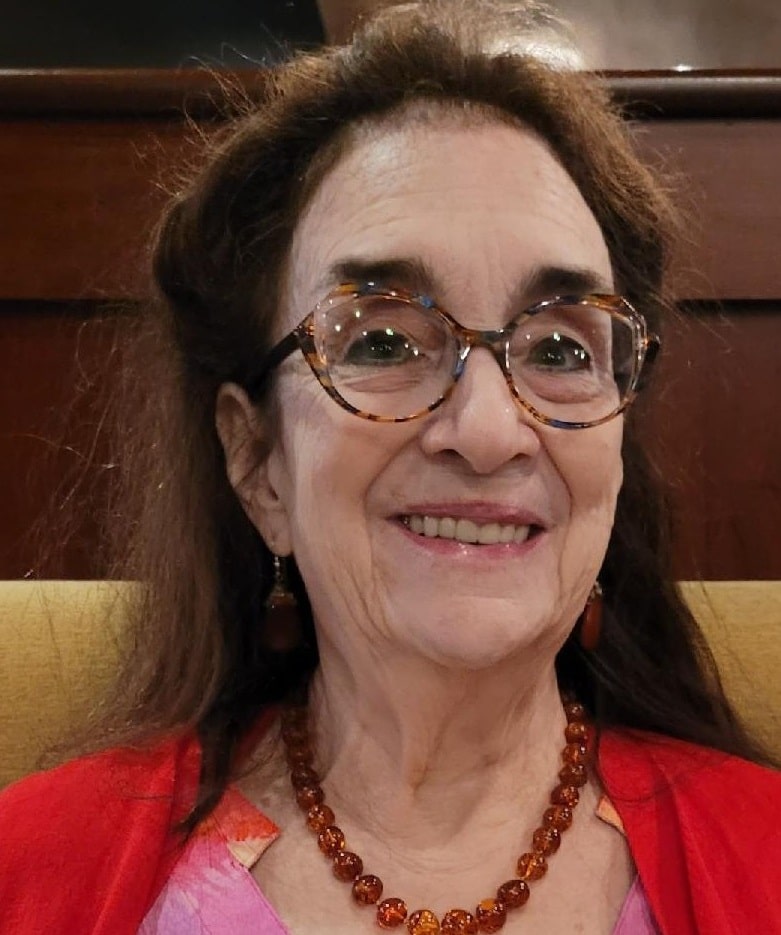
Tone Madison: Can you tell me a little bit about your background and specifically how you became involved in theater?
Jan Levine Thal: My background is that my father was an academic. His field was economics and not the arts. And my parents, we grew up in Champaign, IL, and my father was a scholar at the University of Illinois [Urbana-]Champaign. And he came to Madison in, I don’t know, 1969, somewhere in there.
When I was in high school, I was in plays, but it was very low pressure. I didn’t love acting—never loved acting—but I loved theater. I loved the collaborativeness of it. I loved the idea of directing, although at that time I didn’t have a very clear idea that I was going to direct.
I loved the idea that there were things you could do on stage that you couldn’t do in real life. I think one of my favorite plays when I was in high school was a play called On Borrowed Time [by playwright Paul Osborn], but it was about death getting trapped in a tree, and so nothing died. And what happened when nothing died. On that I thought, “You can just make stuff up, and then you have a play. This is great!”
Tone Madison: Was there a particular moment when or production where you really knew that you had a passion for theater, or was it just the culmination of these experiences?
Jan Levine Thal: I think it was a culmination—accumulation over many years. The first Shakespeare ever saw, I was probably about 12. It was Twelfth Night. And again, it was, “Look what you can do on a stage!”
My mother’s family was working class, and my father’s family was immigrants, so my parents were really trying to find their way to the middle class. And one [way] was consuming the arts. And so we went to concerts and plays and stuff, but part of that was them trying to make sure that we had a broad Liberal Arts education. And it worked. I ended up in the theater, and two of my brothers were professional musicians. And one is an amateur musician in the sense that he has another profession, but he’s in a band. So, a lot of artists came out of that experiment of theirs.
Tone Madison: Who or what have been some of your biggest influences as a theater artist?
Jan Levine Thal: I think my single biggest influence was my acting teacher in New York. By then I’d been around theater for a long time, and I’d done some theater. But Elizabeth—her name is Elizabeth Browning, like the poet without the [Barrett]—anyway, she’s not the poet. She’s alive and well.
I think the reason was the way she approaches theater. There were these golden things she said, like, “Assume every character is telling the truth.” And that has, in the end, really influenced me as a playwright also. Instead of having people say random things or things that don’t forward the plot, assume they’re all telling the truth, and those truths are going to add up to something happening in the play. That’s been very helpful. And then of course, there are characters who lie, but that’s something that gets established in the play, that they lie.
Another thing she talked about as an acting teacher was: “Where does the truth of the character come from?” And, by this, she actually mentioned this sort of “inner life” kind of truth. And she said that if you take your own truth, and you take the character’s truth, and you see where they cross, that nexus is where the truth of your acting has to come from. So you have to bring in your own truth and the character’s truth. I really found that helpful as an actor and also as a director.
Tone Madison: Speaking of playwriting and directing, let’s transition to talking about Salome, your latest work. Tell me a little bit about it.
Jan Levine Thal: So, the theme of Salome is that when women are described in historical terms, whether it’s in histories or in historical fiction, it’s almost always in service of the truth of some guy. We tell the story of Salome to take the burden of the murder of John the Baptist off of Herod Antipas, even though he’s really the one who’s in charge of killing people who are in his jails. The story also blames her mother, Herodias.
Herodias is accused of going after John the Baptist and using her daughter as her instrument of destruction. Many religious Christians believe that. And somebody told me—when I told her I was writing about Salome, she said, “Well, she was the most wicked person in the history of humankind.” And I went, “What? Really? I mean, there’s a lot to choose from out there.” [Laughs.]
It turned out that something I learned—I am not Christian, [so] I should have started off by saying that— [is that] I was more interested in the fact that she got blamed. This character who appears only a little bit in the New Testament—she appears in two gospels, and [in] one of them, she’s not even named. There’s another character whose name is also Salome, who’s probably not the same woman. And in fact, a religious friend of mine kept saying, “No, there isn’t. There’s no second Salome.” And I had to show it to him in order to prove to him that, yes, there is a second Salome, but she is not the one I’m writing about. But even the Salome I’m writing about, a lot of what we think we know about her is from later histories. Oscar Wilde wrote a play, and Richard Strauss wrote an opera. And it was Richard Strauss’ opera that actually inspired me to write the play, because I saw the opera.
And in the opera, this child—I mean, she’s a teenager. And I’m really aware of that right now with being a teenager, you’re still pretty much a child, and I’m really aware of that right now with all the Epstein stuff. And she’s probably about 15 just by the logic of the play, and by the logic of history—the history is very mixed up, what history there is of that period. So we’re blaming a 15-year-old for a murder. And I just came out of that opera, I was so mad. I was like, “Really? She got blamed. Oh, no.” So that is where this play came from. It is not really about religion at all. As I said, it’s not my religion. And it’s really not even about the Bible story. It’s more at the meta level about the way women appear in history.
The inspiration for my play was two things. One is: What is the actual story of Salome? And the other is: If that story or something like it happened today, what would be distorted by time?
Tone Madison: Would you like to elaborate a bit on Salome’s age, particularly in light of the Epstein scandal?
Jan Levine Thal: Based on what little I can discern from the historical record and the New Testament, Salome had to be a teenager, probably around 15, when John the Baptist died. So the story of her “attraction” to John, the story of her stepfather asking her to dance naked, and so on, all added to my feeling that she was abused, as much by the tellers of the story as by the men involved. A teenage girl lusting after an adult man sounds like an adult fantasy about child sexual abuse and not a real account of a teenage attraction. A teenager being forced to strip for the entertainment of her male guardian’s male guests could come directly from the Epstein files. Which shows you that this stuff not only existed two millennia ago but was already being written about.
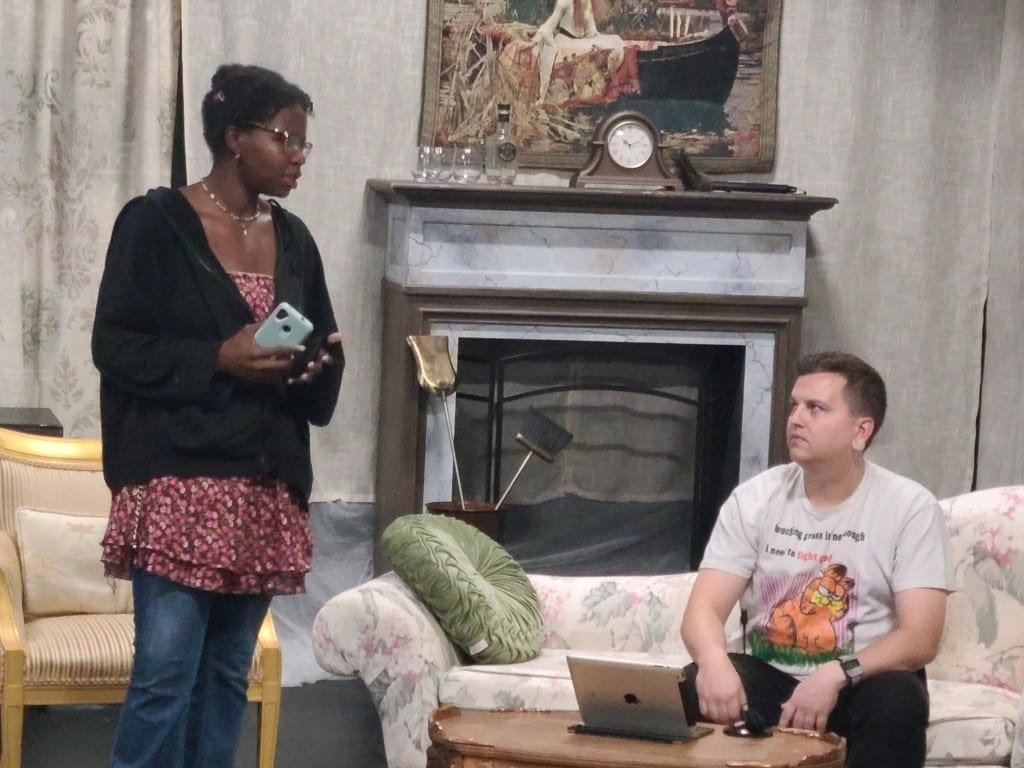
Tone Madison: You’re directing this piece, and you’ve also written the piece. How do those two roles combined influence how you achieve your vision as a director?
Jan Levine Thal: I think the hardest thing is when someone reads a line or delivers a character in a way that is not how I imagine them. That I have to take a deep breath and go 1) Does this work? Because every actor can’t get inside my head. And 2) Do I want them to change it to be closer to what I imagined? Or do I want to accept that this is a really rich way of presenting that character, or that line, or whatever it is? And usually I lean to the second. I lean to trusting the actor who has looked at the text and this is what they’ve come up with.
Tone Madison: What do you hope audiences will take away from this show?
Jan Levine Thal: I hope audiences will take away from this show a sense that everything that they hear in religious tracts—but not just religious tracts, historical tracts—may not be true. And that the big question is: Who benefits? Who benefits from that version of the story? That’s what I would like people to start asking as they walk out of the theater. I also want them to say, “Wow, that was really one of the best casts I’ve ever seen.”
Tone Madison: Widening the lens, I’d like to talk about theater in Madison, and your thoughts and reflections. First, how do you see the role of theater in Madison?
Jan Levine Thal: That’s a really great question. We are lucky to have a very large and varied theater scene here.
There are a number of companies doing original work by local playwrights, and some of the work is very non-traditional. And to me, that’s the most exciting thing about theater, is seeing people playing with the form.
I like the fact that we have people doing traditional theater or people doing original theater, and then all sorts of things in between.
Tone Madison: What do you feel are some of the strengths of the Madison theater scene right now?
Jan Levine Thal: Well, I think the biggest strength right now—and this is actually different from when I first got involved—there are now a number of people who are quite experienced. And for a moment I’m just going to talk about community theater, because professional theater can always hire people who are experienced. So they can get people from Chicago or Milwaukee or Minnesota or some[where], who are both actors and tech people who have done 50 shows somewhere else. But when I first was involved in theater in Madison, there were a lot of people who were newbies.
I feel like when I first started in theater, there were [only] a few people who were experienced: They ran everything, they did everything, they acted everything, they designed everything, and they directed everything. And they were all men. White men. And now there are People of Color directing, and there are young people directing, and there are women directing and writing, and designing, and acting. But I mean, there are always women in acting or people of color acting. But there are many more now.
I feel like it’s a very complex theater community now, and that is the great strength of it—that we have a lot of generations, a lot of different ethnicities, a lot of different abilities. And a lot of people writing now for theater who are not stuck with the old kind of laws of how to write theater and some of that stuff is making it to national prominence.
Tone Madison: What do you think are some challenges that the theater scene is currently facing?
Jan Levine Thal: Number one is money. I mean, it’s always been true. You know, there are always the people who said, “Well, we can just do a play in our backyard,” and you can.
And I kind of love, like, “We’re going to do theater without any money at all and see what happens,” because I do feel like that’s where theater often begins. But let’s face it, wouldn’t it be great if you go to a Broadway show, and you see a set that costs a million dollars you go, “It would be so great to have a million dollars to build this set.” [Laughs.] And it’d be so great to be able to pay my actors so they don’t have to have another job and don’t come to rehearsal exhausted. And it’d be so great to have enough money to pay actors so they could afford a car, or afford a cab, and not have to take two buses to get to rehearsal. And so on.
I think the other challenge is still moving away from a bunch of white guys running it, still moving away from white people running it. Moving away from older people running theater, and moving toward younger, more ethnically diverse, and more diverse in terms of sexual identity. And I think that’s the direction that theater needs to go, because that’s the direction the community [and] the world needs to go.
Tone Madison: Where do you hope to see local theater in Madison headed in the next five or 10 years?
Jan Levine Thal: It’s a hard question because there are people out there—and I am somewhat swayed by them—that say we should consolidate some of these disparate companies and work more together, and raise money together, and divide up use of spaces together. This doesn’t really apply to Broom Street because Broom Street functions really well [as it is], and they’re also in use pretty much all year round. But there are other theater spaces that are not used as efficiently as they could be. Again I’m just talking about community theater. The professional theaters operate in a different way. But on the other hand, I do like the fact that these many, many theaters—I’ve forgotten how many there are in the Madison area, dozens—have very different identities. Therefore, if you’re going to go see theater Q, it’s going to be totally different from if you go to see theater X. It’s just going to be different. It’s going to be a different set of actors, it’s going to be a different sensibility, it’s going to be a different theme. I like seeing all this variety of theater. So, there’s the practical side of me that says everything should be consolidated and we should run it like—we should have people who understand how to run the business part of theater. There’s a part of me that says, “Oh, leave the hodgepodge. It’s creating great creative moments.” And I don’t really know how I’ll end up coming down on that.
Tone Madison: What are your thoughts on how the Madison community can better support theater and the arts?
Jan Levine Thal: I would like there to be some kind of fundraising consortium, because as I said, I feel like we have plenty of creativity, and we have plenty of people with really great visions of how theater could be. What we don’t have is money. And if there were a consortium of those 25 or whatever, 55—I don’t know how many [theaters] there are. [Editor’s note: Cause IQ has reported 40.] And again, talking about community theater, because the professional theaters can get big grants, they can get big grants. But right now, there aren’t many theater grants for little community theaters. And I would like to see—let’s say there are 25 or however many theaters there are [40]—that they work as a group and create some sort of super fund that everyone helps raise the money and then everyone gets a piece of it. And maybe the money would just be used to maintain the theaters. I mean, maybe it wouldn’t even be for the productions themselves. But I feel that the free theater that I was describing before, it’s fine, all theater is fine. But it would be nice to know that the roof is not going to leak while you’re doing a show.
Tone Madison: Is there anything else that you would like to add or share that I didn’t touch on?
Jan Levine Thal: One other thing I’d like to see theaters gather on is maybe four times a year or something like that, to have some kind of creative exchange. And maybe one time it would be on stage managing, and maybe one time it would be on directing, and maybe one time it would be on playwriting. But it would be people from all the theaters. There’d be a commitment from all the theaters to send people to them, to exchange ideas, and to exchange experiences. Because I feel like there’s a lot of reinventing the wheel. And I left acting out of this because I do actually think there’s some good acting classes. What I’m not seeing are promotion classes. How do you promote theater? Well, I got my ideas. And it’s not what everybody does. And maybe somebody else has better ideas than I have.
I think I would like to see something that, at least even when we still have the hodgepodge of artistic visions, that we have more unity for the practical end of creating community theater, and that we work better together.
We can publish more
“only on Tone Madison” stories —
but only with your support.
Author

Related Articles
“Boy Apparition” finds queer liberation by challenging normative constructions of masculinity
mk zariel’s chapbook coaxes us to the edges of our imaginations, and is infused with the undercurrent of love that is necessary to keep going.
The Cardinal Bar’s Cuban film series invites local support for Madison sister city
Cine Cubano bridges interest in Cuban cinema with the cultural exchange and aid mission of the Madison-Camagüey Sister City Association.

Small Bites: How I make bread
Meditating on the process, flour, flavor, time, and place.