
The inaugural Cinema Lanterna screening conjures and matches Chaplin’s reverence of “The Circus”
Founder Landen Celano brings the all-ages slapstick classic to the Madison Circus Space on October 14.
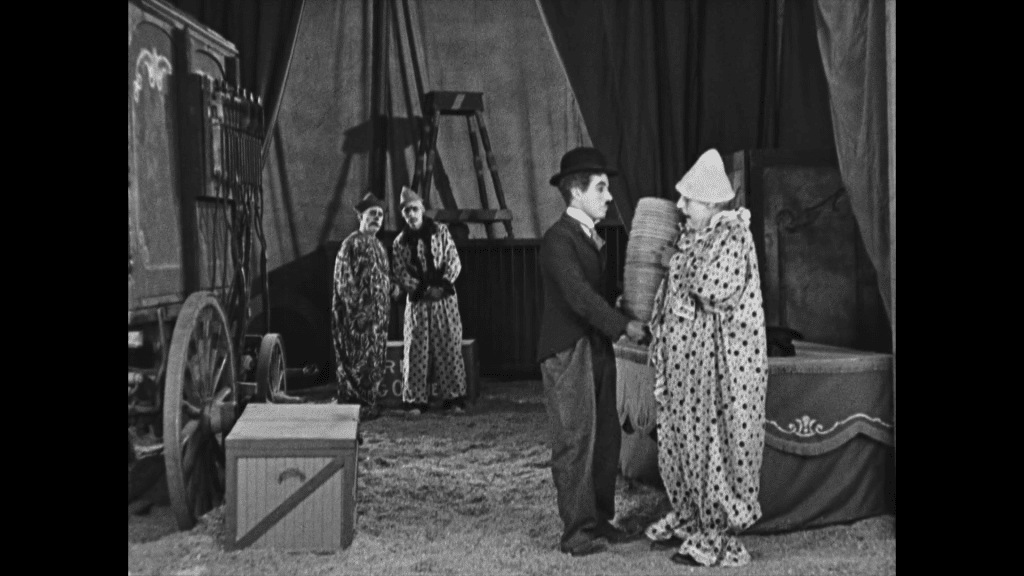
Founder Landen Celano brings the all-ages slapstick classic to the Madison Circus Space on October 14.
In an effort to raise awareness for local organizations and nonprofits, Cinema Lanterna’s inaugural event brings Charlie Chaplin’s slapstick classic The Circus (1928) to the Madison Circus Space at 2082 Winnebago St. on Saturday, October 14, at 7 p.m. Lanterna’s founder Landen Celano has reserved the Space’s upper room and set up an eight-foot screen to project the 4K digital restoration of the 1969 re-release of the film (featuring a lyrically ebullient introductory song by Chaplin). Tickets are $10 in advance and $12 at the door (discounted to $7 for students, seniors, and veterans). All proceeds from tickets and concessions will benefit Madison Circus Space.
The east-side venue, which opened in 2013, is an ideal modern setting for all the death-defying stunts, rollicking showmanship, and twisted troubles that the popular 19th- and 20th-century industry embodied. And this screening of The Circus conveniently crosses paths with the recent UW Cinematheque double bill of Tod Browning’s circus-themed films from the late 1920s and early ’30s. Where Browning had a knack for intensifying psychological drama between his troupes, Chaplin navigated heavier social subjects with a gossamer touch and outsized pantomime gestures.
The Circus remains, in some ways, a culmination of Chaplin’s career in silent film—a spirited tribute to all the vaudevillian performers who inspired his innocently iconic Tramp and pratfall-centric comedy. (He’d shift a bit into starry-eyed melodrama for his first sound film, City Lights, three years later.) Like many Chaplin shorts and features of the 1910s and ’20s, The Circus’ simple story concerns the fateful meeting of two people down on their luck. Chaplin’s penniless “funny man” Tramp and Merna Kennedy’s horseback rider and ringmaster’s daughter’s chance encounter becomes a catalyst to extraordinary circumstance. As director, Chaplin marries this template with the accidental celebrity trope in a way that writer John Swartzwelder imitated and thoughtfully parodied for all millennials to reference in the season-five Simpsons episode, “Bart Gets Famous.”
Amidst the Tramp’s ascent as an unwitting circus sensation after he bumbles through the ring during a police chase, Chaplin features a series of knee-slapping brushes with animals. They include doves and geese preemptively fluttering and scurrying away before a magic act, slinky monkeys on a tightrope walk, and a running joke with a charging mule that becomes part of the circus ring routine itself. These moments are rendered in forms of springy slapstick, and play to the sensibilities of younger viewers. But perhaps the best of these gags is the most subtle, when the Tramp is spooked by a black kitten just moments after attempting to stand up to a (sleeping) lion. The Circus‘ final leg shifts tonal gears into a more tragicomic, unrequited romance, which Chaplin deftly handles in fits of his character’s jealousy and empathy.
Celano was quite deliberate in his selection of The Circus, as it harnesses a “simplicity and precision [that is] primarily out to make us laugh,” he says. Ahead of this first-ever Cinema Lanterna event, Celano penned a personal essay on his relationship to Chaplin’s big-hearted hijinks. He writes of the unbridled joy in witnessing a young boy enraptured by Chaplin’s screen presence at The Silent Movie Theater on Fairfax Ave. in Los Angeles. It was a revelatory moment for Celano, who had previously been caught up in his independent study and analysis of film as a medium that he’d temporarily forgotten “the power of transportation and communication” in Chaplin’s cinema-as-magic trick. The silent-comedy auteur possesses the remarkable ability to “reach out across a century and perpetually entertain generation after generation,” Celano concludes. Inspired by this emotionally grand illusion, he has further prepared handmade zoetropes to decorate the screening space, which encourage audience interaction.
Circus infrastructure and its industry makeup has changed since the release of The Circus 95 years ago, as we’ve developed a firmer understanding of the working conditions and treatment of trained animals. Yet the skillful spectacle and community of it all has remained. (And of course the Madison Circus Space locally serves that function.) In tracing its evolution as entertainment, the circus parallels cinema production in many ways, in that it takes a close-knit village working in harmony; but when they coalesce and cooperate, the art forms contain dazzling slivers of the ineffable. In that sense, Cinema Lanterna couldn’t have selected a more universally appealing jumping-off point that manifests that old adage, “the show must go on.”
We can publish more
“only on Tone Madison” stories —
but only with your support.
Author

Related Articles
One movie meditation after another: toiling through 2025
Nine writers processed these trying times through cinema, at the theaters and at home.
“Liking This Angle” finds artistic inspiration in degrees of the edit
Nicholas R. Wootton’s experimental short, featuring sculptor Christina A. West, premieres at Art Lit Lab as part of Project Projection on January 21.
Evaluating tenderness and depth of family dynamics in “Sentimental Value”
Grant Phipps and Lance Li argue in favor of and against the artistic framework of Joachim Trier’s latest psychological family drama.