
Centering and illuminating the film conversation
Our writers found common dialogue across a variety of film spaces.
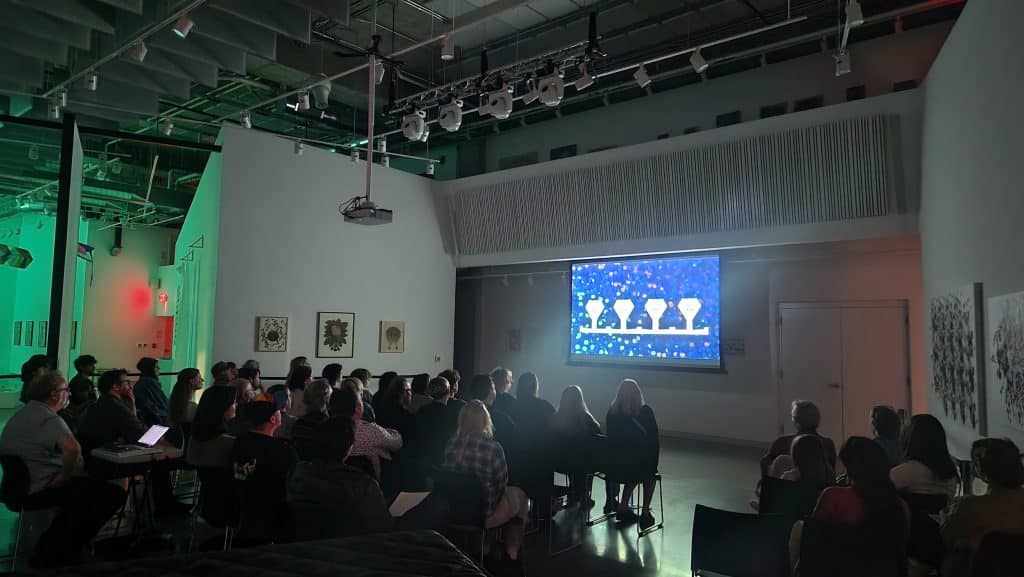
Our writers found common dialogue across a variety of film spaces.
The year of 2024 had its share of hurdles. At this time of year in 2022 and 2023, I contentedly looked back on some of Tone Madison‘s finest stretches of film coverage. Compared to those past couple of reflections, the job of our film section in 2024 wasn’t as straightforward as 2022’s impassioned, full-on revival of in-person screenings, or 2023’s deep explorations of local programming. Regardless of how I may feel in my role as a part-time editor about a few missed connections and opportunities, Tone Madison‘s core staff and contributors came through time and again. That isn’t disputable, as I compulsively scroll through our archive and pause to take stock of and re-read so many articles. I’m proud to feature the voices of the broader Madison-area community on everything from commercial theatrical releases to one-off experimental showcases at more unconventional venues during a time when film criticism and discussion are slipping away to influencer sponcon.
The Cap Times has almost completely done away with its movie reviews and “bingeworthy” in-print sections, once penned so prolifically by Rob Thomas, who now helms City Cast Madison‘s daily newsletters. Other sites that have popped up in the past five years have proven to be unsustainable or fly-by-night, and longstanding institutions and stalwart publications have curbed film coverage significantly, seldom allocating virtual space to the visual art form unless the subject accentuates hefty local ties. And those tend to be isolated to the bustling months of March and April in anticipation of the Wisconsin Film Festival (but who can blame them).
My availability has changed, but Tone Madison hasn’t. Our film coverage isn’t seasonal, sporadic, or dictated by a committee who isn’t tuned in to the most artistically vital and exciting (and not just the most popular) corners of the medium. I’m always pondering film, seeking avenues to maintain necessary dialogue about what’s happening in Madison spaces, even as some of them have shuttered, streaming options stall out yet still pervade, and movie houses on the far reaches of town tailor their programming to more general audiences.
Our year in coverage began with a familiar, thorough look at the downtown campus-based UW Cinematheque’s spring scheduling announcement, as I dared readers to “make a movie-related resolution” to not just see more at the theater but see more in general, by whatever means. By some coincidental turns, the broader scope of our own planning seems to reflect that 11 months later. We started a new column, “Cinemails,” that attempts to capture the upbeat spirit and camaraderie of our year-end email conversations (look for that in January 2025 this time around). The back-and-forth format between two writers in these columns not only permits playfully tangential discourse, but also facilitates certain connections that can’t exist, at least visibly in the copy, in more traditional previews or reviews.
As the weather warmed and awards season heated up, Jason Fuhrman wrote a scrumptiously rich piece on the multisensory pleasures of film and food pairings, with particular emphasis on dining locally (even though, unbeknownst to him, we were all about to say goodbye to favorite King Street noodle spot, Morris Ramen). Less than a month later, I said my own personal farewell to the late film scholar and UW–Madison Professor Emeritus David Bordwell, who inspired me as a writer in the 2010s both before and after I first encountered him in person.
Following Fuhrman’s example in a more multifaceted pitch, Maxwell Courtright offered a dual assessment of UW Cinematheque’s spring series of sci-fi flicks from the 1970s and 1980s at the Chazen Museum of Art in connection with the multi-artist exhibition Message From Our Planet. Emily Mills and C Nelson-Lifson provided their distinctive voices on essential queer cinema through the decades, from Bound (1996) to Desert Hearts (1985), continuing our dedication to OutReach’s Q-Cinema calendar and the unique case of Cat Birk’s “Becoming Horse Girl” movie series at the Chazen select Wednesdays in May. While a little more infrequent, the cineastic Courtright offered prescient insights into experimental films, like those of Ja’Tovia Gary, at Mills Folly Microcinema.
During the latter half of the year, we devoted time to four aforementioned “Cinemails” on topics and films—the future of cinema, Longlegs, the scope and reinvention of the Alien franchise (and superfluity of Romulus), and Anora. We also held steady with 12 in-depth reviews of UW Cinematheque offerings from June through November, despite their perplexing and thorny choice to initiate an international-discoveries series with a new Woody Allen feature, Coup De Chance. This led me to rigorously question the leading programming perspective and Cinematheque’s paucity of gender representation five months into 2024, a point that was challenged by no one else in the Madison media landscape.
Jesse Raub’s trenchant take on Jordan Peele’s Nope (2022), which screened at the Memorial Union Terrace over the summer, caught the eyes of Peele’s own production company, Monkeypaw. The company’s Instagram account subsequently shared Raub’s writing on the film’s depiction of generational trauma to their 160,000-plus followers some seven weeks after our publication. Weeks prior to that widespread circulation, I proudly wrote a sincere estimation of another Terrace screening, the highly successful but often vacuous rom-com, Anyone But You, featuring the decade’s genially inescapable duo of Sydney Sweeney and Glen Powell.
Once again, our Wisconsin Film Festival coverage was unassailable. I’m so thankful for not only the discipline and vision of our writers, but their selective taste as well. That’s worth celebrating openly. Steven Spoerl and Edwanike Harbour covered two new music documentaries with regional connections, Melomaniac and String Theory: The Richard Davis Method, respectively. Lewis Peterson sharply appraised one of the best international films of the year, Radu Jude’s postmodern satire on working-class woes, Do Not Expect Too Much From The End Of The World. I secured an exclusive interview with microbudget writer, director, actor, and comedienne Joanna Arnow ahead of the local premiere of her deadpan comedy, The Feeling That The Time For Doing Something Has Passed.
That substantial Wisconsin Film Festival list does not even account for the repertory chronicle of William Castle’s literally spine-tingling The Tingler (1959), beautifully memorable writing on botanically themed films including Light Needs from Milwaukee’s Jesse McLean, and a primer on rising director Ena Sendijarević through her coming-of-age road movie, Take Me Somewhere Nice (2019). Further, we offered two post-festival diaries on the self-aggrandizing effect of social media on criticism and Sara Batkie’s notable volunteer experience.
And, at the peak of spooky season (on Halloween, in fact), I explored Four Star Video Rental’s long-running tradition of compiling daily in-store movie themes. The staff’s keenly personalized, algorithm-less recommendations have, for years, been laying a path through the current era’s chaotically scattered minefields of streaming content.
So, yes, while I’m internally evaluating my own limitations through the 2024 year, I can’t turn away from the wealth of perspectives we’ve presented to local readers and beyond. In 2025, as I scan my Google Doc-turned-idea Rolodex, I’m hoping to continue this year’s more broadly inclusive framing but set aside more time for those niche, local developments as I did in 2023. But we need your support to keep going, to keep Tone Madison independent and singular in this precarious publishing landscape. New donations are being matched up to $1,000 per individual and up to $36,000 in total—an amount that would make a dramatic difference in our collective efforts, day in and day out. Thank you so much.
“Where we go from there is a choice I leave to you.”
—Grant Phipps, Film Editor
We can publish more
“only on Tone Madison” stories —
but only with your support.
Author
Related Articles
Three video artists tap into personal histories in the 150 Artists x 150 Years exhibition
Chele Isaac, Toby Kaufmann-Buhler, and Aaron Granat reveal the creative depths of their works, which are on display through February 28 at Central Library.
Video: Sizing up local screening events and prominent performances of 2025
A chat with Josiah Wampfler at OCA Media about our favorite movie-going experiences and acting roles of last year.
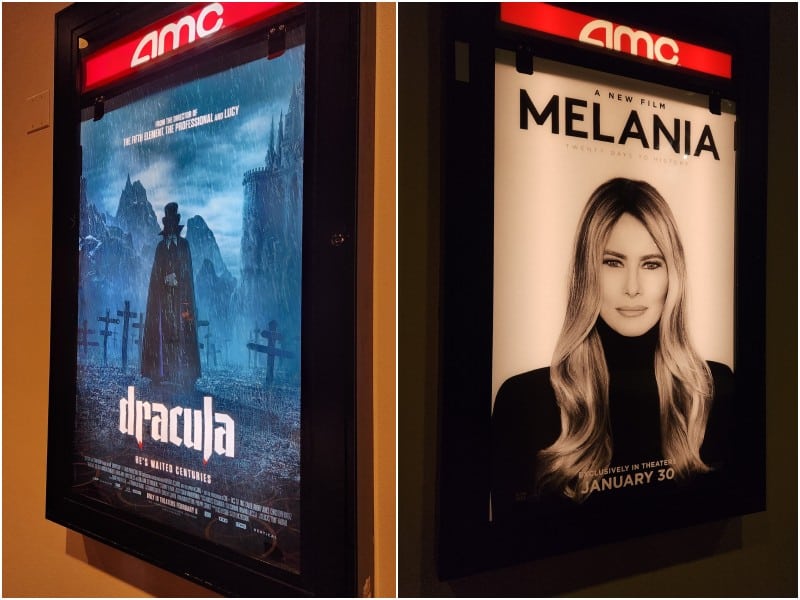
Stop spotlighting new films by known abusers
Madison boasts a dynamic movie culture, yet still needs programmers and community voices to facilitate change.