
In its third year, the Black Film Festival commits to deeper regional representation
The Nehemiah Center and Justified Anger partner with Madison Public Library to honor Black lives and culture November 12 through 15.
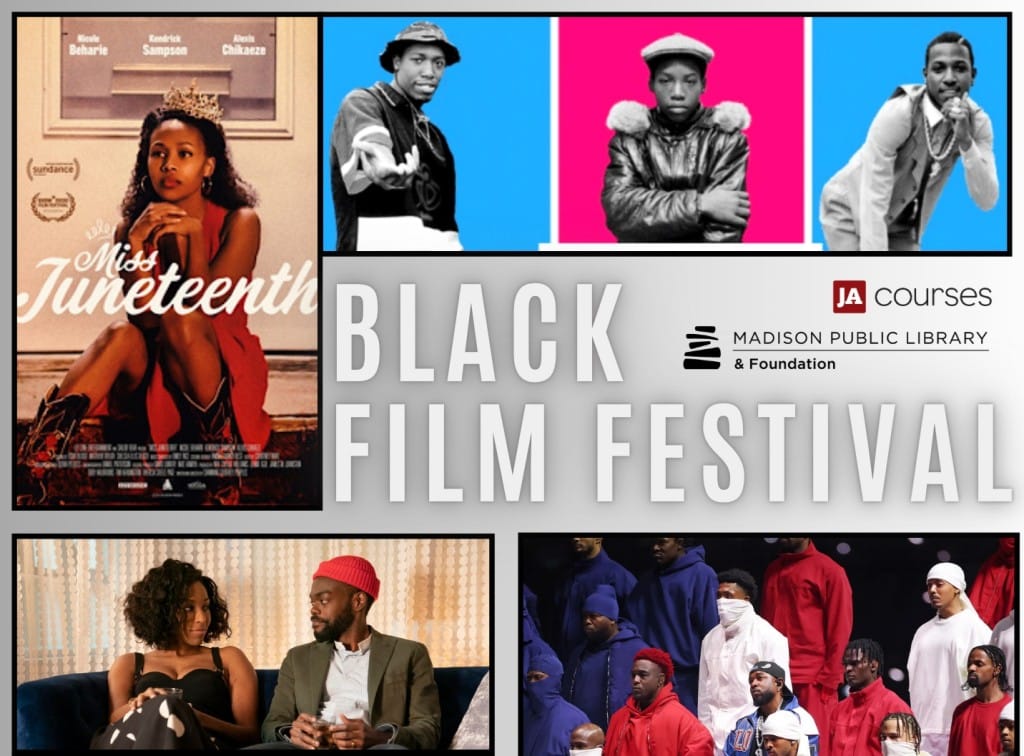
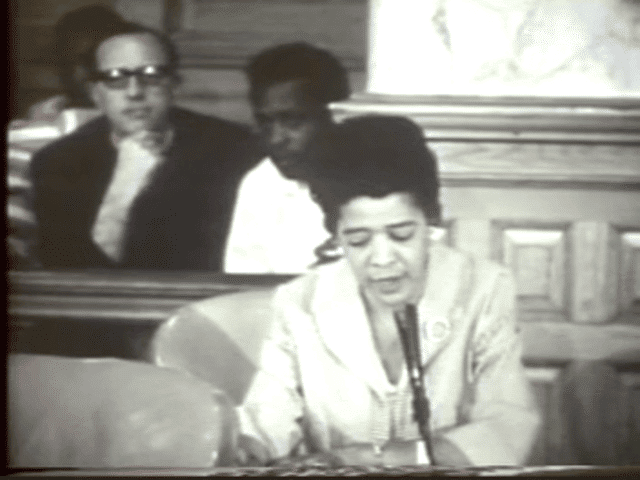
In its most ambitious incarnation since its inception in 2023, the Black Film Festival is expanding to screening locations across Madison Public Library (MPL) branches of Pinney, Sequoya, and Central between November 13 and 15. In addition to post-screening talkbacks for three of the highlighted films, the festival is also hosting a special November 12 opening-night presentation of Dr. Charles Taylor’s 1981 Milwaukee civil-rights documentary Decade Of Discontent 1960-1970, accompanied by a prestigious panel discussion, at the Fountain of Life Church (633 West Badger Road). All events are free, but registration, which ends at 5 p.m. on Thursday, November 13, is required.
This logistical move follows last year’s more spread-out three-day event structure at the Goodman Community Center, Fountain of Life Church, Lussier Community Education Center, and virtual Zoom screening (of Jennie Livingston’s 1990 documentary on the ballroom scene, Paris Is Burning).
Festival founder and current lead curator, Siobhan Jackson, also serves as the Director of Justified Anger adult-education courses at the Nehemiah Center for Urban Leadership Development. In an email to Tone Madison, Jackson writes that getting the Black Film Festival started a few years ago was “a way to better acquaint volunteers and community partners to culturally Black conversations while also creating more space for those conversations to take place.”
That’s a welcome initiative. For Madison’s moderate size, it has a notably robust film scene, marked by a number of culturally specific blocks of programming throughout the year (often connected to UW–Madison). Look to the spring and fall La Cineteca italiana in the Education Building, a summer series hosted by the Southeast Asian Summer Studies (SEASSI) Institute in that same space (room L196), the November Polish Film Festival at the Union South Marquee. (And let’s also include the terrific, but now inactive Iranian Film Festival.)
Yet, until this decade, the city also lacked a centralized environment intently dedicated to capturing the cinematic significance of Black stories in our own backyard. The growing efforts with the Black Film Festival, undertaken by Jackson as well as collaborative programming from MPL media projects “Bubblerarian” Robert Franklin (best known as Rob Dz) and licensing support from community engagement librarian Sean Ottesen, are, in a way, spiritually complementing the long-running Black Harvest Festival in Downtown Chicago (happening at the same time as the four-day festival here).
Even at a glance, the scope of the 2025 Black Film Festival’s programming is immediately apparent, as it boasts several nationally relevant documentaries from recent years, in addition to the repertory showing of Decade Of Discontent. The Fountain of Life Church event on November 12 at 5:30 p.m. will feature a post-screening panel discussion with retired civil rights attorney Thomas Jacobson, who defended documentary subject and white ally Father James Groppi. Dr. Christy Clark-Pujara, UW–Madison Department Chair of African American Studies, and Alexander Shashko, UW–Madison Lecturer of African American Studies, will both join him.
Jackson tells Tone Madison that Taylor’s 55-minute film was brought to the Nehemiah Center and Justified Anger’s attention through Jacobson as well as Nehemiah founder Reverend Dr. Alex Gee, who interviewed Taylor on his Black Like Me podcast. Since its original production date 44 years ago, and 30 years since its 1995 update with an added introduction by Taylor, viewers will notice tragic relevance in Black and urban communities’ fight for equity and justice. The current fascist administration’s brazen cruelty in the form of ICE raids, gutting infrastructure project funding, withholding and even retracting SNAP benefits, and allowing crucial healthcare subsidies to lapse, all violently target and scapegoat communities in major U.S. cities.
In Taylor’s numerous early 1980s interviews with prominent Black civil rights activists in the Milwaukee community, like Attorney Lloyd Barbee and Alder Vel Phillips, Decade Of Discontent constructs an infuriatingly familiar narrative about white America attempting to oppress and deny the aspirations and well-being of their Black neighbors. Though, many citizens refused to accept these conditions, and organized their efforts in a resistance to promote employment programs for Black youth, fair-housing legislation, and the desegregation of public schools.
The following day, November 13, at Pinney Library strikes an admittedly lighter tone to focus on American pop-cultural niches and celebrate Black icons’ undeniable contributions to the zeitgeist. Things kick off with the urban fashion documentary Fresh Dressed (2015)—which also doubles as a tribute to the late director Sacha Jenkins, who died this past May—and conclude with the SoundCloud “mumble rap” chronicle, American Rapstar (2020, dir. Justin Staple), at 4:30 and 6:30 p.m., respectively.
“Family Day” on November 14 at Sequoya Library shifts gears again, with bookending narrative features. Channing Godfrey Peoples’ grounded narrative and debut drama Miss Juneteenth (2020), begins at 1 p.m. Barry Jenkins’ photorealistic CG-animated musical sequel to Jon Favreau’s 2019 remake of The Lion King, Mufasa (2024), will be showcased at 5 p.m. (Certainly a departure for Jenkins, whose queer coming-of-age and 2017 Best Picture-winning Moonlight is one of the 2010s’ defining contributions to American cinema.)
In between those selections, at 3 p.m., the Black Film Festival is uniquely including an hour-long video essay from formerly Chicago-based leftist cultural commentator F.D. Signifier. “[Signifier’s work] has actually been a recurring feature of the Black Film Fest,” Jackson writes via email, as it is again serving as an “impetus for the film fest’s mission to break down culturally Black conversations for diverse audiences without removing the nuance meant for the Black people in his audience.”
While Jackson featured three different video essays last year (on Signifier’s chosen subjects of Black men in the police force, interracial dating, and the current and historical faces of Black conservatism), Jackson has picked just one this year—and perhaps one of Signifier’s most personal explorations on the subject of Black love, entitled Death To “Black Love” ™, which was released in advance of Valentine’s Day 2022.
Signifier’s commentary incorporates virtual interviews with Black couples in diverse relationships to break the patriarchal narrative seized and sold by the self-help and wellness industry. Signifier’s thesis is, in his words, how “the image of Black love we’ve all been taught to aspire to and champion the most is not only false but is based on a capitalist lie created explicitly for white Americans that was never meant to include [Black folks] anyway.” Further, his segment within the video essay on Jada Pinkett and Will Smith is particularly interesting in light of the public incident at the Oscars less than two months after he dropped the video.
The festival’s final day at Central Library is all about local and regional filmmakers—most prominently, the current Madison-based artist Rafael Ragland, who heads the religious-themed production company Sograteful Films. He’ll join in person for a double feature, beginning early at 11:30 a.m. with The Comforter, which premiered in late March of this year at the Union South Marquee. Another of Ragland’s feature-length films, Echoes Of Freedom, also had its premiere at the Marquee less than six months later, in mid-August, and it will screen thereafter at 2 p.m.
Finally, at 4:30 p.m., the day winds down with Donnell McLachlan’s 43-minute film and video essay The Great American Game. McLachlan attempts to situate hip-hop megastar (and certified Drake-hater) Kendrick Lamar’s February 2025 Super Bowl Halftime Show “in the lineage of the resistance of Black writers in American history,” as McLachlan frames in the video’s annotated comment. It’s sure to produce one of the most fruitful conversations of the entire festival, as it connects elements of several of the preceding documentaries and influence from Signifier’s researched cultural commentaries from a Black lens.
After the screenings by Ragland and McLachlan in community rooms 301 and 302, the Black Film Festival will move outside into the main third-floor hall (W. Jerome Frautschi Madison Room) at Central Library for a 7 p.m. wrap-up party. It will include collaborative performances by young hip-hop artists of the “New Gen Movement,” who are fronted by Madison’s 2024-2025 Youth Poet Laureate Justin Festge Russell a.k.a. Jexizis.
The evolution of the Black Film Festival and its footprint are indicative of what Dr. Charles Taylor might argue is something of a “Black renaissance” in the city of Madison. Both Siobhan Jackson and Liz Boyd, the Digital Service and Marketing Manager at MPL, complement that feeling in their characterization of how this now-sustaining 2020s event has been able to foster broader community conversations at the intersection of culture and politics. In an email reply, Boyd stresses that “hosting a festival versus a one-off screening allows for a broader representation of voices, opinions, and perspectives to be heard from within the Black community—both locally and nationally—which helps break down stereotypes and avoids the dangerous interpretation of the Black community as a monolith.”
We can publish more
“only on Tone Madison” stories —
but only with your support.
Author
Related Articles
Stop spotlighting new films by known abusers
Madison boasts a dynamic movie culture, yet still needs programmers and community voices to facilitate change.
“Resurrection” explores human perceptions through the historical labyrinth of cinema
Bi Gan’s latest art-house epic premieres locally at UW Cinematheque on February 5.
One movie meditation after another: toiling through 2025
Nine writers processed these trying times through cinema, at the theaters and at home.