
Achieving a broader focus through music photojournalism in 2025
The fourth installment of our live music photo essay series centers a more personal vantage point.

This is our newsletter-first column, Microtones. It runs on the site on Fridays, but you can get it in your inbox on Thursdays by signing up for our email newsletter.
In the first three installments of this series, I put an emphasis on exploring trends impacting the functionality of Madison’s music landscape. In 2025, I felt those considerations giving way to new ones, not out of an incuriousness, but out of disappointment-addled familiarity (small entities get raw deals, and the ones that don’t need support get propped up, again and again), as well as virtual necessity.
Madison’s upper echelons of music programming have been captured by a monopoly that is continuing to prove more deleterious than not for local musicians (and their opportunities as such). When a local musician breaks through to broader recognition in Madison—and remains in Madison—it’s notable, because the way the city’s music landscape operates isn’t conducive to that level of success. Everything from radius clauses to lack of direct access to more visible press apparatuses inform this reality. It’s a core part of why the vast majority of Madison acts seeking the next step end up leaving for cities with landscapes more beneficial to their aims. And the ones who stay are generally touring significantly harder than those who leave.
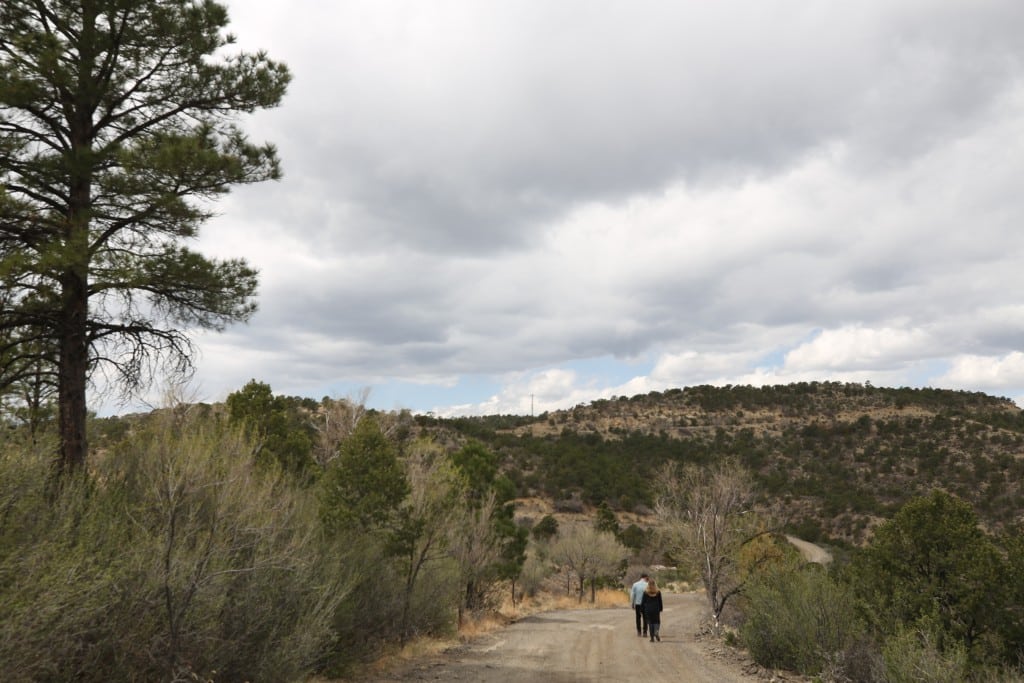
While the members of my primary musical project, Holly And The Nice Lions, have not actively viewed the band as a legitimate potential career path, over 2025 we began engaging with more opportunities that would be consistent with a decision to do so. We drove to April in New Mexico to spend a week recording a new album—Dolores—with the late, great, under-sung audio engineer Patrick Haight, and continued to forge surreal professional connections that are producing dreamlike opportunities. But those opportunities continue to demand a greater time investment, with the payoffs thus far proving inarguably worthwhile and hyper-motivating. To date, none of those opportunities have taken place in Madison.
So, where the past installments of this series have pointed inward on a logistical level, underscoring the various phases of what Madison has to offer as a live music destination, this year’s edition of the series is taking a different tack. While live music that took place in Madison will still be showcased, the emphasis this time around rests primarily on providing a window into the perspective of a Madison-based musician (rather than being exclusively trained on musicians playing Madison). Balancing the tightrope between spectator and performer can be disorienting, even for truly veteran resolve, but it’s an experience worth putting into sharper focus. Music’s as fertile of a ground for joy as it is disappointment, and there were a few instances of the latter category that continue to sting.
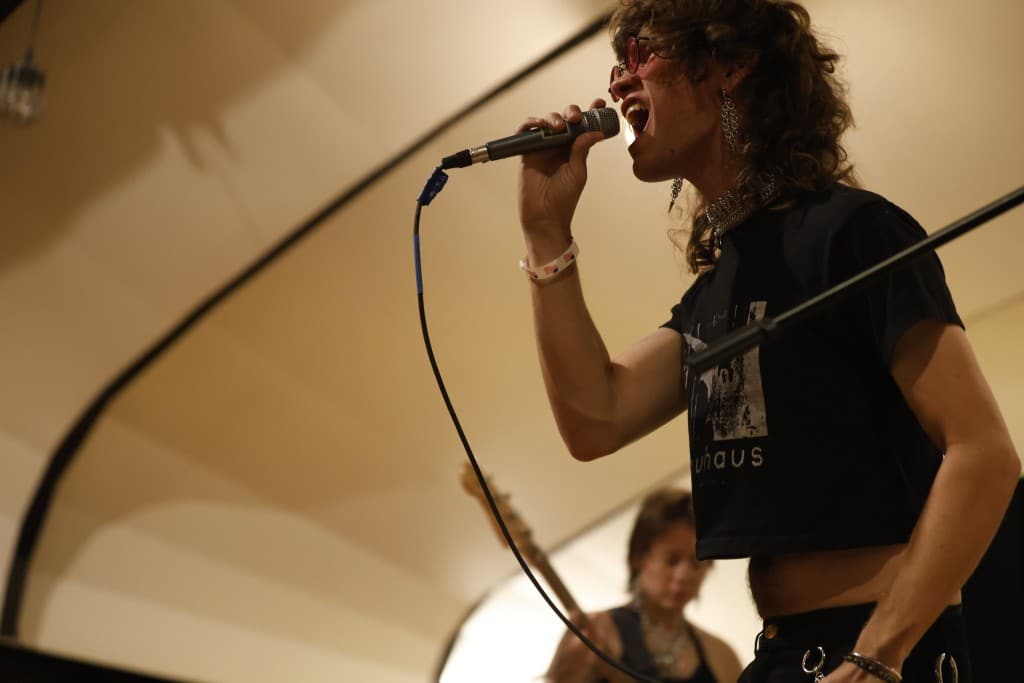
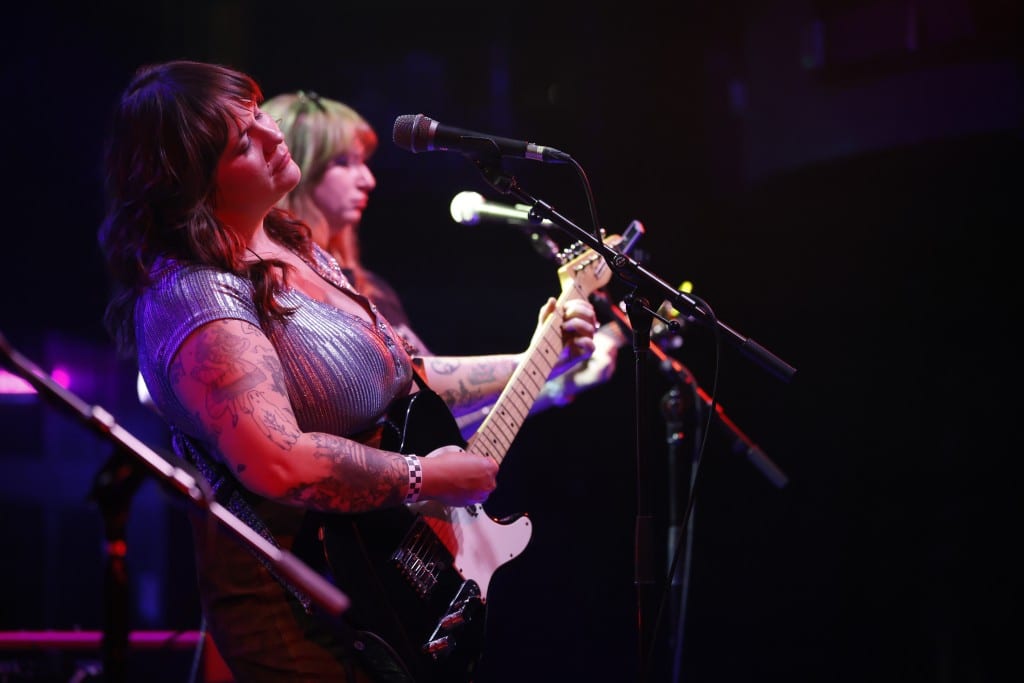
I kicked myself for missing a handful of shows featuring well-established headliners—decisions that largely came down to my lack of overall energy, capacity, and/or availability. I was playing a show in Oshkosh the night Pile played the High Noon Saloon, and missed a makeup opportunity to catch the band at Chicago’s Thalia Hall. The Instagram clips circulating from the former set suggested the show was characteristically invigorating, but footage from the latter has left me beyond confident that the experience was a transcendental all-timer, making the miss all that more devastating. I’m positive that clipping. was enthralling at the Majestic; another regrettable near-miss. I completely believe that everyone’s raves about Ratboys‘ headlining set at Orton Park Festival would’ve neatly coincided with a rave or two of my own. I’m still grappling with the disappointment of having to miss the Rilo Kiley reunion tour stop at Palace Theater in Minneapolis (though moderating a Wisconsin Book Festival showcase with David Levithan and Jens Lekman the following day at Bascom Hall was one hell of a consolation prize).
But the disappointment that tends to bruise hardest isn’t attached to missing those headlining sets—it rests in missing the local shows populated by friendly faces. And therein lies the crux of many tight-knit artistic communities: they are bonded by a shared understanding that small sacrifices are a necessary component of The Pursuit. While this holds true to varying degrees for any activity-based community, it’s especially evident in the arts. Artists are painfully aware that the payoff of The Pursuit typically amounts to a net loss or barely breaking even, but contains intangible payoffs that still feel worthwhile. That in itself is a small miracle, given that the bulk of supposed support structures for live music are either antagonistically rigid, or transparently prioritizing profit over artistry.
Back to those intangible payoffs: community-strengthening is often the driving force behind what makes so many ostensibly raw deals feel palatable. Even on occasions where a band effectively performs for free—or even ultimately, quasi-inadvertently pays in to perform—there still exists the possibility of establishing invaluable connections. Sometimes those connections are enthusiastic audience members, sometimes they’re like-minded bands. In nearly every case, there are people who aren’t just worth discovering, but returning to, time and time again. And while this is in no way meant to exempt a broken structure or be a call to perform for “exposure,” it speaks directly to most local gigging musicians’ perpetual struggle, and the small joys that keep us returning, despite a largely hostile reality.
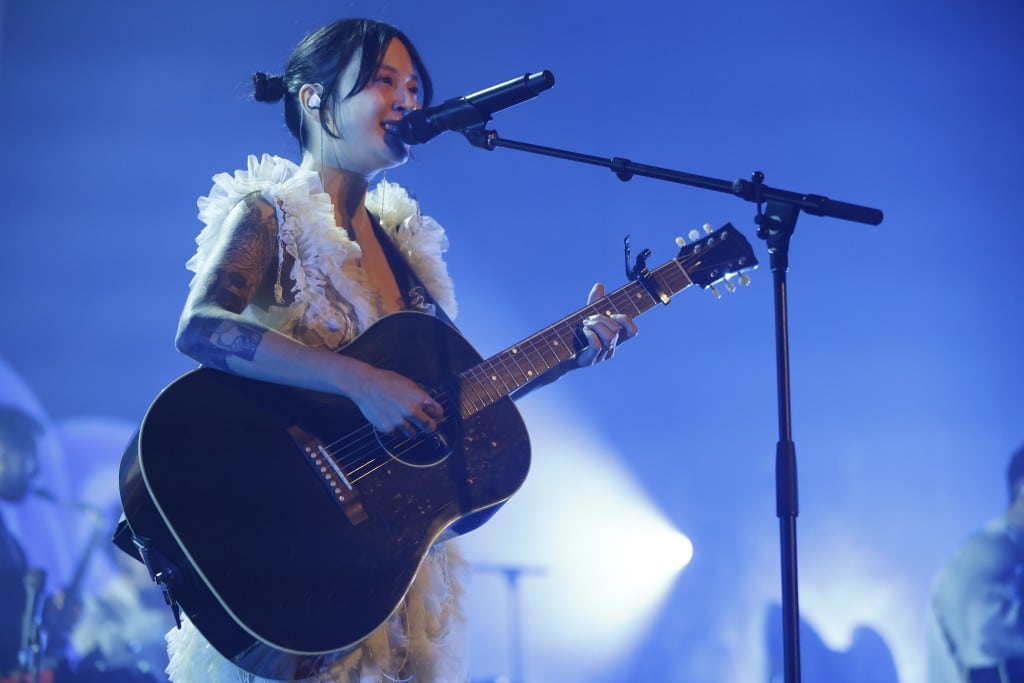
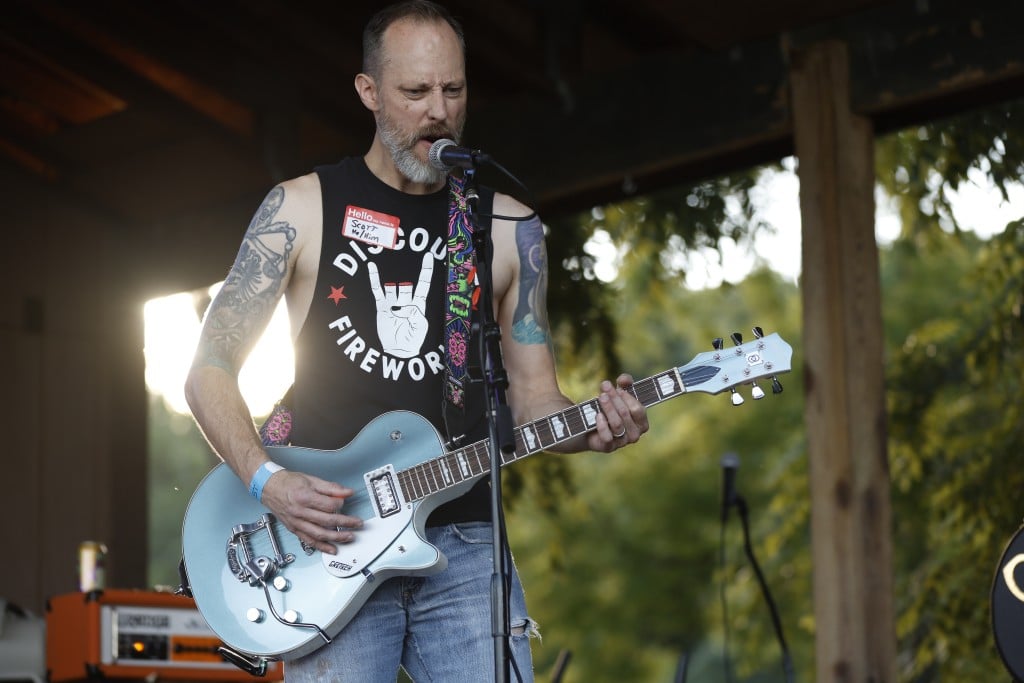
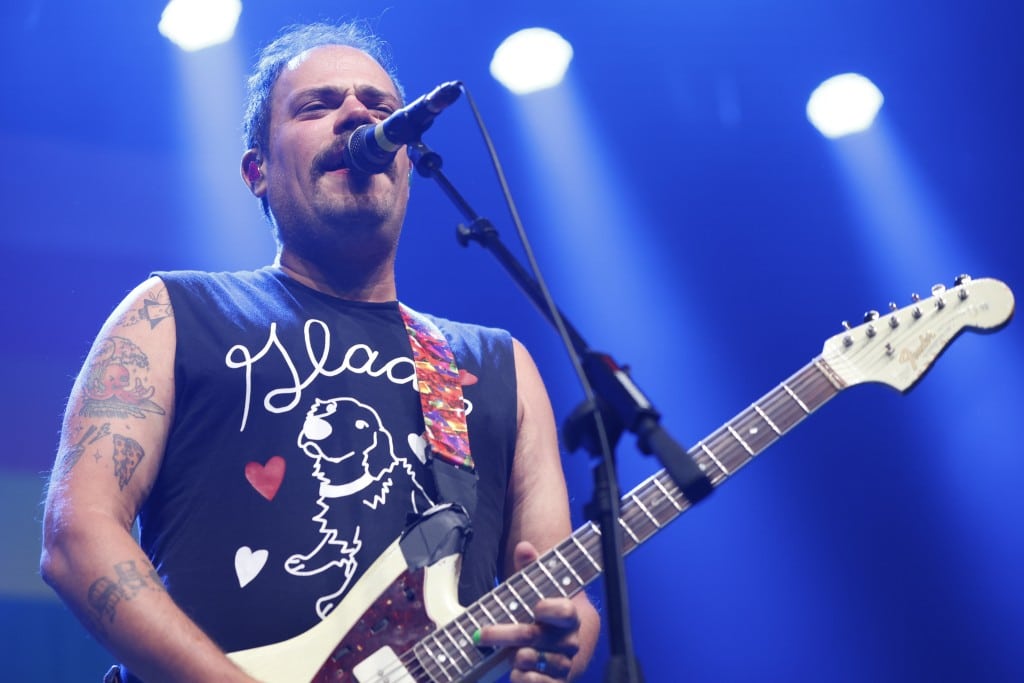
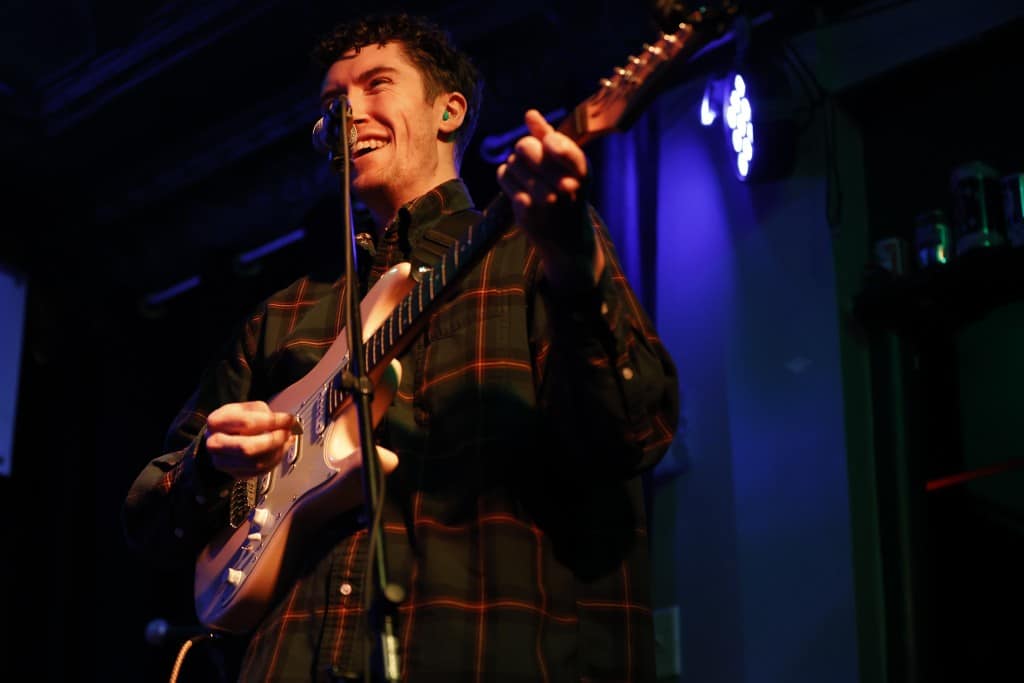
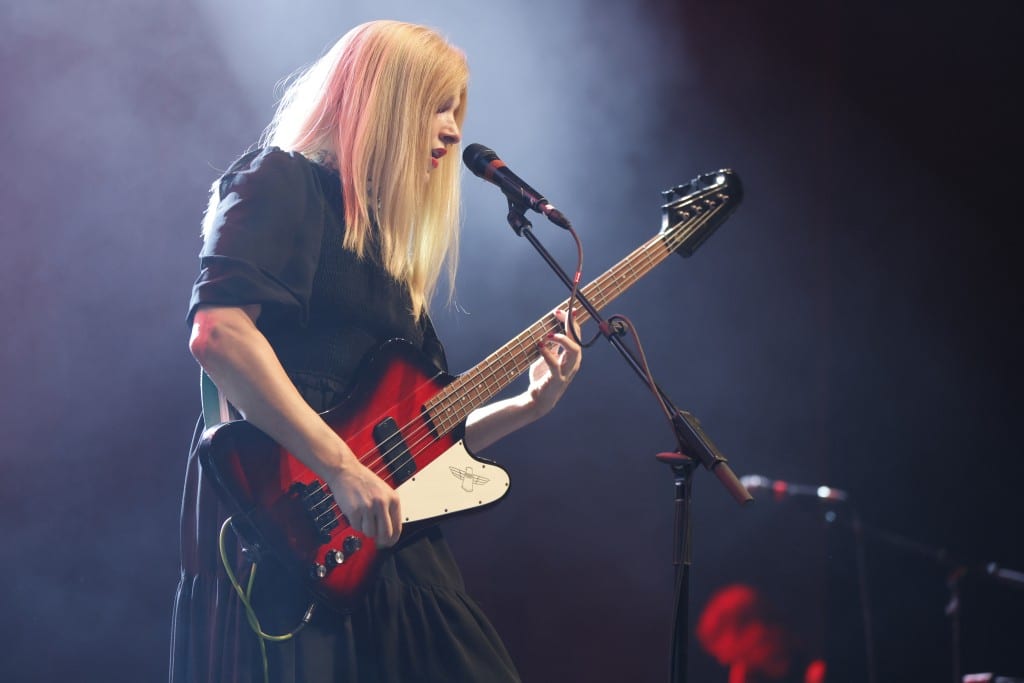
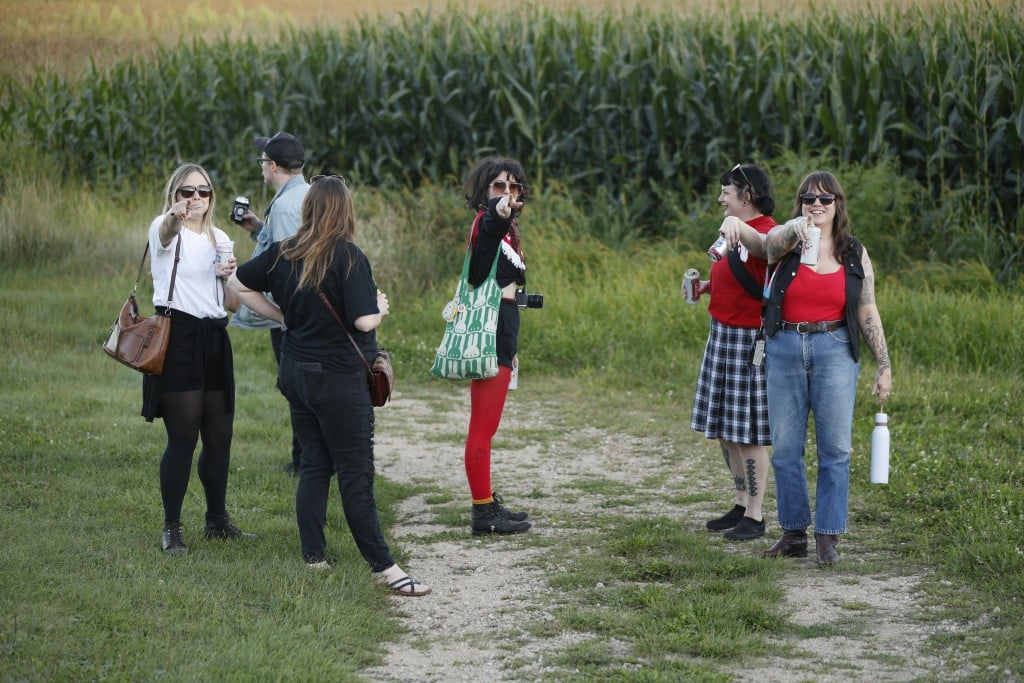
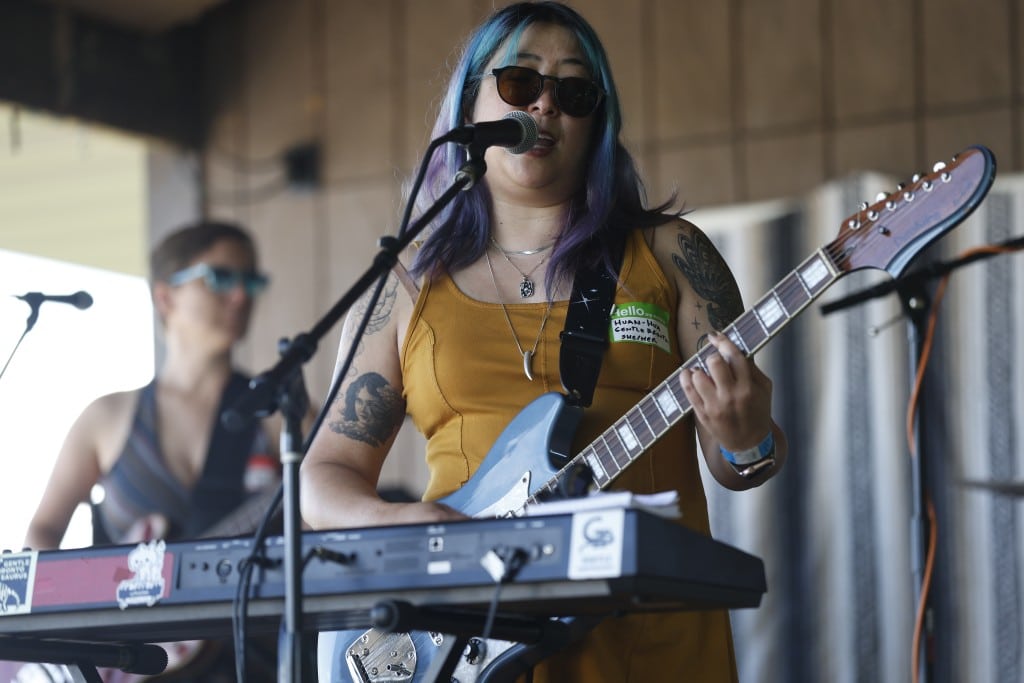
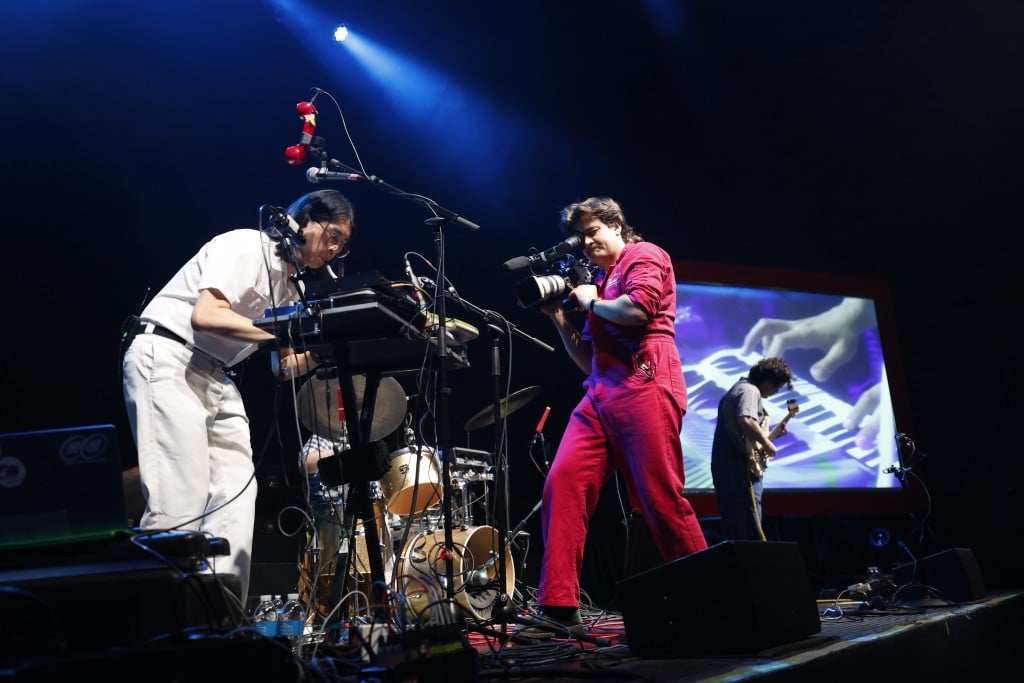
When it comes down to brass tax: community is what keeps us going. And, for the first time in ages, I documented shows I played about as heavily as I did at shows I attended. All of the images and videos taken in either situation were shot with the intent to showcase both the musicians at their center and the broader community that can be fostered through music. And that community extends far beyond the city’s limits, but still impacts Madison’s music landscape. Whether it’s by way of touring bands routed through here as a result of those connections, or local Madison bands being invited to play farther-out shows where they can effectively represent the city, there’s a meaningful elevation at work. And that dynamic enhances the potential for great moments in local music.
It takes a great set to push the imbalances presented by Madison’s major music players away from the forefront of my mind. On that count, only two of the year’s “big” shows delivered such a reprieve. Seeing Japanese Breakfast’s sold-out, tour-ending Sylvee appearance was surprisingly heartwarming, given my long-standing appreciation of bandleader Michelle Zauner’s work. Zauner herself was kind enough to contribute a 2014 guest essay to my currently mostly-dormant blog, Heartbreaking Bravery, and I’ve been fortunate enough to hold a few fond memories of her on a social scale. Most of that can be directly attributed to the time we spent in each other’s orbit in New York City, which itself reflects yet another instance of communal bond development within arts spaces. Witnessing the results of her ascent have been meaningful, and something I’ve quietly cherished. Seeing how far she’s come as an artist—and the amount of support she’s amassed—elicited real emotion, and instilled a sense of thankfulness. (Lucy Dacus’ home-run headlining set at Milwaukee’s Riverside Theater in July brought up similar emotions, for similar reasons, and the rousing back-half scream-a-long portion of “Night Shift” was a truly perfect moment.)
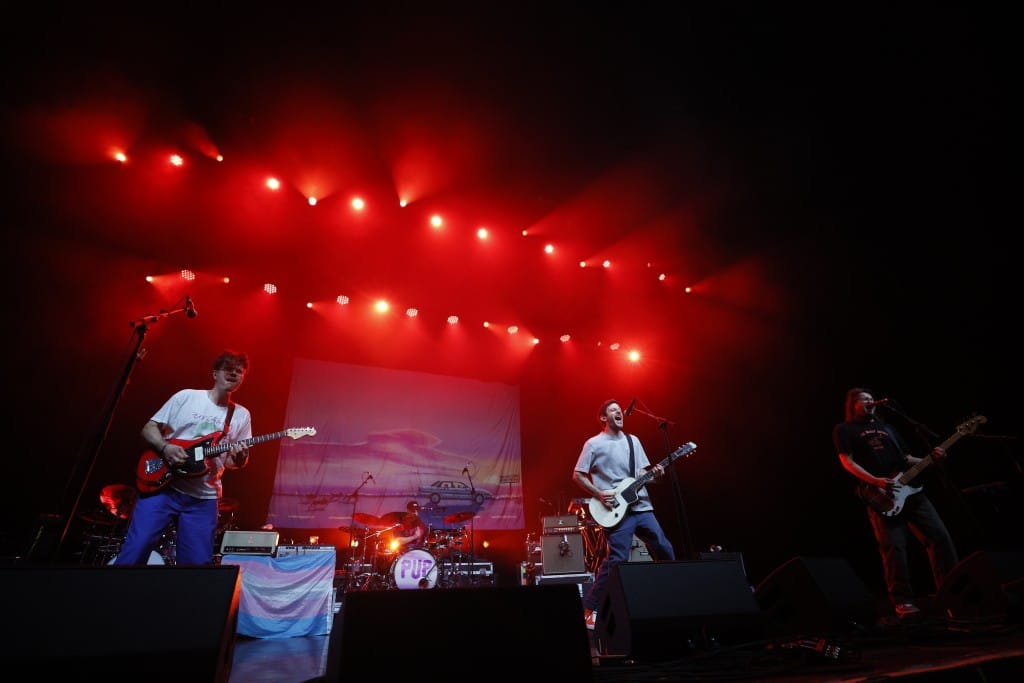
PUP and Jeff Rosenstock‘s co-headling set at The Sylvee was my favorite local high-capacity show of the year, for a multitude of reasons. Not only was it a hyper-intentional celebration of friendship and community—the “double band” section was truly a thing to behold—but it also acted as an incidental connecting point. While the bands were tearing it up onstage, I also found enough time to connect with other local and regional musicians whose work I genuinely love and continue to champion: Julia Blair, Graham Hunt, and Philadelphia’s Augusta Koch (Gladie, Cayetana, Universal Girlfriend). From the stage to the crowd to the merch table, there were potent reminders of connective tissue that has done nothing but strengthen over the past decade-plus. Few experiences in 2025, inside or outside of music, were quite as heartening.
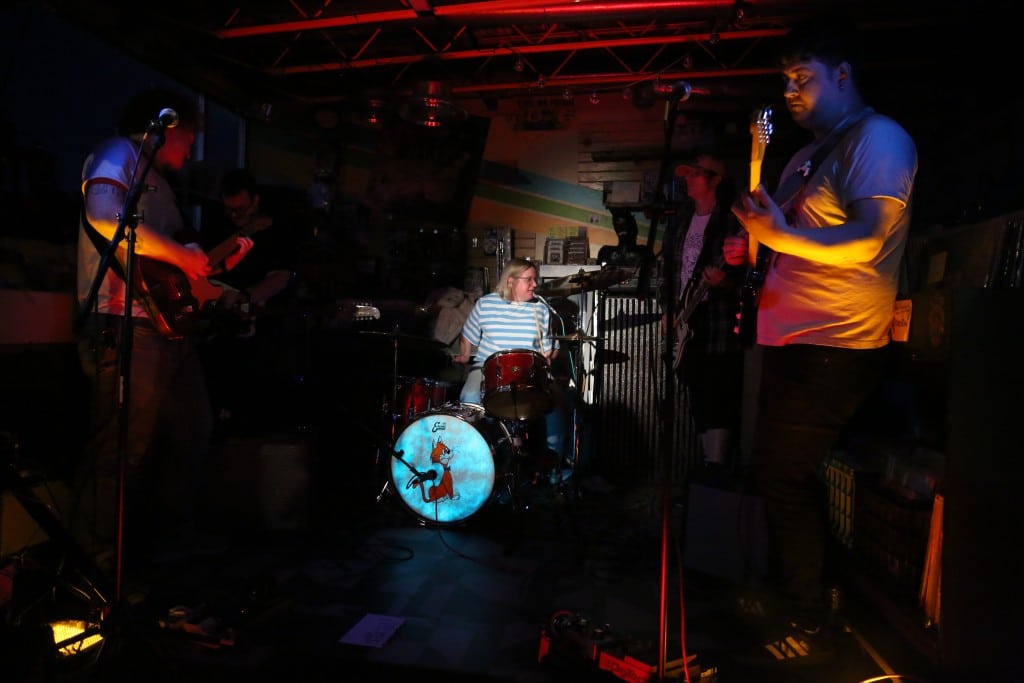
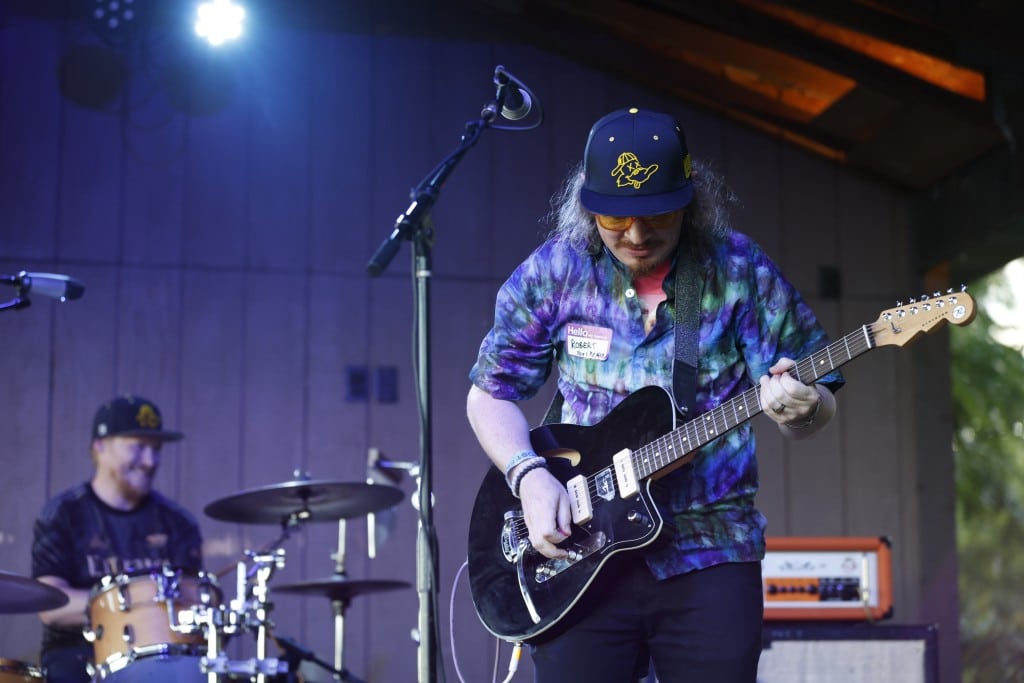
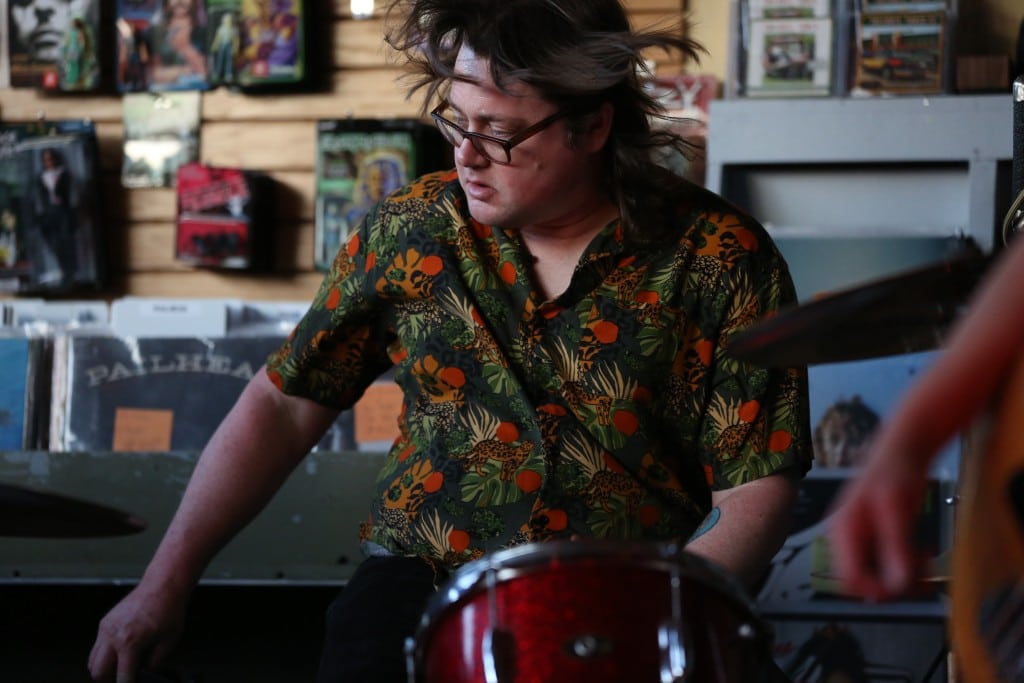
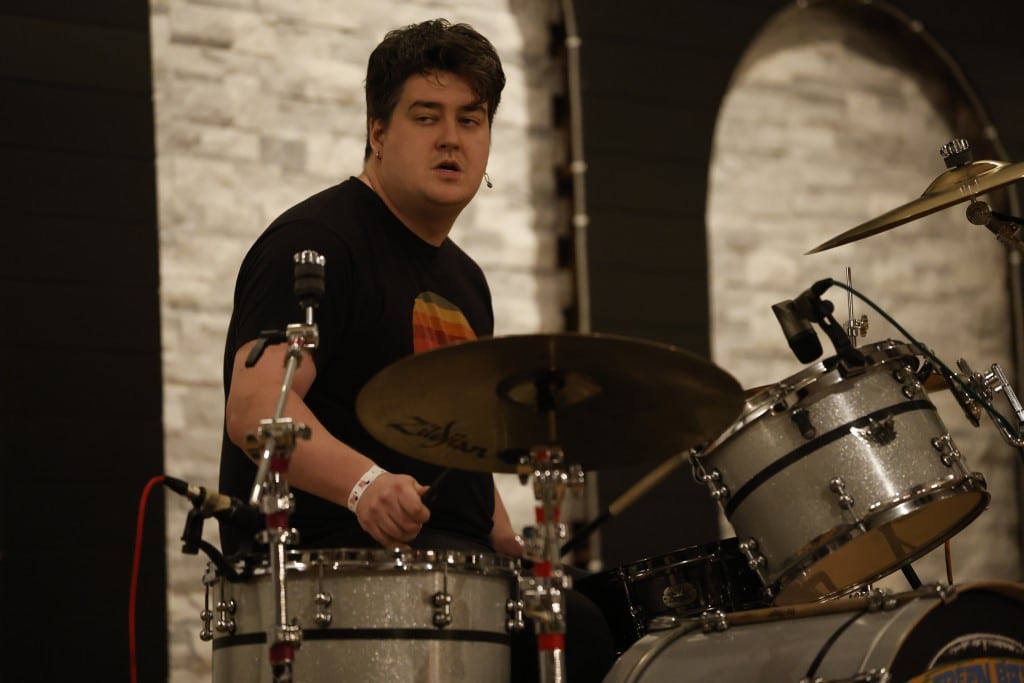
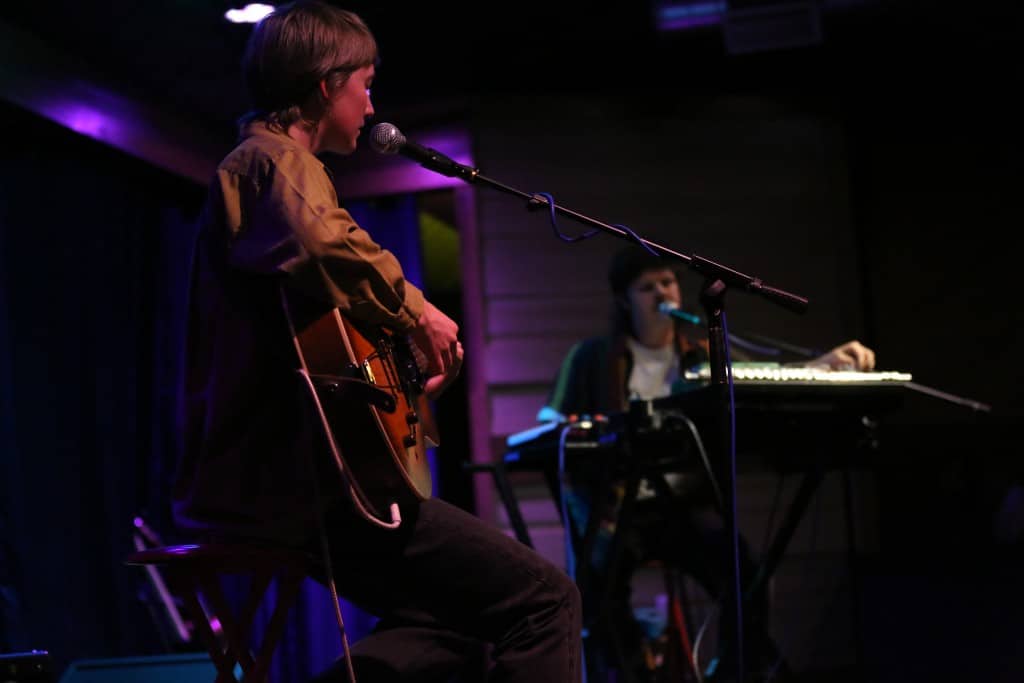
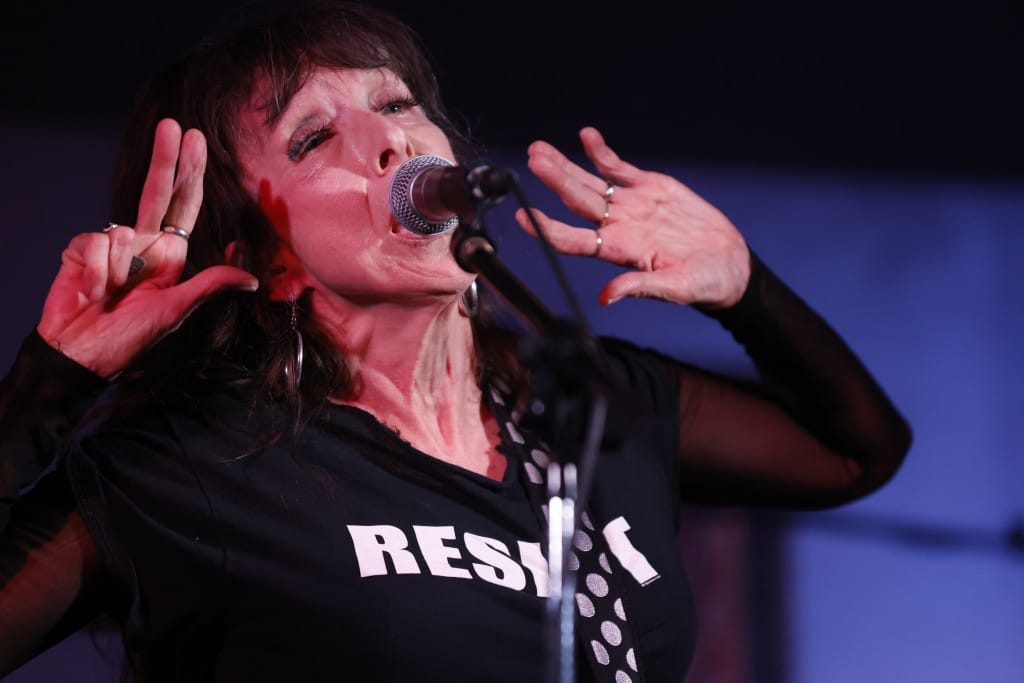
Outside of those experiences, my strongest live music memories across 2025 took place at shows where I wasn’t solely an attendee. Immediately after our New Mexico recording session, we were able to join Romeo Void‘s Debora Iyall and her Raton 3 bandmates for a multi-band rendition of “Never Say Never” at the Trinidad Lounge in Colorado. At that show, I was elated to reunite with music journalist Sasha Geffen, who was a key figure in my development as both a person and a writer. And yet again, those Southwestern moments highlighted the inextricable bonds of practicing and maintaining community. Whether it was joyful collaborative efforts or reuniting with cherished friends, it’s hard to miss the unifying dedication that acted as a central anchor; the restless, relentless pursuit to support not just music, but each other.
Unified dedication also helped ground the two multi-band weekend runs we co-engineered in 2025. One was a two-day run with Milwaukee punk power trio Jinksie, and local Madison rippers Heather The Jerk. Our shows in Milwaukee and Green Bay were full of unapologetic zip and easy camaraderie, and being able to finally catch a Jinksie set—after trying and failing for a few years—was an additional bonus. On Heather The Jerk’s end: watching the full-band version of that project continue to confidently operate as a volume-pushing wrecking crew wasn’t just deliriously fun, but a galvanizing process that ultimately renewed a fire to keep creating and performing music. It’s rare to return from those short runs feeling more energized than exhausted, and it takes exceptional bands and people to make that happen: Jinksie and Heather The Jerk both qualify.
A little under two months later, we reunited with Heather The Jerk at the sprawling GBUFO Fest in Green Bay, on a day that featured a host of long-held personal connections. Perhaps most notably, Sex Scenes‘ bassist—and Girls Rock MKE Executive Director—Mary Joy, who has been a figure in my life since we were both in grade school. Few people are stronger reminders, or pillars, of how intentional, organizational, on-the-ground community-building positively impacts local music than Joy. And being able to weave in and out of each others’ lives, no matter where either of us are (or were) living, continues to stick out to me as a poignant example of how motivating and fulfilling intentional community can become. And, taken at face value, Sex Scenes’ set was a blisteringly sharp reminder of the power of well-executed hardcore and proved a clear-cut highlight, alongside exceptionally strong sets from the day’s Madison-based acts (Celebrity Sighting, VomBom, and, especially, Heather The Jerk). Once again, the broader experience of GBUFO Fest tapped into a growingly incessant compulsion to create and engage with music on a more immediate, practical level.
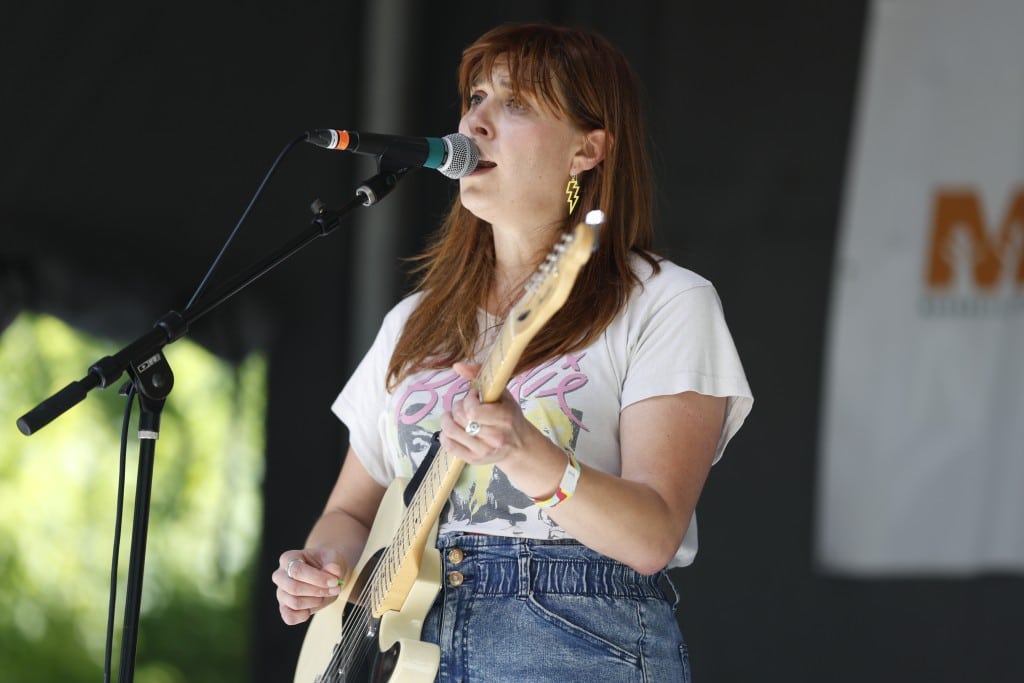
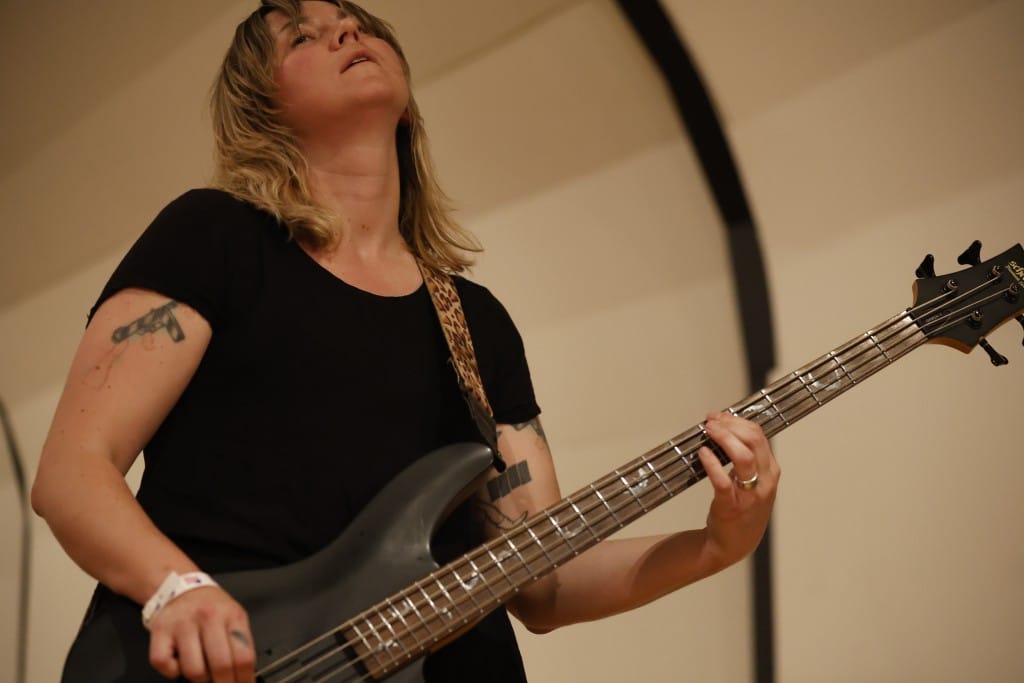
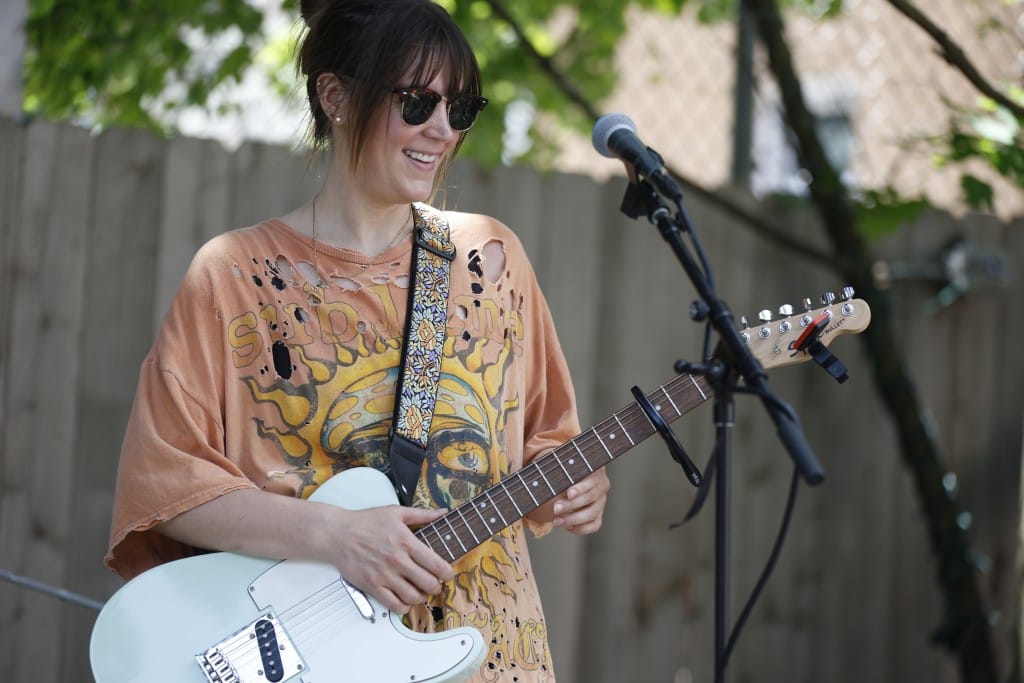
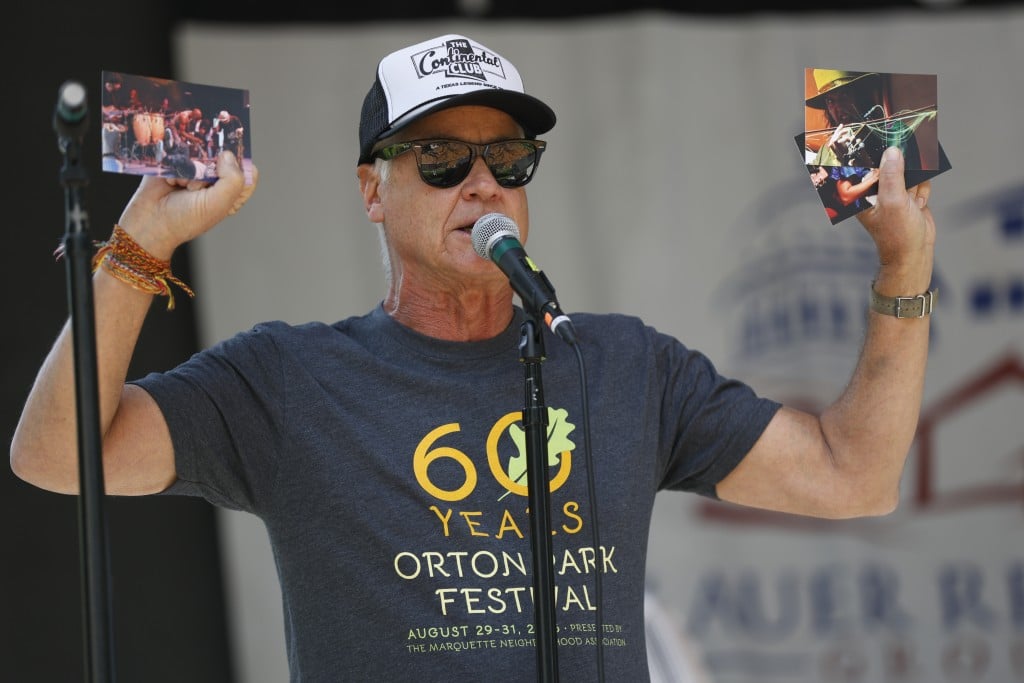
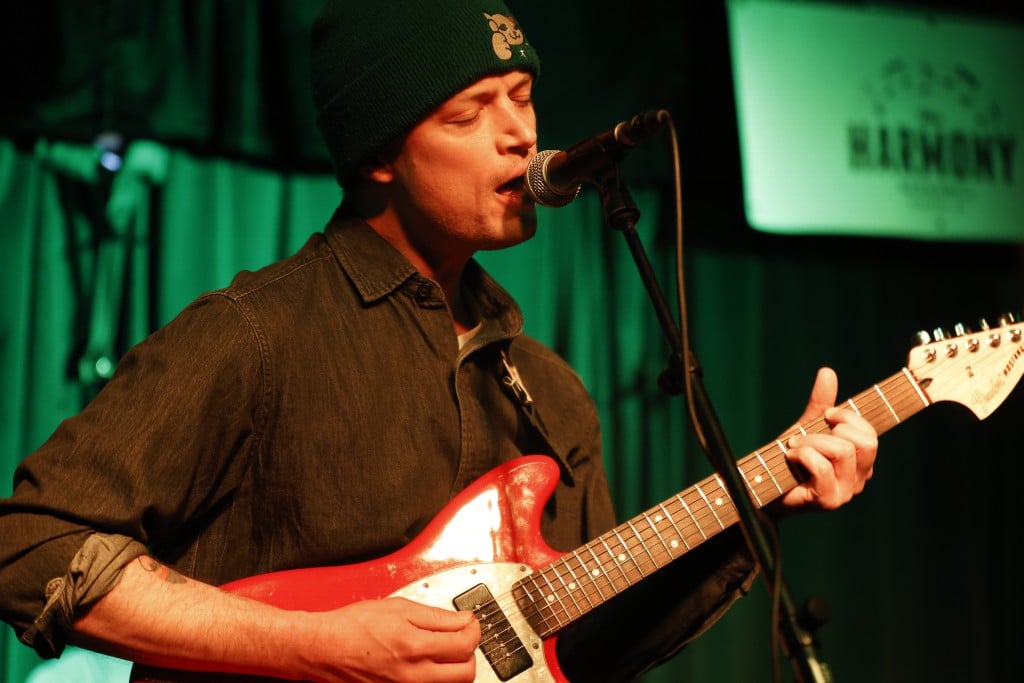
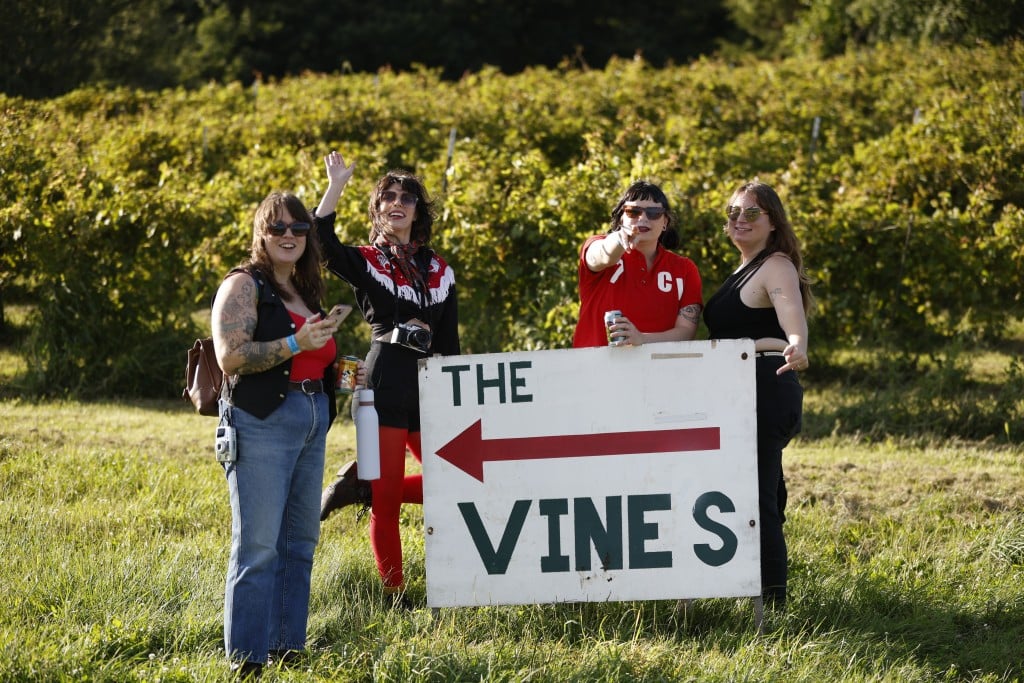
Our other weekend run consisted of three stunningly gorgeous summer days that took us from Wisconsin to Minnesota, joined by the retro-leaning Minneapolis “y’allternative” quartet Crush Scene. In Milwaukee, we received a beautiful introductory reading from “band-introducing poet” Thax Douglas, and made a tentative bond with our weekend tourmates. (And I’d be remiss not to give their dual-shooting bassist, Janet Kolterman, an especially appreciative and heartfelt nod for capturing a string of beautiful footage of our own sets over that weekend.) In Sauk City, that emergent cross-band bond became near-unbreakable over an unforgettable, picture-perfect experience at the Future Ghost Club-presented Ghost Fest, which included several other bands with Madison-area ties. By the time our Minneapolis show wound the weekend to a close, it felt like leaving found family. Sometimes three days is all it takes to etch people into your heart forever.
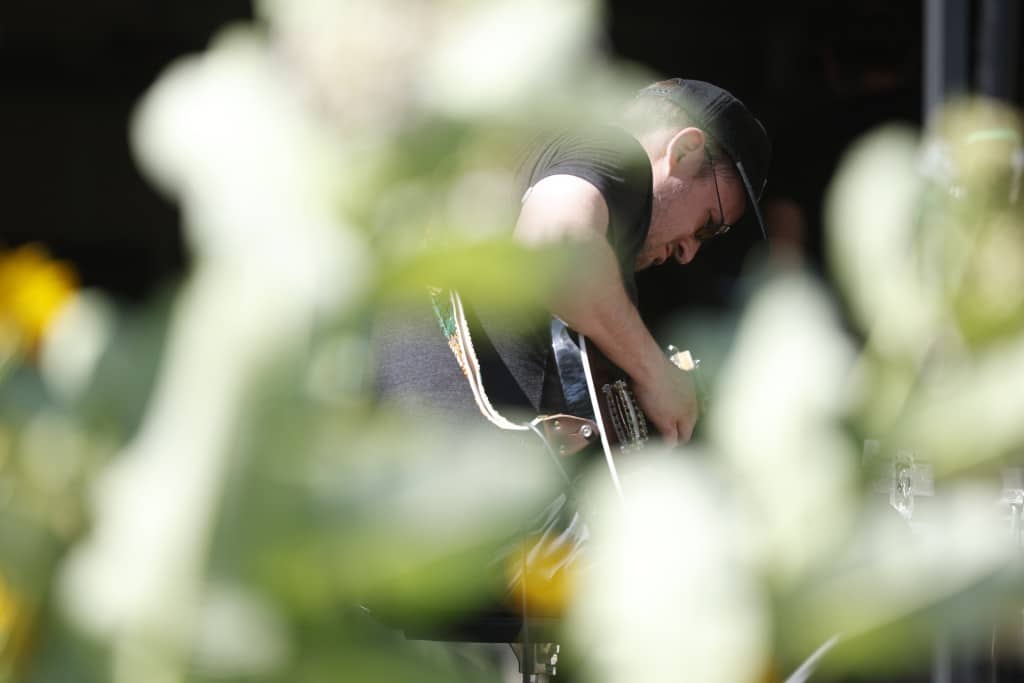
Sauk City was the closest we came to playing in Madison proper in 2025, but a number of local shows still worked their way into my memory. While I didn’t get any professional-grade photos at Atwood Music Hall’s Locals Only showcases, they ranked among my favorite live music experiences in Madison this year. Orton Park Fest set a stage for a surprising local reunion (Poopshovel) and a hard-won moment of cathartic release for indie-pop quartet Heavy Looks, who delivered a breezily confident powerhouse set with Eric Hartz behind the kit. Make Music Madison—while still subject to a number of fair criticisms—played host to a few great showcases that truly thrived when they embraced multi-artist collaborations, leaving a small, memorable mark of its own.
Multi-artist collaboration also wound up playing a role in our own event—co-presented with Madison Area Music Association (MAMA)—which highlighted a small group of emergent acts: The Stoplights, Rockstar & Elise, Marigold Motel, and Jonathon Millionaire. (On a personal note: getting that show across the line took a unified group effort, and I’m proud of what I saw in the communications from each and every one of those acts.) Across every show I attended this year, virtually no moment felt more immediately arresting than The Stoplights’ heartstring-pulling solo acoustic rendition of folk standards “Too Old To Work, Too Young To Die,” and “This Land Is Your Land.” Rockstar & Elise proved they were well on their way to establishing themselves as a mixed-media staple in the Madison music landscape, Marigold Motel flashed unmistakably polished chops, and Jonathon Millionaire doubled the night’s volume and proved an explosive headlining act. MAMA representatives spoke directly to the power of community in between sets, lending to a welcomely celebratory feel and a sense of unshakable wholesomeness.
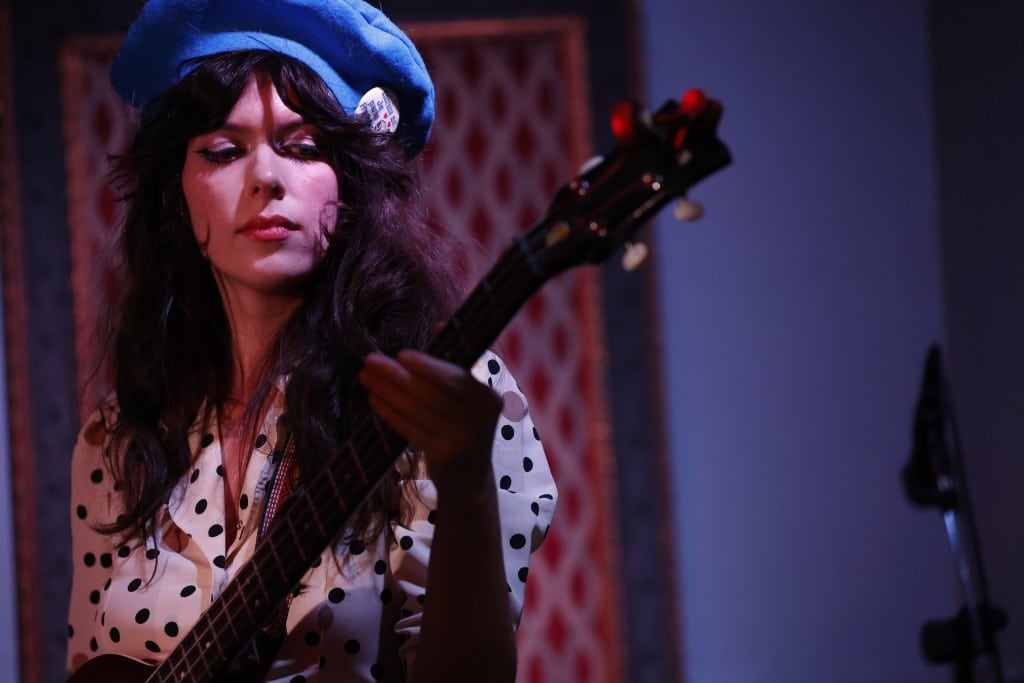
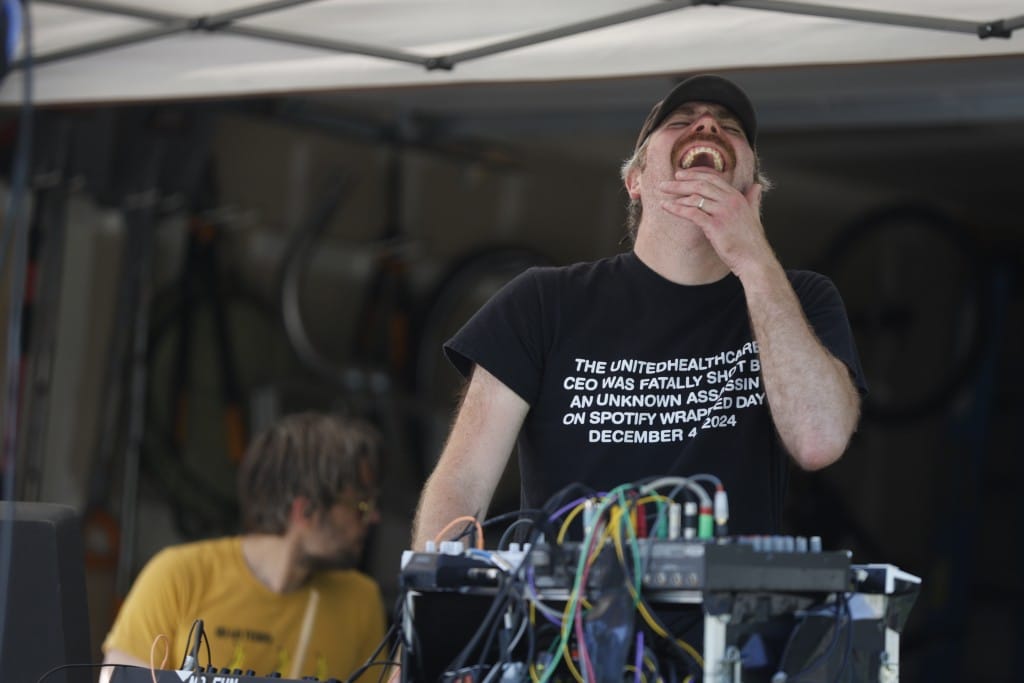
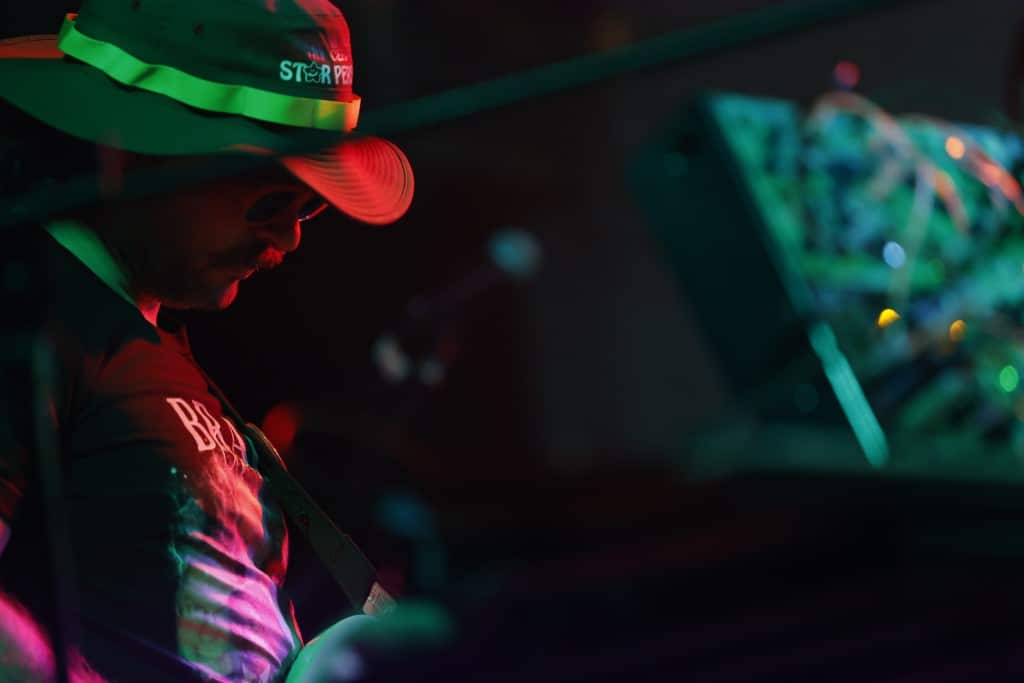
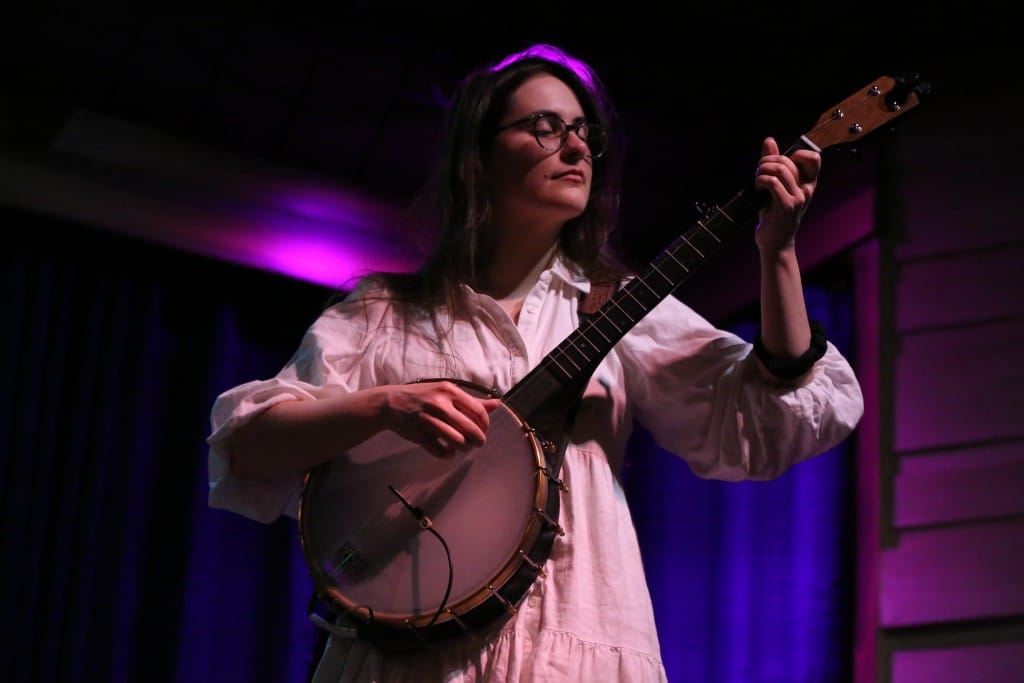
For a long time, these moments and developments have been building upon each other. And it has felt meaningful to be able to take stock of many of them in a journalistic capacity. But it’s also become exceedingly clear that my position as a Tone Madison editor-owner has become incompatible with the increasing demands being presented by ground-level engagement opportunities. Uniformly, I have felt that any personal sacrifices—missed or turned-down shows, delayed projects, various social cancellations, etc.—have been meaningfully balanced out by the work I’ve poured into Tone Madison over my time here. But with new opportunities emerging, a quickly-ascending pile of time-intensive professional projects, and the prospect of pursuing longer tours, the amount of effort my work outside of Tone Madison requires is no longer compatible with providing my work as an editor-owner the attention it doesn’t just demand, but deserves.
Put simply: I am stepping away from my position as a co-owner and editor of Tone Madison. But I will not be disappearing from Tone Madison bylines entirely. Before working my way up the Tone Madison ladder as a writer-turned-editor-turned-owner, my work as a multimedia music journalist was most consistently visible at Heartbreaking Bravery. In 2026, Heartbreaking Bravery will resume more consistent publishing (though it certainly won’t be daily, as it once was; and you’re welcome to follow along with its ongoing development here and here). I will still provide original material to Tone Madison in a freelance capacity, either as an author, photojournalist, or both. The vision of Tone Madison is one that I firmly believe deserves support, and the only way I will be exiting it entirely is in the event the publication permanently shuts down.
I can not thank ex-Tone Madison publisher Scott Gordon enough for bringing me into Tone Madison‘s fold, and have nothing but confidence in the three remaining editor-owners: Christina Lieffring, Juan Carlos Garcia Martinez, and Grant Phipps. They’re an extremely capable ownership and editorial group, and I’m genuinely looking forward to witnessing how they shape Tone Madison going forward. I have seen them rally through adversity, show spine when spine needed to be shown, and have received every indication that Tone Madison will continue to be in the hands of people who deeply, profoundly care about their local communities. That’s an invaluable component of journalism, and it deserves your celebration and support.
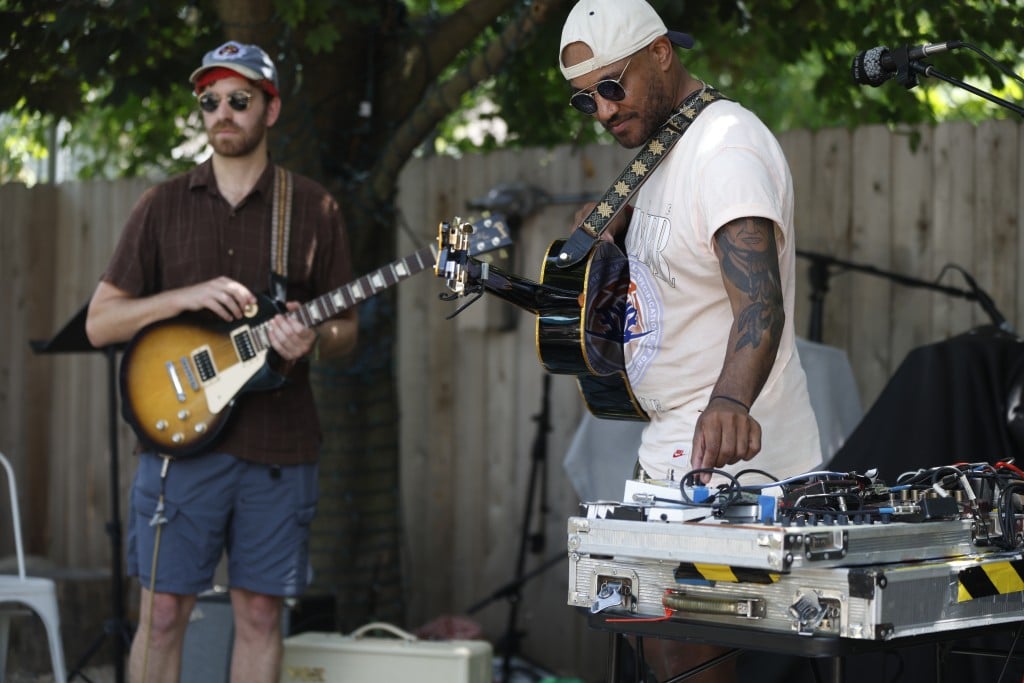
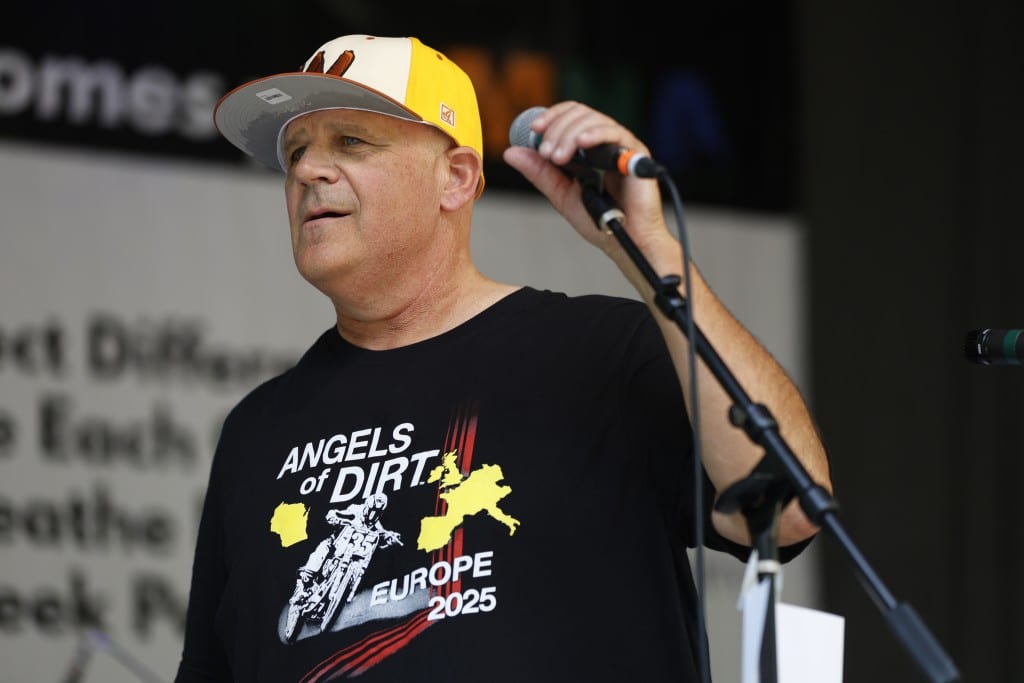
As for myself: apart from resurrecting Heartbreaking Bravery from its purgatorial state, I will be expanding my solo recording project, students (lowercase intentional), into an entity that extends beyond the scope of hastily-recorded material for fundraising compilations. I’ll continue to contribute to meaningfully increasing the investment being collectively poured into Holly And The Nice Lions. And, on an external professional level, I will be spending the bulk of my time developing and producing the relational therapy podcast, Untangling Intimacy: Build Your Therapy Toolkit. In partial tandem with that role, I will be increasing my output as a multimedia producer over the course of the year. A number of projects on that front are already actively underway, and I’m looking forward to dedicating real time to their refinement and release(s).
It’s been a privilege to be able to serve Madison’s music community through Tone Madison, and I’m thankful to have seen confirmation after confirmation that people still genuinely value both local music and reporting that treats it with the amount of respect it deserves. I’m looking forward to continuing covering Madison’s music scene at a lessened editorial output rate, and am just as excited to interact with it on a more immediate basis, whether as a promoter/organizer, attendee, or performer. What Tone Madison provides is not lost on me, and it’s been an honor to leave a small imprint on its history.
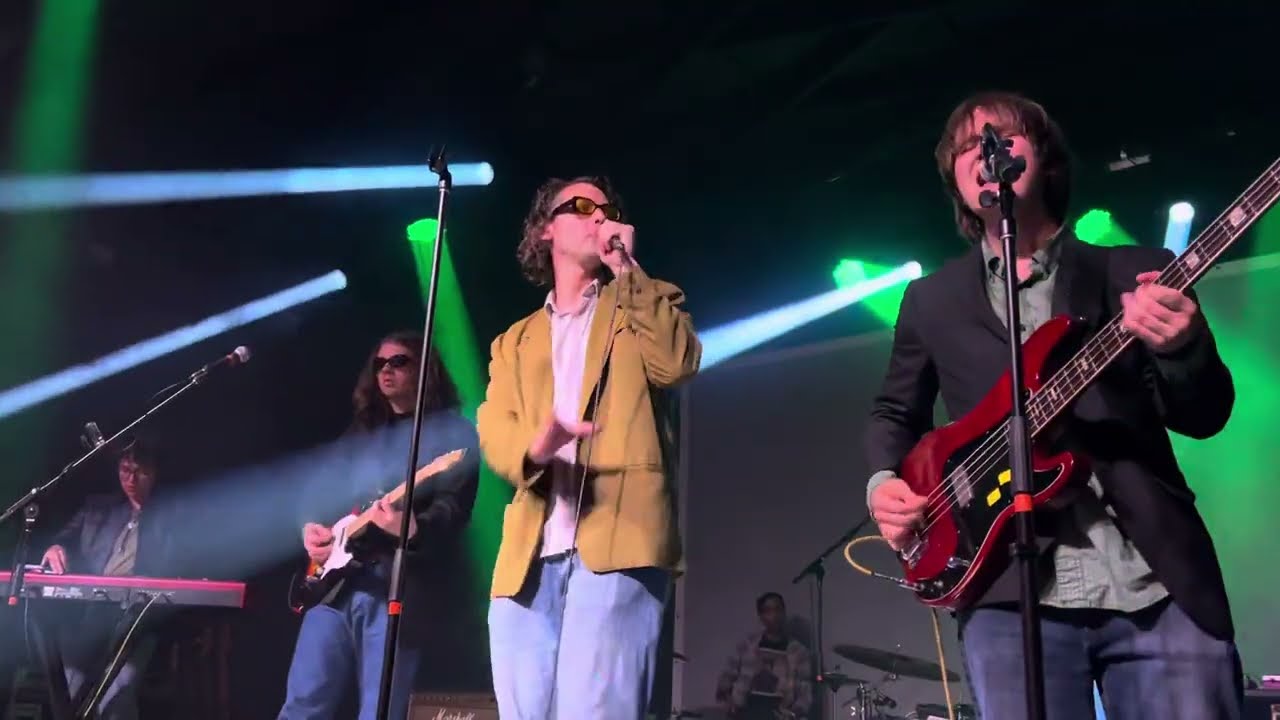
In the past six-plus years, I’ve made more music-focused memories than I can recount, whether acting as a representative of Tone Madison, or of my own volition. In the past year, that reality held more true than ever. While it would be literally impossible to communicate the breadth of these memories’ collective meaning, the least I can do is offer a video playlist of some of the musical moments that resonated for me (as one of many Madison-based musicians), throughout 2025 and beyond. [Editor’s Note: this playlist will be receiving future updates. Feel free to check back in for expansions as you please.]
Thanks for reading, listening, watching, and above all, caring. As is always the case: the music doesn’t stop just because someone leaves the venue. Music and journalism are—and will forever be—rooted in community, and I can think of no central note more fitting to go out on than that one. I’ll see you at the shows.
A full Flickr gallery can be accessed here.
If you would like to pitch a music-focused piece, please direct your pitch to Tone Madison’s general editor line: editor@tonemadison.com. We’re always looking for new pieces, new voices, and new local releases to consider for coverage.
We can publish more
“only on Tone Madison” stories —
but only with your support.
Author
Related Articles
Don’t shrink the Common Council and County Board
Madison needs more representation, not less.
Starter homes? No, we need starter apartments
As homeownership continues to be out of reach for too many Madisonians, we should build more owner-occupied, multi-family housing.
Madison needs a wake-up call
The longer we pretend this City is a progressive haven, the more people will be harmed.