
Tone Madison’s favorite records of 2025
A celebration of 20 local releases that defined the year.
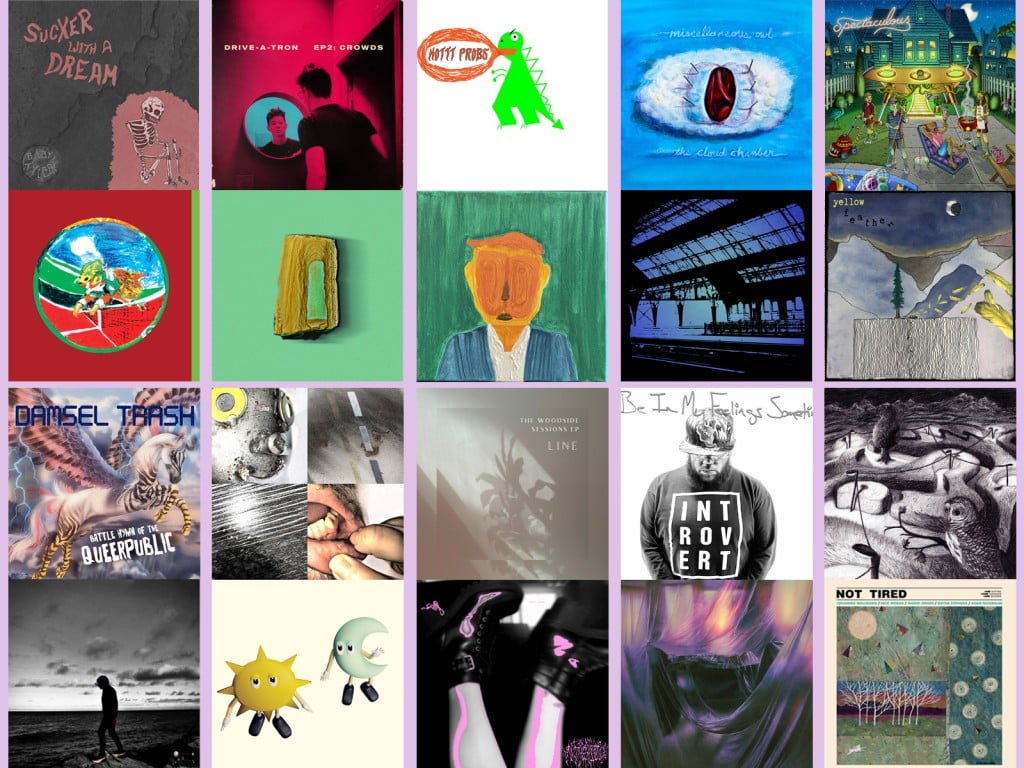
In the introduction for our favorite songs of the year list, I keyed in on the rapid, ongoing escalation of fascism and the importance of preserving and forwarding culture in the face of that threat. That’s still on the mind of everyone who contributes to Tone Madison, and we know it’s likely weighing on our readers as well. But for our record round-up, I want to shift focus to more plainly celebrate what Madison musicians have achieved outside of that context, and on their own terms.
There are—and will always be—small reasons to celebrate in any given year. Music offers one of those reasons, not just for artists, but for fans. As exhilarating as it is to hear your favorite band’s latest work, it’s just as momentous and cathartic for those artists to finally get that work into the world. That simple dynamic is one often lost to the ether, going unremarked upon more often than not. But those moments can and do hold weight, and they’re deserving of celebration. There’s a reason why release shows are often referred to as parties, and that’s not likely to change.
The end of the year provides a perfect opportunity to look back and reflect on the music that meant the most to us, or stayed with us the longest. It becomes another time period in which we can extend those initial celebrations in a meaningful way, and it’s a modality that has been wildly underused in Madison for the past several years.
Our local musicians deserve far more notice than they get on average for producing superlative work. Sure, there are contexts that impact that reality, but it doesn’t make it any less true; a band that can’t afford a PR agency or doesn’t have the right connections should not automatically be doomed to hyper-obscurity because a market is too saturated. Too many extraordinarily gifted songwriters have gone undiscovered because they didn’t have the social cache or stomach necessary for the borderline-mandatory modern marketing tactics needed to cross prospective listeners’ paths.
Despite that, as well as Madison being a generally-overlooked hub for local music on a national scale, a record or two on this list still managed to make a significant impact outside of state lines. And while that doesn’t have to be anyone’s primary goal (a few of the best bands I’ve ever seen never consistently played outside of their hometown), it’s still deserving of some additional, local celebration. From solo, piano-focused records to fearsome punk demos to experimental ambient work, there were plenty of Madison records to celebrate across 2025.
Here are 20 of our favorites.
Baby Tyler, Sucker With A Dream
Former Proud Parent Tyler Fassnacht’s shit-kicking solo punk project Baby Tyler’s venomous, hardcore-tipped fury is undeniably potent. Sucker With A Dream stars a wild-eyed Fassnacht digging in his heels and setting to work over the course of a dozen songs, only three of which—”Rinse/Repeat,” “Entertain,” and closer “Old Advice”—exceed the two-minute mark. Every single one features a combination of blistering guitars, barked vocals, and vengeful drumming. Sucker With A Dream‘s piss and vinegar nature is, near-paradoxically, both a far cry and a sensible development when viewed alongside the bulk of Fassnacth’s existing discography, which consistently keys in on sugary fun and plaintive melancholia (including a ridiculously fun EP as Baby Tyler).
Unsurprisingly, given Fassnacht’s songwriting pedigree, the songs on Sucker With A Dream are dynamically varied, and don’t grow stagnant over time. Keen-eared listeners will find an unexpected moment or three to keep their attention rapt and unwavering, even as the onslaught of hardcore-leaning punk proves relentless. In terms of narrative, Sucker With A Dream lives up to its caustic, self-effacing title. The vast majority of the album keys in on feelings of frustration and displacement while still showcasing perseverance, and ultimately, hope. “In the end, it’s hard to tell,” spits Fassnacht on the hard-swinging, penultimate “Hard To Tell.” While that may be true for the song’s protagonist, it’s decidedly easy to come to a conclusion on Sucker With A Dream as an album: it’s good as hell.
Combat Naps, This Was The Face
Multi-instrumentalist Neal Jochmann’s sometimes-band, sometimes-solo project Combat Naps is responsible for one of the more fascinating evolutionary arcs in Madison. Combat Naps’ stylistic oscillations never got in the way of superlative material, despite the noticeable differences between records. This Was The Face genuinely cuts across as a culmination of that varied work, bridging indie-pop, progressive-minded punk, twee sensibilities, and—critically—acutely-realized, whip-smart songwriting. Reliably mid-tempo and overwhelmingly nuanced, the album constantly pays dividends for attentive listeners.
Quick-lilting vocal melodies, layered harmonies, and impeccable production further enhance Jochmann’s ear-catching artistry, evidencing an irrepressible musicality. Late-album track “Nothing Ever Happens To Me,” brings rollicking keys back to the center of Combat Naps’ musical equation in an otherwise guitar-forward affair, providing a startlingly gorgeous wrinkle to the proceedings. This Was The Face‘s closing track, “A Big Nothing,” stands out as a spiritual cousin to the inventive breakout indie-rock act This Is Lorelei, showcasing a similarly intoxicating strain of genre-restlessness and subversive compositional tendencies. Fittingly eye-widening and predictably unpredictable, it’s a powerfully thoughtful moment that provides a perfect end-cap to Combat Naps’ most formidable collection to date.
Damsel Trash, Battle Hymn Of The Queerpublic
More than a decade into their career, scuzz-punk duo Damsel Trash keep finding ways to thrill. Battle Hymn Of The Queerpublic is a righteous piece of queer-centered frustration rooted in shared solidarity and the goal of cathartic release. Drummer/vocalist Emily Mills—a long-standing Tone Madison contributor—and multi-instrumentalist Meghan Rose lock in across a dozen tracks, the bulk of which are fiery originals teeming with intentionally overblown, metal-tipped distortion, and the remainder of which constitute a winsomely irreverent closing triptych.
While it’s worth staying for those unexpected covers, the heart of Battle Hymn Of The Queerpublic beats through its original works. Whether it’s the threatening whispers of “Miso Cup Soup Bits,” the anguished screaming of “Phone Party > Doomscrolling,” or the disco-beat danceability of “Polycule Paradiso,” the duo drums up an unshakeable sense of spirited rebellion that permeates the album. Every track here feels like an emphatic punch to the gut, and a forceful instruction to move towards intentional action. Sneeringly vigorous and unabashedly combative, Damsel Trash’s latest is a welcome molotov cocktail of ideas, ideals, and punk scrappiness.
Def Sonic, Aesthetically Pleading
Johan Petty’s enigmatic, mid-fi strain of noise-laden indie-folk is a moving testament to the DIY artistic spirit. Aesthetically Pleading, the songwriter’s latest album, is chock-full of stunning introspection and rare, transportive beauty. Opener “Soft Skills” acts as a warm invitation for listeners to fully submerge themselves in the album, and those who choose to do so are repeatedly rewarded. Meditations on what it means to be human, the ongoing struggle to meaningfully advance fundamentally basic civil rights, and the search for meaning are scattered across Aesthetically Pleading‘s 16 tracks and 46-minute runtime.
Manipulated vocal layering, melancholic atmospheres, gorgeously plaintive acoustic guitar work, and enrapturing synth tones provide Aesthetically Pleading its core stylistic anchor, and Petty navigates the results of that decision with grace. “Foolhearted,” one of the album’s early tracks, features Petty pushing against despondence, singing “Looking at my life / I see nothing,” in the first verse, before narrating a feeling of airborne flight less than a minute later, implicitly underlining the complex struggle of finding reason and hope within contexts that instill feelings of hopelessness. It’s a small, beautiful moment, on an album absolutely laden with a sense of empathy that resonates well past the final notes.
Drive-A-Tron, EP2: Crowds
Aggressive, in-the-red static comprises the opening moment of Drive-A-Tron’s second EP of highly-danceable, electronic-indebted indie-pop. A few light punk overtones weave in and out of multi-instrumentalist Paul Vash’s playfully kaleidoscopic blend of complementary genres. Each song on EP2: Crowds was released as a standalone single in the run-up to the EP’s release, with three (“Like-Minded Skeletons,” “The Decision,” “Break Your Heart”) coming out in 2024, and “Hot Coals Walking,” and “Take My Money” in 2025. All five act in perfect tandem, gaining additional strength through the benefit of more contextual—and less siloed—placement.
EP2: Crowds doesn’t play like a singles compilation or collection, but rather as a functional whole. Each of the five tracks reinforces a cohesive artistic vision and a narrative sensibility rooted in possibility. “Looks like we’re learning to dance,” sings Vash in a particularly sticky vocal hook on “Hot Coals Walking,” keying in on a sense of excitable discovery that defines the EP. Everything on Crowds is brimming with hopeful possibilities, with Vash effortlessly connecting a web of strings to keep everything tethered enough to be sensible. Sultry, thoughtful, and smooth, the EP is likely to act as Vash’s strongest artistic calling card for years to come.
Andrew Fitzpatrick, Forest Calendar
Andrew Fitzpatrick’s pedigree as one of Madison’s most visible experimental musicians is undeniable. Whether carving out a foothold as an unavoidable fixture in the local music community through live programming, or through his contributions as a band member in projects like Bon Iver, All Tiny Creatures, or Volcano Choir, Fitzpatrick’s been a relentless force. Forest Calendar, Fitzpatrick’s latest solo work, is a surreally hypnotic example of the multi-instrumentalist’s mastery of compositional craft.
Fitzpatrick forces listeners to lean all the way in on Forest Calendar, in an effort to unspool narrative intent over hyper-acute decision-making regarding levels, field recording placement, and synthesis. In the case of the latter, Fitzpatrick slyly coaxes out a double-meaning through effective synth work but also via an overarching album structure that plays into the cyclical nature of the album’s title. Emergence (or attack) and decay play pivotal factors over Forest Calendar‘s nine ambient, noise-damaged electronic tracks, feeding into what ultimately becomes a grandiose—albeit tastefully understated—statement about the nature of life itself.
Fred Really, Black Pudding
Supa Friends’ Alex Driver’s series of haymakers over the last few years across an array of projects has been revelatory. From Ruwa Alien School to Dro Cup to his long-standing work as Al D to his new project, Fred Really, Driver’s produced a discography that’s a few cuts above superlative. Fred Really’s first few releases, especially, have pushed Driver to an upper echelon of artistry that eschews the various restrictions of his other projects to mesmeric effect. Black Pudding is Driver’s first full album under the Fred Really moniker and stands out as a jaw-dropper.
Blackly comedic, darkly hazy, and unquestionably sharp-witted, Black Pudding is the true culmination of Driver’s artistic growth as both a producer and an MC. From a musical standpoint, Black Pudding is in league with some of the best indie-rap to have been released over the last several years, with billy woods standing out as an especially strong touchpoint. “Piece of my head is now loose and unseen” raps Driver—through untold layers of vocal manipulation—on “Industry Insomniac,” underscoring an undeniable truth: Driver is rapping his head off on Black Pudding. With an over-abundance of rapid-fire thought(s), it’d be a wonder if more than half of his listeners were able to keep up with Driver’s furiously-paced punchlines, observations, and entendres on a first listen. Then again, part of Black Pudding‘s appeal rests in its endless replayability; the exhilaration of parceling it all out never wears off.
Graham Hunt, Timeless World Forever
For a decade and a half, Graham Hunt has steadily worked his way to the forefront of indie-punk in the upper Midwest. After moving from Milwaukee to Madison in the late 2010s, Hunt has maintained a torrid pace, unleashing one superb album after the next, on a near-annual basis. With Timeless World Forever, Hunt officially pushed through to the national scale, signing to the highly-celebrated punk label Run For Cover Records in conjunction with the album’s release, virtually guaranteeing wider recognition. And that recognition is more than deserved.
“East Side Screamer,” one of the album’s early singles, turned a pained, unrelenting scream into a core hook, punctuating an unwieldy, off-kilter punk ripper that owes as much to its ’90s slacker-punk forebears as it does to the alt-pop acts of the early 2000s. Over his last several albums, Hunt’s been exploring that very territory with increasing effectiveness. On Timeless World Forever, that trend continues, with toe-tapping back-beats, sleek electronic production, and razor-sharp rock n’ roll songwriting coalescing into a potent strain of indie-rock that feels as timeless as the album’s title suggests. (It’s also worth noting that the show-stopping “Frog In The Shower” continues Hunt’s streak of delivering at least one larger-than-life chorus per album.) If there was ever any doubt that Hunt was one of Madison’s brightest emerging stars, Timeless World Forever should leave virtually no doubt.
Hottt Probs, Cream Rinse
Speaking from a plainly personal level, one of my favorite records of all time is the six-song 2011 demo from indie-punk quartet Swearin’, What A Dump. Fourteen years later, Hottt Probs‘ introductory demo, Cream Rinse, is more than strong enough to invoke comparisons to What A Dump‘s unlikely excellence. Hottt Probs’ jaggedly invigorating four-song demo is one hell of a debut, more than living up to the weight of growing expectation. (The spunky, veteran quintet’s been one of Madison’s most exciting live acts for several years, generating a good deal of anticipation for recorded material in the process.)
Cream Rinse is 11 high-octane minutes of seasoned, ass-kicking punk prowess, that enthusiastically seizes the self-empowerment of the riot grrrl movement, the irrepressible energy of the 2000s indie buzz-band boom, and the sharp-eyed clarity of session musicians given free rein. Bookended by two future Madison punk classics—the feisty “Pity Party,” and breathtaking epic, “CCBOOK”—Cream Rinse is going to make one hell of a first impression for those who aren’t yet familiar. Everyone else will be unsurprised that Hottt Probs sound hell-bent on laying waste to anything in their path.
Alex Kalfayan, The Emperor Is An Ass
Hyper-prolific avant-jazz musician Alex Kalfayan’s pointedly-titled The Emperor Is An Ass is the definition of a standout release. From the provocative, eye-catching album art that relays an unavoidably clear message, to the mountainous amount of well-constructed material, everything about The Emperor Is An Ass cuts across as noteworthy. After a quiet year in 2024, Kalfayan returned with a vengeance, releasing five albums in 2025—most of which contain several dozen original compositions—while showcasing genuine musical variety.
All of Kalfayan’s 2025 albums are worth a listen, but The Emperor Is An Ass‘ timeliness and force of conviction offer a rare level of connection. Bowed bass, a host of strong instruments, intermittent vocals, tasteful woodwinds, keys, and more all work in partnership over The Emperor Is An Ass‘ 55-song (yes, 55) duration. All of the titles map out a poem that reflects Kalfayan’s sharp, unapologetic politics, providing an additional, often emotional, heft to the album. The Emperor Is An Ass‘ title track boasts a lilting, melancholic string arrangement and a pensive, plaintive lead melody that betrays a simple truth about the state of current affairs: underneath all the rightful frustration is a wellspring of sadness. The Emperor may be an ass, but at least Kalfayan’s soundtrack offers a lovely respite from the painful realities of his reign.
LINE, The Woodside Sessions
Before LINE guitarist/vocalist—and principal songwriter—Maddie Batzli officially left for New York, they managed to record and release an emotional gut-punch of an EP in The Woodside Sessions. With the help of producer and multi-instrumentalist Charlie Koz, Batzli dusted off a collection of demos, refining them into final versions that stand proudly alongside the best work of LINE’s still-evolving discography. Opener “In The River” immediately sets a gripping tone, with hushed, tender vocal harmonies evoking a feeling of spiritual holiness, bringing to mind the acoustic reverberations of a well-trained choir in a cavernous chapel. Put simply: it’s stunning.
From there, The Woodside Sessions doesn’t let up, even a little. Improbably, the EP feels like Batzli and Koz have a hold of listeners’ jugular, while also wrapping them in a warm embrace. Devastating, self-reflective, and painfully gorgeous, each of these five tracks achieve maximal impact with minimal setup, often featuring no more than vocals and acoustic guitar. Keys, banjo, cello, and a few other stray instruments provide well-placed, ornate moments that amplify Batzli’s soul-baring offerings. On the full-band-leaning “Someone Else,” Batzli sings “I don’t wanna be someone else / Even if it scares me to be myself,” providing a shed of light at the end of a narrative journey replete with moments of haunted darkness.
M.otherthing, manic, ecstatic
Juniper Uhrmacher’s manic, ecstatic is a seethingly powerful personal statement wrapped in the barbed wire of metal aesthetics. A wild deviation from some of the musician’s prior material, manic, ecstatic leaps out of the speakers with a relentless, nearly retaliatory effect; a long-held repression erupting into a beautifully chaotic release. “Hold onto me / Softly we cry / And we’re free / We have to try / Have a good cry,” screams Uhrmacher at the close of “cry!!,” holding onto the realization for all its worth in the midst of hard-charging guitars, brutal drums, and an improbably dreamlike atmosphere.
Uhrmacher’s the sole member of M.otherthing, and handled manic, ecstatic‘s production with a keen, adept ear. Listeners can feel every palm-mute in their bones, the overwhelming waves of perfectly-articulated white noise in their thoughts, and go wide-eyed at the violent, hard-won vocal performance that fluctuates between metal screaming and pure pop harmony. Dull moments simply don’t exist on manic, ecstatic, but the highly-memorable sections are plentiful, with the skyscraper intro of “mother,” being one of the finest. Closing track “angel thing” is a perfect showcase for Uhrmacher’s uncanny grasp on the connective tissue shared by metal, punk, pop, and ambient, and how to bundle that tissue into an indestructible weapon of musical expression.
miscellaneous owl, the cloud chamber
Huan-Hua Chye may be most familiar to local listeners and audiences as the key driving force behind long-running indie-pop outfit Gentle Brontosaurus. But the work Chye’s produced with her solo project, miscellaneous owl, stands on its own and offers an elevated intimacy. Chye’s first release as miscellaneous owl came via 2017’s “The Story Of Light,” and she has kept her foot on the gas ever since. March’s the cloud chamber—written and recorded as part of the February Album Writing Month project—puts Chye’s practice to good use, and the results are as winsome as they come.
“Old friends, old stones / Old streets, my old home / Old scars, old sounds like the church bells ringing / Echolocation for the places I’m forgetting,” sings Chye on the slow-burning, mid-tempo “The Invisible City,” implicitly interrogating the link between a desire for connection and the comfort of familiarity. All of the cloud chamber‘s hyper-personal restlessness is a beautiful microcosm of the experience of most DIY musicians, suggesting a fundamental need to create. This desire is heard in the mid-fi production and the small, imperfect moments that further outline the project’s humanity. When the synth washes fade out on “Spooky Action At A Distance,” it’s worth reflecting not just on all that preceded it, but the unseen investment required for musical creation—and that is a gift all its own.
…or Does It Explode?, Tales To Needed Outcomes
Tales To Needed Outcomes is a new chapter for the punk-leaning (and post-rock indebted) Midwest-emo quintet. After impressing with 2022’s Chrysalis, the band expanded, bringing in vocalist Katya Pierce. At the same time, guitarist/vocalist Shawn Bass was working on an arsenal of solo material. Eventually, that material was brought to the band and morphed into Tales To Needed Outcomes. The quintet softens some of the sharper edges of their earlier work on the album, leaning into aching, Brit-pop territory intermittently. (A trait that is never more true than it is on the Smiths-evoking “Cyclic Living.”)
Emphasizing softness pays dividends for …or Does It Explode across the album, with its triumphant moments sounding even bigger placed within a gentler framework. “Loneliness (I’m Waiting)” is a strong example of this dynamic, with the focus placed almost entirely on conjuring up atmospherics, before Pierce’s gently forceful vocals transform the track into a genre-defying, heartstring-pulling plea. It’s one of many moments across Tales To Needed Outcomes where …or Does It Explode explore compositional subversion with confidence (and highly-technical instrumental ability), leading to a memorable listening experience that points to an enticing future.
Rob Dz, I Be In My Feelings Sometimes…
In late 2025, MC and producer Rob Dz suffered a heart attack onstage at Gamma Ray Bar during an opening set. Fortunately, a quick reaction from venue owner Kevin Willmott II—as well as show attendees—resulted in Dz receiving necessary emergency care. Now, the versatile musician appears poised to make the experience a key component of his forthcoming album—Black Oddball—tentatively scheduled for a spring release. And while that record’s undoubtedly worth looking forward to, it’s also worth pointing out that Dz released an outstanding EP back in March, I Be In My Feelings Sometimes….
On the seven tracks that constitute that EP, Dz goes to war with his personal habits, imbuing enough self-love and optimism to power a movement. “Being Black in White-sconsin require restraint,” raps Dz on the bouncy “Composure,” before noting “Settling for less not part of my debate / Just because I’m movin’ love in a world full of hate.” It’s a keenly self-aware observation that posits Dz as an agent of positive change in an environment that desperately needs more of it, and becomes a central point on an album teeming with worthy messaging. Dz is in full control on I Be In My Feelings Sometimes…, even when the proceedings get a little more confrontational and challenging, as they do on the genre-bridging penultimate track, “TMH,” which tees off on internal pain and widespread suffering. Even when engaging with darker material, Dz’s light shines through, and those moments wind up—along with the EP itself—constituting a celebratory triumph.
Solshade, Proxy
Progressive metal quintet Solshade came roaring into frame in autumn with Proxy, a towering, accomplished work that impactfully showcases the band’s various strengths. Technical prowess, effectively emotive communication, and an acute grip of composition all inform Proxy. Hairpin instrumental turns, soaring vocals—alongside growled, barked, and grunted metal vocals—knifelike guitar playing, and a truly tenacious rhythm section propel each track forward. As a result, Proxy seems as if it’s leaping out of the speakers and determined to enact hostile action. “I am fervor / Perched atop a soap box as usurper,” goes the hook in the album’s lead-off single, “Gavagai.” “Still bound to the multitude / Value inscrutable,” screams vocalist Dillon James Hare, punctuating a point centering on political blowhards’ tendencies to inflate their value via a poisonous dynamic where unsuspecting audiences conflate their confidence with cogency.
“Gavagai” is not the only track on Proxy to sound off on the fractured state of American politics. In the album notes on Bandcamp, the band relays that Proxy is intended to “discover and confront what it truly means to be transient,” and keys in on a few key elements of that experience. “Impermanence. Disgust. Reprieve. Love. All we know is temporary,” reads the final line of their public-facing dispatch, underscoring the polarities of simply existing in an increasingly antagonistic political climate that prizes penalizing empathy, diversity, and solidarity in the interest of capital. At the same time, the sentiment expands out to an even more macro-scale, examining humanity’s limitations, up to and including mortality. Proxy isn’t just a technical marvel, it’s a formidable narrative meditation. Critically, the album also sounds unbelievably good, with guitarist/vocalist Spencer Fox affording Proxy impeccable audio engineering. Solshade proves beyond a shadow of a doubt that Solshade’s increasingly aware of their own power, and it’s a small joy to hear them wield it so successfully.
Spectaculous, Spectaculous
One of 2025’s most exciting local developments was the emergence of Spectaculous, a collaborative project between multi-hyphenate Dequadray White and chameleonic jazz trio Mr. Chair. On Spectaculous, the quartet confidently conjure up and breeze through genre-hybrids that incorporate elements of jazz, funk, rap, soul, punk, R&B, and modern pop over seven ambitious, wide-ranging tracks. In some ways, Spectaculous feels like a spiritual successor to Bartees Strange’s 2020 breakout, Live Forever, which bridges a similar genre palette, but with the emphasis more consistently on the rock-leaning side of the equation. Spectaculous eschews the decision of consistent emphasis to—effectively and tantalizingly—embrace the group’s exploratory tendencies, never tipping too far towards one genre or another.
A staggering host of guest musicians help them achieve this (the album credits on Bandcamp rattle off nearly two dozen auxiliary contributors, including the likes of Tony Barba, Kxnny, José Guzmán, and Tom Curry) and leave imprints of their own. Even with all those cooks in the kitchen, Spectaculous improbably cuts through as a unified vision, intentionally highlighting White’s narrative and impressive abilities as a vocalist. “Over the over-populate / Over the over-stimulate / Over the over-respirate / Now you feel so dilapidated,” sings White on the hyper-playful “Tempo,” highlighting a showtunes-leaning chorus that’s then cut up by clear-eyed, rapped stanzas stuffed with witticisms and wordplay. “Tempo” is one of the clearest-cut tracks on Spectaculous in terms of meeting the album bio’s stated criteria of “Reflect[ing] the lived experience of Black, Queer people who continue to defy the bounds of tradition and reality as we know it.” By constantly fusing disparate touchpoints with unimpeachable swagger, Spectaculous create a world of their own, and it’s one worth living in.
The Spine Stealers, Yellow Feather
In the first few weeks of 2026, The Spine Stealers’ Kate Ruland announced she was exiting band membership. If Yellow Feather is the last release to feature Ruland as a core contributor, she’s stepping away on a high note. Yellow Feather was the first Spine Stealers record in which the band was officially billed as a trio: Ruland and Emma O’Shea on guitar and vocals, and James Strelow on pedal steel. Yellow Feather features the trio expanding an effort to tastefully widen their previously minimalist-leaning, primarily guitars-and-vocals aesthetic, and they do so with aplomb. Opener “LOML” incorporates post-rock elements into the band’s autumnal folk aesthetic to arresting effect, with O’Shea’s vocals proving as commanding as ever. “Where do you go, when the wind starts to blow? / Always wanted you to stay a little longer,” sings a wistful O’Shea, illuminating a tenderly-held desire for the knowledge of a loved one’s safety.
Yellow Feather‘s most ambitious, expansive moment arrives in the outro of “LOML,” which is stuffed to the brim with foreboding atmospherics and a cavalcade of white-noise that mirrors the unsettling pace of an incoming storm. Closing track “Michigan” goes the opposite direction, and the cumulative impact is just as powerful. For its hushed first verse, a ukulele sits low in the mix, a fingerpicked acoustic guitar figure dictates emotional bent, an ominous, drawn-out bass line underscores unease, and O’Shea’s plaintive, attention-commanding vocals convey naked intimacy. In that respect, “Michigan” becomes a perfect display of The Spine Stealers’ secret weapon: their attention to minutiae. All across Yellow Feather, the smallest details are revealed to be thought-out and intentional, becoming a testament to craft. That trait’s inherent to many great bands, and no matter what the future holds for their revised lineup, Yellow Feather offers the enormous pleasure of hearing the band take flight.
The Stoplights, Bard Owls
It’s hard to overstate my personal appreciation for the work that songwriter Ryan Maguire has been releasing over the past several years, and his June EP, Bard Owls, reinforces that in kind. Opener “Thank You For Doing Business” is one of the most beautiful songs I have heard from anyone in years, and the ensuing track, “Good Things Happen Slowly,” isn’t far behind. Maguire has achieved a rare beauty with Bard Owls, which is primarily made up of gorgeously-implemented piano playing and achingly devastating vocal performances that carry a discernible warmth. Every listen suggests and reinforces that something indefinably special is happening with Maguire’s ongoing work, with the bulk of it eliciting an innate, hyper-emotional response while retaining a pronounced modesty.
In about 10 minutes’ time, Maguire delivers a wallop that may legitimately have an impact that’s felt for years. On the closer, “Borrowed Time,” Maguire himself looks ahead to a complex future that’s impossible to predict with absolute certainty, but easy to inject with hope, even as it’s weighted down by the knowledge of mortality. “But hey, look at me / Lookin’ up at the blue / City of clouds, fortresses and the sky / You try to remind me we’re on our borrowed time,” intones Maguire over a somber, slowly-paced piano figure, propelling the track’s gripping thoughtfulness. “We just hit some turbulence / Plane that you fly / Has got people afraid / They’d give praying a try / But for me, if we go down / I’ve had a good life / I’m grateful, I thank you / For my borrowed time,” sings a serene Maguire at the album’s close. In those final seconds, Maguire’s content to meet whatever future lies ahead, no matter how harsh. It is, as is the rest of Bard Owls, overwhelmingly beautiful.
Johannes Wallmann, Not Tired
Pianist Johannes Wallmann has long been one of Madison’s most prominent composers, and Not Tired is as clear a reflection of that hard-won expertise as anything in the storied musician’s discography. On Wallmann’s 12th album as a bandleader, the pianist joins forces with Madison-based bassist Nick Moran and a trio of New York-based musicians: Trumpeter Ingrid Jensen, tenor saxophonist Dayna Stephens, and drummer Adam Nussbaum. Madison’s Mitchell Shiner contributes glockenspiel and vibraphone on the opening track as well as vibraphone once more on “Blind Spot,” adding an additional, distinct flavor to the proceedings.
Not Tired is unmistakably the work of veteran jazz musicians, and infused with a tasteful liveliness that should keep listeners tapping their toes and swaying their hips, even as they’re swept away in thought. Each of these 10 tracks are original compositions, with two (“Twelve Thirty-Four Intro,” “Twelve Thirty-Four”) coming from Moran. Wallmann’s responsible for the rest, and has authored a soaring, intuitive jazz album that’s both immediately impactful and layered enough to reward any subsequent listen. “Nine Orbit,” Not Tired‘s longest track at nearly nine minutes, is a clear highlight, with gentle drumming and elegiac piano providing an initial bed that slowly evolves into a rapturous, penultimate minute, before resolving with the same knowing gracefulness that defines the rest of the album.
We can publish more
“only on Tone Madison” stories —
but only with your support.
Author

Related Articles
Madison acts rivetingly ring in 2026
Five local bands offer new songs and projects, and capture a hopeful feeling in the new year.
Achieving a broader focus through music photojournalism in 2025
The fourth installment of our live music photo essay series centers a more personal vantage point.
Madison’s musical odds and ends of 2025
A meditation on the past year’s musical margins.