
The Spine Stealers aim to author a bold new chapter
Songwriters Emma O’Shea and Kate Ruland open up about their burgeoning career.
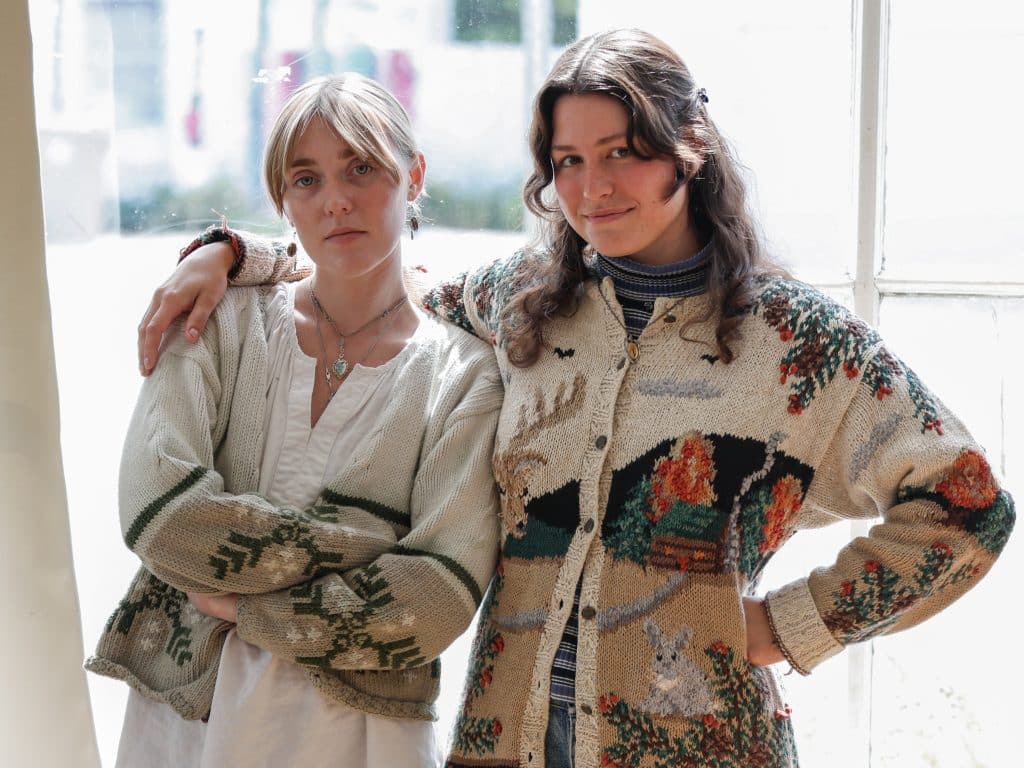
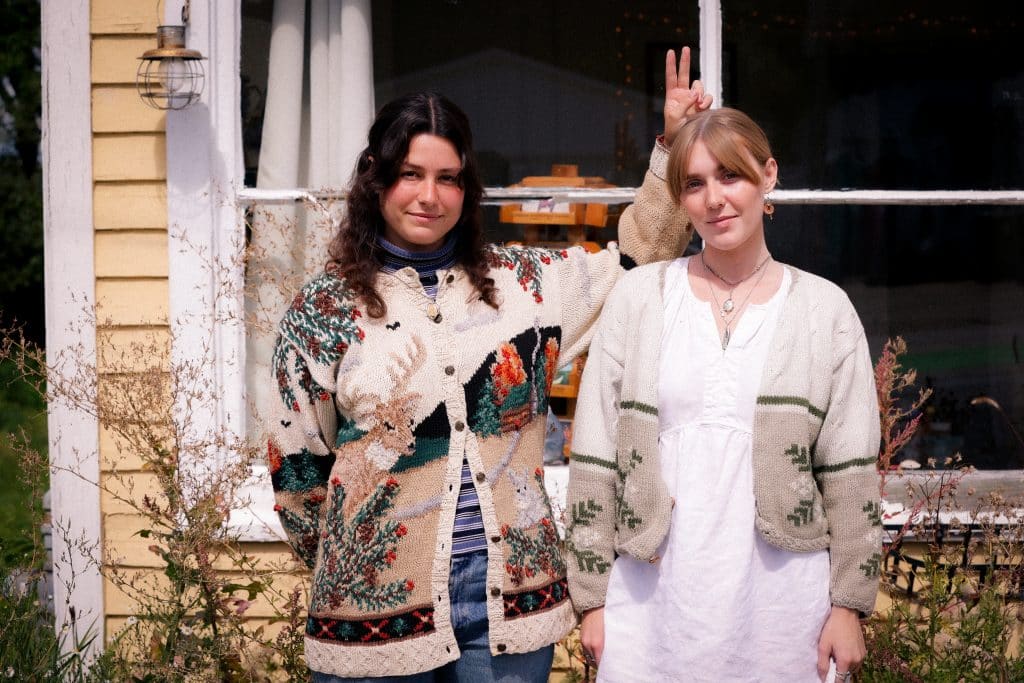
For the past several years, few bands in Madison have captured the city’s collective attention quite like The Spine Stealers. Originally an acoustic-led, folk-indebted duo made up of principal singer-songwriters Emma O’Shea and Kate Ruland, the band has been a lightning rod of intrigue. To their immense credit, O’Shea and Ruland haven’t been overtaken by the current of public scrutiny, but shaped by it. Through a number of releases, hundreds of shows, and a shifting string of influences and collaborators, they have developed a strikingly intimate sound that has resonated with local—and, increasingly, national—listeners.
From a personal angle, I can attest to that resonance on several fronts. I’ve made conscientious efforts to prioritize seeing them perform, several times over. “Midwest Winter” is one of my favorite tracks from any band this decade. And for a slight peek behind the curtain: Tone Madison‘s year-end favorites selection process for musical releases has largely been democratic, with both staff and freelancers submitting votes for releases and making claims to author their accompanying writeup. No band has garnered more votes or competitive claims in the last three years than The Spine Stealers, underscoring the project’s sweeping appeal.
O’Shea and Ruland have successfully cultivated an ineffable songwriting voice that invokes familiarity, comfort, longing, and a sense of (occasionally apocalyptic) serenity all at once. Macro-existential wonderment factors in, even as the band’s lyrical narratives tend towards a hyper-specificity surrounding isolated, personal scenarios. One of the earliest encapsulations of this dynamic—which has only grown more forceful in the ensuing years—came via the plaintive January 2023 single, “Waffle House.” “There’s a bunch of wilted flowers / Above the dash / You gave me last week,” sings O’Shea over ukulele, banjo, and bass, in a lilting, world-weary vibrato. “I hate all the ways you love me,” goes the hook, leaving listeners to grapple with a painfully relatable sense of relational defeatism.
“I would say most of the songs are nonfiction,” says O’Shea, sipping tea on the couch at The Spine Stealers’ Madison studio, during a long sit-down conversation with Tone Madison in early September. “They’re all very much inspired by real experiences I’ve had with going through heartbreak, or whatever the hell. With ‘Waffle House,’ I was stoned with the current boyfriend at a Waffle House on a road trip, but we didn’t break up right there. And it might not have been at 6:30 in the morning… I think [our songwriting is] probably 90% nonfiction.” “I would say that’s pretty factual,” adds Ruland, highlighting a sense of honesty that constitutes a key pillar of The Spine Stealers’ innate draw.
Given that the band has released an album, three EPs (including one live EP that reimagines past material), and multiple strong singles since debuting “Wisco” in late 2022, listeners should be forgiven if they’re operating under the assumption that the songwriting process is simply second nature to the band. In reality, the truth is a bit murkier. “[Some songs] take a day, sometimes [it’s] a year and a half,” says O’Shea. “It really depends on if it’s stuck in the brain a bunch or not.” “I would say [our songs get written] usually quicker than more slowly,” adds Ruland.
Both O’Shea and Ruland are keenly aware that their rate of production is a quintessential factor in sustaining listeners’ interest. “You have to keep putting stuff out. Something shifted, which is daunting, but also I feel like we’re fairly prolific, so I don’t think it’s too hard. But [we] try not to release anything that’s half-hearted,” says O’Shea, speaking directly to an amorphous music landscape that’s increasingly dictated by the brutal one-two punch of shortening attention spans and overwhelming access.
At various points in our conversation, both O’Shea and Ruland remark that the band is still stringing together new modes of beginning. From learning to play guitar over the pandemic, to becoming regulars at open mics, to aggressively playing shows and establishing a reputation as live performers, the duo has maintained that they’re always at one starting line or another. This opening chapter sensibility extends to O’Shea and Ruland’s recent conviction to take the band more seriously—as well as the decision to formalize pedal steel player James Strelow as an official band member. But they’re still cognizant of the fact that incremental progress is progress.
“In terms of numbers, our listeners have gotten significantly higher,” says Ruland, deep into the conversation. “But you’ve got to be careful with those things, because it’s always an influx. Wherever it settles is really [the] most important [point] to focus on. And I definitely don’t want to, like, focus on just the number thing. But it was nice being on tour in Seattle and Portland [this summer], and actually having people come out to listen to our music.”
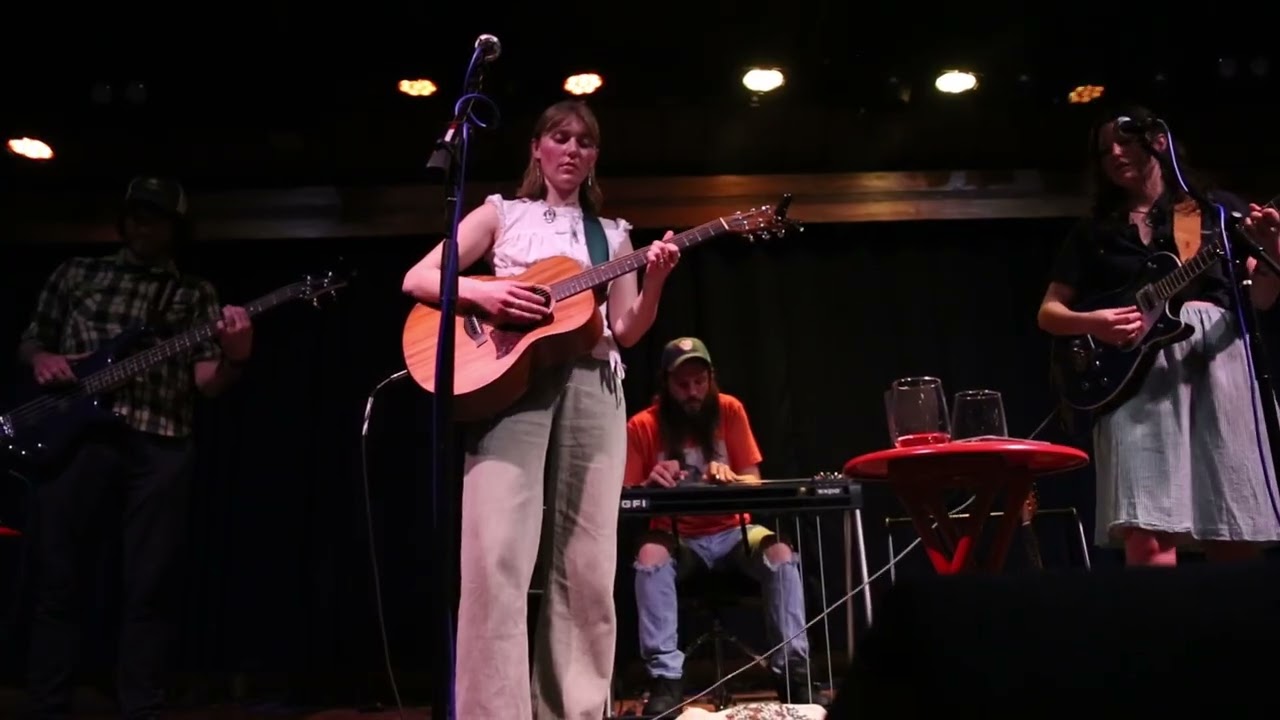
Adapting to new environments and realities has been a running theme for The Spine Stealers. When O’Shea and Ruland formed the band, they were largely only spending time with each other, and following social distancing guidelines. As the appetite for live, in-person events hit a surging peak in the wake of the pandemic, they capitalized on that interest, and found ways to keep their momentum going. From winning the Blue Ox Music Festival’s “Virtual Band Competition” in 2023, to onboarding a sterling cast of rotating auxiliary members, to a Weary Traveler residency, the band has positioned themselves at various forefronts with consistency.
And the music they’ve been making since 2022 justifies those showcases.
On September 6, the band released the Yellow Feather EP, which stands as the present culmination of their developing artistry. All five tracks evidence different slivers of The Spine Stealers’ formula, with each new tune conveying a different form of melancholia. The imagery of dancing in the snow underneath the Northern Lights in “Past Life” is evocative enough to transport most listeners to tender memories of winter or taking in astronomic phenomena. And the latter also holds true for the invocation of stargazing in “Bloodletting.” “Michigan” features instrumentation that establishes the characteristic quietude inherent to much of the band’s work, which encourages listeners to lean in and truly absorb the material. Even the rockier, full-electric band moments—”LOML” and “You’re Just A Man”—establish a sense of bitterness or regret that plays into the more common, everyday tragedy of avoidable conflict or quick-souring relationships.
Yellow Feather‘s material comes across as the work of a band discovering a newfound confidence. “LOML,” especially, expands some of the haunted, electric swings the band’s taken at a few points in the past (“Midwest Winter,” several tracks on If The Sky Falls, Beyond The Sidewalks). And the experiment seems to have unlocked a willingness to toy with atmospheric experimentation. “We’re entertaining recording the new songs we have with Kate’s boyfriend, Xavier, and doing a [little bit of a] lo-fi thing,” says O’Shea, casually highlighting not just another instance of the band seeking out new forms of atmospheric progression, but their undeterred capacity for constant creation. Both of those aspects seem to exist in tandem with a newly attentive focus on professionalism.
While their eyes move towards the future, and a new set of potential opportunities, O’Shea and Ruland remain in lockstep.
“We’re working on a new collection of songs, trying to figure out how [we can professionally expand] next year,” says O’Shea. “I don’t know if it means [hiring] booking agents, or a manager, but we’re looking into ways where we can be touring with a bigger band, or [to] try and get [more shows and awareness outside] of this regional market. But for now, I’m just writing, working.”
When it comes to that sense of growing ambition and the need to view the band in more professional terms, Ruland is unsparingly forthright. “Ultimately, to set the record straight: we’re not looking for fame and fortune, necessarily. We’re looking for this to be a sustainable part of our life that we can legitimately live off of, and still enjoy it,” she says. “We have been getting green lights, and we’re still confidently going in whatever direction we are going.”
The Spine Stealers’ next Madison appearance will be at The Majestic on Friday, November 14, as the opening act for The Last Revel.
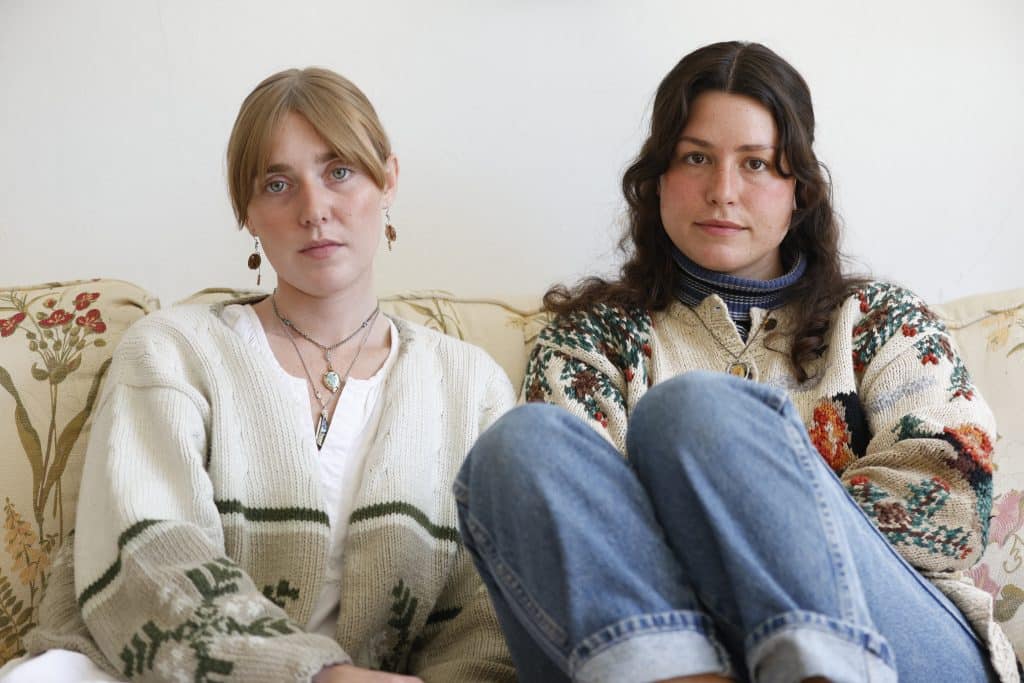
[Editor’s note: The Spine Stealers’ James Strelow had a scheduling conflict, and would have otherwise been part of this interview.]
Tone Madison: You’ve covered how the band started in the past; what drove the impulse to not just start the band, but commit to being one?
Kate Ruland: It’s kind of a two-part thing, because it was just us in the beginning. It was easy to formulate a band, because it was literally just us. We got opportunities pretty quickly that we just decided to say, “Well, why not try it out?” And things just kind of kept happening from there. And it was, I don’t know, never a real [question].
We just were experimenting with things and then bringing other people in, and still getting gigs, and it was fun. So we just kept doing it. Now we’re at the point where we have some experience playing with a full band, and [of] having brought people on. I think that this tour [with Ross Thorn], now, three years later, essentially, is actually solidifying more of a conscious effort to be like, “Okay, I guess we’re gonna do this thing.” We did do [a lot at] the beginning, going around the Midwest and doing all of those shows, and things like that. But now, I think it’s a different level. Our goals have shifted a little bit. If anything, now is the point where we’re feeling like [we’re seeing the] fruits of our labor, and [that the band] is worth putting more time into.
Emma O’Shea: Yeah, when we started, it was during the pandemic. I had just graduated from college, [and Kate] moved back from Chicago and picked up the guitar. I [thought], “I’m never going to have the chance to ever write again, or do anything.” There [was] so much existential dread. I don’t know how [Kate] felt during the pandemic, but I was like, “Okay, so I’ll just invest my time into this thing that’s sort of like a distraction of everything else going on.”
And then it was like, “Okay, we’re 23, almost 24, and only play in front of our parents.” Because the thought of playing in front of people… Neither of us were comfortable playing in front of other people. But then we were like, “Okay, we have to go to an open mic because, because we’re 23, living at home.”
Kate Ruland: And why not? Not even with the intention of like, “Yeah, of course [we should do that.]” There’s always the underlying curiosity of like, “Oh, maybe something interesting could happen out of this.” But purely from an entertainment standpoint. We would [go] explore Willy Street, because we grew up here, but we didn’t really spend a whole lot of time in our young adulthood being a Madisonian, necessarily. So we would [go] hang out at Mickey’s [Tavern], meet people. I think we were also hanging out with each other a lot, and that’s great.
Emma O’Shea: During the pandemic, we were only hanging out with each other. [Laughs.]
Kate Ruland: Yeah, so it was definitely a curiosity thing.
Emma O’Shea: There was one time where you said we were talking about [committing to the band], and you’re like, “I mean, it’s normally for jobs”—or something like that—you interview, and then you decide whether you want to do it or not. And I think because we did the open mic and got offered to open for Able Baker, and that band, Duck Turnstone. That was our first gig, the same month that we did our first open mic. And then we just took [offers] to play anywhere.
Kate Ruland: Because why would you say no?
Emma O’Shea: It was never a conversation. And now I think there is [an] intentionality of, “Okay, now we are choosing to do this, and there is some risk in that,” but it’s not so, like, fly wherever-the-heck.
Tone Madison: So that Able Baker show was your first non-open mic performance. And was this before or after [Able Baker frontperson] Tim [Anderson] moved to Chicago?
Kate Ruland and Emma O’Shea: Before!
Kate Ruland: I think that was a good year before he moved.
Emma O’Shea: I still have the video of—he came over, and what was that Carrie Underwood song? [Singing] “Blown Away.” [Laughing.] Anyway, that was before he moved [to Chicago]. He was at an open mic, and then he—and Neal [Jochmann]’s great too. We like Neal a lot. We played in his basement!
Kate Ruland: It is interesting, that question. Because there’s certainly a missing portion. The simplest answer really is that we… I don’t know if it’s luck involved. In a grateful sense: we did that first gig. For the first year or two, people just reached out to us to do shows. And it’s like… why wouldn’t we do it? It’s pushing yourself out of your comfort zone, which is fun for us to do.
Emma O’Shea: There was so much anticipation to get out of the house. I think that helped a lot, too. Because people wanted to have any reason to go out again, and see live music, or go to places where things are actually happening, or where people are. That helped. Getting thrown into a bunch of…
Kate Ruland: …new scenes. And the people were enticing.
Emma O’Shea: It feels so long ago now.
Tone Madison: In the spirit of getting offers out of the blue and having people reach out, you’ve had a number of significant collaborators. Some have stayed with you for more than a one-off. I’ve personally seen you play as everything from a duo to a quintet. How do those auxiliary collaborators generally come into the picture?
Emma O’Shea: It’s happened very serendipitously. I went to Blue Ox in 2022, and after I came back from that, I went “We have to go do an open mic.” So we went to an open mic, and we got involved around all these bluegrass people. And there was very much a pressure, because we were still figuring out our sound, and people were saying “You just don’t know what you like yet. You’re so used to just playing two guitars that this will sound good, or this will sound good.”
So we’re like, “Mandolin. Upright bass. We need banjo.” And then it’s like, well… I don’t think we’re really bluegrass. And so we met James Grenier, [our] last pedal steel player. We [were] playing with him for a bit, and then he didn’t want to tour around as much, so we were just on our own, which definitely made us uncomfortable. And [we were] questioning things for a minute, because we relied on him so much. Then we re-solidified not relying on other musicians. But then my brother—who has been playing bass with us—[got involved,] and his girlfriend, Molly, originally was playing bass with us. And then she started playing banjo.
Then we met James Strelow when he was playing with Jane Hobson at the High Noon Saloon, and just asked him. Because he lives in Madison, we like pedal steel, and he’s so versatile with playing so many different instruments, it’s insane.
It’s been fun experimenting with the full-band thing, but we’re going back down to a trio for the majority of shows, and maybe full band once in a while. But I don’t know. It just kind of came about. I feel like, if we like them… we’ve definitely entertained playing with some people where it’s like, “I don’t think this is gonna work.”
Kate Ruland: The pedal steel has become a very identifying sound with us, and that’s why it was hard for James Grenier to just… He had his own priorities, and we were starting to really formulate some longer-term, bigger aspirations for this whole project. So him deciding, essentially, to not really play with us anymore was difficult. And pedal steel players are incredibly hard to find in general. We didn’t even think another one existed until we met James.
Emma O’Shea: And then they’re both named James. [Laughing.]
Kate Ruland: So then we were just like, “Oh, we should reach out to him.” And then [we] started playing. I think the first thing we did with him was at Weary Traveler, when we were still doing that residency there. We love James [Strelow]. He has become a very solidified part of The Spine Steelers. He aligns with what we see happening with the band. And that’s great, but you’re right: it was pretty serendipitous. He just showed up in our path, and then we decided [to ask] him if he would be interested. He’s been so humble. We knew him for like, six months before we knew that he can totally shred on guitar and play any instrument. He’s, honest to god, probably the best musician I’ve ever met. He’s just so knowledgeable, and he has such a good ear. We were just hanging out last night and songwriting and finishing up [songs]—he has a lot of very good ideas. We trust his taste.
Emma O’Shea: And he wants to help with the going forward [aspect]. Like, the administration tasks. “You guys should do this. Keep putting music out.” All those things. It’s nice to have a third person wanting to take that on.
Tone Madison: Up to this point, you’ve maintained an aggressive calendar for shows and releases. Is that a pace you’re looking to maintain, or something you anticipate scaling back?
Kate Ruland: It will be maintained. I think we share this philosophy [that] if there are songs that we have deemed worthy, there’s no reason not to put them out and record them. I think that’s a really important part of growing as a musician, in terms of getting people to hear your music. I don’t think that it will necessarily slow down. I mean, there’s, of course, natural ebbs and flows of when you’re feeling like you are in a mood to create more. That’s just natural and unavoidable. But for the most part, as I’ve witnessed over the last three years, there hasn’t really been any period of time where there aren’t—almost constantly—new songs being produced amongst us. I don’t know, do you feel differently? [Looking at Emma.]
Emma O’Shea: No. We definitely have had the feelings of looking back on things and being like, “Kind of wish that we didn’t put that on there.” We didn’t do this with that… which, it doesn’t really matter. Because we want to see how far this can go, it is sort of like throwing shit at the wall and seeing what sticks. So I feel like [we’re] putting new stuff out with intentionality, and trying to make sure that the production is good. And [that] we’re not just slapping shit together and putting organ on crazy shit, or something like that.
But I feel like it is good to keep putting stuff out there, especially nowadays. It just seems like if you don’t, if you aren’t putting new stuff out there, you kind of just fall to the wayside. I don’t know how to feel about that, because you see [that] there’s a lot of [huge] musicians that release their debut album, it blows up. It’s huge. And then—especially pre-2020—every two years there’s a new album. And now it doesn’t feel like that’s how it works. You have to keep putting stuff out. Something shifted, which is daunting, but also I feel like we’re fairly prolific, so I don’t think it’s too hard. But [we] try not to release anything that’s half-hearted.
Kate Ruland: In terms of shows, I don’t know. I think that will decrease a little bit.
Emma O’Shea: Quality over quantity. No shitty bars where people aren’t listening. [Laughing.]
Kate Ruland: Yeah. We’ve also learned a lot about where our music is best digested—where it’s most enjoyable for us to perform. And [we] have a newer goal of prioritizing being [an] opening act for bigger bands at larger venues that have a broader reach. Not that I think that our city or market is completely tapped; everyone who could possibly hear us has heard us. We still will play around Madison, but that was a large part of doing the tour too. It’s [more] getting into newer cities and not playing locally as much. That’s also part of the growing process, I guess.
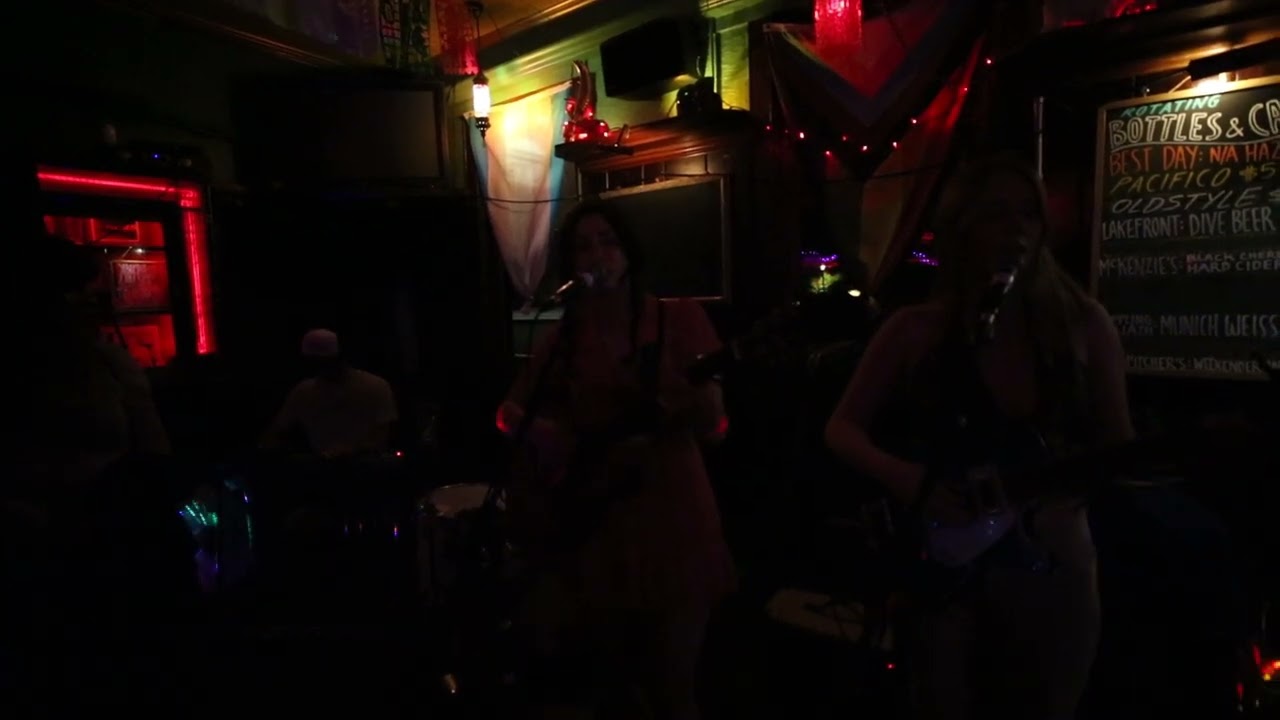
Tone Madison: Speaking of show calendars, in an Andy Moore-authored piece for Isthmus, you said you played 89 shows in 2023. Do you still keep a running count?
Kate Ruland: No, we don’t. I think it was similar in 2024.
Emma O’Shea: We have them all on the Google Calendar.
Kate Ruland: Yeah, we could count ’em up. I think as every year went by, like… The first year was a ton of fun, and we were playing a lot of shows. And then we were like, “Oh, we should maybe not play as many.” And then we still played as many. Even this year has been pared back, I think a decent amount, but there’s some flexibility. [If a band] coming through town asks us to play and we admire their music, or, you know, think it would be a good fit, it’s hard to say no to those things. I think being too overly strategic at this point would not do us any good.
Emma O’Shea: Yeah, we’re still small. We’re still trying to get somewhere.
Kate Ruland: I think [it’s important to form] relationships with other artists that are coming through town, or, you know, that you just haven’t gotten the chance to play with yet. Like, that’s where the most actual enjoyment comes. So it’s hard to be picky-choosy sometimes too, because we want to make sure that we’re having good crowds at our shows. But it can’t always be a perfect situation.
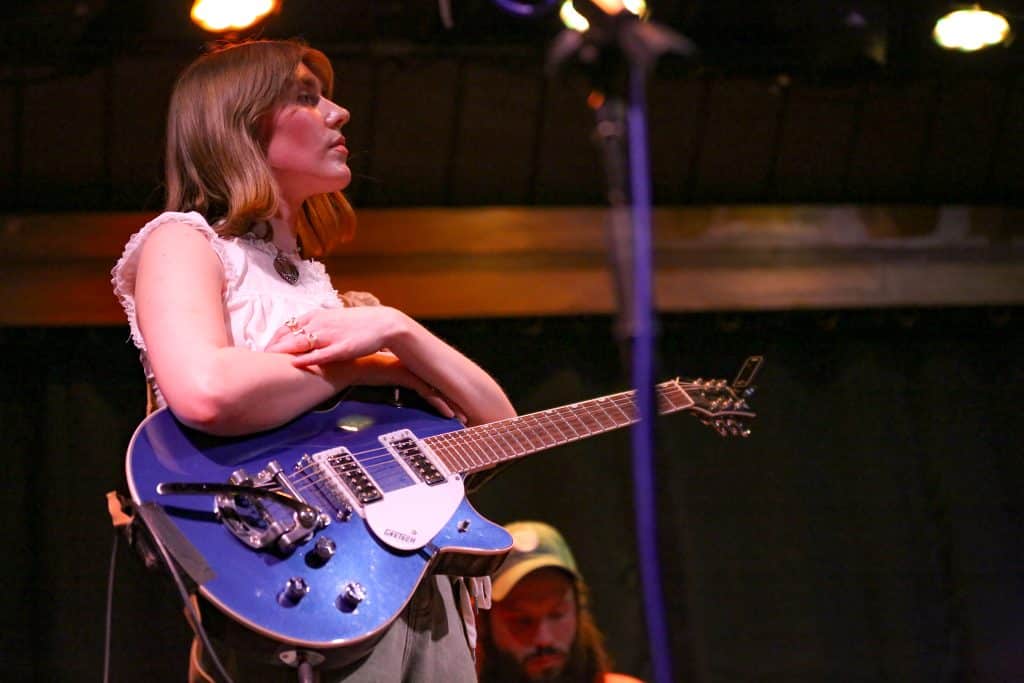
Tone Madison: Moving back just a touch, it seems that being that prolific can make it really difficult to gauge incremental progress, especially in terms of craft. Have there been any significant markers that have made you re-contextualize where you’re at as artists?
Emma O’Shea: I don’t know. It does feel like things are getting bigger, but also, I feel pretty isolated. We’re always not where I want to be yet, so it doesn’t… I don’t know. It’s hard. Sometimes it feels like things move too slowly, but the grass is always greener. I hope people think [that we’re progressing].
Kate Ruland: Yeah, it’s hard to point to any specific thing necessarily. There were sort of monumental shows that we had—one of the first really validating ones being very early on when we played at The Majestic. I think that propelled a lot of the continuing energy throughout the last couple of years. And then it was also very validating getting an offer to play at Blue Ox this year, you know, on the official lineup.
After putting out the EP, and having the single that we did with Pretty Pretty Please, and things like that… In terms of numbers, our listeners have gotten significantly higher. But you’ve got to be careful with those things, because it’s always an influx. Wherever it settles is really [the] most important [point] to focus on. And I definitely don’t want to, like, focus on just the number thing. But it was nice being on tour in Seattle and Portland, and actually having people come out to listen to our music.
There’s that fear of like, of course, people in the Midwest know about us, or might take time to come and see us. But it’s a daunting thing to go all the way across the country and then hope people come. And we did have really good turnouts with the lineups that we had, and that was validating. But yeah, truthfully, we are kind of at this weird point, which kind of brings back to the first question of, like, “When have you guys really decided to, like, be a band?”
With the growth and the time with anything, I think it makes you have to reassess. Because I think we’re realizing now, it’s still really only just beginning, and it will probably get harder from here. I think that we’ve decided to cross a threshold with [not exactly putting] more faith in the process, but [in] really making a conscious decision to be like, “We’re going to continue to try this.”
It does take a certain level of sacrifice, and you definitely feel delusional a lot of times pursuing something like this. So it’s just those little things that kind of get into your head about how it really is a very long journey. I don’t think we were completely naive to that at the beginning, like we’ve always mentioned: “Okay, well, Sierra Farrell is like 40, and she, you know, was still playing for like, 10 or 15 years before she is where she’s at currently.” But that doesn’t make it any less daunting a situation to be in, right?
Emma O’Shea: Because you’re not guaranteed that at 40.
Kate Ruland: Ultimately, to set the record straight: we’re not looking for fame and fortune, necessarily. We’re looking for this to be a sustainable part of our life that we can legitimately live off of, and still enjoy it. And still feel like we’re not having to be something that we aren’t, or are [being] too energetically depleted in, or sacrificing the wrong things in order to get somewhere.
But that’s all something that you figure out as you go, and a big conversation that we had when we got back from tour… It’s just like now, it might feel really uncertain, but now is not the time to [be extremely aggressive]. We have been getting green lights, and we’re still confidently going in whatever direction we are going. But, yeah, it’s interesting, I don’t know.
I think we’re pretty aligned, obviously. [Motions at the tea mugs they’re both drinking.]
Emma O’Shea: [Playfully] Obviously.
Kate Ruland: Obviously we’re aligned. Naturally, we both have worries about things.
Emma O’Shea: Especially people that are not musicians and/or family members are very inclined to be like “So, when are you gonna do something else?” Or, “Do you really think this is going somewhere?” I just… I’ve never asked somebody that about what they’re doing with their life. That’s an insane thing to [say]. And I can be very impressionable to people’s doubts of things. I think with this project, there hasn’t ever really been a place where we’ve spliced ourselves and [gone], “Well, we just have to sound like this—we have to emulate [this] now, to get this.” Or, “We have to do this to get this.”
There’s definitely been [an aspect of] not really questioning what, or how, we’re doing it. But it can be intimidating to put a lot of effort into this. It’s not like an investment in a career where you have a 401K, and you know that 15 years down the line, it will pay off and you will be fine. But people get fired from the jobs that they think [are] a safe bet, and then they lose their home. There’s just so many risks and lack of control that you have in life anyways.
Kate Ruland: There’s zero security. And I think that people are pretty risk-averse, so I’m not surprised. It’s not really a relatable position to be in, and there’s people who love us and support us. But like you said, unless you’re a musician, and have been doing the things… I just can’t really listen to those people.
Emma O’Shea: And then you meet musicians, too, that are kind of in the same boat, and they’re completely comfortable. And they’re like “Yeah, this is just what you do in life. You take the risks, you do the things, and you see what happens.” That’s the energy I like being around.
Kate Ruland: I think that’s part of why it’s worked so far. The opposing side of that does not seem desirable at all, so why not? From the beginning it’s been “Why not see what happens?” But, still human at the end of the day.
Emma O’Shea: Still human.
Tone Madison: A lot of your recent music has clearly operated outside the bounds of “traditional” folk or bluegrass, as you mentioned earlier. You’ve been able to blend in these elements of ambient and post-rock, among others. Are you approaching songs with certain genres in mind, or are the songs dictating your stylistic approach?
Emma O’Shea: I don’t think that we’re approaching [writing new songs with] any genres in mind. I think we’ve taken different things that sound good, different chords. And truly, we did learn guitar, fully, in 2020. No musical background before that. There’s still a lot of new things that we’re learning. But I feel like it didn’t work out with categorizing our music as bluegrass, and then trying to form-force ourselves to fit into this category of music.
I feel like we’ve kind of had fun with it. We’re definitely very open-minded. And I think that the experimental, indie, rocky, folky, gothic-y, whatever the heck I have no idea, is just fun to mess around with. I feel like we’re fairly comfortable not really assigning too many genres to it, because I think that it’s like a worm in the head a little bit.
There’s a slight apprehension to “indie-folk,” I mean, that that encapsulates so many different types of music, and I don’t really know even what that music is. I do, but I don’t. Then the country elements, or Americana… I feel like assigning the genres to it takes away the fun of experimenting with things. But I like finding out different names, like the genres you just listed. I feel like I don’t really have many names. I don’t know that many genres, or obscure genres, or different specific ones that fall under certain umbrellas. It’s kind of hard. That’s also part of the crux of not wanting to name a genre, because I don’t want to name the wrong one, or put ourselves in a box.
Kate Ruland: Music is just getting genre-less in general, and I think that’s why a lot of these niche categories are coming out, because there is naturally so much overlap. And, I mean, the folk element is there, and there is some indie or like, ambient energy going on. But it kind of just is what it is, to be honest. Even off the last EP, some songs were a little more folk-oriented. And then, like, “Love Of My Life” [“LOML”] gets a bit rockier, and has a lot of, I don’t know… it’s just different. And I like that direction. I think it speaks more to our personal style of music, and that got a little bit started with “Midwest Winter,” and trying new things with that. We even were talking last night about maybe doing more double electric guitar stuff, and having pedal steel, and James can do [whatever] else.
Emma O’Shea: It definitely is the beginning. It definitely feels like we’re starting to not feel imposter syndrome as much. [Or] feigning being musicians with no background knowledge of things. Playing enough and now with James and feeling solidified in this group—us three are the band. Leaning more into just what we like and what our sound is. When you begin something—not [just] music, but in general—it’s sort of like, “Okay, well, this needs to be perfected.” I need to know where I’m going, immediately, from the beginning. But it’s taken us three years to even realize, like, “Okay, this is actually the beginning.”
Tone Madison: “LOML” and “Midwest Winter” are both great examples of an expanded sound, but you’re also still releasing songs that are relatively spare. Are there key drivers for your instinct to either expand or cut back on arrangements?
Emma O’Shea: Whatever emotion is behind it.
Kate Ruland: Yeah, it’s pretty spur of the moment, I guess. With recording, [we] lay down the base of everything, and then if there’s an idea, we tend to explore it. And there’s a couple things where we weren’t sure. [Like whether or not] we wanted to put drums on “LOML.” I’m pretty sure there are drums on there. Now, it’s not too over-thought, which I think is great.
We definitely were impressionable [when it came to] certain elements being in songs before and maybe weren’t feeling right about it, but didn’t know how to say it. Or thought we should trust the people that were suggesting those things. But I don’t know, I remember being in the studio, and we recorded “LOML,” and we both just kind of knew. Like, “Okay, this song is really good, liking all the tones in this.” And a couple ideas were thrown out there. In that song, there’s actually a thing where you put a phone on a pickup and then texted the phone, and it came through with all this static. Did we end up using that in there, or did we pull that out?
Emma O’Shea: I don’t know! It might still be in there, loosely, but James has done that live.
Kate Ruland: Yeah, that kind of inspired James to [switch] his tone on his pedal steel. Doing things like that. So it’s pretty organic, not too over-thought.
Emma O’Shea: I think it was a safe bet in the beginning. And I do appreciate that this did naturally come to us. The folk songs, and the sadder elements of things, just came naturally.
But I think there was also [a time of] not being comfortable singing louder, or trusting that you can play the instrument loud enough to go off. But we’ve really enjoyed getting into that rockier element. A lot of the new stuff, even [what] we were writing last night, doesn’t sound like how we’ve written songs in the past, certainly.
Embracing the emotions really is just like the [sweet spot]. We don’t have anybody in the studio, telling us—sometimes Jeff [Peterson], who we [regularly] record with, will suggest things sometimes, or secretly put some, like guitar on there. And [we’ll go], “get that off of there!” [Laughing.] But generally speaking, I feel like we’re good at identifying what sounds good emotionally, rather than like, what just sounds good. It does hit you in some way, if it is something good.
Tone Madison: A lot of your songwriting and storytelling is grounded in yearning, loss, and a number of other big, but relatable emotions. How much intentionality is there behind returning to those themes?
Emma O’Shea: This is something we relate together on, too, but I’m a very melancholic person. And I know that that’s just a characteristic that I have. But I also find it incredibly inspiring. I’ve gotten better. Like, we’ve written some funny things, or, like, have some more cheekier songs. I guess that we’re practicing.
But before, a lot of that was poetry that I wrote in college. Just random words and scraps and stuff like that. And I feel like it’s just a common feeling that I have all the time, of the way that I see things. Now, there isn’t so much a lean-to on it, like, [not] a glorification, but I definitely think in the beginning it was a genuine feeling. But there was like a lean-to insert, of like, almost romanticizing being depressed, to alleviate being depressed.
I feel like now, that’s just not the most interesting thing about songwriting. And it’s still definitely an emotion that I gravitate towards. But I think moving forward—like, “LOML” is a good example of it not being this, like, “Oh, it’s just happening to me.” Not that. I think that’s how all of the songs have been before. But I definitely think [I] tap into a little bit of some anger and then rid [the feeling of] that experience. Going forward, there’s a lot of songs that aren’t just sad about life in sort of, like a…
Kate Ruland: …static way of capturing the sadness. I’ve noticed that with [Emma], because [she’s] the main songwriter. And I try to tap in. I’ve never been much of a writer, to be honest. It’s much more difficult for me. But there is the experience of doing it now for three years. There’s more complexity than just that. Like, there is the anger. There is a more full story around these things, even if they’re completely unresolved. And I do agree [that] it’s more interesting, and honest, in a way. That’s what makes it more provocative. From a witnessing point-of-view.
Emma O’Shea: But, yeah, I definitely think, like, things can be sad, as long as they’re slightly self-deprecating too, because then it actually is [more provocative].
But it’s been fun learning to write with [Kate] too. Because as much as [she wasn’t] a writer before, [she’s] tapped into something that is like a complete yin-yang to my style of writing. [It] brings new air to that end. It can feel a little bit static, or stagnant, I guess, only existing in the style of writing that I have. “Past Life” is a perfect example of that, where there’s more of a perspective. The silver lining, and appreciation of letting things go. There’s a slightly more optimistic tone of melancholy that comes with your style of writing that I think complements [mine]. Both of our styles of writing can work really well together in that vein.
Kate Ruland: It’s interesting. A lot of “Past Life” was one of the first songs that, fully, I wrote. Looking back, “Midwest Winter,” “Quitting,” “Feelings of Floating,” those were songs that I had predominantly written, but they weren’t actually about anything. Like, they were a non-existent scenario. Which, I don’t think that there’s anything necessarily to look down upon with that, but I think that’s just in respect to me not knowing exactly how to write honestly about things so well.
Emma O’Shea: [Kate is] good at observing and writing about the outer world around [her], and getting inspiration. From a storytelling end, I’m too much in my own head. [I draw a lot from] personal experience, which is why it’s good to bounce off the both of [those styles], because I’m not that interesting. It’s not as interesting to just write from one perspective versus having the combination of both.

Tone Madison: A lot of your lyrics have included hyper-specific observations and allusions to Wisconsin, but the sound also feels distinctly connected to the Upper Midwest. How much of an impact do you think location has had on your work?
Emma O’Shea: A big one. A lot of our tenacity for finding chords that fit well—or finding sounds—is emotional. And we’re both from the Midwest. I went to school in Eau Claire, and didn’t do music there, but was surrounded by a lot of interesting characters that did music. But also, just the energy of Up North culture—log cabin-looking, shitty dive bars, where the rural [way] of life is “You don’t matter as much, and I have shit to do”… I feel like there’s a lonesomeness in that, but there’s also a comfortability in that isolation.
Especially seasonally, there’s a lot of inspiration that comes from experiencing four extremely different seasons that can all be harsh in their own ways. I loved living [in the] Up North, and going as far north as I could. Even in the pandemic, there was an aspect of that. Of course, we’re in Sun Prairie, but it was just in the backyard, at night, around bonfires. Or we were in our parents’ basement, or we were going out to random fields, or something like that. But the isolation of just being in a rural area in nature, completely alone, and then letting whatever spirits arise from that situation.
Kate Ruland: I agree. I think it’s a natural escape. And apart from anything literally lyrical, you go up there, you have good times, you have bad times, and there’s a natural draw. By proxy, of course, growing up here, it’s hard for it not to seep into little metaphors and personifications within the music. It’s also just a very special place [that’s] indicative of our upbringings and where we are now. We’re going up in a couple weeks with all our girlfriends. It’s a natural route. I think it lends a lot to our personalities, in general, outside of being musicians.
Emma O’Shea: The good times. There’s a level of escapism up there, to a place that feels more comfortable. And that’s what Michigan’s about, too. I [drove] up to—I don’t even know where that was, Traverse City?—and it’s fucking downpouring the entire weekend when I [got] up there. And I [was] in a tiny house, writing about that. I also think drinking culture in Wisconsin—especially Up North Wisconsin—has [had] a big effect on my life. Generally, the culture is pretty crass and blue collar, from what I’ve experienced being Up North. There’s a different perspective on life that can be… not nihilistic, but there is [a] forlornness that exists. An “If you don’t like it, then leave.”
Tone Madison: Earlier on in this conversation, you mentioned songs or material that you wish hadn’t been released. But you also recently just put out an entire EP that was effectively reworks of existing material. How instructive is the process of examining or revisiting existing material for you?
Emma O’Shea: We definitely have an intention of wanting to play songs how they are recorded and sound, which is why there is sometimes an inkling of [a sense of expansion] on the full album. I think we were just inclined to [listen to] other people’s opinions of like, “Oh, what if you try this, try this?” And kind of globbing on a bunch of stuff.
I think that there’s a lot there that, like, you don’t experience. Like, we would never play the organ live unless James is able to. So there’s different things where it’s like… I do like experimentation. Somebody I’ve been listening to a lot lately is Bendigo Fletcher, but also his side project, Moose Loon. And he has, like, a kazoo in there at some point. I love that, because a lot of times, especially nowadays, people are going to be listening to your music online only.
But we definitely have played like, through old songs, and it’s like, “Oh, it’d be fun to play a faster version of this, or a different version of this, or, actually, let’s start the song with this,” because you really can just say, “Fuck it.” And who cares? What are they going to do? No one can get too upset at you for playing the song completely differently than how they know.
Kate Ruland: But yeah, maybe if we ever did get really big, some of that early stuff would get re-recorded in a different way. Because I remember even, like, we went to that Watchhouse concert, and they played one song in a different key, and I was, like, devastated. So it is kind of a toss-up. But it’s a bit of a time capsule too. It’s nice to kind of just have them there still.
Tone Madison: You recently released a great, fully collaborative single with Pretty Pretty Please. How important has the process of artistic collaboration been to the development of the band?
Emma O’Shea: We’ve collaborated with people that have played with us, like in our band. I guess we’ve only ever written songs just for us. I don’t know if we’ve reached out as much to do collaboration things. Well, we did a song. We did a cover of “Fade Into You” that we’ll be releasing at some point this fall with Rianna [Marie]. And that was fun to kind of do our own rendition of that. And then Ross [Thorn] reached out with his fully-written song for us to sing on.
And Pretty Pretty Please reached out about this song, and sent it to us, and we really liked the sound of it. So we recorded that when we went up to Minneapolis on 4/20. And one of our good friends, Vinnie [Donatelle], who plays fiddle in The Last Revel, has a side project, Friend Dog. We wrote a song up there with him.
It’s been a lot of fun to [do]. I think we’re definitely more open to those collaborations. You can’t just sit down with somebody, just because you’re good friends with them, and write a song. There might be two different song styles. No one wants to collaborate on something [feeling like], “Well, this doesn’t really give me any emotion at all.” But Ross came in with a new song that will probably be out on the next thing that we record.
I didn’t understand that [guest-authoring] was as big of a thing that artists do as I do now. And I think we were very reserved in working with other people, because I don’t really [know] how to transpose or tell you what key it’s in. Songwriting, I feel like for both of us… We’re able to write well together, like sitting in a room together, but that’s because we’ve been doing this for a number of years, and we’re comfortable vulnerably making up lyrics, or messing around with things. And that’s generally not something that I’m extremely comfortable with, with other people, if I’m not very close with them.
Kate Ruland: And even so, we’ll write together, but a lot of stuff is like, you still go your separate way, and then you come back together. The song that we did with Vinnie and some other people—Nate [LeBrun] from Friend Dog and Simon Cropp, who’s in Slapdash Bluegrass, and plays with Clare Doyle and stuff like that—that was an interesting experience. I would be down [to] do it again. But essentially, everyone just came together.
We wrote a little bit with Vinnie the day before, and then the day that we went in to record, it was extremely spontaneous. Everyone kind of just threw something on, and there wasn’t a lot of forethought. And the song did come out really good. It kind of fell by the wayside, because everyone’s pretty busy, and the song is pretty much done. Everyone will just have to decide when they want it to be released. That was fun, but we also knew everyone, and it was more of an activity. It was like, “Yeah, why not?” I’m sure if we sat down to, like, collaboratively write, even just an EP with someone, it would prove to be much more difficult.
Emma O’Shea: And it was more fun [to do that] in a bigger group of people. That wasn’t us and one other person, right? Because there’s a lot of pressure to be like, “Here’s my idea.”
Kate Ruland: If it gets a little too personal, then who knows?
Tone Madison: Speaking of Ross Thorn, your national tour together recently wrapped. Did that experience generate any key takeaways for either of you?
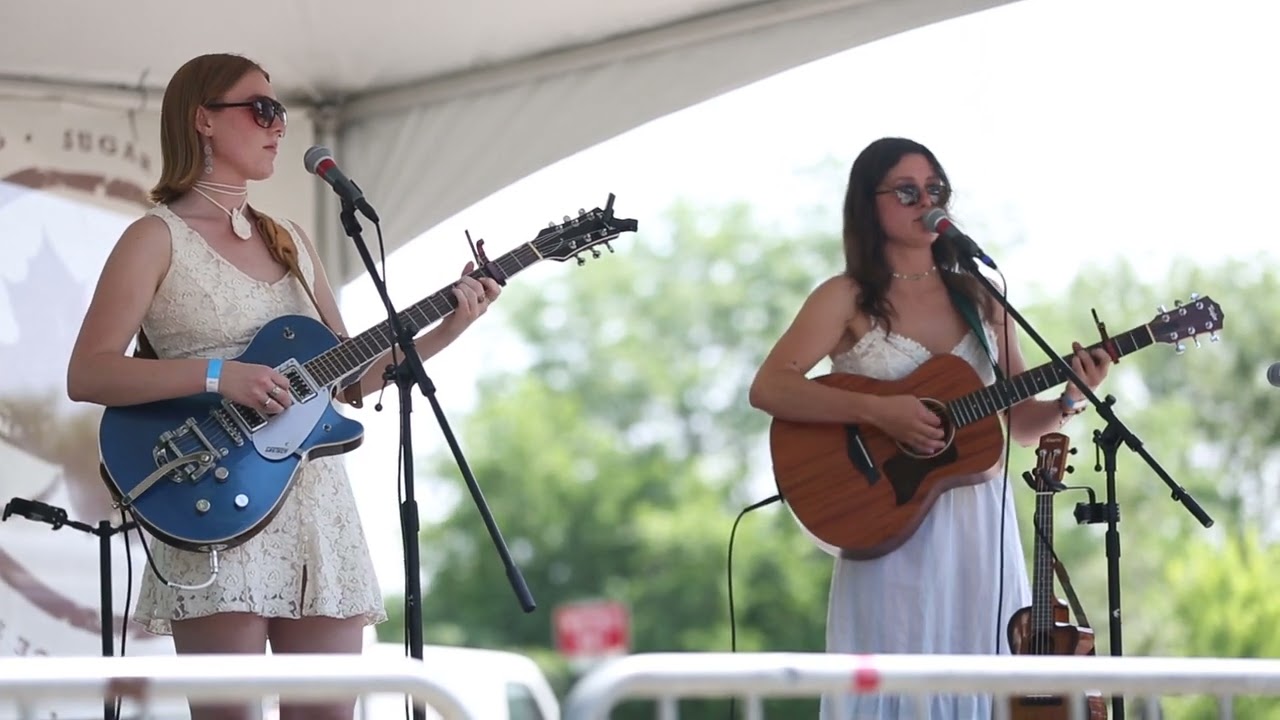
Emma O’Shea: I think that it showed that we’re capable of doing it. I was very worried at first about, like, just the logistical side of everybody getting along. You’re with six people for two and a half weeks. Everybody got along completely fine, and there was no tension whatsoever. And no one [was] trying to stay out and party. We pretty much played the gigs, maybe had a couple drinks, and went back home. I feel like everybody was on a really good wavelength of, like, hitting the road, being responsible, having snacks in the car.
I just think logistically, I’m very happy about the fact that we were able to not get too lonesome or homesick over the trip, and we were able to do it. I mean, there was a benefit to having a decent crowd at all of the shows. There wasn’t an, “Okay, this is the fifth show in a row with two people showing up.” I think I would feel a lot more wary about it [if that happened]. But then, like, there was a recording studio outside of Denver that asked us to come and tour their recording studio. We did a radio show, went and did an open mic.
There [were] different things that we did to also not just be isolated into, “Play show, then leave.” It just became something that’s like, “Okay, this can realistically be an occurrence in our life, and it’s not a huge, extremely taxing thing.” I mean, touring like artists that [do] two or six months of the year or something like that, I just don’t know, that sounds like too much. Two and a half weeks is great, and doing that a couple times throughout the year sounds great. We all kind of had a head on our shoulders [when it came to] keeping a balance of everything and having sustainable energy for such a long period of time. But I felt pretty good about it.
Kate Ruland: Yeah. I was the [one that] got more homesick and it was only, like, basically the first day that we left. I was like, “Fuck, I’m a homebody.” I sometimes overthink things. And so I was starting to feel homesick on the first day. And I’m like, “This is not good.” And then it was totally fine after. So, it dug some things up [but it also contributed to] re-establishing certain goals, now that this milestone has been crossed—how do we feel about all of that and continuing to do it? What does sustainable [practice] look like for us? Everything like that.
So, yeah, it was really good. Overall, we had a ton of fun, and I think we planned it out quite well, if I do say so myself. Gave us a couple free days here and there, we all got to see friends along the road, and [we were] staying in comfortable places, which makes it a lot easier and alleviates a lot of stress. So hopefully they’re all like that.
Tone Madison: In terms of tour management, was this a DIY affair?
Emma O’Shea: Yeah, we just organized it all with Ross. There [were] a lot of people that were like, “What’s your market out here?” “I don’t know. We’ve never been out there.” “Then I can’t book you.” How are we supposed to get a market out there? We don’t play out there. And thankfully, we got some decent venues.
The idea with a booking agent or a manager or a promoter is that they have connections to be able to get you in front of people you wouldn’t be able to get in front of yourself. But if we already have the skill set to be able to schedule our own tour, the only reason we would be asking somebody to help is if they’re able to.
You can be as good as you can be. And now we’re realizing, you do actually kind of need someone that has connections to get you in front of other things. So, also manifesting, [we] would love to play a show with Free Dirt. I think that they’re sick, and I really want to play a show with them. We’ve messaged a few times as well. I think it just needs to be [a calmer time]. So many things can be up in the air and chaotic. The summer happened like that.
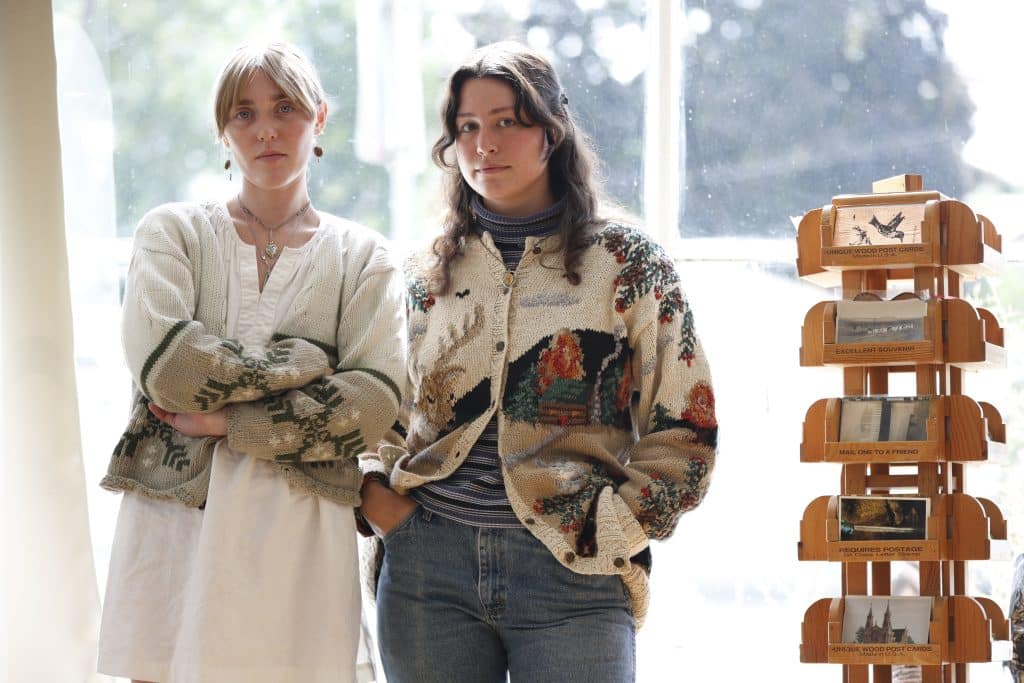
Tone Madison: One aspect of your output that has been particularly striking is the consistency of your visual art. Before we started rolling, we were talking about postcards and collaging. How important do you find it to maintain a conscious visual aesthetic?
Emma O’Shea: Oh, yeah. I mean, in one aspect of it, I think that’s naturally something we’re inclined to—the visual aspects of visual art. [Kate’s] very good at it. I’m very good at it. It’s something that I think we’re both very passionate about, outside of music anyways. And also looking at [visual art] as more of a project that isn’t just [completely centering] me and Kate.
I think [that’s] part of the reason there hasn’t been, really, any album covers [that are] just a picture of me and Kate. This is an output of things; we’re just trying to exemplify some sort of energy or some sort of atmosphere to accompany the songs. And I think like incorporating the passion of visual art with the auditory art that we make has been very fun to do, and has been a natural thing that we’ve just done the whole time.
Kate Ruland: Yeah. We even got slightly away from the collaging. We used to do monthly posters, or it was [nearly] every month. And then, yeah, you were like, “We should do one.” I was just thinking the same thing, because we got kind of deterred by a comment once, of someone being like, “Bands post their monthly calendars like it’s a tour poster,” or something. And then we stopped doing that, but now we’re gonna do it again, and, and it’ll be collaged. I mean, it was. It already got posted on Instagram.
Emma O’Shea: And that is definitely not something to take for granted, that we feel very comfortable making all the art for our merch, making all the art for our posters, and all of those kinds of things. [It’s just] something we really enjoy. And [we] don’t have to pay someone to do it. It adds another element of tapping into the emotions, because you can kind of create something that feels [honest]. Like, the “Midwest Winter” poster up there [motions to the poster]. That feels like the song. So it’s just fun to do that.
Kate Ruland: And it’s fun to have a physical copy of things. I am a very tangible person. I do love items. And to actually have, like, you have the “To Emma” poster. There’s, I think, a couple other ones in there still too. They’re all laying around somewhere. It’s not a printout. It actually is the thing that you made, and you can keep it for forever, for forever.
Tone Madison: You’ve been actively navigating Madison’s music landscape for three years. Is there anything you’ve seen over that time that you think could be improved upon?
Emma O’Shea: There’s a few different independent venues, which is nice. I think that, generally speaking, it doesn’t seem as cutthroat as other cities, from what other people have talked about, where it’s very gatekeep-y, and the people that are in charge of whether you get gigs or not are not musicians. Whereas, it seems like—besides Live Nation or FPC Live, whatever that is—there’s a lot of people that own or run the venues are also musicians themselves and very interested in [building and sustaining] a good community.
That being said, I feel like there’s still so many communities and so many musicians that I don’t know in Madison, because it feels very isolating. We go and play our gigs and then we come here, and we both still have our jobs, and we try and make time to see our family and friends, and I don’t know… it would be cool if there was more of a fostering of DIY venues or independent venues, like Pink Place is a perfect example of a venue in Minneapolis that is a pretty well known and supported music DIY venue, and they’ve switched locations now.
[Editor’s note: Shortly before this interview took place, Pink Place announced its closure, along with a note indicating that the people responsible for running the venue are looking to “make a real venue one day with the same goals in mind.”]
But I know Mousetrap got shut down because of sound ordinances. We never played there, but it would have been really fucking cool to play there. It’d be cool to see a solidified DIY place maybe not run by college kids, even though I think Madison Manor was really cool, and there are cool places that are run by college students. But, yeah, I don’t know. It’s interesting, because it feels like there’s a good community around here, and then at the same time, it feels very much barren, where I just don’t see so much of this DIY scene that I see in other places.
Maybe that is because it’s pretty dependent on the college population, but I don’t know. In Eau Claire, for example, there are a lot of house show venues. Run by musicians or a collective of people, and they have good lineups, and they really take the time to promote things and foster this collaborative community aspect. And I think it would be cool if that were something that could be more occurring in Madison.
Kate Ruland: Yeah, that’s a tough one. Someone who is willing. Willing and able, and has a house and stuff.
Emma O’Shea: And we need to have more queer line dancing going on! Queer line dancing. Where’s at it? What the fuck?
Tone Madison: Having that DIY infrastructure run through a non-collegiate space does seem to be something that’s largely either been missing in Madison or had a short lifespan. There are a few exceptions, but it’s not as robust as it once was, or currently is elsewhere. It wasn’t that far back that Milwaukee had a thriving DIY punk venue network.
Emma O’Shea: Yeah. And it seems like the punk scene in Milwaukee is a pretty solidified community of people. Like, that is a genre of music that does exist in the DIY spaces there. Here, I’m not sure what the genre would be. It seemed like Mousetrap was pretty punk, but Madison Manor did a lot of different genres. I don’t honestly know.
[When it comes to the demands] of time and curation that goes into making a DIY space, who’s taking that upon themselves to create, and who has the space to be able to do that? But I think it could exist, and it’d be cool. My favorite place to play at right now is Lakeside Street [Coffee House].
Kate Ruland: Most weekends [Lakeside Street will] have something going on, [and] I agree. It’s my favorite place [to play].
Tone Madison: Is there anything we’ve already touched on that you’d like to expand, or something that we haven’t discussed that you’d like our readers to know?
Emma O’Shea: We’re around Madison. Come hang out. We want to meet other musicians. We like being a part of the community. And go to open mics, okay?
We can publish more
“only on Tone Madison” stories —
but only with your support.
Author
Related Articles
Achieving a broader focus through music photojournalism in 2025
The fourth installment of our live music photo essay series centers a more personal vantage point.
Tone Madison’s favorite records of 2025
A celebration of 20 local releases that defined the year.
Madison’s musical odds and ends of 2025
A meditation on the past year’s musical margins.