
“The Guerrilla Feminist: A Search For Belonging Online And Offline” documents a nearly 15-year fight for social justice
Madison-based author Lachrista Greco offers a brutally honest exploration of the potential and pitfalls of online activism.
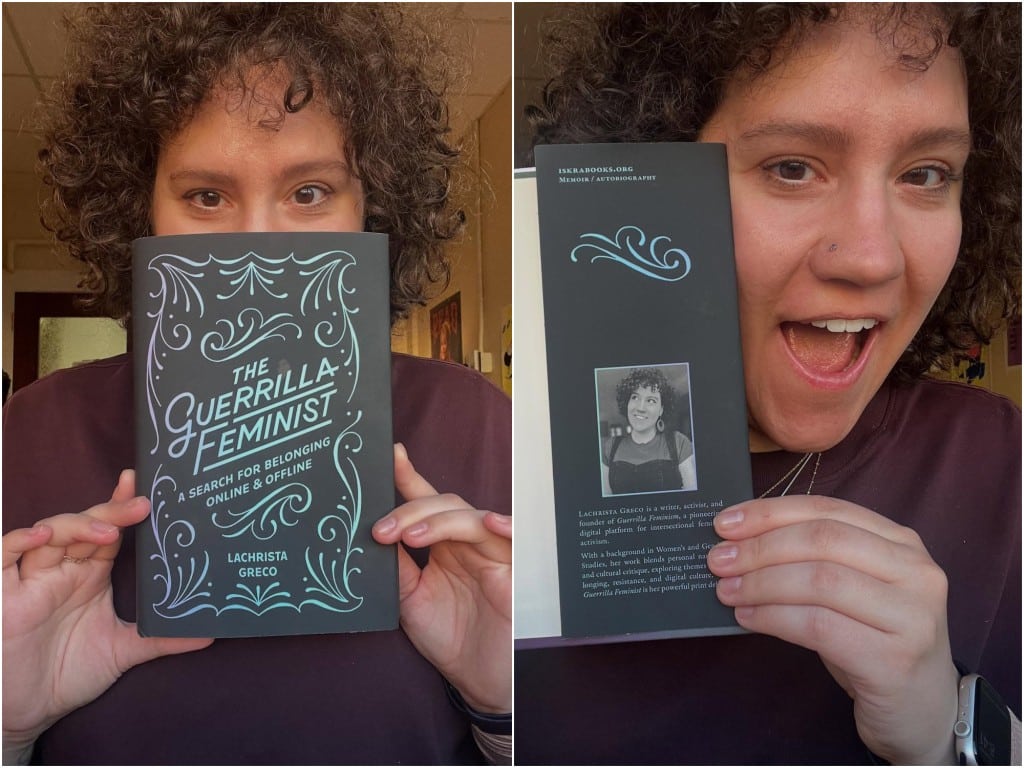
Lachrista Greco, a Madisonian who transformed herself from social outcast to an influential digital activist with a radically honest online presence, is still fighting for the marginalized and for herself—now in book form.
Greco, a self-described elder millennial and Italian-American, founded Guerrilla Feminism as a (now-deactivated) Facebook page in 2011, and has amassed an Instagram following of 225,000 and more than 8,000 subscribers on Substack. Not to brag, but it’s not uncommon for her to see likes from the band Garbage’s account, which is run by frontwoman Shirley Manson.
Greco’s book, The Guerrilla Feminist: A Search For Belonging Online And Offline was published earlier this year by the Ireland-based Iskra Books, which prints revolutionary books, journals, and art. Known for being brutally honest and offering unfiltered takes on current events for 15 years, Greco takes on topics some would deem too taboo or personal to discuss.
“I wanted to create something where people felt like they belonged—even if just for a moment while they browsed my posts on social media,” she writes in the book. It “is a love letter to all of us who have found (and still find) belonging in online spaces.”
Greco will read from her book at A Room of One’s Own on Thursday, August 14. Doors open at 5:30 p.m. for the event, which runs from 6 to 7 p.m.
Outcast to outspoken
Since 2011, Greco has been posting and reposting to amplify the voices and causes of the queer and disabled, BIPOC folks, and anyone who needs a champion by speaking out against injustice. She has also been helping others feel less alone by being honest af.
Social media is an extraordinary tool for the cause. “The immediacy of digital activism allows for instantaneous communication, visibility, and resistance,” Greco writes. And it offers many things that in-person activism doesn’t: a global reach, accessibility for those who can’t attend events, convenience, inclusivity, safety, and open access to resources. For Greco, digital activism means using social media as a tool for “respair,” which is defined as the returning of hope after a period of despair.
Greco felt like an outcast from a young age. Diagnoses of dyscalculia (a difficulty processing numbers) and a language-processing disorder destroyed her self-esteem. She felt undesirable to her peers and unsupported by teachers as she occupied a desk in special ed. Yet, she remembers a certain freedom in that group—a camaraderie in collective stigmatization. But her home life didn’t offer a safe haven. Greco also felt unsafe around her mother’s abusive cop girlfriend and was expected to take on adult responsibilities in her father’s care.
After literally praying for friends, Greco joined a group of kindred souls in junior high who then turned on and bullied her at age 16, leaving her to eat lunch in the locker room and experience even more depression and anxiety.
During her senior year, as Greco was trying out cybersex with men in chatrooms, she found her way into cyberfeminism through the internet canon Feministing website. The next year, she started attending Edgewood College, majoring in Creative Writing and minoring in Women’s and Gender Studies. She also started the school’s first feminist club and volunteered answering phones at what is now the RCC Sexual Violence Resource Center. Meanwhile, she blogged on once-popular platforms like LiveJournal in the early 2000s and distributed a TinyLetter newsletter before blogging on her own website.
“I started blogging because I wanted to write publicly about what I was going through, what I was thinking about, and wanted to hear from others who were dealing with similar things,” she writes.
At 24, Greco created Guerrilla Feminism after earning a master’s degree in Women’s and Gender Studies at DePaul University in Chicago. She also took up collaging as release from a shitty boss, and began printing and laminating phrases like “Rape is Rape” as she came to terms with the fact that the heinous crime had been done to her. She and a friend started sticking phrases like these on public transit and in public restrooms—a guerrilla warfare tactic against patriarchy. Guerrilla Feminism was soon reborn online as a Facebook page, the name a homage to these surprise attacks along with the Guerrilla Girls feminist art group.
Greco says the two main things that differentiate Guerrilla Feminism from other feminisms are the lens through which it was created—hers—and a specific focus on uplifting and amplifying issues that haven’t been covered in mainstream or liberal feminism. Those include: the normalization of STIs, race and racism, ableism, LGBTQIA rights to live and thrive, Universal Basic Income (UBI), Marxism, prison abolition, decriminalization of sex work and the distinction between sex work and human trafficking, and mutual aid.
Online, Guerrilla Feminism became a group effort with volunteers and branches all over the world, from Italy to Iran and Wales to Jamaica, started by folks who messaged for permission to use the name. The pages discussed political topics, reposted memes and moderated every comment to create a safe space for those who needed it. Greco added an Instagram account in 2013. Then, after a few years of managing 50 volunteers, Guerrilla Feminism became a solo effort again in 2016. Even then, she was still answering nearly every DM that didn’t threaten her for sharing her opinion, which led to burnout.
Greco has long shared her personal experiences to help others find community. She’s upfront about having herpes and where she got them—from an ex-boyfriend who sexually assaulted her. She educated herself via Tumblr’s #Herpblr hashtag, learning more through the social media platform than health class ever taught her, she says. In April 2016, she co-created #shoutyourstatus with other online activists, a sibling to author Lindy West’s #shoutyourabortion, to destigmatize the virus many people carry whether they know it or not.
As Greco’s platform grew, so did the cyberbullying. Death and rape threats have been common in her DMs. Like many femmes online, she faced cruel criticism of her appearance. She was outed as a former sex worker (which she would blog about years later) and contemplated suicide after a smear campaign. She still suffers from PTSD and paranoia from the experiences.
The book covers Greco’s life and political evolution through auto-theory, a literary technique that combines memoir and the theories that form Guerrilla Feminism. In the book, Greco delves into her experiences with feeling alone, finding community in various online platforms, and being compelled to create a similar space for others. Her raw and intimate personal experiences are flanked by explanations of theories from academic and news articles, along with quotes and concepts from an impressively wide-ranging bibliography that includes Ralph Waldo Emerson, Dr. Angela Davis, writing teacher Anne Lamott, author and blogger Lyz Lenz, as well as queer, disabled care advocate, and member of the South Asian diaspora Leah Lakshmi Piepzna-Samarasinha. There are also jokes.
Greco tells of her self-discovery through dating in the Tinder era (which she calls the gamification of relationships) as well as the phenomenon and experiences of trauma storytelling online, and being a feminist who likes makeup in the era of selfies and much-used, often-racist social media beauty filters that lighten skin and make features more European.
These days, though, Greco has backed off of Instagram, and prefers to stick to blogging and self-care.
“It just wasn’t a sustainable way to do activism for me. I could see the algorithms changing every year. And that was upsetting because you would work so hard on a post and then nobody sees it. And at some point, you just are kind of like, all right, well, fuck this,” she says.
The online spaces that felt like an empowering community are overwhelming in current political conditions. Greco has cut back drastically on social media usage to reset her nervous system despite the ever-present desire to be informed.
“It’s just like an all-out assault all the time. What the state wants is for us to be in a state of abject terror all the time, so we can’t build coalitions and can’t make good decisions. So you have to willingly change your behavior and unplug so you can come back instead of being in it all the time.”
No longer on Facebook, Greco has a following on her Instagram, which she changed from “Guerrilla Feminism” to her name after more than a decade. The handle better represents that she’s a person, not an organization. She now blogs on her Substack, Rage & Softness. She appreciates but also feels burdened by being tied to the platform, especially when she’s being shadow-banned for the topics she posts about and reposts, like ICE kidnapping students.
“I try not to just scroll and scroll and scroll. And I wanna stay informed about things. I need to be offline and off of Instagram,” Greco says. “I have a much better balance with it now, ’cause I really didn’t back in the day. It feels a lot healthier.”
Still, Greco is excited by new digital activists entering the space, and she says folks are “rightfully pissed off” and want to participate in creating change.
“I really would caution those folks to look to what other organizers are doing and have already done. People have been doing this kind of work for decades, so there’s a lot of great stuff and great people we can look to and see what to do and, not necessarily replicate something that’s not a good idea, or replicate something that hasn’t worked really well,” Greco says. “It’s going to take a lot of different ways of activism to actually get to where we want to get to.”
Who has power in Madison,
and what are they doing with it?
Help us create fiercely independent politics coverage that tracks power and policy.
Related Articles

Coliseum renovations should proceed with caution
Dane County should apply strict scrutiny of its partnership proposal with FPC Live, even if it’s the only bidder.
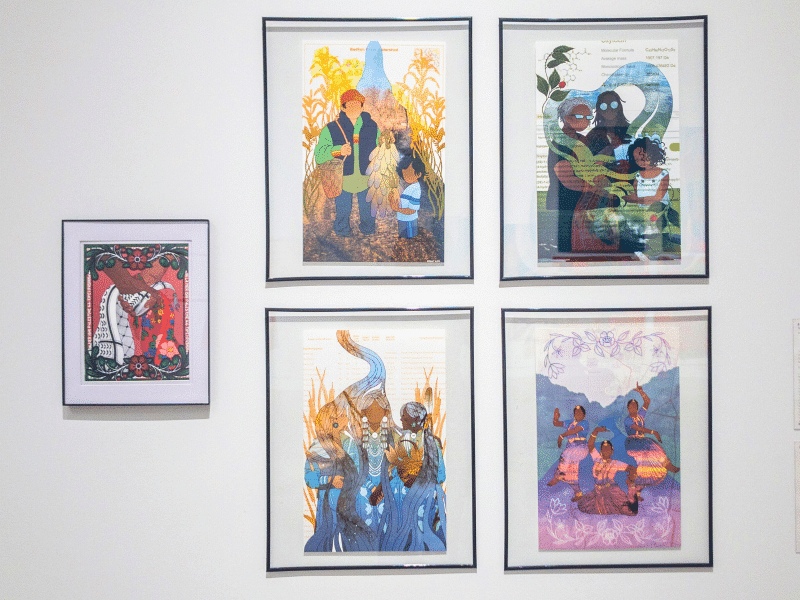
Could an exhibition like “Guiding Ethos” find a home in Madison?
A group show at Appleton’s Trout Museum stands up for “political” art in an era of cowardice and compliance.
Small Bites: How much garlic is too much garlic?
With “double the garlic” dominating social media, it’s time to reevaluate your recipes.