
Multisensory moviegoing: the art of pairing film and food in Madison
A local foodie and cinephile shares what’s on the menu before (or after) showtime this awards season.
A local foodie and cinephile shares what’s on the menu before (or after) showtime this awards season.
Dinner and a movie: the classic two-step outing and date-night template. But how much thought and planning do people now dedicate to the relationship between an afternoon or evening meal and a motion picture on the big screen?
Coupling an excursion to the cinema with complementary cuisine is a delightful way to become more fully immersed in the world of a film (especially if it depicts a culture foreign to you) while also creating a memorable multisensory experience. Watching a movie on an empty stomach doesn’t really sound like my idea of a good time. So why not try to align your choice of fare with the film you’re thinking about seeing? Thanks to Madison’s rich cinema community and flourishing culinary scene, this has become increasingly easy to accomplish in recent years.
Whether you are attending a screening at UW Cinematheque, the Marquee Theater in Union South, Madison Public Library branches, Arts + Literature Laboratory, Madison Museum of Contemporary Art, or any of the few remaining commercial movie theaters on the outskirts of the city (i.e. Flix Brewhouse, Marcus Point, Marcus Palace in Sun Prairie, and AMC Fitchburg 18), there are a wealth of great restaurants to choose from. Finding a harmonious film and food pairing not only heightens appreciation of a film, but can also help us focus our full attention on an experience—an intentional pause in today’s landscape of passive media consumption and sensory overload.
When matching a movie screening with a dining experience, there are different factors to consider. Over the years, I have developed some rules of thumb to facilitate this process, but I always approach it on a case-by-case basis. If you are watching an international feature, then searching for a restaurant from the same country or region as the film can be a helpful starting point.
For instance, you could have dinner downtown at A La Brasa Mexican Grill (15 N. Broom St.) or Los Gemelos (244 W. Gilman St.) before seeing Victims Of Sin (1951), a lurid film noir musical melodrama from the golden age of Mexican cinema, or grab a bite at Taiwan Little Eats (320 State St., #2021) prior to catching the whacked-out Taiwanese kung-fu spectacular Shaolin Invincibles (1977).
Both of those films screened recently at Cinematheque’s regular venue in Vilas Hall, which is within walking distance of the aforementioned establishments, so these are no-brainers. Proximity of a restaurant to the theater and speed of service are always important to consider.
Cuisine, much like cinema, serves as an effective medium of cultural transmission. The proper combination of food and film can be an especially rewarding way to explore other cultures without traveling far geographically. If a film features a specific dish or type of cuisine, then pairing it with a restaurant requires little effort. Food captured on-screen can also have a particularly seductive appeal.
Last September, I watched a new restoration of Wong Kar-wai’s exquisite chamber piece In The Mood For Love (2000), which inevitably induces an intense desire for noodles with its gorgeous slow-motion cinematography and haunting soundtrack. Since I had seen the film many times, I had the foresight to eat at Hutong (410 E. Wilson St.), a superb, authentic Chinese noodle restaurant in the space formerly occupied by Plaka Tavern.
Some of my other favorite film and food pairings in recent memory include: dumplings at Feast (904 Williamson St.) with Park Chan-wook’s Oldboy (2003)—if you know, you know; an abundant meal at Fugu Asian Fusion (411 W. Gilman St.) with John Carpenter’s Big Trouble In Little China (1986); tacos and margaritas on the patio at Jalisco Cocina Mexicana (108 King St.) with Sebastian Silva’s pitch-black absurdist social media meta-comedy Rotting In The Sun (2023); a shawarma plate at Mediterranean Cafe (625 State St.) with Turkish director Deniz Gamze Ergüven’s feminist fairy tale Mustang (2015); sandwiches at Cheba Hut “Toasted” Subs (453 W. Gilman St.) with John Boorman’s bizarre dystopian sci-fi satire Zardoz (1974); Russian dumplings at Paul’s Pel’meni (414 W. Gilman St.) with Hungarian auteur György Fehér’s bleak, black-and-white murder mystery Twilight (1990); and pizza at Ian’s (319 Frances St.) with Sidney Lumet’s heist thriller Dog Day Afternoon (1975)—because pizza is quick, and the bank robbers have several pies delivered for their hostages in the movie.
Of course, not all cinema and cuisine couplings are as obvious or convenient. Sometimes you have to get creative and think outside the box. But for me, that’s part of the fun, and I relish the challenge of trying to coordinate a meal with a movie. If a film does not immediately inspire any ideas for a particular kind of food or establishment, then consider the genre or prevailing mood of the film. I like to think about how the atmosphere of a restaurant or the energy of the cooking might accompany and influence the cinematic experience. If you are going to see a challenging or thematically heavy film that demands more attention, then you could opt for lighter or milder fare so that your digestive system does not interfere with your appreciation of the film.
When practicing the art of film and food pairing, there really are no hard-and-fast rules. Trying out different combinations and contemplating the connection between your senses can transport you to other worlds, while optimizing enjoyment of the cinematic and dining experiences alike.
As the 96th Academy Awards approaches on March 10 and spots around campus and the greater city limits shift into their spring seasons, I have come up with some timely film and food pairing suggestions. Here’s what’s on the menu.

Poor Things with martinis, oysters on the half shell, house greens, and seared salmon at Sardine (617 Williamson St.)
Poor Things (2023) is a sumptuous feast for the senses that demands a similarly decadent dinner to accompany its aesthetic excesses, provocative subject matter, whimsical sensibility, and scintillating dialogue.
Adapted from the 1992 novel of the same name by Scottish novelist Alasdair Gray, Yorgos Lanthimos’ Poor Things is a surrealistic, postmodern revision of Mary Shelley’s Frankenstein. The film follows the strange intercontinental adventures of Bella Baxter (Emma Stone), an eccentric, charming, childlike creature who remains confined to the house of an unorthodox scientist in late-Victorian steampunk London until a dissolute and licentious attorney, Duncan Wedderburn (a scenery-chewing Mark Ruffalo), whisks her away.
As she becomes increasingly intelligent and curious about the outside world, Bella travels from London to Lisbon, Alexandria, and Paris before circling back to British shores. Throughout the film, Bella wholeheartedly indulges her voracious appetites for sex, food, alcohol, and literature, throwing herself into novel experiences and situations with reckless abandon and lust for life.
With its creative French-inspired fare and lively location right on Lake Monona, Sardine immediately stood out to me as the obvious choice to pair with Lanthimos’ film. (It’s also one of my favorite restaurants in Madison to begin with.) I started this particular meal with an hors d’oeuvre of oysters on the half shell with mignonette and a gin martini served up with a twist, as one does. (Pro tip: Citadelle gin from France makes for an excellent martini.)
There are few food and beverage pairings better than martinis and oysters. The crisp, clean, classic cocktail perfectly complements the oceanic flavor and buttery texture of an oyster. Duncan and Bella’s first rendezvous away from her home consists of him introducing her to oysters at a bar in Lisbon. While Bella does not appear to have a cocktail in this particular scene, she drinks gin martinis later in the film. The two almost certainly would have had martinis together, considering that Duncan desperately pretends to be a gentleman and an epicure with refined taste.
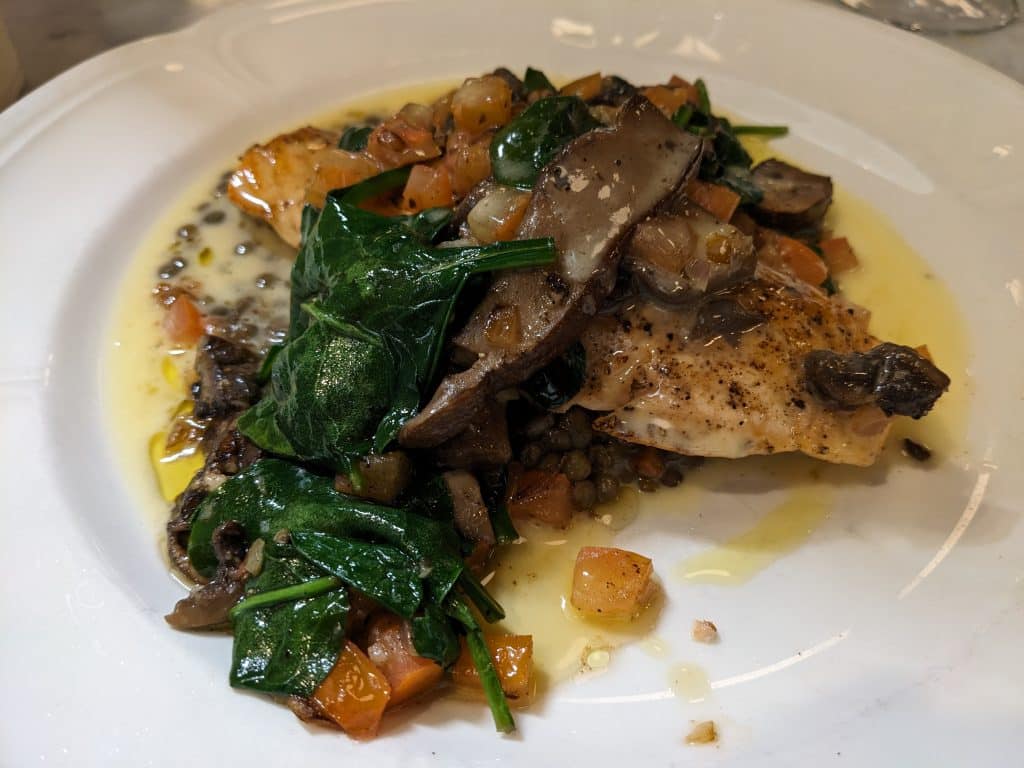
The duo of martinis and oysters is an ideal way to prepare your palate for an elaborate, complex meal. Thus, for my next course, I ordered an elegant salad of fresh house greens with shaved shallots, crispy chickpeas, beets, sieved egg, and champagne-tarragon vinaigrette. “Delighted,” I replied when the server asked me how I was doing. The salad was a light, refreshing interlude between the oysters and the entrée—seared salmon with bacon-braised French lentils, sautéed spinach, portobella mushrooms, tomatoes, and beurre blanc. “How marvelous,” Bella might say.
If you want a thematically appropriate libation before dinner, then I’d recommend stopping by the Robin Room for a Corpse Reviver No. 2 cocktail (which traditionally consists of gin, Lillet blanc, orange liqueur, absinthe, and fresh lemon juice).
Vegan/Vegetarian alternatives: The menu at Sardine is not especially accommodating to those who prefer a plant-based diet. While there are no vegan options at all, most of the salads are suitable for vegetarians. They do offer a single meatless entrée: cabbage rolls with roasted mushrooms, farro, butternut squash, leeks, sultana raisins, Parmesan Reggiano, sauce of summer preserved tomatoes and taleggio cream.

Monster with spicy ramen, pork belly bun, and Iwai Blue Label Japanese whiskey at Morris Ramen (106 King St.)
Veteran Japanese filmmaker Hirokazu Kore-eda’s latest effort, Monster (2023), premieres locally at UW Cinematheque on Thursday, February 22, at 7 p.m. Although I have yet to see the film, I am familiar with the director’s previous work. I feel like the serene atmosphere, minimalist decor, and elegant, nourishing Japanese fare at family-owned noodle shop, Morris Ramen, would be especially well-suited to the contemplative style and pacing of Kore-eda’s films.
For starters, try a pork belly bun with pickles and hoisin sauce accompanied by a two-ounce pour of Iwai Blue Label whiskey served neat. Then move on to a hearty, steaming bowl of spicy ramen with chashu chicken, bok choy, and kikurage (wood ear mushrooms). Personally, I like to add extra toppings such as nori, moyashi (mung bean sprouts), and ajitama (marinated boiled egg). Round out the meal with a cold, crisp, refreshing pint of Sapporo Japanese lager on draft.
Vegan/Vegetarian alternatives: One of the more vegan- and vegetarian-friendly establishments in Madison, Morris Ramen explicitly identifies which items on its menu are suitable for your diet. The menu includes both a Veggie and Vegan Ramen, two different vegan Mazemen (soupless ramen) options, a Veggie Donburi (rice bowl), satsuma fries, and a squash bun with yogurt and chutney.

The Settlers with Pollo Caribeño (pollo a la brasa, arroz con cilantro, frijoles negros, tostones, salsa criolla) at Estacion Inka (616 University Ave.)
Estacion Inka, a family-owned Peruvian eatery with quick service and casual atmosphere, has been a staple for years when I’m planning to attend a campus screening. The restaurant is literally down the street from Vilas Hall and the Chazen Museum of Art, and only about six minutes away on foot. I especially like grabbing a bite at Estacion Inka before going to see the annual selections presented with the support of the Latin American, Caribbean, and Iberian Studies (LACIS) program at UW-Madison.
Chilean director Felipe Gálvez Haberle’s ravishing revisionist western The Settlers (2023) will close out the spring LACIS film series with its first (and possibly only) screening in the Madison area on Thursday, February 29, at 7 p.m. If you are inclined to eat before what promises to be a fairly intense and brutal look at colonialism and exploitation at the turn of the 20th century, then some rustic, homestyle comfort food from the Andes should fit the bill.
You can’t go wrong with any of the special platters at Estacion Inka, but I suggest the Pollo Caribeño, which includes a one-quarter portion of Pollo a la Brasa (Peruvian-style rotisserie chicken) served with twice-fried green plantain, white rice, black beans, and salsa criolla (Creole salsa). Make sure to substitute Arroz con Cilantro for the white rice, though. Believe me, you won’t regret it (unless you don’t have a palate for cilantro, of course). All of the platters come with homemade Inka yellow and green sauce.
Vegan/Vegetarian alternatives: Estacion Inka offers a handful of vegetarian options that seem to be suitable for vegans too, including a Veggie Platter consisting of cilantro rice, black beans, and plantains served with salsa criolla, and a Tofu Saltado platter featuring sautéed tofu, onions, tomatoes, cilantro, and French fries served with white rice. Again, substitute Arroz con Cilantro!

The Holdovers with a Tip Top Burger, french fries, and a Rakish cocktail at Tip Top Tavern (601 North St.)
With its cozy atmosphere, vintage feel, friendly service, and menu of elevated pub fare, Tip Top Tavern is the perfect place to have dinner before watching The Holdovers (2023). The movie even includes a scene in which two of the main characters enjoy burgers at a bar/restaurant.
Alexander Payne’s witty, warm-hearted throwback comedy tells the story of three forlorn people stranded together at an elite New England boarding school for boys over winter break in 1970. Paul Hunham (Paul Giamatti), a cantankerous, cynical, and hard-drinking adjunct professor of ancient history, finds himself obliged to remain on campus and look after the handful of students who have nowhere to go for the holidays. He gradually develops a surprising bond with Angus Tully (newcomer Dominic Sessa), a bright yet emotionally damaged troublemaker, and Mary Lamb (Da’Vine Joy Randolph), the school’s head cook, who is mourning the recent death of her only son.
In addition to being set in 1970, The Holdovers actually looks like it could be a film from that era, thanks to the efforts of cinematographer Eigil Bryld, who was able to emulate the style and spirit of classic Hollywood movies made in the ’70s without using traditional film stock.
At Tip Top Tavern, I recommend the Tip Top Burger, which is prepared with Heritage Farms grass-fed beef, lettuce, tomato, red onion, pickles, and special sauce served on a buttered bun with kettle chips and a side salad. Substitute french fries for the chips, add sharp cheddar and cherrywood bacon for a slight upcharge, and wash it down with a Rakish cocktail (the Tip Top’s house Old Fashioned, made with Four Roses bourbon, fresh fruit, bitters variety, and ginger beer). Or, if you want the genuine experience, order Jim Beam on the rocks. For dessert, procure some vanilla ice cream, cherries, and a bottle of bourbon to create DIY cherries jubilee à la Paul.
Even if you’ve already seen The Holdovers, for a truly nostalgic and unique viewing experience, be sure to catch the Cinematheque screening on Friday, April 12, at 7 p.m., where it will be presented on one of a limited number of 35mm prints struck for the film’s theatrical release. Director Alexander Payne will also appear in-person for a discussion following the screening.
Vegan/Vegetarian alternatives: Although vegans will be hard-pressed to find anything edible on the menu at Tip Top, there are several rich and delicious choices for vegetarians, such as cheese curds, fried pickles, sweet potato fries, and a wild mushroom melt (sautéed mushrooms, roasted butternut squash, chévre, havarti, arugula, and garlic aioli on toasted sourdough bread).
We can publish more
“only on Tone Madison” stories —
but only with your support.
Author

Related Articles
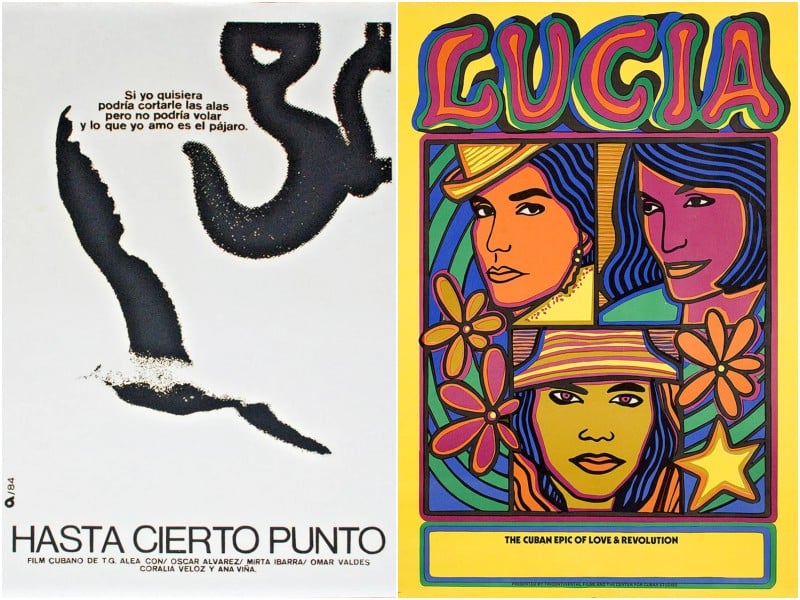
The Cardinal Bar’s Cuban film series invites local support for Madison sister city
Cine Cubano bridges interest in Cuban cinema with the cultural exchange and aid mission of the Madison-Camagüey Sister City Association.
Three video artists tap into personal histories in the 150 Artists x 150 Years exhibition
Chele Isaac, Toby Kaufmann-Buhler, and Aaron Granat reveal the creative depths of their works, which are on display through February 28 at Central Library.

Video: Sizing up local screening events and prominent performances of 2025
A chat with Josiah Wampfler at OCA Media about our favorite movie-going experiences and acting roles of last year.