
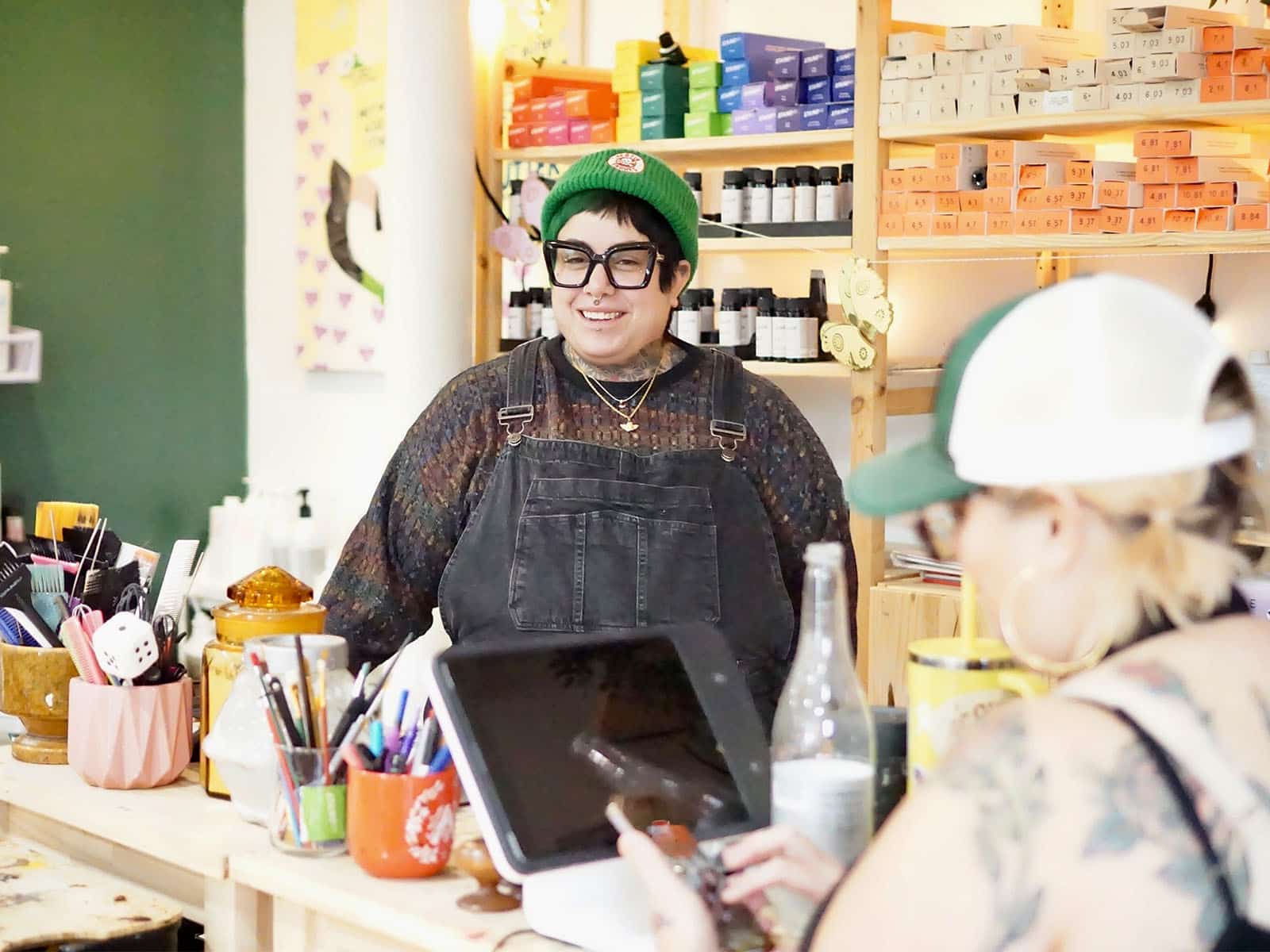
How Mint Cuts and Color became an affirming hair haven.
The hold that hairstylist El Ershler has on the queer community in Madison is undeniable. “I always joke that if you see a queer person with a mullet in Madison, they probably got the haircut from El,” laughs Ershler’s friend and regular client, Louis Lindley.
In 2019, Ershler started Mint Cuts and Color—an inclusive salon that allows Madison’s LGBTQ+ community to explore and express their identity through hair—at 812 E Dayton St, Ste 208 in Madison.
Ershler never intentionally set out to be one of Madison’s go-to queer hairstylists. But through the nine years of their career, Ershler’s willingness to experiment and ability to understand their clients shone through. Word spread, and Mint Cuts and Color became a hair haven for queer people who weren’t getting their needs met elsewhere in town.
“Being part of the queer community and non-binary myself, I think, helps a lot of those people out,” Ershler says.
Queer clients often have uncomfortable experiences with more “traditional” salons, El says. “If they wanted a short haircut, and they had really long hair, the stylist would be like, ‘No, are you sure?’” Ershler says. “Just very weird vibes and not affirming at all.”
“That made me really sad, because even if you identify as a woman or a man or whatever—you can have long hair or short hair. It doesn’t matter. Hair has no gender to me,” Ershler says.
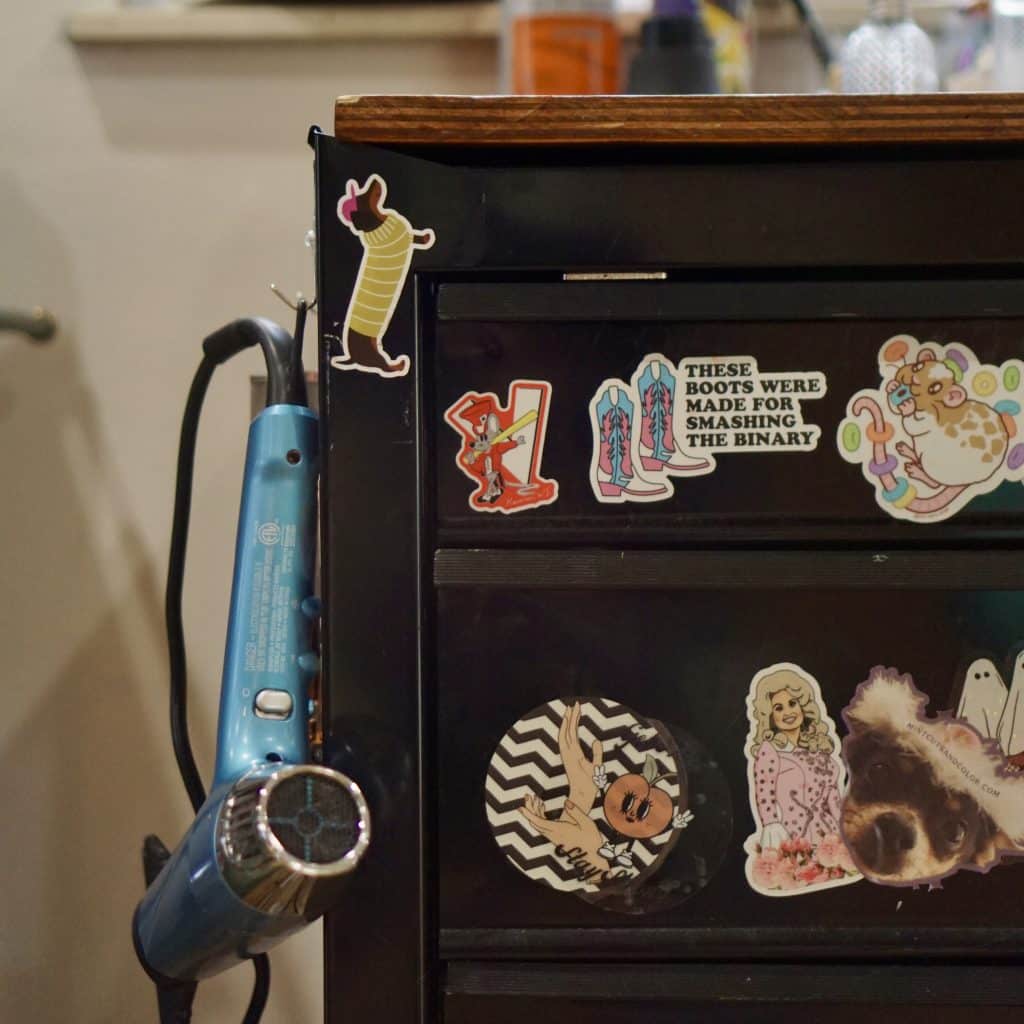
At Ershler’s place, hosted by Citrine Cooperative on the near east side, queer-empowerment posters fill the walls, and Ershler’s sweater-clad chihuahua greets newcomers at the door. It’s an atmosphere where clients can talk about their gender identity and expression openly.
“They can be honest about what they want their hair to look like, and feel confident that I can execute that for them,” Ershler says.
Lindley switched to Ershler after his previous hairstylist made one of those comments.
“‘I don’t really cut men’s hair, but I’ll cut your hair,’” Lindley recalls the ex-stylist saying. “And as a trans man, that just doesn’t fully sit right with me. Like, I am a man.”
Lindley’s wife recommended Ershler, and the first haircut grew into a friendship. Ershler styled his hair in ways that allowed him to express his queer identity. They were active in his community and, just as importantly, didn’t “make shitty comments,” Lindley says.
Ershler’s mindful approach and styling abilities were reinforced when Lindley “cheated on El, so to speak” at another salon and got what he calls the “most terrifying haircut of my life.”
“I called El and was like, ‘I’ve never understood a hair emergency, but I’m having one right now,’” Lindley recounts. “They were like, ‘No worries, come pick me up. We’ll go to the salon and fix it.’”
Ershler did damage control and turned the disaster into a simple cropped cut, but Lindley still wasn’t sure.
“It felt like a really boring cis-man’s haircut,” Lindley says, and that didn’t reflect who he was.
So Ershler dyed his hair a bright blue, and Lindley felt more himself.
“It’s things like that,” Lindley says. “They understand the nuance of how hair is gender neutral, but it can make you feel more yourself.”
Lindley now rocks a rat tail (courtesy of Ershler, of course) and finds it validating in how it signals his queer identity—”it’s punky as can be”—while still playing within the boundaries of professionalism.
As a researcher at UW-Madison, Lindley focuses on the trans and non-binary experience. From both personal and academic experience, Lindley knows changing hairstyles can be an important part of gender-affirming care.
“Most people think of gender-affirming care as these medical transitions, but it’s really anything that you’re engaging in to celebrate your own gender,” Lindley says.
Often, this means that Ershler’s work is more than a haircut—it’s also a significant step in people’s lives that Ershler excels at bringing them through: “They really do understand that hair is gender affirmation,” Lindley says.
Sometimes, clients schedule a haircut from Ershler before other major steps in gender-affirming care, like top surgery or other procedures. Having a person go to them during such a meaningful point in their life is something that Ershler doesn’t take lightly.

“I always have a hard time expressing how that feels,” Ershler says. “It’s just really heartwarming for me that somebody trusted me to do that for them.”
C Nelson-Lifson, a queer hairstylist who worked at another local salon with Ershler before they both became self-employed, attests to the importance of salons like Mint Cuts. “To help people feel like themselves is pretty incredible,” Nelson-Lifson says. (Full disclosure: Nelson-Lifson is also a Tone Madison contributor.)
Nelson-Lifson, who runs Temperance Suite on the north side, shares similar stories of queer clients finding comfort in a queer stylists’ space.
“Sometimes people come in, and they’re like, ‘Hey, I was really nervous about making this appointment,’ ‘I couldn’t find a place that offer gender-neutral haircuts,’ or ‘I’ve gone to barbers and they won’t cut my hair because they think it will be too masculine,’” Nelson-Lifson says.
They say that hairstyles are “a significant way that people can change their appearance and feel a sense of control in a society and current political landscape that feels out of control.”
“I feel like, right now, I’m offering a space for people to not be okay,” Nelson-Lifson says. “Because being alive right now is exhausting, especially for queer and trans folks.”
Ershler agrees, noting how the current administration has noticeably made their clientele feel more unsettled. While these times can be tough to navigate, clients have continued to show gratitude to Ershler for their services helping them find queer joy.
Ershler and Nelson-Lifson are just two of many queer stylists in Madison committed to running inclusive salons for the community. As self-employed workers, they both see the importance of supporting not just other queer hairstylists but also business owners and artists across Madison. Ershler enjoys connecting with other stylists, and would eventually like to see a queer stylist support group in the future.
Being self-employed comes with its perks. For Ershler, it includes making their own policies. To make their services more accessible, Ershler offers sliding scale appointments for lower-income customers to pay for what they can. During November and December 2024, Ershler reserved this option specifically for the queer community so they could have moments of self-care during a stressful election cycle and its aftermath. Instead of taking tips, Ershler encourages people to donate to their mutual aid fund. That way they can continue offering appointments to clients going through financial hardship.
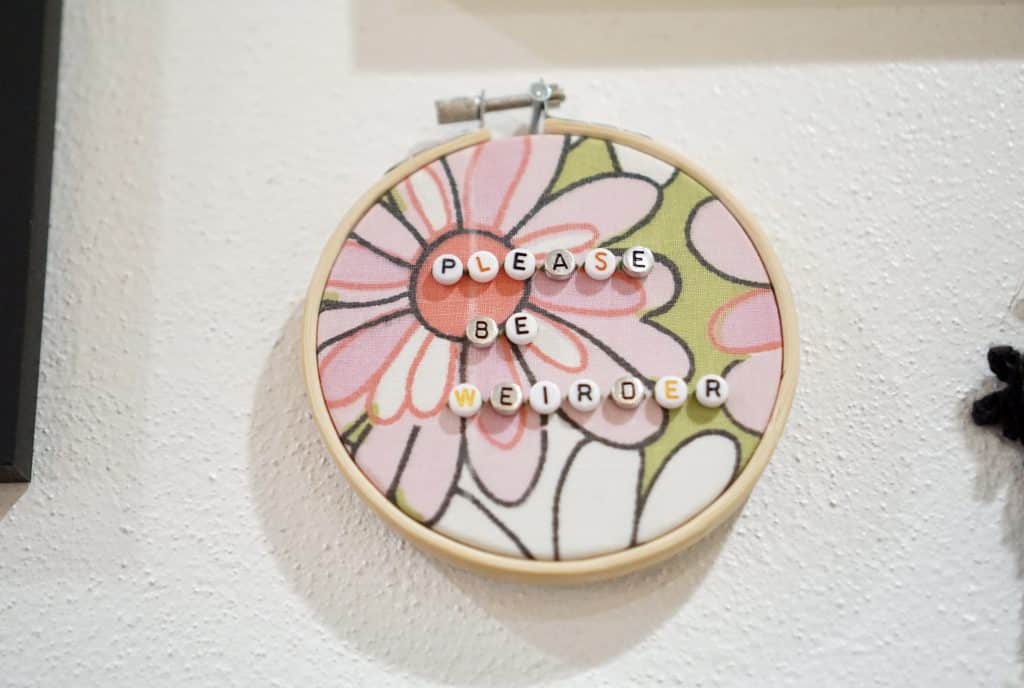
Ershler also makes it publicly known that Mint Cuts and Color is a welcoming space by registering it under Strands for Trans, a worldwide registry of queer and trans-safe salons. Several customers have found Ershler through that platform, Ershler says.
Because Ershler independently runs Mint Cuts and Color, they have more freedom to create their own inclusive policies and environment. But that wasn’t always the case before Ershler went self-employed.
“I think in the beauty industry, it can be really hard to fit in when you aren’t the norm,” Ershler says.
At some salons, Ershler says, pressure to look “presentable” through outfits and makeup can be common. At beauty school, for example, students were required to wear all black. Ershler finds this draining: “It can be kind of hard to fit in when you don’t fit that mold. I’ve never fit that mold my whole life,” Ershler says.
Creating a space where they can validate themselves and others was worth the wait, Ershler says. They advise other queer hairstylists to go independent if they can.
And for people considering a new hairdo, Ershler has one thing to say: Go for it.
“There’s some weird BS standards that we follow. People sometimes won’t even get a haircut if they think their face is too round or too square,” Ershler says. “I think all of that is bullshit. Just get the haircut.”