
Still collating: The mixed mutations of the “Alien” franchise
Scott Gordon and Grant Phipps trade notes on “Alien: Romulus” and take stock of the series’ cruel, expanding universe.
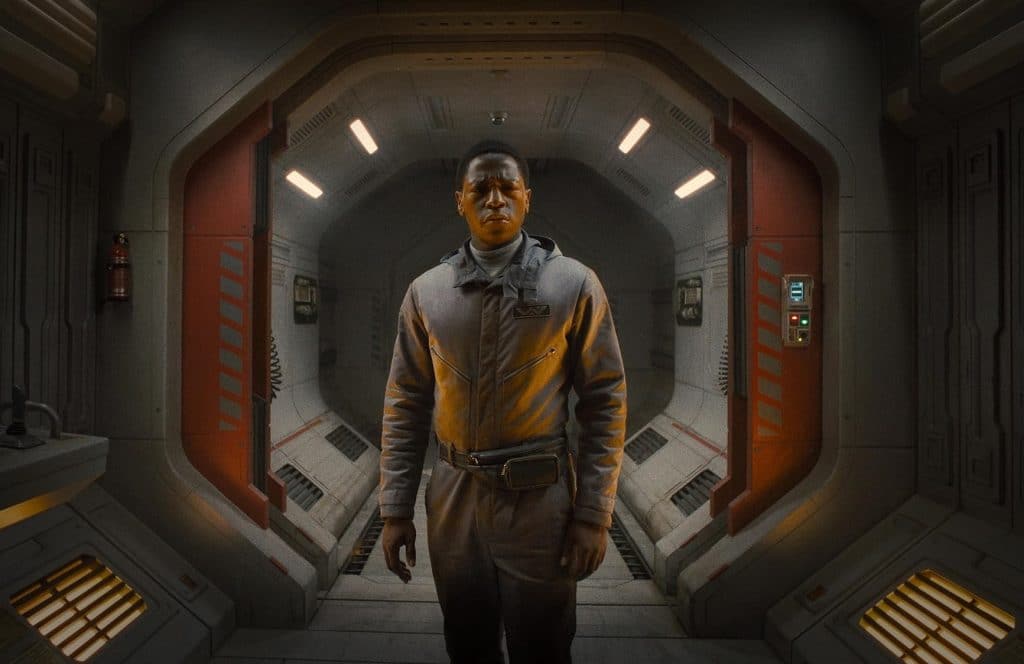
Scott Gordon and Grant Phipps trade notes on “Alien: Romulus” and take stock of the series’ cruel, expanding universe.
In our “Cinemails” column, two writers exchange viewing notes on a recent theatrical or streaming experience and/or dig into something more broadly philosophical about the movies.
For this third edition of Cinemails, I kind of wanted to chip away at something of a franchise movie, since their successes have sustained and buoyed the health of theaters this year—especially since June’s juggernaut, Inside Out 2. And that has continued, yet again, with another Disney property and latest Alien series entry, Romulus. As of September 11, it is still playing in all Madison area theaters.
Tone Madison publisher Scott Gordon and I began making informal plans to see Alien: Romulus together a short while back following its release on August 16. But thanks to a wild late-August heat wave and sudden sickness, those plans got severed. We ended up reconverging via Discord DM when my first message to him exiting the theater was: “smh, v bad movie.”
However, I didn’t want that to be the end of that. So I encouraged Scott, a great admirer of not only Ridley Scott’s original Alien (1979), but science fiction in general, to write an assessment of the film as a catalyst to conversation about what went wrong (and, sure, what co-writer and director Fede Álvarez got right). I don’t think I was quite prepared for the depth of Scott’s knowledge and understanding of not only the archetype of sci-fi horror, but of others’ writing and appraisal of the seven core films in the franchise. And that doesn’t even include Alien: Isolation, the 2014 Creative Assembly-developed video game, which we mention in brief.
While we expend a lot of words looking at the nuts and bolts of Romulus, this back and forth also reaches an unexpected depth by even our third or fourth paragraphs. As was the case with the initial entry in this “Cinemails” series, our exchange reveals one of the core purposes of these prompts: to spur others to engage with movies in a way they wouldn’t necessarily on their own. This is Grant Phipps, film editor, signing off (at least, by way of introduction).
Editor’s Note: The following conversation contains several spoilers for Alien: Romulus.
Scott Gordon to Grant Phipps
subject: priority one
So, to set the table here, I approached Alien: Romulus with a mix of affection and apprehension. Over the years, the first Alien has become one of my favorite movies. My love for it gestated at decidedly non-xenomorph speed. I got to see the 1979 film in theaters (finally) earlier this year, during a brief theatrical re-run that served to promote Romulus. It held up as richly as ever, in the battered realism of its production design, the suspenseful restraint of its storytelling, its still-convincing use of practical effects and miniatures.
I appreciate a few of the key things that Romulus is trying to do. One, drawing very self-consciously on the production of the original—from the title fonts to the music to the built-tough computer screens rendered nearly illegible under layers of scratched glass. (This includes leaning extra-hard into the body-horror elements that have always been at work in this franchise. If you somehow didn’t already realize that the xenomorph life cycle is supposed to remind you of more earthly processes and orifices, Romulus has you covered.) Two, showing us what life is like for the average proles powering the Weyland-Yutani space empire. Three, the specific focus on what it’s like for young people trying to survive in this ugly, grimy, extractive future.
The first Alien has a sharp, class-conscious eye for the plight of the Nostromo’s crew—even before the really bad shit starts happening, they worry about getting cheated out of their share. I think expanding upon that is more interesting than all the creation-myth stuff in Prometheus and Covenant. The first act of Romulus introduces us to this group of basically kids who’ve already had to deal with so much death and exploitation and hopelessness. Their future on a sunless mining colony is so bleak that they decide to steal a ship and some hypersleep pods to seek out a better life. Honestly, a pretty compelling setup for going back into this universe.
That said, I’m not much of a franchise guy. Plenty of people have already made the point about the tiresome over-milking of various IPs. The point for me is that good storytelling works because it’s not telling you everything. It makes choices about what to leave in and what to leave out. The more a franchise tacks on the lore and explanations and origin stories and extra chapters, the more I feel that it’s just trying to make all the possible choices, and that gets boring. I suppose I’m as susceptible as anyone else to the impulse of “give me more of that thing I like.” So I get it.
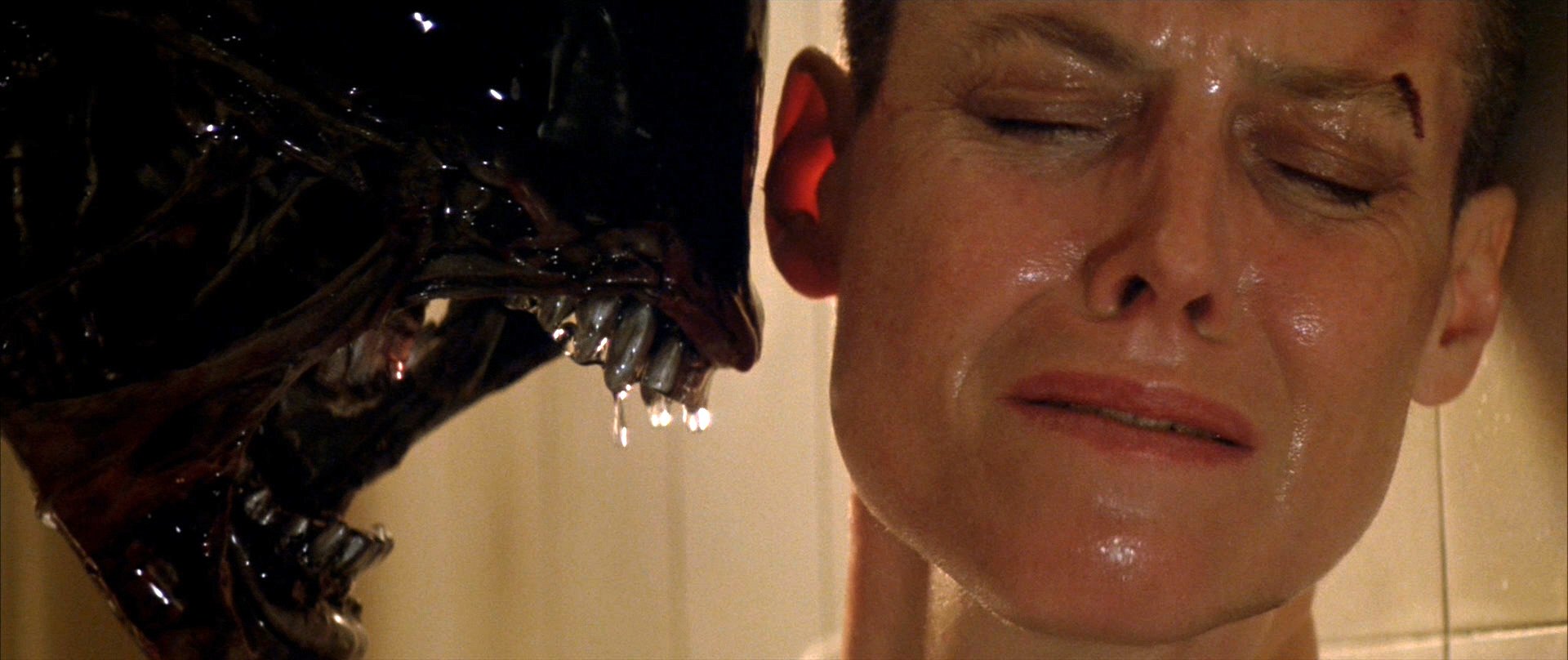
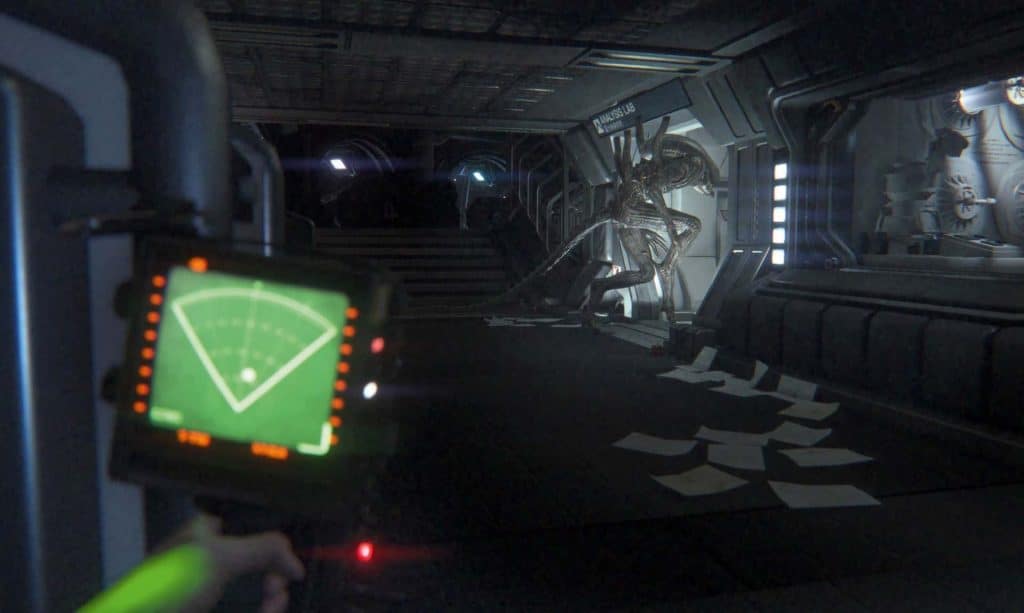
Still, I don’t really need to be fan-serviced in an Alien movie. Does anyone? The first film is already spectacular, complete, a pleasure to revisit. You see H.R. Giger’s haunting vision of a gigantic dead pilot in a derelict spacecraft and you don’t get the whole story behind that. You just have to sit with the imagery. You have to just wonder and deal with the mystery of it. It suggests a whole grand sequence of terrifying events without telling you all about it, and that’s the point! That’s why it works! It’s not a viewing experience that needs to be augmented or improved upon. Prometheus and Covenant try to give you some of the backstory, and they’re worth watching, but they’re not as good as just being left to marvel at the fragments the first Alien gives you. If a filmmaker wants to revisit this, I’d almost rather they just do something fucking off-the-wall and weird with it (which is why I will defend Alien: Resurrection). Want an aesthetic homage to the original? Play Alien: Isolation. Seriously. (Halloween’s coming up and it will almost certainly be marked down in various video-game stores’ horror sales.) Want a look behind the curtain? See Alexandre O. Philippe’s 2019 documentary Memory: The Origins of Alien. Want to chase more of that creepy sci-fi feeling? Well, countless films draw on Alien‘s influence in some way or another, and quite a few of them are very good! Sputnik and Underwater, for starters. But as we know, even a perfect organism can’t resist the drive to reproduce and mutate. So here we are.
Romulus seizes on some of the potential to unpack the story and the world-building in an interesting way. The company has set an abandoned space station on course to collide with a planet’s rings, and I loved how the film uses that cosmic belt-sander to ratchet up the suspense. It delivers on the creatures. It delivers that sinking feeling of dread as hubris and haplessness catch up with everyone in sight. It also falls prey to some very silly play-the-hits stuff. Re-heating catchphrases that were barely catchphrases in the first place—the really good writing in Alien is all about grim bureaucratic euphemisms, not one-liners. Bringing an old android back for way more than a milk-gurgling cameo (definitely more about that later). Some callbacks to the shoot-’em-up approach of Aliens, as a treat or whatever. Still, something tells me I had more fun than you did. Please respond, all other priorities rescinded.

Grant Phipps to Scott Gordon
re: priority one
Priority one should be that a worthwhile movie is made, especially for a franchise that has built itself on reinvention in the past several decades. Before Romulus birthed, I could say, “Hey, actually, all these movies are so different, and that’s what makes them interesting, even if I have my production or casting gripes.” But our corporate America is now exactly mirroring this fictitious universe’s Weyland-Yutani corporation (or just simply Weyland in the prequels) with some incredible irony: “Insure the return of organism for analysis. All other considerations secondary. Crew expendable.” You can say that again. The figureheads just want to deliver an Alien movie at any cost; preserve the IP, satiate the fandom. Universal movie culture seemed to have died at some point last decade when Disney was insatiably buying up every goddamn pop-cultural touchstone for at least two generations of people. “You like this thing? Here it is again.” And that risk-averse brain-rot has spread out to every major movie release I can think of in the past few years, especially after theaters reopened after the initial shuttering during Covid.

Before Romulus started “rolling” on the most sweltering night of the entire year at Flix Brewhouse, the theater had a pre-show reel of amusing interview clips with cinema audiences from 1979, many of whom didn’t seem to take the original film’s R-rating seriously. People included parents with their kids, even. Those clips were followed by a 1986 toy commercial for James Cameron’s action-driven follow-up to the original, Aliens. I simply took this as a kind of nostalgic warm-up for the film I was about to see, oblivious to the unintentional commentary it provided. The executives are goading us to remember the days. “Even if you don’t remember them, because you weren’t alive, does the aesthetic *not* remind you of today? That’s good, because we’re doing nothing to ensure the artistic preservation of cinema and build something new for this generation. We’re just gonna deliver something with the weight and value of a toy commercial (not that you’ve ever really seen one of those either on Amazon Prime, Netflix, YouTube, or TikTok).”
It’s distressing, Scott, to look at this movie and collectively agree that, yes, it *looks* good. Even if you don’t have a baseline reference to any of the first four films, made between 1979 and 1997, Naaman Marshall and his team’s production design is cool and admirable. And for those of us more versed in its visual language, Romulus opens with a dead-of-night, dusty scope that recalls Ridley Scott’s Blade Runner (1982) and even Paul Verhoeven’s Total Recall (1990): those classic contributions to sci-fi thriller grammar. I love what you have to say about the focus of Romulus “on what it’s like for young people trying to survive in this ugly, grimy, extractive future.” The other Alien films don’t do that; they drop us onto ships of hardened professionals or into worlds home to cynics and communicants. By contrast, the setup here is mining new territory, no pun intended (as the setting is Jackson’s Star mining colony). But it does not deliver upon any established promise, and instead reverts to a “Force Awakens syndrome,” nostalgic ouroboros. You do allude to this, Scott, but I’m interested to know if part of you is hung up on all this as I am, or if you go to the movies less for analytical reasons and just to enjoy yourself and hope that it sparks a fun discussion afterward. (Sorry if I’m disappointing you here on that front, lol.)
Baby-faced Marie “Rain” Carradine (Cailee Spaeny) walks out of an office of colony affairs without her travel papers approved. We never see her or her comrades toiling away or doing anything that would convey the desperate feeling, that she has to leave. It’s all inferred from the aforementioned environmental scope. The deepest relationship she’s forged, and this entire film forges, is between her and a brotherly android (sorry, “artificial human”), lazily named Andy (David Jonsson). But, even as with several of the other Alien films, this has to be muddied by a predictably expendable crew. The goal is to get to the first chest-bursting death expediently; this isn’t going to be a measured, controlled burn, even like in Aliens, an entry that is as surprisingly action-heavy as it is lore-heavy. The one thing that struck me about Romulus, which it does better than Aliens (I know, right?), is that it retroactively takes a bite out of the credibility of Cameron’s vision. The acid-blood of the xenomorph creatures can melt through steel grates and the hull of ships, so why the hell was every space marine and sentry gleefully blasting away at hordes of them? It was a factor in Aliens, but it felt so conveniently used in the plot. Director and co-writer Fede Álvarez really had something here, and he delivers upon it in an OK set-piece that is little more than a visual effects flex. It’s one thing I’ll confess to liking about the story and plot here (and boy, is there simply too much of that).
While I was touching up some initial notes, the Pitch Meeting for Romulus dropped on YouTube (August 29), and the parody artist behind all those, Ryan George, hammered home the depths of this film’s lack of identity and soullessness with a razor-sharp quote from the Producer Guy on the other side of his pitch: “We can’t let something as trivial as death stop us. We can’t let anything stop us.” Here, George is referring to the generative/deepfake AI use of Ian Holm’s Ash likeness for a new artificial human character, Rook, aboard the titular ship. (Holm passed away in 2020.) This seems to be some unnecessary comment on the prequels’ use of Michael Fassbender in a dual role in Covenant. …Does this not reinforce my initial point about the modern corporation analogue to Weyland-Yutani?
To run through the history and approval of this fake Holm abomination isn’t a great use of personal time, but I do want to come at this from another angle and maybe revise my thoughts about “the future of cinema,” which Max and I debated just a little while ago. The use of AI in film could theoretically be implemented to save resources and aid humans in post-production, but it’s instead being used, already mind you, for this kind of thing—to resurrect an actor who’s no longer alive for not only dubious purposes, but superfluous ones. Just…why are we doing this? To falsify some sort of emotion for audiences of a certain age? It embodies Álvarez’s conservative methodology, or at least his absolute willingness to yield to the studios’ insistence on it.
The more I thought about this, the more I was reminded of a lecture that singular Canadian filmmaker Guy Maddin brought to Madison 10 years ago, which I actually wrote about back then in my thoroughly dry here’s-what-happened style. Basically, Maddin discussed film as a haunted medium, because it’s an evolutionary branch of photography. From the instant footage is gathered, it recedes from living actors in time. And I think proponents of AI would similarly characterize its use in this way—that what they’re doing with the Ash-Rook concept in Alien and Alien: Romulus is just an extension of this idea, that eerie relationship we have with actors suspended in a specific period in time during a movie shoot. I feel like the main difference, however, is oversight and manipulation. Living actors consent to what they’re doing; although, they can’t predict what will ultimately become of a film, they’ve committed to an understanding of that. In our present and future hell, we’re doomed to live in the past, because few are brazen enough to challenge the notion that nostalgic revenue isn’t the guiding light in the universe. Does any of this resonate with you, Scott?That’s what depresses me about watching this film. It succeeds technically, and feels like a real movie, but really isn’t one that I can point to and say, “I appreciate what they did here.” While this film dances with aliens, it isn’t one of them. I’ll leave you with a nice li’l quote from a Letterboxd user, ThixthThenth, who distills the feeling quite movingly:
I am a fan of good art, and I am a fan of fun but bad art. Alien: Romulus is not good art, and it is not fun but bad art. It is something far worse: a product that is a fan of itself. There is no suspicion in Alien: Romulus that the artistic soul of the project is at stake, and that it could be lost: the film was always empty, like an emptied airlock, like the chest of someone whose fandom has ripped them apart from the inside out.

Scott Gordon to Grant Phipps
re: re: priority one
I love that movies and video games are filled with stories about technological hubris gone wrong and AIs gone bad and on and on, and then these industries learn nothing from those stories. When I first heard about Ian Holm appearing in Romulus, I thought the movie would be giving us just a little of Ash, as an admittedly graceless treat. I was not prepared for Rook to serve as a load-bearing character throughout the plot, repeating a bunch of Ash’s lines from Alien word-for-word. I know that Holm’s family signed off on the use of his likeness. It’s still a lazy storytelling choice, and it still looks like shit.
In the first Alien, Ash is made of “milk and caviar and pasta and glass marbles,” as Ridley Scott says in a making-of doc. That’s one trip to Whole Foods with a stop at a toy store. The results still hold up today—unnerving, uncanny, and most of all tactile. Every surface in that movie has a texture you can almost feel in your fingertips, from the Nostromo‘s padded hallways to the xenomorph’s slick-latex head. The more advanced digital tools available to Álvarez and crew fall short of the practical effects, at least when it comes to Rook. It just looks kind of flat.
Anyways, it feels like a step backward after Michael Fassbender’s performances as David/Walter in Prometheus and Covenant. Fassbender gave us a fresh approach to the whole creepy scheming android thing, expanded upon it, and created some truly chilling moments, while also staying true to the single-mindedness and arrogance of Holm’s original performance. Lance Henriksen (in Aliens and Alien 3) and Winona Ryder (in Resurrection) have explored the more sympathetic, even heroic possibilities of the various Weyland-Yutani android lines. In the Alien: Isolation video game—which, like Romulus, takes place on a space station where, you-guessed-it, has gone terribly wrong—players have to spend a lot of time dealing with a bunch of off-brand androids called Working Joes. They channel Ash’s corporate atrocity-speak into some dark comic relief, but also play a central role in making this game an utter stress nightmare. (Full disclosure: I love this game but will never finish it because I’m bad at video games and don’t want to have a heart attack.) That’s a worthy contribution, and one of many reasons why Isolation deserves to be appreciated alongside the Alien movie sequels, even if it’s a hellish chore to get through.
I do want to say one other thing about Jonsson’s performance as Andy. Ash and HAL 9000 and the sinister creations of William Gibson (who wrote a never-produced script for Alien 3!) are on the extreme end of a nuanced continuum, one that I’m sure will only grow more complex going forward. Sci-fi has also told plenty of more hopeful stories about AI characters. And of course the potential to toggle an AI between good and evil has become a familiar sci-fi storytelling device, one that Romulus uses with Andy. One of my favorite recent examples from the kinder end of the spectrum is Becky Chambers’ four-novel Wayfarer series. If you haven’t read these, think hard sci-fi with an unabashedly tender heart. Chambers creates storylines about AIs that form emotional bonds with sentient beings, AIs trying to figure out their place in a world on a basic, almost existential level. As a relative newcomer to all things Star Trek, I’ve found Brent Spiner’s performance as Data to be deeply moving, and of course often very funny. Data is always trying to reach across that gap between his sophisticated, artificial consciousness and the various sentient species around him. He doesn’t harbor any delusions about becoming fully human, but on some level he yearns to fill a deep lack. “Data’s Day,” from season four of Star Trek: The Next Generation, is one of the loveliest episodes of TV I’ve ever seen.
This is a bit off on a tangent, but I do think it’s rewarding that the character of Andy straddles different points of the continuum. The quiet volatility of Jonsson’s performance really works for me. He layers tenderness and self-doubt on top of an entity that is ultimately still mutable and unknowable. If only Romulus had made an effort to give Andy a sinister foil worthy of this performance—played by a living actor!—rather than just “We have Sir Ian Holm at home.”
When we talked about Romulus before starting into this piece, I thought you were a little too hard on the film’s younger cast members. The whole point of these characters is that they’ve grown up in this awful company town in space, then get themselves into this terrifying situation before they’ve really had a chance to figure out who they are. Aileen Wu turns in the film’s sharpest appearance as Navarro, who defines herself by seizing on the toughness of the world that raised her and spitting it back. Whether Álvarez really taps the thematic potential of all this is another question. Pity really, because there aren’t a lot of younger people portrayed in this franchise, except Newt (Carrie Henn) in Aliens, and then Alien 3 happened.
To get back to a point you made earlier: I also re-watched Aliens recently and it’s definitely selective about the acid blood! It also helps to firm up some key rules that I think most sequels have been good about following. One, you can’t shoot your way out of the situation, or even nuke your way out, really. Two, there will always be people who think they can harness the xenomorphs’ power. A “…but it might work for us” level of delusion is all it takes to trigger another disaster. Brad Dourif captures that all-too-human tendency so well in his performance as a freaky scientist in Resurrection, and poor Rafe Spall takes it to a comically stupid place in Prometheus‘ infamous “make friend with space cobra” scene. Not so easy to dismiss Resurrection now, is it?
Anyways, within those conventions, you can have a lot of fun. What else is there to limit you? Incredible character design that can mutate in endless, freakish ways? The vastness of space? The reckless greed of corporations and militaries? Ultimately there aren’t a whole lot of tedious rules a filmmaker has to follow in an Alien sequel. I’m kind of resistant to even thinking of it as a franchise. Part of me would hope that people who love Alien movies could resist the entitled strong-arming of various other movie and video-game fandoms. Like, how much pandering can you really even do with this? A sequel centered around Jonesy, where the xenomorphs have to share the one orange cat brain cell? Romulus even tries to pander a bit, when Andy repeats Ripley’s “get away from her, you bitch!” line from Aliens. If Romulus were 10 times the film it is, it would still be stupid to expect it to channel a mech-suited Sigourney Weaver and one of the coolest action sequences of all time. Forget it! Surprise people. Do something perverse! Like having them float through rings of acid blood!
Grant Phipps to Scott Gordon
re: re: re: priority one
I spent too much time this past holiday weekend binging four of the Alien movies (the first two and Ridley Scott’s two prequels from last decade), so I must’ve thought it worthwhile. I wanted to challenge my perception of them in light of my brusquely negative opinion of Romulus, and I have to say how vindicated I felt as the credits rolled to my third or maybe fourth viewing of Alien (1979). There’s no substitute for the lean and mean terror of that primary vision, but every entry afterward, besides Resurrection (which is bad for other tonal reasons), could be interchangeable on a ranked list. For all their defects, their directors (James Cameron, David Fincher [withdrawn, lol], Jean-Pierre Jeunet) and Ridley Scott himself, the original director, punctured this universe and found high-minded and even fun angles to explore about humanity’s place within it and violent exploitation of/by our creations. This is what a movie franchise can and should be. To reflect on your comment about wanting to resist grouping these films as a franchise, that’s ultimately a celebration of the diversity of styles and visions but inherent spiritual unity.
In my concluding remarks to you about Romulus, I pull-quoted someone on Letterboxd who basically used this film to go on a screed against the concept of “fandom.” Strangely, I believe it was the very first review I actually read as I stood at the corner of East Washington and Independence waiting for one of the last buses home that night of the screening, and it instantly clicked with me. I agree that the problems with art in our current always-online world have led to audiences feeling like they own and control something they merely enjoy. That their collective knee-jerk response to a rumor or teaser nugget on socials about something is an official democratic vote to change a narrative’s course or the inclusion of something that otherwise wouldn’t be there. Disney seems to have absorbed this into their business model (as they absorbed 21st Century Fox), and Romulus doesn’t take a seismic or that spiritual risk that might leave audiences scratching their heads in a way any of the other films do. Which is strange to me, again, as the whole series has established itself on avoiding that inherent tameness.
Your comments about the Isolation game, released nearly 10 years ago now, intrigue me. Again, this is something I pointed out in my back and forth with Max this past summer, but I do wonder about the creative viability of big-budget spectacle when video games exist, and even more specifically, a video game that’s been adapted from a movie series with extensive lore and instantly recognizable characters like Alien. (Gone are the 1990s and early 2000s days when movies had so precisely linked video-game tie-ins, but you might remember them.) However, horror movie-viewing and horror gaming are possibly distinct in this realm from a more general action or adventure movie for the reason you mentioned—they can register as simply *too* scary to play, because there are so many more variable triggers to the experience, which you’re enacting with your twitchy thumbs to move down this corridor, deploy a weapon, or what have you (NPC-related stress seems unique, I will say).
Returning to Romulus with some final remarks, I’ll complement your impressions of David Jonsson as this artificial human, Andy, and how the nuances of his performance elevate perhaps what co-writers Álvarez and Rodo Sayagues put on the pages. (And yeah, I have no idea how that reprised line made it into the final cut of this movie. It’s honestly beyond reproach.) Andy is in direct opposition to the intentional and unintentional sterility of Holm’s AI character, Rook, who should’ve been removed in order to add even more to Andy’s relationship to his human companions. It’s interesting that the one non-human character elicits more of a reaction than any of the others among the crew aboard the Romulus. But I’ll give Isabela Merced some credit for some genuinely believable moments of terror as Kay, who has to endure the heaviest trauma across the film.
The tragic characters across the Alien universe, especially Shaw (Noomi Rapace) among the Prometheus, impart narrative depth, whether it’s really there or it’s just felt through metaphorical twists of empathy. Which is why it’s a huge bummer that Kay doesn’t carry that weight, in my impression. I mean, maybe I’ll feel differently on another viewing before Disney’s next inevitable entry follows suit, but Kay, to me, feels like the peripheral Lambert (Veronica Cartwright) of this movie. And while I agree that the Alien universe has not given us younger characters besides Rebecca “Newt” (though, a couple crew members of the Covenant appear to be in their mid-20s), Romulus doesn’t hone in on this promising concept. To the point where I wonder if our reading of the untapped young-crew concept was accidental on the writers’ part, ha. The first act is basically a smoke-screen for a greatest-hits re-scrambling with diminishing returns and flattened personalities. I mean, you seem to not like Prometheus much, and it has more casting issues than its more structurally flawed counterpart, Covenant, but I can safely assert that its group was memorable.
The way you characterize AI in other media is beautiful and convincing; and while I’m not familiar with Becky Chambers’ Wayfarer series, I do know enough about Data (portrayed by Brent Spiner) from The Next Generation. I can’t match your literary reference, at least in recent leisure reading, but your writing “AIs trying to figure out their place in a world on a basic, almost existential level” recalls Kogonada’s After Yang, based on a short story by Alexander Weinstein. The film did not get a premiere in Madison until the students of WUD brought it here in late 2022, but I’d recommend it as I did back then. Undeniably, it is moving to see this sensitive representation in science fiction among the more menacing or rogue AI you and I probably grew up with in more popular media, especially the movies like Alien. So the concept of an android as a brother, like Andy, is fertile territory for drama. But I just wish it weren’t overshadowed by familiar thriller elements tethered to deepfaking Ian Holm as a “new” android. They just wanted to follow Ridley Scott, who saw an opportunity for (living actor) Michael Fassbender to portray both David and Walter synthetics in Alien: Covenant, as I previously mentioned.
Lastly, in my binge-watching of those four aforementioned Alien films (a good eight and a half hours’ worth), Romulus stands out to me with its score and sound design in a couple distinct ways. And those elements seem at odds with one another, which suggests to me that not enough attention was paid to them in production. Composer Benjamin Wallfisch is emulating the original film’s cosmic pins-and-needles orchestral feel by Jerry Goldsmith, even adding an unnerving operatic dimension in the “Chrysalis” theme; but by the time he gets to “There’s Something In The Water,” Wallfisch seems to shift modes to this tuneless, synth-driven, industrial bombast that not only sounds like utterly generic danger music, but its sense of forced, abrasive tension is something I can’t stand. I remember physically recoiling in my seat in the second row of the Flix theater, lol. Sound design also seems like such a mix of thoughtful implementation (with use of absolute silence, a benefit to the dynamic emotional range the film lacks, and something the other Alien films actually don’t do—one more plus here, at least) and general horror ambiance on serviceable autopilot. In the end, the nondescript seems to win out, which is indicative of Romulus‘ whole vibe. Despite a few promising slivers, the film is in desperate need of developed ideas and identity.
We can publish more
“only on Tone Madison” stories —
but only with your support.
Authors


Related Articles
Evaluating tenderness and depth of family dynamics in “Sentimental Value”
Grant Phipps and Lance Li argue in favor of and against the artistic framework of Joachim Trier’s latest psychological family drama.

Movie tee envy
Pondering a shirt collection, and stumbling upon Cosmic Cabin, which has the goods—at least niche ones for cinephiles.
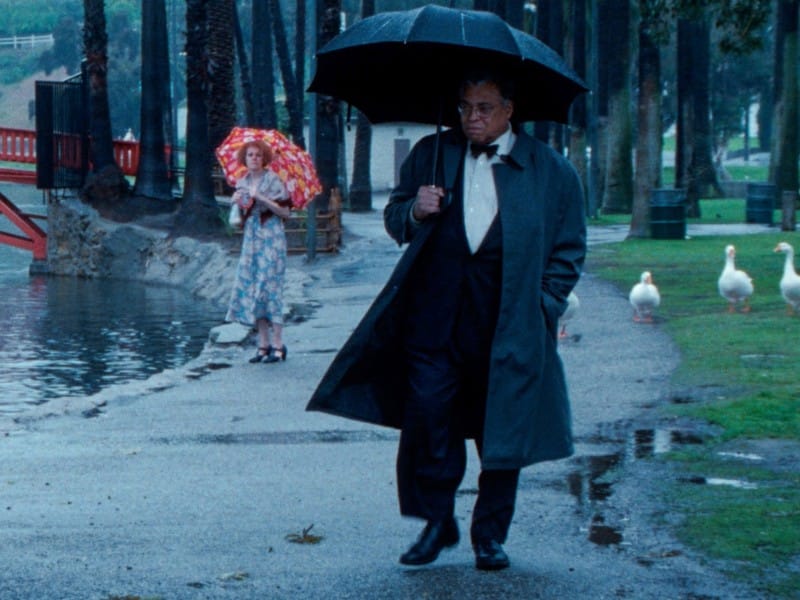
“The Annihilation Of Fish” wholeheartedly renders the enchanting eccentricities of a senior romance
Charles Burnett’s long-lost love story from 1999 screens on 35mm at UW Cinematheque on December 5.