
Small Bites: The cure for aesthetic convergence
Avoid homogenous dining experiences by seeking out unassuming hand-pulled noodle spots.
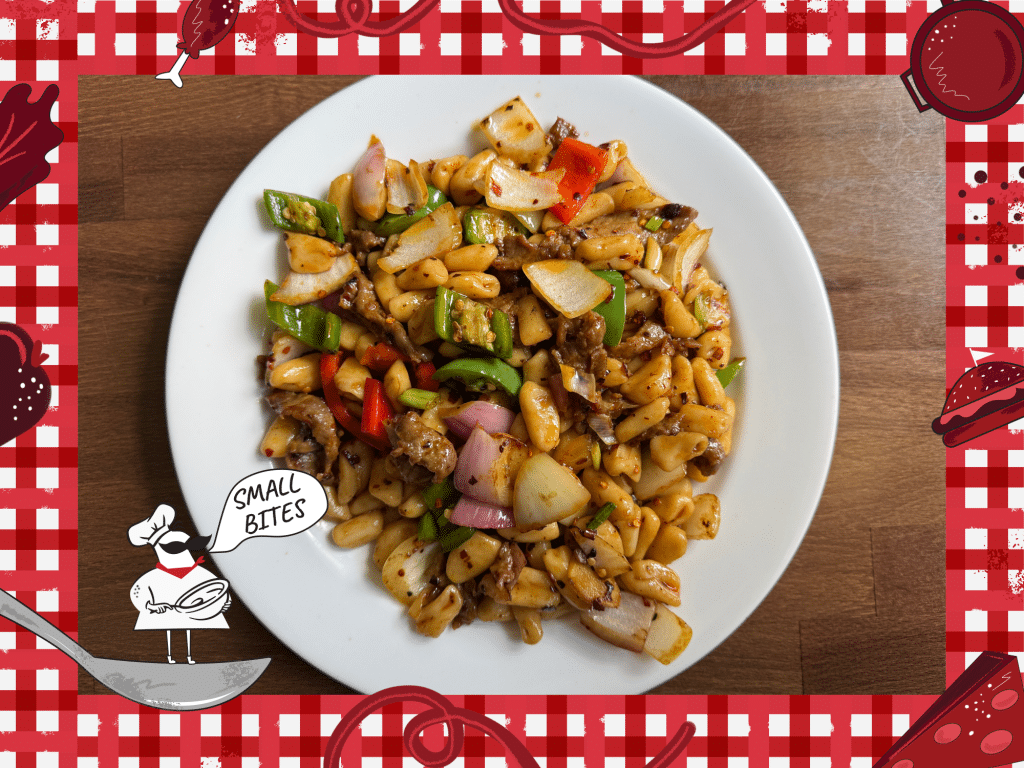
Avoid homogenous dining experiences by seeking out unassuming hand-pulled noodle spots.

This is our newsletter-first column, Microtones. It runs on the site on Fridays, but you can get it in your inbox on Thursdays by signing up for our email newsletter.
“Small Bites” is about exploring the broader world of food and drink in Madison through approachable and specific experiences.
Convergent evolution is when distantly related species start to develop similar traits based on an ideal acclimation to their environment. For example, sharks and dolphins have similar-looking dorsal fins; sharks are fish and dolphins are mammals. Opposable thumbs, wings, spines—the list of examples goes on and on. However, I’m only half-interested in why both koalas and humans can grab tree branches. What I really want to talk about is a specific version of convergent evolution known as carcinization: the process by which all crustaceans eventually become crabs. If you asked me to name nature’s perfect animal, I wouldn’t have put “crab” at the top of the list. Nevertheless, when it comes to survival, the crab is where it’s at. That is to say, if a crustacean wants to stick around for a while, they better develop a flat carapace.
It’s not just a survival tactic for Earth’s fauna, however: convergent evolution pops up in the design world as aesthetic convergence. One of the most well-known examples is a 2015 Medium post by Adrian Hanft that points out how every new car in the U.S. is a crossover SUV. While the style is popular amongst consumers, its popularity is better explained by Bob Sorokanich’s Jalopnik piece that breaks down how automakers exploit a loophole in U.S. regulations to maximize profits while skirting fuel-efficiency targets. In short: it’s a survival move. But there’s another victim of aesthetic convergence that I really want to talk about: casual fine dining.
You know the place I’m talking about. White walls, natural stone countertops, dark wood accents. A moderately hip playlist that’s too quiet for you to pick out exactly which 10-year-old songs they have on a loop. A vaguely Italian or French bistro-inspired menu that talks up its “uniqueness” even though it looks exactly like the same menu you see at every one of these restaurants. Those kinds of places. They’re popular because they dredge up an idea of what used to be cutting-edge and make it feel approachable, even if the price points aren’t. In a sense, it’s a survival move.
On a recent work trip to Portland, Oregon, I made sure to book some nice dinners ahead of time. As a bastion of modern cuisine, Portland has been on my “to eat” map for a while. And yet, after catching up with some friends one night and taking myself out on the next, I found myself questioning if I even liked going out to dinner. After unceremoniously throwing my back out by sleeping on a too-soft mattress (here’s to turning 40 this year), I felt some melancholy about how I wasn’t going to have a revelatory food experience before jetting home to all my hometown favorites.
And then I stopped by Nong’s.
Nong’s basically makes one thing: Khao Man Gai, the Thai version of the classic Singapore dish, Hainanese chicken rice. As I hobbled up the street to their small counter service restaurant, I worried that this, too, would leave me uninspired. I was wrong. The rice was cooked perfectly, the chicken was poached beautifully in a fragrant broth, and the Nong’s sauce was sweet, tangy, savory, and tart all at the same time. I was blown away. And I was also inspired. If the best meal I had in Portland was from a humble counter-service spot, I was probably overlooking just how transformative some of my favorite casual meals in Madison were. When I returned to Madison, I started to catalog all the meals I recently had here that blew me away. It didn’t take long for me to zero in on one thing: hand-pulled noodles.
One of my favorite spots is Hotco Noodles at the Global Market & Food Hall. With its open kitchen, passersby can watch the chefs kneading slabs of dough before cutting and stretching it into long, wavy noodles. Their Hotco house noodles are boiled and then tossed with stir-fried vegetables and house-made chili oil. Because the noodles are made fresh with traditional hand-pulled techniques, the texture is chewy and perfectly tender. A piquant acidity cuts through the richness of the oil, instantly creating a crave-worthy bite. I’m also a massive fan of their stir-fried beef noodles, which add a touch of sweetness and smokiness from being tossed in the wok. As part of a food hall, there’s always ample seating; and with a touchscreen ordering kiosk, it’s easy to place an order. My partner and I tend to stop by while running errands near the East Towne Mall, kicking off a quick grab-and-go in the market for Korean snacks and Indonesian sweet soy sauce.
I’m also a huge booster of Ruyi Hand Pulled Noodle on State Street. Their main offerings are based around noodle soups, but I’m a sucker for their cold sesame noodles. There are a lot of great sesame noodles in Madison (I’m looking at you, Hutong), but the incredible texture of Ruyi’s hand-pulled noodles takes that dish over the top. The stretching of the noodles bit by bit helps elongate gluten strands, developing a signature springiness that ever so delicately yields to your teeth with each bite. While most noodle dishes see the noodles as a canvas for the rest of the components, at Ruyi, they’re truly the star of the show (or bowl, as it were). Though, I have to confess something: I’ve never dined inside Ruyi. For our household, Ruyi is a great takeout option if our day takes us campus-adjacent. And, of all the State Street businesses, its location on the 300 block usually means there’s a fair amount of nearby parking on side streets for an easy pickup.
Lastly, I’d like to champion Taigu Noodles at 5372 Old Middleton Road. After a pointed recommendation from an online acquaintance, we finally stopped by for lunch at the new space, now the permanent location after the original Middleton restaurant closed (the chef for that location suffered from a back injury… of course, I empathize). Taigu specializes in hand-pulled noodles as well as cat ear noodles, which are cut and hand-shaped and not too dissimilar from orecchiette pasta. Taigu’s spicy ginger beef was extremely punchy, while the cat ear noodles, stir-fried with the beef, had a great chew that was more substantial than their stringy cousins. They retained a tenderness unique to fresh dough, and I don’t think I’ve ever eaten anything like it. The restaurant space was clean and new, unassuming and comfortable, and I was served a meal that I’ve been thinking about for three weeks straight.
I feel like Madison residents are somewhat shielded from aesthetic convergence in restaurants—most of our approachable fine dining has a distinct point of view and unique ambiance. But I think this says something about perspective—the food I was most excited about in Portland felt like a cookie-cutter experience after the fact. Instead of chasing down a mind-bending meal from familiar-looking decor, however, I’m going to reorganize how I hunt down new spots in cities I’m visiting. Instead of searching for highly rated restaurants, I might browse around to see if that city has a well-regarded chicken rice. Or maybe, instead, I’ll just stay home and eat noodles.
We can publish more
“only on Tone Madison” stories —
but only with your support.
Author

Related Articles
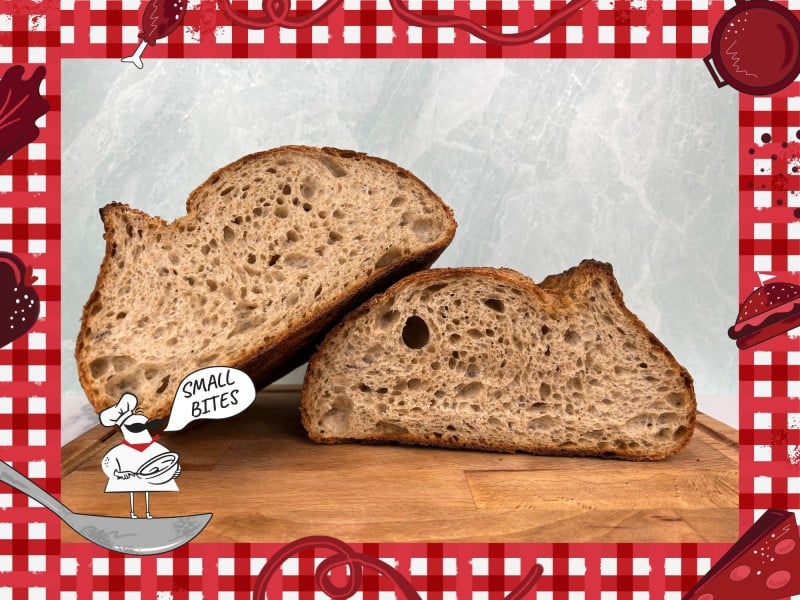
Small Bites: How I make bread
Meditating on the process, flour, flavor, time, and place.
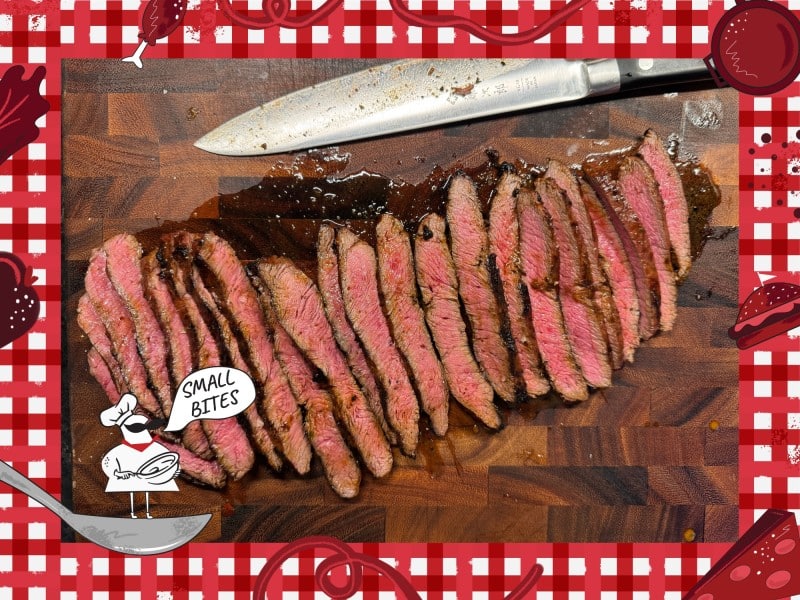
Small Bites: The moral cost of meat
How a bad dream prompted more intentional eating in the new year.
Small Bites: How much garlic is too much garlic?
With “double the garlic” dominating social media, it’s time to reevaluate your recipes.