
A reflection on Wisconsin music’s cultural connection to alcohol
Several local musicians sound off on the struggle.
Several local musicians sound off on the struggle.

This is our newsletter-first column, Microtones. It runs on the site on Fridays, but you can get it in your inbox on Thursdays by signing up for our email newsletter.
The stand-up routine in my mind starts out with my annual physical. The doctor asks me how many drinks I average per week. I tell him. He glances down as people do when solving math problems then looks up and goes, “you’re a functional alcoholic.”
“Really?” I say.
“Yes.”
“What a relief. You said functional, right?”
Remember this is a joke I’d tell in my smash comedy routine. Still. There’s no question I like to, as the late novelist Tom Robbins once put it during a bar conversation, “fresco my tonsils with the Bavarian brush.” Now and then I get into a cycle that spirals me too close to too much. Taking a concentrated and intentional time away from IPA has been a good recalibration for me, if for no other reason than to remind the monkey who’s on whose back.
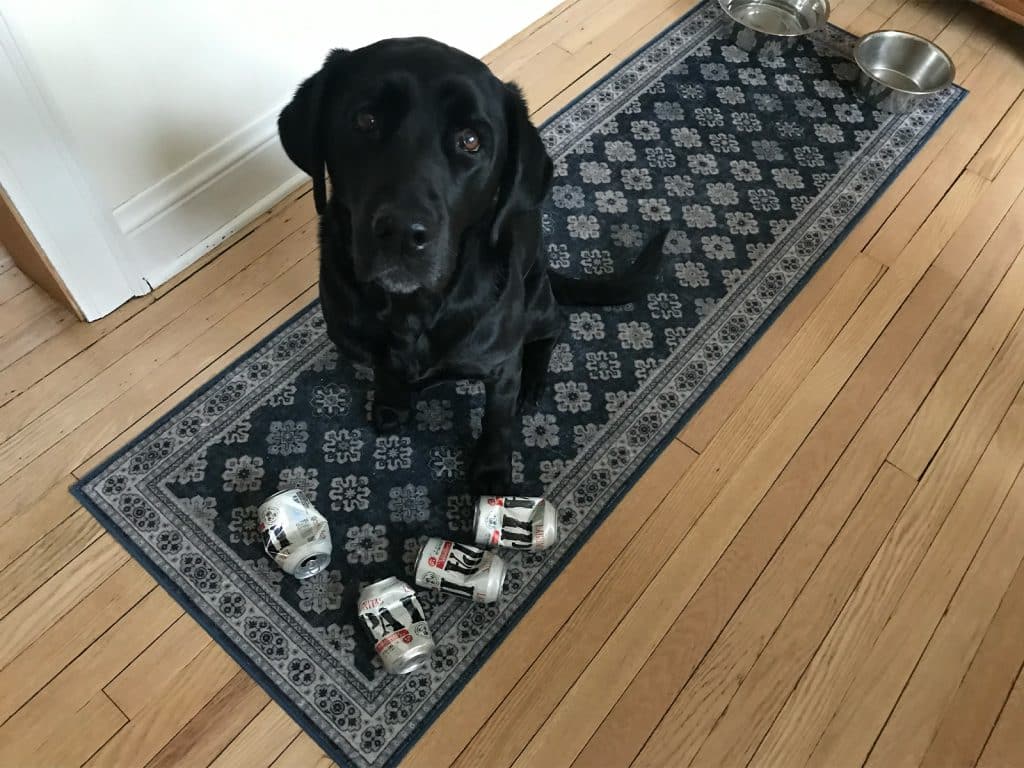
Last Thanksgiving Day, in anticipation of what promised to be a social explosion at Christmas time, I made the commitment to not drink until Christmas Eve. Not quite a month, but close enough. It’s always a good idea to tell someone about a plan like this for accountability. So I told two individuals. One was my wife, Peggy. The other? Our dog, EmmyLou. If you knew what her wet brown, trusting eyes look like, then you’d understand the power that comes with not wanting to let her down. It works. At least for me.
Many dry-monthers say the first week is the most challenging. They ain’t kidding, and guess what? After promising EmmyLou, I realized I had a pothole to clear right off the blocks. I forgot that I had a gig to play that very first Sunday. It’d been awhile since I performed without a beer or two during load-in and soundcheck, a tried-and-true practice that goes all the way back to my days in the Cork n’ Bottle String Band, who were named after the long-running Madison liquor store.
The Sunday gig was with the Madison-based Rolling Stones tribute act Loving Cup at the Bur Oak. I play harmonica and some sax on the horn line with them. Even before the soundcheck started, free drink tickets were dispersed. These tickets fly like confetti into the face of a musician at a bar gig. Questions popped into my head. “How many ways does working live shows challenge a drinking performer who doesn’t want to drink? How could things be different?”
“The greatest alternative I can think of is food,” says Madison drummer Terry Galloway. Galloway has led bands and drummed in others in town for 40 years. Sober. “For places that serve food—and there’s a lot of them—they’ll give you a free drink before they give you a hamburger,” Galloway says. “Man, I would have killed for some fries on some gigs.”
Year after year, Wisconsin tops the lists of “most drunk states.” It happens so often that it’s no longer news. Dane County is the third drunkest county in the state (behind Piece and Eau Claire Counties) according to Intoxistates. Slide guitarist Dan Walkner has been gigging in Madison since 1999. He says the drinking culture in Wisconsin amplifies the boozy bombardment that musicians endure on the job in nightclubs.
“People don’t understand how interconnected it is, alcohol and music,” says Walkner, who took his last drink over seven years ago. “And it doesn’t have to be, but it’s easy to make it that way. You set up and you have a beer. You get one for your set. Then the set’s over and you get one for break. And one for the second set,” he says. “And it’s ingrained in you as a relaxation.” Walkner says he gets in a “dark place of self doubt” before a performance. Drinking, he says, would take the edge off of that. “I’d say to myself, if I want to be my best, I should just have one. So that’s the hard part. It becomes ingrained. Like tuning your guitar.”
Then there are the patrons. Some who are friends, some who are strangers, all fairly ingrained themselves and eager to put a free drink into the hand of a performer. “And so you know,” continues Walkner, “they’ll bring shots up and set them at your feet. And where I come from, you don’t turn that stuff down.”
I can vouch for the on-stage sight of a room filled with partiers at a bar gig. You see the enjoyment. And you witness the transactional activity the enjoyment very intentionally spawns. “When you’re a musician at our level,” reflects Walkner, “you’re an alcohol salesman. The point is for you to get up there and do your thing and have some fun and get people up to the bar and just pounding them and having a great time.”
There’s no bitterness in Walkner’s voice. He describes these things with the dispassion of a court reporter. But the “it’s your job” end of a working musician’s complicit deal with booze runs deep. It can start with your very first band if a sponsor comes your way willing to foot the gas bill in exchange for a banner upstage.
“We were sponsored by Jose Cuervo,” says Madison singer-songwriter Josh Harty, looking back at his first rock band. “We had a bottle of Cuervo and two cases of beer supplied for every single gig,” he says. “There were whole years when I didn’t have to buy booze because it was always just there.”
Harty decided he needed to stop the sauce one morning a few years back when he was both too hungover to drive and unable to keep a tumbler of whiskey steady in his shaking hands. A risk of alcoholism can be tied to genetic predisposition. That risk can also be elevated by occupational cultures. Last August, Harty decided to start a support group, with working musicians in mind, who were interested in cutting alcohol down or out.
Imagine an AA meeting without rules, rituals, boxes to check, or dogma. No religion, too. It sounds like a John Lennon song, but it’s called “Sober Curious” and it meets once a week at Bohemian Oasis Healing Center on Atwood Avenue. Harty says he got a lot out of AA but “it was like military school.” He says he felt separated from the AA mission because he doesn’t think alcohol is a “terrible thing.” Instead, he says, “It’s just not a thing everyone should be doing.” He became restless with the program. “I wanted to talk to people my own age, and I wanted to talk to people in the music business.”
I attended Josh’s Sober Curious group in the middle of my sober month. The discussion topic focused on the difference between “need” and “want;” a fork in the road that musicians encounter their first step onto a job site.
That dry night at the Bur Oak, I felt weirdly shaky stepping into the first set. Not detox shaky, just unconfident. I could hear every mistake. Fat notes or off-beat smears that ordinarily would be obscured by the beer. Maybe for the audience, too. It exposed the myth of playing better “with the edge off” that drinks purportedly provide. Terry Galloway is especially tuned to this vibe.
“I know what it’s like for some people to say when I have a drink I play better,” he says. In fact, the connection of performing while under the influence to normalcy is so strong that Galloway says other musicians are confused when they learn he’s a non-drinker. “They equate musicianship with drinking,” he says.
At the time of this writing, I’m set to play a solo set at Cargo Coffee at the end of February. I can’t say I won’t have a beer while soundchecking. But I can say talking with folks for this story curbs my enthusiasm for much more than that.
We can publish more
“only on Tone Madison” stories —
but only with your support.
Author
Related Articles

Don’t shrink the Common Council and County Board
Madison needs more representation, not less.
Starter homes? No, we need starter apartments
As homeownership continues to be out of reach for too many Madisonians, we should build more owner-occupied, multi-family housing.
Madison needs a wake-up call
The longer we pretend this City is a progressive haven, the more people will be harmed.