
Psychedelic crime thriller “Aggro Dr1ft” saturates itself in avant-garde traditions
Harmony Korine’s alluring, infrared, video art-adjacent feature premieres locally at UW Cinematheque on Halloween night.

Harmony Korine’s alluring, infrared, video art-adjacent feature premieres locally at UW Cinematheque on Halloween night.
If Harmony Korine has one claim to fame, it’s that he’s a bit of a troll. The artist, writer, director, and tech-company founder has spent his career provoking. It all started around 1994 when he got involved scripting a few of Larry Clark’s pervy youth-in-decline PSAs (famously, Kids). He then spun out into Dogme 95 riffs, antagonistic video experiments, and, more recently, the garish neon modernism of Aggro Dr1ft (2023). The latter premieres locally on Halloween night, October 31, at 7 p.m, at UW Cinematheque. Korine’s become increasingly focused on stylistic endpoints—works that demand an all-or-nothing reaction due to their aesthetic particulars. Aggro Dr1ft enters this body of work as Korine’s first foray into genuine thriller territory, though in his own anti-pleasure sort of way.
The hyper-saturated film follows the lone assassin Bo (Jordi Mollà), a man who, according to his hardboiled voiceover, is the greatest hitman alive. As is typical of fictional lone-wolf assassins, Bo finds less and less security in his work, and he’s desperate to get out of the game but unsure whether there is anything left for him but killing. Promised a large but undefined payout by one of his usual employers, he takes on the contract to kill Toto (Joshua Tilley), a demonic human trafficker who is all muscle and hubris.
This is about as specific as the plot gets. The film happens mostly in narrative fragments and is littered with flashbacks. They’re all a pretext for the visual style. Korine ostensibly shot its whole 80 minutes with infrared cameras, and further tinkered with color grading and digital effects in post so that every shot of the movie is a wash of bright complementary colors, always bordering on but never tipping into full-on abstraction.
As an exercise in surface substitution, Aggro Dr1ft calls to mind various avant-gardists like Phil Solomon, Peggy Ahwesh, and Jon Rafman who have used video-game engines to animate films. Like these film’s interventions, Dr1ft‘s colors and extensively overdubbed dialogue all function as an elaborate series of “skins” on the footage, which, untouched, would feel like a streaming throwaway actioner. The story beats and the hard-boiled voiceover are all so secondhand (or third-, or fourth-) that they essentially dissolve into meaninglessness, just preset gestures serving as an “engine” of sorts for textural improvisation.
There’s a baked-in irony to the effect of Korine’s infrared images. They’re ostensibly “deeper” visuals that capture heat from within people and objects, but ultimately flatten every shot by radically simplifying the color field. The infrared puts every place both far and distant, real and imagined, on the same perceptual plane. In these psychedelic saturations, each person radiates energy, and objects are only differentiable by their contours.
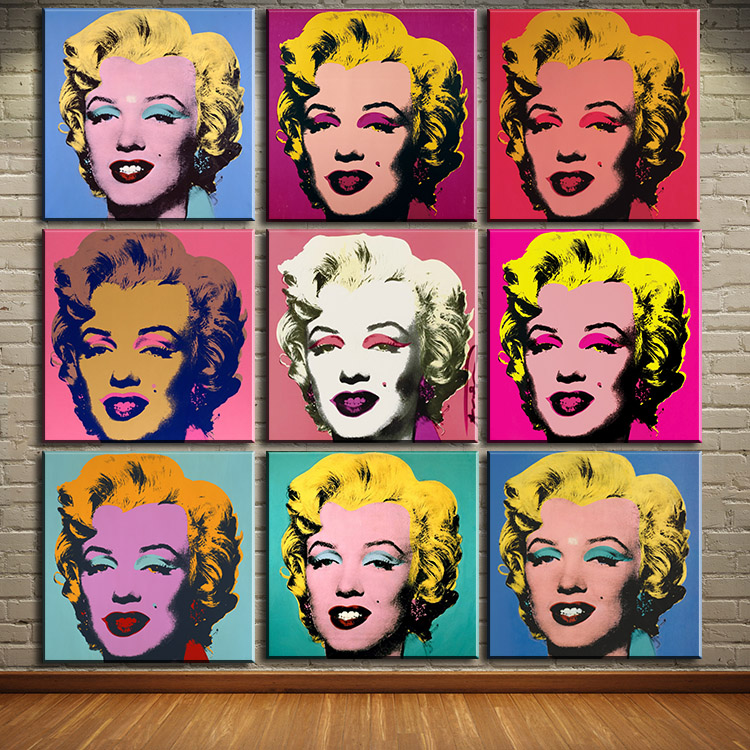
Korine occasionally changes up the color palette mid-shot, calling to mind Warhol’s screen-printed variations on the same image, a sort of joke on the mutability of all that we see in a film. Warhol and Korine find their loci of meaning in the substitutions they make within otherwise rote, prepackaged concepts, and both artists similarly excel at parlaying dislike of the components of their work into a begrudging respect for their ability to troll you. Aggro Dr1ft is actually one of Korine’s least troll-y films, its content ostensibly sincere (if a bit shallow). If there’s any provocation at play here, it’s the film’s general formlessness. But the tradeoff is that the viewer gets to see the most beautiful thing Korine has ever made.
We can publish more
“only on Tone Madison” stories —
but only with your support.
Author

Related Articles

Evaluating tenderness and depth of family dynamics in “Sentimental Value”
Grant Phipps and Lance Li argue in favor of and against the artistic framework of Joachim Trier’s latest psychological family drama.

Movie tee envy
Pondering a shirt collection, and stumbling upon Cosmic Cabin, which has the goods—at least niche ones for cinephiles.
“The Annihilation Of Fish” wholeheartedly renders the enchanting eccentricities of a senior romance
Charles Burnett’s long-lost love story from 1999 screens on 35mm at UW Cinematheque on December 5.