
Porchlight has an “affordable” housing-opoly in Madison
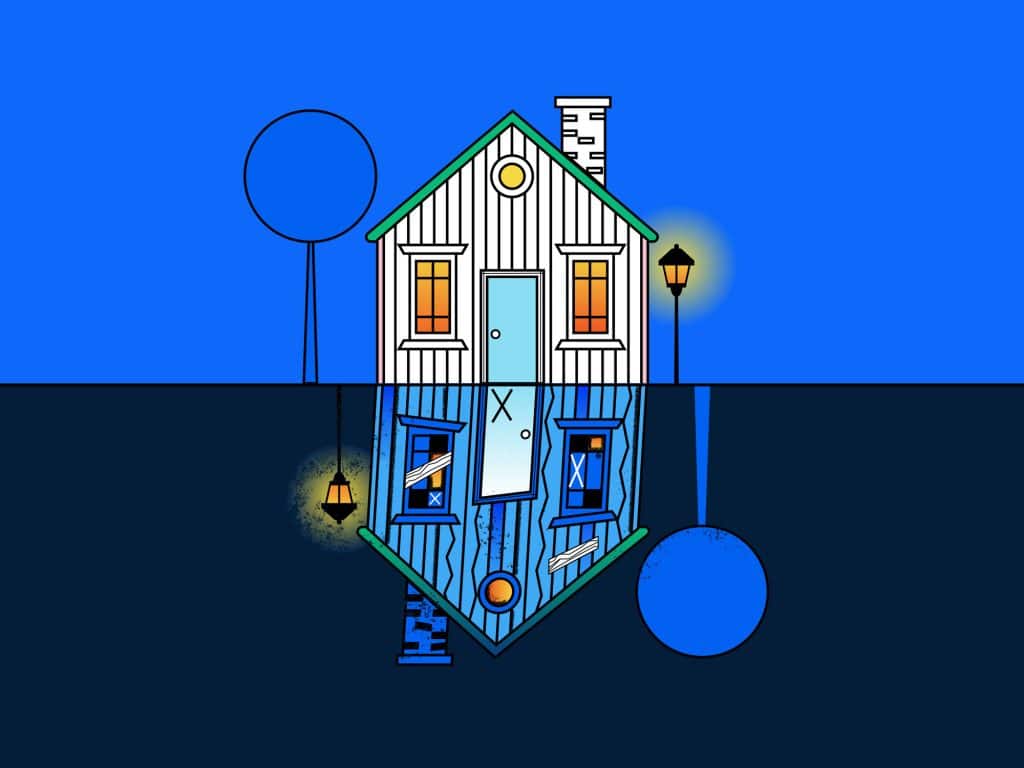
Current and former tenants accuse the organization of unsafe living conditions and contributing to the cycle of housing insecurity.
Current and former tenants accuse the organization of unsafe living conditions and contributing to the cycle of housing insecurity.
“It’s legalized slumlording,” one Madison resident says about their experiences living in an apartment owned and operated by Porchlight Inc.
Porchlight is a local nonprofit that grew from efforts to combat homelessness in the 1980s, and provides both housing and supportive services. The organization currently owns about 350 units of affordable housing in Madison with a range of rental options that start around $300 per month.
Porchlight is presented as a resource for Madison residents who cannot afford or are not easily accepted into other housing arrangements. A potential resident does not need to show proof of income to join the waiting list for a Porchlight-owned apartment, but they must have an income of at least twice the monthly rent before they can move in. While Porchlight is housing Madison’s housing insecure, their approach is out of line with Housing First, an evidence-based model that prioritizes maintaining housing for vulnerable people without strings attached.
For most units, potential residents are put on a waitlist based on “”risk factors”” that affect their safety and vulnerability, including disability, length of homelessness, and medical conditions. Porchlight’s largest permanent housing location at 306 N. Brooks St. operates on a more first-come, first-served basis.
While Porchlight properties are more affordable than market-rate housing, residents and homeless advocates have reported unresolved pest infestations, lack of responsiveness from Porchlight staff, unfulfilled maintenance requests, and insufficient supportive services for residents who need it across Porchlight properties.
Residents told Tone Madison they don’t dream of living in Porchlight housing; they live in Porchlight housing because it is their only option. Many of the residents in this story asked for pseudonyms out of fear of reprisal from Porchlight. Tone Madison interviewed Porchlight residents in the fall of 2024 to understand residents’ perspective on Porchlight and their experience as tenants.
“People feel this is a drag,” a Brooks Street resident says. “They aren’t ambitious and don’t think they can do any better. I try to keep their spirits up but it’s hard. It’s such a bummer here.”
Living with Pests
Start a conversation with someone who lives in a Porchlight building, and soon they’ll likely start talking about pests, including bed bugs, cockroaches, and mice.
Shellie, a resident at the Brooks Street location, says that bedbugs and roaches live in bedrooms and common areas. She told Tone Madison that residents can catch bed bugs from sitting in the lounge chairs and they see cockroaches when they open their refrigerators. Shellie says that some residents even take it on themselves to clean these shared spaces, but the pests have remained an issue.
“They crawl in everything. They’re in boxes. They’re in mail,” Shellie says. “The big ones, we call those the ‘dinosaur roaches.'”
The infestation of the shared spaces motivated Shellie to ask other Brooks Street residents if they are living with bed bugs in their rooms. In December 2024, she found that on each of the building’s three residential floors (of the building’s four floors) at least seven tenants said their room had bedbugs. Two communal kitchens and one bathroom in the building also had bed bugs.
Theo, another Brooks Street resident, says his apartment was infested with bed bugs three times since he moved into Porchlight in 2015. He is careful when visiting other tenants’ rooms because he doesn’t want the bed bugs to travel back to his room. He says he can tell whose rooms have a bad bed-bug infestation from a foul smell that the infestation causes.
Karla Thennes, Porchlight’s Executive Director, says pest issues in Porchlight buildings are inevitable. Porchlight hires a pest control service to come into affected buildings monthly and use a heat treatment machine in tenants’ rooms. However, pest control requires the apartments to be in a certain condition before treatment. If residents do not clean their units properly in preparation, pest control workers can’t treat those rooms.
“There have been people who’ve lost their housing because they are either unwilling or unable to comply with pest control,” Thennes says. “You can’t have 100 people in one building without having pest control issues. We just know this is a forever thing.”
Residents feel that Porchlight could and should be doing more to control the pests in the building. Oliver, a Brooks Street resident, confirms to Tone Madison that pest control does come in monthly, but he hasn’t noticed a huge improvement on pest infestations as a result.
“They spray, but I don’t know if they spray stuff to kill them or stuff to bring them back,” Oliver jokes.
Ezra lives in a different Porchlight building and has also experienced pest issues. He says it once took Porchlight about a year to resolve a building-wide roach infestation there.
Shellie is concerned about the potential health consequences of living with pests.
“I have medical issues,” Shellie says. “I told my care team that this is not a safe place for people health-wise, because of the bug infestation.”
However, James, who moved into a Porchlight building in mid-2024, a few months before Tone Madison spoke with him, says he hasn’t experienced any issues with pests so far.
When a maintenance order requires a doctor’s note
When the air conditioning broke in Ezra’s room, he says he continuously called Porchlight to fix it, but to no avail. Ezra is a 70-year-old Porchlight resident who had a second heart attack in 2024, three years after his air conditioning broke. This prompted his doctor to write a note to Porchlight, stating that the air conditioning needed to be fixed for Ezra’s health. Shortly after Ezra gave this note to a trusted Porchlight staff member his air conditioning was fixed.
Recently, Ezra’s toilet and thermostat needed repair. He says that a maintenance worker came to his apartment, jury-rigged the thermostat with tape, and failed to fix the toilet.
“Man, he didn’t do anything,” Ezra says. “They only have two maintenance people for 230 units. I think he was trying to save some time.”
Some tenants say that Porchlight needs to hire additional maintenance staff to speed up the process and allow for more thorough repairs. In March, 2025 Porchlight posted on Facebook that they are looking to expand their maintenance team.
Tone Madison requested inspection records from Porchlight-owned properties from the last two years from the City of Madison’s Community Development Authority (CDA) and the City’s Building Inspection division.
Across various Porchlight-owned buildings, City inspections reported pest infestations, exposed wiring, roofs caving in, mold, water leakages, and broken door locks. Several inspection notes mention that Porchlight was contacted about these issues, but in some cases was unresponsive or did not resolve the issue. In September, 2022, inspectors reported that Porchlight was unresponsive after someone broke into one of the organization’s buildings on Nakoosa Street. The break in occurred three months prior to the inspection filing. A car backed into the security door, breaking it and causing the fire-alarm to fall from the ceiling. The inspection report mentions the resident was blind and disabled, making the situation more unsafe.
City inspections of Porchlight owned properties from September 14, 2022 through September 12, 2024
| Issue | Number of inspections noted | Example |
|---|---|---|
| Pests | 9 | “Mice infestation, never really went away from previous case.” |
| Broken Door Locks | 2 | “Locks to building broken so people getting in who don’t live there.” |
| Water Leakage | 13 | “Apartment above has water leakage causing flooding in apt. Landlord has not responded to fix problems.” |
| Sewage | 4 | “There is very bad smell coming up the drains and it smells like sewage. I’ve reported it several times but to no avail.” |
| Mold | 7 | “Black mold in basement (laundry room), throughout building Tenants are very sick.” |
| Broken or turned off heat | 5 | “Just had night 5 of no heat; boiler is now shut off and no heat until fixed.” |
| Roof or ceiling caving in | 4 | “Roof caving in, landlord has been unwilling to resolve issue. May be due to water leakage in ceiling above.” |
CDA inspections from the past two years included similar notes about broken refrigerators, windows, and smoke detectors. Multiple records mention roach infestations, electric hazards, and faucets leaking into cabinets or units below. Tenants’ spoken account of their individual experience are further validated by the statistical findings in the records.
Multiple residents shared stories of Porchlight staff hanging up on them when they called to report a maintenance issue or other concern. Though one Porchlight tenant said repairs happen promptly, others complained that when something was wrong in their apartment, it took weeks, months, even—in the case of Ezra’s air conditioning—years for the issue to be resolved. This includes issues with pests, broken appliances, and safety concerns.
Thennes says that she is “too far up the food chain to know” how long it normally takes for maintenance orders to be completed. She says that residents should submit maintenance requests online, rather than calling Porchlight, and that residents are instructed how to submit requests when they move in.
But Ezra says that he was never shown how to use the online request system. Porchlight residents have to pay for internet service, so he does not have internet access in his apartment.
One resident, James, says that he sends emails and submits maintenance requests online and is able to get things fixed when needed. Sometimes he will go to Porchlight’s office at the Brooks Street building to tell staff about a maintenance issue.
“If it’s an emergency, you can get a hold of them,” James says. “It’s about taking initiative.”
Jeff Colman is a former Porchlight resident who hangs out in front of the Brooks Street location to chat and share a meal with friends who live in the building. He says Porchlight staff failed to address a range of problems, including pests and tenants’ mental-health needs. Forming relationships with other tenants was essential to enduring the conditions during his time as a Porchlight resident, Colman says.
“If you write complaints, sometimes they end up in the trash. They don’t always tend to it right away,” Colman says. “The only reason why I made it here is because I know the majority of people that live here, and I know how to deal with it.”
Rex is a former Porchlight tenant who lived in a building on Mifflin Street. He believes that Porchlight delayed or ignored the repair requests of tenants who openly complained about the organization.
“They have one maintenance person, and he doesn’t come along if Porchlight doesn’t recommend that,” Rex says. “Especially if you’re creating noise.”
At one point, Rex tried to organize a tenants’ union in his building where tenant leaders would negotiate with Porchlight staff. When Porchlight management heard about their unionizing efforts, repairs stopped, Rex says, claiming a door that was broken following a break-in wasn’t fixed.
“We were creating noise and thinking about creating a Porchlight tenants’ union and it was all over,” Rex says. “That building, they wouldn’t do any repairs on it. They shut down their whole services on the building.”
Porchlight did not confirm or deny Rex’s claim of a halt to maintenance services.
Porchlight eviction: a housing oxymoron
Porchlight is one of the only housing providers in Madison that will house people who have evictions on their records. It has an eviction-prevention program dedicated to assisting households with rent, security deposits, and other needs. Porchlight tracks how many evictions it prevents through this program. In 2024, the organization says it prevented 382 evictions. At the same time, Porchlight is a leading evictor in Madison.
Despite Porchlight’s mission of providing housing to those who are denied housing elsewhere, many residents have trouble keeping a Porchlight roof over their heads. In 2024, Porchlight filed more evictions than any other landlord, with a total of 61 eviction filings, according to a Tenant Resource Center (TRC) report.
Porchlight is not the only affordable housing provider with high eviction rates. The TRC found that “six of the top 15 most frequent evictors since 2023 are landlords that provide subsidized housing, receive public development assistance, or have a significant number of voucher-holders in their units.”
The TRC report also noted that an eviction from a nonprofit or subsidized housing provider can hinder tenants’ ability to find housing in the future. This either results in homelessness, or exacerbates their reliance on nonprofits, which typically have long waitlists.
Colman echoes the conclusions from the TRC report and explains that getting evicted from Porchlight makes it hard to find permanent housing in the future.
“Porchlight is like the bottom of the barrel,” Colman says. “If you get kicked out of Porchlight, that’s really sad. Because if you can’t make it at Porchlight, you’re not making it nowhere else.”
“The options are so limited that if you’re kicked out of the place you can actually afford, it’s unlikely that you’re going to find something in that same range, especially if now you have an eviction on your record,” says Grace Kube, Director of the Eviction Defense Clinic at the University of Wisconsin Law School.
The trend of nonprofits being some of the most prominent evictors is contradictory to their mission of being support networks for tenants, Kube explains.
“We’re seeing them operate as a landlord, [with] the headspace or business mindset of a landlord, rather than from the space of a nonprofit,” Kube says.
To operate as a support network, Kube says that nonprofit housing providers like Porchlight should grant more leniency to tenants who are behind on rent and provide or connect tenants to the resources they need beyond housing.
“You can tell when there are nonprofits or when there are housing authorities, or even private landlords who are there because they care about tenants,” Kube says. “They want to do the right thing. They’re trying to make things work, and it’s really a partnership. They’re coming to the table reasonably, looking for reasonable solutions that will work for everybody.”
Allocation of resources
Another common complaint from Porchlight tenants is that the organization does not provide sufficient services in addition to housing, including mental health and addiction support. This is despite the fact that supportive services are included in Porchlight’s mission statement and they employ multiple case managers. But tenants state that Porchlight is not providing the type of services that they need.
“There’s a lot of people with a lot of mental health issues, and they don’t do much to help them,” Colman said. “The case managers are not trained like social workers to help people with mental health issues.”
“I have PTSD, and if I have an episode, there’s no one to turn to,” a Brooks Street resident says.
According to Porchlight’s 2023 annual report, the organization received over $4 million in public funding that year for various programs including shelters, permanent housing, supportive services, and emergency services. They spent about $2.3 million on housing and about one million in supportive services. Public revenue comes from Madison Community Development Block Grants (CDBG), Dane County, the State of Wisconsin, and the federal Department of Housing and Urban Development (HUD).
In April 2024, the Dane County Board of Supervisors approved a $231,005 grant to Porchlight to help the organization cover the increasing costs of operating its men’s shelter on Zeier Road. Thennes says the additional funding is being used to hire case management staff for the shelter.
But residents wonder how those funds are being put to use.
“They get all these grants. They get all these donations and funding, but they do not help the people that need it the most,” Shellie says. “A lot of the people here are on drugs. They have bad drug problems. It’s prostitution in these buildings. You know, it’s just a lot of shit that’s run rampant out here,” Shellie continues. “And we tell people, tell the office, there’s so many reports in the office, and they don’t do nothing about it. It’s like they don’t care. And the people who do try to say something or speak out about it, they get shit for it.” Tenants like Shellie are unsatisfied with the actions of Porchlight staff up to this point, and some hope for a shift in staffing in order to improve Porchlight’s housing conditions and services.
Rex would like to see more unhoused and formerly unhoused people hired for leadership positions within affordable housing programs. He believes that Porchlight’s current leadership team can’t truly understand the needs of their tenants regardless of their previous work experience.
“They don’t have experience with homelessness because they’ve never been homeless,” Rex says. “They don’t have experience with poor people, because they’ve never been poor.”
Pearl Foster—a social worker and advocate for homeless people—says that many Madison nonprofits, including Porchlight, engage in the nonprofit industrial complex, which she defines as “a corporate way for nonprofits to make money off of vulnerable people. Their sole focus is growing their nonprofit and therefore their focus is not necessarily on helping folks.”
Foster and Ezra are part of the Madison Wisconsin Homeless Union (MWHU), a group of community organizers that formed from the Reindahl encampment, a homeless encampment in Reindahl park that the City shut down in 2021. The MWHU continues to advocate for Madison’s unhoused community. The union organizes weekly meal distributions on State Street and discusses the state of homeless rights in Madison.
MWHU publicly criticizes multiple housing-focused nonprofits in Madison, including Porchlight for engaging in the nonprofit industrial complex. In 2023, MWHU and Madison Tenant Power protested a Porchlight fundraiser at Monona Terrace. They held signs with photos of pests and called for an investigation of the conditions in Porchlight owned residential buildings.
Foster believes that the City of Madison should have more responsibility in running shelters and providing affordable housing, rather than leaving this work primarily to nonprofits. She explains that the City doesn’t have the same incentive to keep people relying on its resources, whereas nonprofits receive the most funding when community need is high.
“Due to the number of complaints over the years, I don’t think that [Porchlight] should get another contract,” Foster says. “But unfortunately, they’re the biggest nonprofit and [have] a monopoly on housing.”
Housing First
Critics of Porchlight recognize that legitimate affordable housing is a large unmet need in our community. However, they criticize both the nonprofits and the City of Madison for not following a Housing First approach and question how much control nonprofits should have in housing our community.
Housing First is a trauma-informed model that prioritizes placing residents in stable housing with supportive services, without behavioral or financial requirements. The model is based on the belief that once a person’s basic needs are met, they are able to address other areas of life such as finding a career or quitting an addiction. The National Low Income Housing Coalition reported that a 2000 study found that 88 percent of Pathway participants, an early form of Housing First, remained housed, compared to only 47 percent of the residents in the control group.
There is a lack of dedication to achieving a Housing First approach because there are too many requirements for being accepted into affordable housing, a high number of evictions from affordable housing, and general gaps in supportive services, Madison homeless advocates argue.
“[Housing nonprofits] don’t believe in Housing First, and they just believe in their homeless services projects,” Rex says. “They want to give you a Band-Aid, and they have no intention of following up.”
To Housing First advocates, Porchlight is one of these Band-Aids, failing to maintain a healthy quality of living in their buildings and build relationships with tenants that result in stable permanent housing.
Construction of a new Porchlight housing location on East Washington Avenue is underway and expected to be completed around April 2026. At that time, Porchlight will close its Brooks Street location, which contains the most housing units. Not all of the Brooks Street residents will be able to move to the new location. Eligibility at the new location will depend on a tenant’s income and if they have unpaid rent built up, resident Oliver explains.
When asked how he feels about the new building, Theo says he’s “pissed” because it will have higher rent.
“There’s a lot of people saying ‘how am I going to move in there?'” Theo says.
“We have discussed the new units with our Brooks residents, so they are aware of their personal situation and moving,” Thennes says.
Who has power in Madison,
and what are they doing with it?
Help us create fiercely independent politics coverage that tracks power and policy.
Author

Related Articles
Starter homes? No, we need starter apartments
As homeownership continues to be out of reach for too many Madisonians, we should build more owner-occupied, multi-family housing.
The federal war on trans healthcare mirrors that of abortion
Hospitals are folding to anti-trans hate, but the community continues to advocate for trans youth.
Madison needs a wake-up call
The longer we pretend this City is a progressive haven, the more people will be harmed.