
Madison needs an evil gossip rag
A gross proposal for desperate times.
A gross proposal for desperate times.

This is our newsletter-first column, Microtones. It runs on the site on Fridays, but you can get it in your inbox on Thursdays by signing up for our email newsletter.
You can get a lot out of Madison’s media landscape. What you cannot get is something that appeals to your petty, nasty side—stuff that makes life genuinely unpleasant for politicians, business leaders, and half-assed local celebrities. This is a real problem. Madison needs a robust gossip publication.
I’m not talking about light joshing and playful banter. I’m talking about something so foul, so unscrupulous, tawdry, lurid, and virulent that it kind of hurts to even look at it. Something that would disgust even me, the person suggesting this idea, who has a reasonable appreciation for pettiness and drama. (Ideally, I would come to bitterly regret writing this very article.) An outlet that would trample upon every journalistic standard to publish rumors, insults, dubiously sourced tidbits, blind items, insinuations, and scuzzy leaks about public figures in town. A blacklight-and-luminol assault on the bland surface Madison labors so tediously to maintain.
I know this sounds perverse coming from someone who actually cares about the civic role of the media. I understand the desperate need for more trustworthy, in-depth reporting. I’m painfully aware that we need more substantive critical writing about the arts, more insightful commentary writing, and so on. The return of a fascist president, leading a Republican Party that has spent generations attacking journalists, spells dire times for what remains of a free press. There are exceedingly scant resources for the work that actually matters. Working our way up the journalistic hierarchy of needs, we’re still far from rebuilding—or building in the first place—a solid foundation of nuts-and-bolts local-government reporting and the funding to sustain it. We’re further still away from the deeply-considered culture journalism, analysis, and commentary that would form the capstone of this pyramid. Why would I want anyone to spend time, money, and energy on a bilious, unethical gossip outlet?
Because such an outlet could, just possibly, deliver the occasional jolt to our local consciousness and cast the blandness of most local media into sharper relief. Because the triage of repairing media is important, but can be short-sighted. Because a media landscape that is as profoundly averse to negativity as Madison’s is, well, just plain out of whack. (Sometimes, people think Tone Madison is too negative. I still think we’re too nice!) Because a cosmetically liberal establishment does not negate the need for someone to pelt the establishment with rotten fruit every so often. Because we need to frequently ask whether or not we hand out credibility a bit too easily in Madison.
Public figures who throw tantrums about even the mildest criticism or questioning (not a Madison-specific problem, but still an extremely pronounced one around here) would look at the evil gossip rag and perhaps realize that the occasional bit of harsh-but-fair coverage from more ethical media isn’t such a terrible thing. It might make Madison less attractive to the kind of person who craves the benefits of a public profile without any of the scrutiny that should come with it—and god, I’ve encountered all too many. People who cultivate a public platform for themselves would fear being mentioned in this publication.
That’s the point. It’s harder to bullshit the public or abuse your power in a society where ridicule, of the most cruel and venomous kind, is possible. Where the harmful or questionable things someone has done are even half as sticky as all the nice things that get regurgitated in puff pieces about them.
Such an outlet could also use its tactics to drag important but unsavory information out into the light, to give more legitimate publications an opening to pick up on it. Not an ideal way for a story to play out, I know. It’s like a guy with a pocketknife crudely lancing a boil so that someone with scientific credentials can examine the unspeakable goo inside. Awful process, but then at least we’d know if the goo had anything dangerous in it.
The most obvious point of reference here is probably the first incarnation of Gawker, before its juridical assassination at the hands of Peter Thiel. As much as it grossed out conventional journalists—and yeah, sometimes it was just gross—even its critics often admitted its value. Its coverage often influenced the wider news cycle, both through scoops and through a simple insistence that the icky stuff was still worth talking about.
Think of it like a fecal transplant for the soul. Or an episode of House, MD. Yes, Doctor House is an arrogant jackass. He should have lost his medical license a thousand times over. His constant grating use of sarcasm as a defense mechanism only serves to reveal the small and bitter man within. And yet! He is able to diagnose strange medical conditions because he’s willing to look at things from a warped perspective. He saves lives because he’s willing to carry out bold and downright perverse experiments on live human beings. (Note: I have no idea if this kind of thing happens with real doctors and patients, and nothing you read on Tone Madison is to be construed as medical advice.) One pain-in-the-ass doctor and his reckless ministrations cannot solve what ails the American healthcare system writ large. Still, he has a part to play.
Society needs haters, cranks, and gadflies the way an ecosystem needs brush fires, termites, scavengers, and whatnot. You may look down your noses at the vultures and coyotes, and you may complain about the smoke. It still beats having dead critters rotting in the open for weeks at a time and tripping over brambles everywhere you step.
Quality control already escapes us on a routine basis in the world of local media. I’m talking about the quality of the actual journalism, but also the quality of the narratives and figures who are treated as credible. Partially, that’s because the good journalists don’t have the support they need, and because there is such a massive void right now for bad actors in media to exploit. There’s also just a lot of well-intentioned mediocrity and a lot of cheerful fluff—too many soft areas, too little friction between the worlds of journalism and reputation management. And even when they’re doing truly excellent work, media outlets here are rarely adversarial. They don’t do enough to challenge the prevailing narrative. They’re too polite and professional to talk back to their betters, as it were.
Too often, this creates situations where nothing sticks and no one learns anything. There are healthy and positive ways to move on from the transgressions of a powerful or influential person. Whether we’re talking about truly heinous misconduct or just low-grade disingenuousness, it’s healthy to air it, ask people to take responsibility, and take meaningful steps to make things right. Instead, we move on from bad stuff by just not really talking about it, or by passively neglecting those chapters. The problem with these propensities is that sometimes you need to remember the bad stuff. Not because you have an axe to grind, but because said bad stuff tells you something important about how an individual or institution is likely to treat people. That information is a form of self-defense. Use it wisely, and just maybe you can prevent even bigger problems from festering.
Madison is a place where an extensive exposé about a restaurant owner sexually harassing his employees can go largely unremarked upon almost three years later. It’s a place where people rely heavily on whisper networks to steer clear of abuse, sexual assault, and all manner of predatory behavior and shady business practices. It’s a place where the local billionaire can go all the way to the U.S. Supreme Court to weaken labor rights, but can still count on fluffy press coverage of her kooky office buildings. Where a departing police chief can enjoy a whole tour of softball exit interviews and more or less lie with impunity. Where defending an accused domestic abuser with a weird repurposing of a poem about the Holocaust somehow does not cause one’s political career to implode on the spot. We have allowed our local bigwigs to get too comfortable.
Ignore the bad stuff too often, and before long, you’re dealing with a standard of credibility based entirely on wishful thinking. It’s like living in a city where people use chocolate coins for money. Well, if everyone agrees on their value, then I guess candy coins are money—no more or less fake than anything else to do with money. But the chocolate is still weak against the dollar, and you will feel very silly at the currency exchange place if you are used to grown-up transactions.
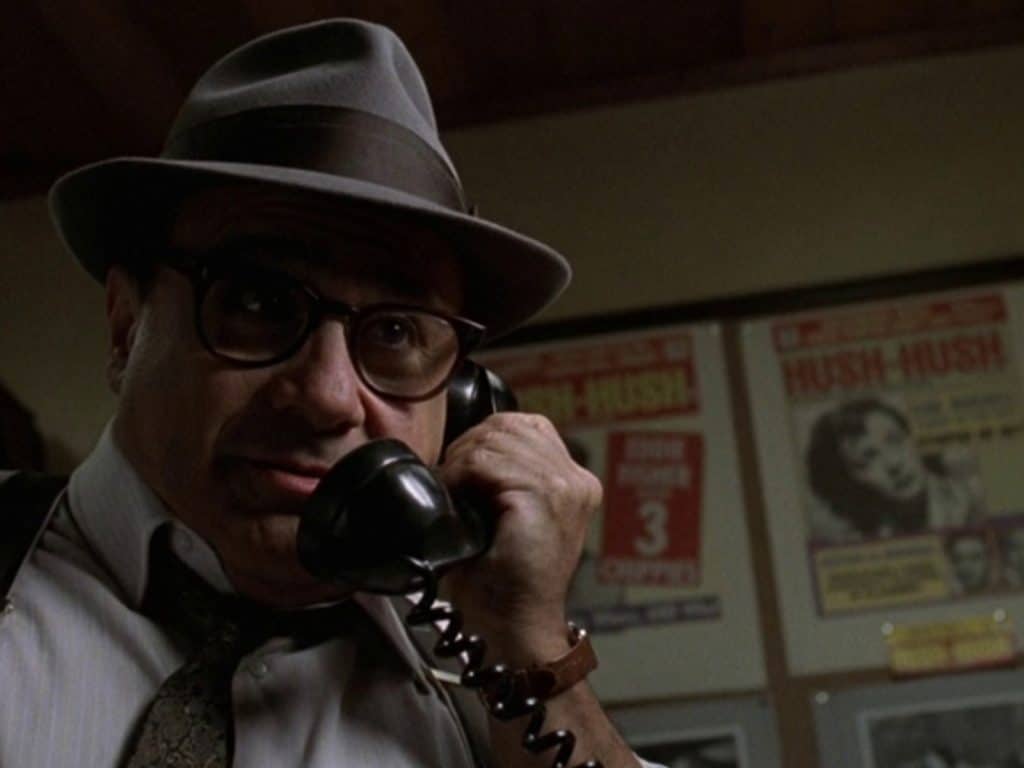
The costs and practical barriers of launching a Madison gossip publication would be borderline-insurmountable, true. It would need ridiculously expensive libel insurance, for one thing. The outlet itself and its writers would risk becoming public targets themselves, while also seeking out a degree of access. They’d need to maximize readership but avoid ending up like the Danny DeVito character in L.A. Confidential. These are problems for someone more cunning than me. Trying to do it the honest way is hard enough.
A healthy local media ecosystem should play a constructive role in the community. It should celebrate worthy things and, on some level, connect people to their better selves. It should have a lot of positivity in the mix. It also needs to take care not to get too soft. It needs to acknowledge that sometimes we’re just gross critters. To love yourself, you’ve got to be honest with yourself.
The work of building up a media landscape that fully and richly serves our community would still be everybody else’s job. The evil gossip rag would merely shift the window.
We can publish more
“only on Tone Madison” stories —
but only with your support.
Author

Related Articles

Police surveillance technology needs proper accountability
Grassroots resistance against Flock cameras are writing the blueprint for comprehensive reform.

Don’t shrink the Common Council and County Board
Madison needs more representation, not less.

Starter homes? No, we need starter apartments
As homeownership continues to be out of reach for too many Madisonians, we should build more owner-occupied, multi-family housing.