
Madison musicians tap into a renewed sense of momentum
Spotlighting six excellent releases from 2025’s first two months.

Spotlighting six excellent releases from 2025’s first two months.
Only two months into 2025, Madison musicians have already produced an outpouring of fascinating work. While some of this work is laced with the type of familiarity that accompanies updates of previously-released material, others have the gravitational pull of the unfamiliar. In addition to the releases highlighted below, this particular crop of early-year music was strong enough to merit a few extra highlights: Air Cabin’s After You was a potent reminder of the band’s gift for compelling albums, Boo/Hiss’ “Banana Song” was a sizzling introduction to yet another successor of indie-punk greats Proud Parents, and Fred Really’s “Artie Lange” continued the rap project’s burgeoning ascension. Power-pop act Heavy Looks and indie-folk project The Spine Stealers both staked consideration bids for NPR’s Tiny Desk Concert via strong live video contest submissions.
Overall, Madison musicians gave local listeners plenty to be excited about as 2025 clicked into gear. Any time a new year arrives, there seems to be a renewed sense of momentum. Maybe having a finite time-marker encourages forward movement and emboldens people to take definitive action. For now, anyone who appreciates Madison’s local musicians should be happy to reap the results of a new groundswell of excellent material, across a range of genres.
And if you find any of the featured releases appealing, consider making a Bandcamp purchase from any of these artists on Friday, March 7, when the streaming platformer waives its usual cut of sales to ensure a greater percentage of proceeds goes directly to the artists.
Def Sonic, Aesthetically Pleading
Few Madison-based artists have managed to carve out a cross-genre foothold quite like Johan Petty. Aesthetically Pleading—the latest album from Petty’s mostly-solo project, Def Sonic—is a startlingly beautiful testament to the songwriter’s penchant for bridging unlikely elements into a seamless whole. Lo-fi noise, dreamlike vocal manipulations, plaintive folk, subdued indie-rock, ambient drones, and serene synth work coalesce into beautiful, immediate works that carry a sense of profundity.
It’s a wide-ranging, definition-averse trait that’s acutely encapsulated on “Faces Fade,” which bristles with an urgency that is firmly underscored by its introduction: an audio pull of Zianna Oliphant tearfully addressing the Charlotte, North Carolina City Council in 2016. Oliphant’s speech came six days after a Charlotte police officer shot and killed Keith Lamont Scott, an unarmed black man. The officer who pulled the trigger was not charged, nor were the officers who played key roles in the shooting. Oliphant was nine at the time the speech was recorded. “Faces Fade” only uses a segment of the speech, but it’s an unabashedly powerful one:
“It’s a shame that our fathers and mothers are killed and we can’t even see them anymore. It’s a shame that we have to go to that graveyard and bury them. And we have tears, and we shouldn’t have tears. We need our fathers and mothers to be by our side.”
The usage of this moment comes across as both pointed and respectful, as “Faces Fade” slowly unfurls into a meditation on the nature of death. “Don’t tell me why / Don’t make me cry / Fought all my life / Don’t tell me why,” intones Petty over an elegiac keys pattern and a deliberate, rich bass line. A great many things intersect on “Faces Fade,” a track that proves hard to shake, but feels squarely at home in the broader context of Aesthetically Pleading. Petty maneuvers through the album’s 16 tracks with grace and a burdened sense of understanding. It’s a heavy listen, but the empathy at its core filters through, resulting in a genuinely poignant experience.
Lunar Moth, Lamplight
Indie-rock trio Lunar Moth have never been shy about cranking the volume. But they’ve also shown no qualms about dialing it down, either. Lamplight is, in a way, a bit of both. On the EP, guitarist/vocalist Amber Fasula, bassist Mac Felckowski, and drummer Gage Brunes take a selection of tracks from the band’s impressive discography and meticulously rework them into acoustic numbers. Three of the tracks that Lamplight repurposes can be found on Stranger, the band’s excellent 2024 album, which cracked our year-end favorites list.
“Stranger,” “Leech Teeth,” and “Worn Thin”—the Stranger trio—all hold their own as acoustic tracks. But it’s “Sunshine Veins,” a cut from the band’s 2022 EP In The Mourning, that really stands out. A subtle bossa nova flair establishes a foray into intriguing new territory for the trio, evidencing a willingness to take risks, even when locked into a traditional, folksy formula. All together, Lamplight clocks in at under 15 minutes, and not a second feels purposeless. There’s always a temptation to greet this type of experiment as empty novelty, but Lamplight‘s more than substantial enough to cast out that notion.
Alex Kalfayan, Some Of Ciel’s Synth Songs
Alex Kalfayan’s solo synth album, Some Of Ciel’s Synth Songs, is a surprisingly moving labor of love. “[Ciel] loved my upright bass playing when we were young, so I wanted to make warm bass tones that felt like a hug,” Kalfayan tells Tone Madison over an email discussion of the album. Kalfayan outlines his connection to a person named Ciel—a “lost love, rediscovered,” who recently experienced “significant health issues.” In the message, Kalfayan explains that the decision to solely incorporate synth recordings for the album came down to his assertion that “acoustic bass never sounds as good” when recorded live.
The album itself is an anachronistic, lower-fi 32-track affair where every track title is a number, though those numbers don’t correlate to anything immediately evident. (The first track is titled “54,” the 28th track, “51.”) For as sparse and unpredictable as Some Of Ciel’s Synth Songs can be, there is an undeniable gravitational pull inherent to the central work. It’s an album that openly invites listeners to deconstruct its content, to piece together a whole. A slow-burning score for a film that no one but Kalfayan has experienced. Experimental and clearly well-intentioned, it’s an album that requires listeners to be patient as they sit with—and map out—expansive, emotive ideas presented in decidedly minimalist trappings.
Luke McGovern, “Transient City“
Luke McGovern’s “Transient City” marks another small triumph for the folk-leaning singer-songwriter. Joined on the track by Will Hansen (guitar, omnichord, and percussion), and Drue Devente (bass, vocals), McGovern delivers a memorable performance of his own on guitar and vocals. “Falling in love / In a transient city / Is a dangerous thing,” sings McGovern during the song’s core hook (and emotional anchor). Nostalgia-fueled, and blanketed in a sea of warm tones, “Transient City” is the first song to be released by a Madison-based artist in a long time to so closely resemble The Kinks at their most painfully romantic. Ostensibly about a hopeless romantic struggling to find stability while leaning on a number of vices (cocaine, fleeting lovestruck moments, and fleeing commitment), “Transient City” is a perfectly realized slice-of-life narrative.
An exceedingly lovely omnichord pattern becomes the foundation that sparse percussion, intuitive lead electric guitar figures, and weary vocals drift over. McGovern and company excellently cultivate a sense of exhaustion throughout “Transient City.” The song sounds as if it was explicitly designed to soundtrack a montage featuring a main character staying still and dead-eyed amidst a torrential flurry of time-lapsed movement. For as impossible as it is for the song’s protagonist to escape their habits, it’s going to be equally impossible for listeners to pull themselves away from this one.
Outside The Sphere, Full Potential
Ex-Madisonian Tony Barba and musical mainstay Michael Brenneis combine forces as Outside The Sphere, an experimental jazz duo that charts unpredictable paths. Barba and Brenneis both have incredibly strong musical pedigrees that don’t ever seem to stop strengthening. Brenneis’ drumming has been a driving force for a number of jazz and experimental projects in Madison over the past 20-plus years. Barba’s tenor sax work has proved just as essential to Madison’s music community over that time; even though he’s now living elsewhere, his distinct imprint on Madison’s music culture remains. Outside The Sphere’s debut album, Full Potential, is just the latest testament to both musicians’ impact.
Given both players’ wealth of experience and expertise, it should come as no shock that Full Potential comes across as masterful. On album centerpiece “Padded Sell“—which clocks in at nearly 23 minutes—the duo cuts loose and proves their prowess. Erratic synth glitches, scattershot snare blasts, and interruptive sax lines dance around in an unholy, riveting cacophony of impulse. Much of Full Potential‘s template appears to be dictated by primordial instinct, the two musicians at Outside The Sphere’s center fully committing to the project, and trying to maximize an unspoken but incredibly palpable connection. It’s nearly a spectacle, but grounded enough to maintain a sense of intimacy. Put as aptly as possible, Outside The Sphere may have arrived having already achieved their full potential.
The Spine Stealers, Cabin Tapes
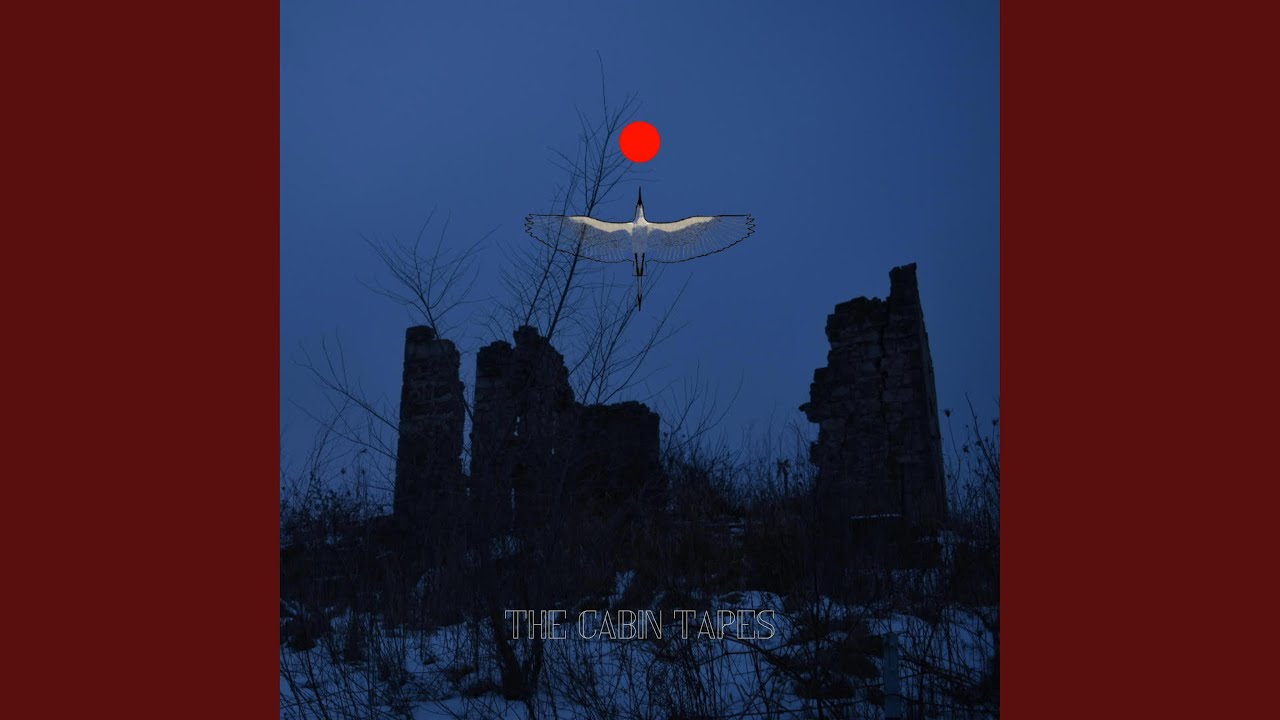
The Spine Stealers’ Cabin Tapes is—like Lunar Moth’s Lamplight—a presentation of acoustic-heavy reworkings of material that appeared on our “Favorites of 2024” lists. Where the difference comes into play is that the bulk of the songs selected for Cabin Tapes were already acoustic. Some of the variations across these four tracks (“Lake Life,” “Midwest Winter,” “Quitting,” and “Void”) aren’t overly pronounced, but the overall effect of difference remains striking. Those familiar with that quartet of tracks may find themselves leaning a bit further in, attempting to uncover or deconstruct something new.
One of the more underrated aspects of The Spine Stealers—primarily a duo of Emma O’Shea and Kate Ruland—is their ability to find complementary players for their work, something that cuts through on Cabin Tapes. On the EP, they’re joined by Sandhill Strangers’ Marin Danz—a frequent collaborator—and Armchair Boogie‘s Augie Dougherty on banjo. Both players lend tasteful additions to O’Shea and Ruland’s guitar and vocal work, never overstepping, and always elevating the material at hand through a process of delicate refinement. Cabin Tapes‘ soft flames lick the ears of listeners, providing a reassuring warmth that may help some forget about the recent wave of below-freezing temperatures.
We can publish more
“only on Tone Madison” stories —
but only with your support.
Author

Related Articles
“Resolution” is out today!
Proceeds from our new Bandcamp compilation will help fund Tone Madison.

Look out for our next compilation album, “Resolution”
Our fourth Bandcamp collection features unreleased material from Madison artists.

Tone Madison Presents: MAMA New Artist Listening Room
Join us on Saturday, November 29, at Harmony Bar & Grill for a night of live music from emerging Madison artists.