
Madison house-hunting: 2025 edition
Local housing exploration offers windows into the past, present, and future.
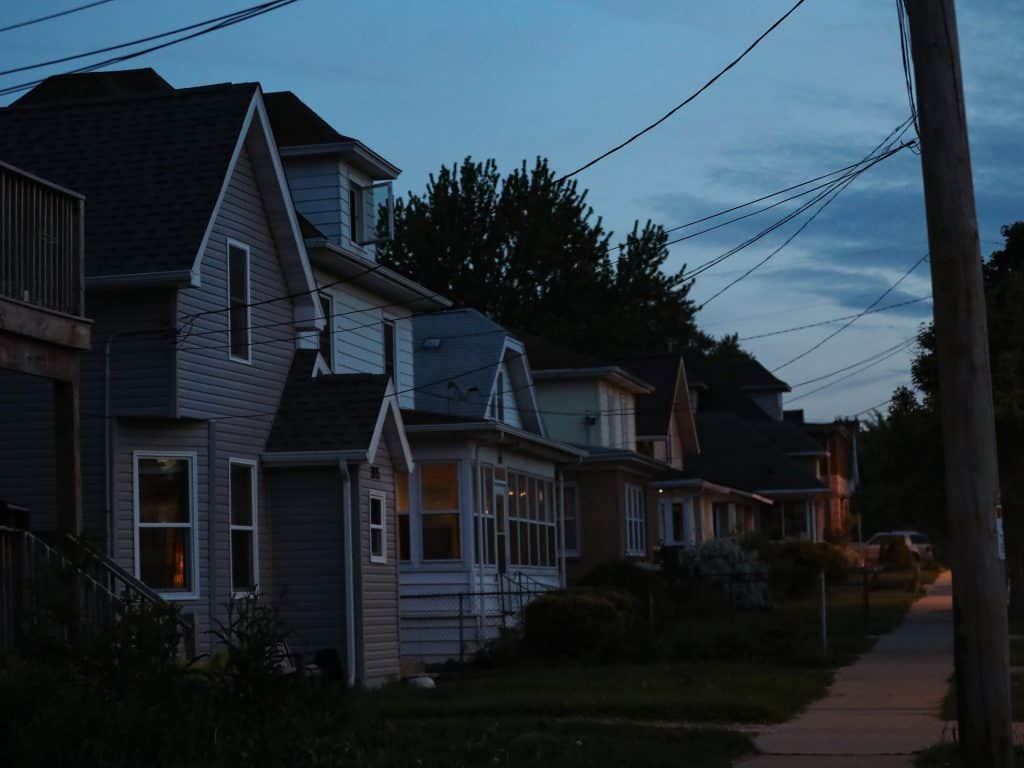
Local housing exploration offers windows into the past, present, and future.

This is our newsletter-first column, Microtones. It runs on the site on Fridays, but you can get it in your inbox on Thursdays by signing up for our email newsletter.
Owning a home in Madison can seem like a pipe dream. Too many non-negotiable aspects need to be as airtight as possible before it’s a responsible consideration. Financial security, job stability, a reasonably high credit score, and a baseline knowledge of home management costs should all factor into the equation. In Madison, if you’re not making at least six figures annually, it may be out of the question. Per Zillow, the median list price of a Madison home is above $400,000; per the US Bureau of Labor Statistics, only three of the city’s most common occupational fields cross the six-figure threshold. It’s a harsh and steep reality that has only grown harsher and steeper over time, demanding prospective buyers to seriously reckon with the question “How comfortable do I really need to be?”
If there are multiple people who are willing to work towards home ownership as a collective, some of that weight is lifted, but the prerequisites remain intact. All parties should have a certain level of employment and financial security to make it as manageable as possible, and be in agreement on how to split the responsibility. Should all the right boxes be checked, then the storied millennial tradition of treating Zillow like a fantasy dating app quickly becomes a lot more real—and demands a lot more focus. Excitement and fear arrive in equal measure. A plan generally forms, and the path to ownership begins unfurling.
Committing to a realtor often puts the metaphorical train in motion and can quickly confirm a realistic, personalized-budget-friendly range. There’s an exceptionally strong chance that many of the Zillow listings that would-be buyers meet with heart-eyes plummet out of the picture; Icarus’ once-euphoric flight leaves a mangled body drowned in a sprawling sea. Even when the losses are an entirely expected development, the devastation still stings. But then a number of new, delightfully weird doors open, and Madison starts showcasing one of its defining qualities: borderline inexplicable strains of eccentricity.
My partner and I recently committed to the idea of buying a home in the greater Madison area. We were expecting to have to settle in one of the suburbs, though we both wanted to stay within the city proper. What I don’t think either of us were expecting was—even through a relatively minimal and short-lived process of touring our options—how genuinely baffling some of those showings would get.
A few curiosity-piquing items quickly stuck out, the most obvious being that nearly every home we toured was built during the 1950s post-war housing boom. Basement toilets and showers were a feature of every basement. Those seemingly unshakeable fixtures—chances are you’ve encountered one or both if you’ve spent at least a few years in Madison—are possibly due to old sewage management systems. The showers? Rumor has it that industrial and yard workers would often enter their homes through the basement and use them to clean off accrued filth. Those showers also seemed to play a role in more effectively managing both in-house water supply systems, as well as tempering the unpredictability of city-wide sewage systems. It’s hard not to see them as signs of historical character.
It’s even harder to come across a house with linoleum flooring, a wire-cage tunnel system that runs from a basement to a designated playpen, and a “Raccoon X’ing” sign and not see that as a sign of character. While the “Pittsburgh Potty” network of Madison basements spoke to the city’s history, the customization of homes speaks to the vibrant personalities of its residents. Multiple basements featured at least one room evoking classic VFW halls. Carpeted kitchens prompted unease, carpeted garages brought about endless curiosity, and lovingly-rendered portraits of pets teased out some strong sentimentality. Abandoned home-wide, immersive surround-sound media systems with precisely-positioned outlets reminded us of the importance of sound electrical wiring. Each new showing featured a novel form of bold whimsy.
Most writing about younger people’s fascination with apps like Zillow tends to prioritize an egocentric viewpoint. In each instance, the subjects imagine themselves, and what their lives may become, in the houses they view. Touring them in-person—at least for us—brought about the inverse: a fascination with the lives already lived within the confines of each home. What would it have been like to own domesticated raccoons? What kind of media-obsessed person needed screen or audio access in virtually every single room? Or was that another surveillance suite “exorcism house” horror story? Who exactly was comforted by the feeling of soft carpet beneath their feet? Were they not at least somewhat mortified by the prospect of cleaning out all of the cooking stains that are bound to accumulate? Who parks a car on carpet? And why?
But even as those thoughts dominated our quiet, collective fascination, we still needed to evaluate what the homes could become. How much fixing would they require? What were livable setbacks and what were non-starters? How many tools did we already have at our disposal to undertake necessary upkeep? What would it take to make each house feel like a home?
We both fell hopelessly in love with a home that had a truly gorgeous, unfinished wood attic. We were outbid, but we went into the bidding process expecting to have our hearts broken. Losing out on that particular home still hurt a good bit anyway. We toured another place that tempted us enough to place a call to the seller, and were quickly informed that it had already sold. (A tip to anyone considering going the house-hunting route for the first time: the market works a lot faster than you might expect.)
Before we got our hearts broken too many times, we managed to secure a cozy home in Madison’s Northside—one of the last remaining “affordable” areas in the city—that met a number of our needs. As an appreciated bonus, the walkthrough portion of the sale answered a number of questions about that carpeted garage. Turns out, if you have two non-sealed doors leading from the basement to the garage, and they both have built-in windows, parking a car in that space is an extreme no-go.
Our newly-gained house isn’t conventionally perfect. A number of issues need to be dealt with to make it safer, and it’s near enough to a regional airport that we’ll likely experience heightened health risks. It is not in the best cosmetic shape, and will require a good deal of patience, care, and meticulous attention to truly spruce up. But it’s ours. And there’s a yard! A wildly overgrown yard that needs some intensive landscaping refinement, but a yard nonetheless. What once seemed like an unachievable fever dream is now a reality with fast-setting roots.
This particular house is not something I could have ever hoped to afford on my own, despite being well under Madison’s median list price. My partner’s generosity did the bulk of the heavy lifting when it came to the purchase phase. In turn, I will do my part to repay that generosity and lessen the burden of ongoing costs in a multitude of ways. We’re a team, and we would not be able to share a home as comfortably without each other’s support.
If we had waited a year or two to start looking, there is no guarantee we would have been as fortunate.
Madison residents are expected to largely be priced out of their own city over the next handful of decades. As climate disaster looms over everyone and people continue to migrate to the upper Midwest under the misrepresented guise of its status as a “climate haven,” both the population and housing prices will climb. The window on home ownership here was slim to begin with, and it’s on pace to slam shut so firmly that the damage from the impact will cascade through future generations.
We’re going to make the most of our time in the city, and we’ll do it from the relative comfort of our new home. Should a new prospective owner of the home ever come along, the least we can do is live authentically enough to leave behind a vibrant history of our own.
We can publish more
“only on Tone Madison” stories —
but only with your support.
Author

Related Articles

Madison’s musical odds and ends of 2025
A meditation on the past year’s musical margins.

Opting out of the tech-backed AI inevitability narrative
As data centers set their sights on harvesting Wisconsin’s human and natural resources, refusal and resistance starts locally.

Movie tee envy
Pondering a shirt collection, and stumbling upon Cosmic Cabin, which has the goods—at least niche ones for cinephiles.