
Madison and Dane County should fund the arts like it’s an emergency, because it is
We can fight fascism if we’re willing to create refuges at the local level.
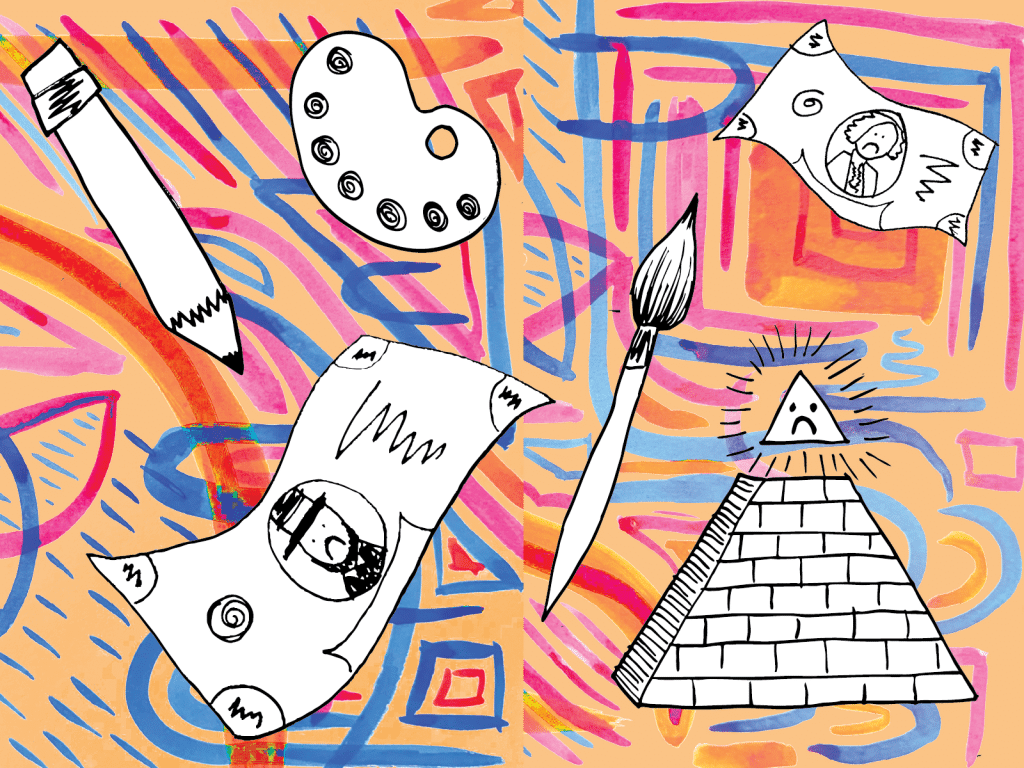
We can fight fascism if we’re willing to create refuges at the local level.
Artists, arts administrators, and journalists in Madison constantly bring up the talking point that Wisconsin is among the worst places in the nation (by some measures the worst) for state-level funding of the arts. It’s true, it’s awful, and it’s a disservice to our community and communities around the state. I’m glad that so many people draw attention to it. I’m also very tired of hearing people mention the dismal state picture without going on to acknowledge that the City of Madison and Dane County also suck at funding the arts. Many of our local elected officials pay lip-service to the arts, but over the years they have done virtually zero meaningful work to significantly increase budget lines that support the arts. They have not meaningfully improved the mechanisms that distribute arts grants, nor bolstered the revenue streams behind that funding.
We can’t treat this as an acceptable state of affairs any longer. We can’t keep listening to excuses, even good excuses. Moments like this make it clear that our piss-poor arts funding paradigm has got to be shredded entirely. It is too slow, byzantine, under-funded, convoluted, and captured by private interests.
Fascist regimes, like the current administration, always go after artists, intellectuals, and journalists, right out of the gate. We must counter this as a matter of policy and daily habit. It is literally essential for our survival, and for maintaining the capacity to depose a dictatorship and eventually move on to a better world. We have to take responsibility to do this on a local level, because help isn’t coming from above. We need to get money directly to the artists, and act like it’s an emergency, because it is.
Dane County’s arts-funding arm, Dane Arts, provided something of a model for emergency support of artists this during the early stretches of the Covid pandemic: The Dane Arts Need Grant (DANG) program. DANG distributed small grants of $500 or so to hundreds of local artists, no strings attached, with a bare-bones application and review process. (I’m using “artists” here as a catch-all term for visual artists, musicians, writers, filmmakers, theatrical performers, etc.) The usual grant process for agencies like Dane Arts (and its City of Madison counterpart, the Madison Arts Commission) requires a much more complex application and generally provides partial funding for specific projects, rather than just funding for artists to pay their bills. Grantees are expected to raise the rest of the funding on their own, report back on the results of the project, and adhere to specific guidelines about how they can or can’t spend the money.
By simplifying and streamlining, DANG accomplished something important and necessary. It brought in hundreds of applications from artists who’d never before applied for Dane Arts grant funding. Because grant funding is usually a specialized and complicated thing to navigate, it tends to have a bit of a usual-suspects dynamic. It just doesn’t occur to a lot of people to seek it out, if they even know about it in the first place. It doesn’t occur to most of the rank-and-file independent artists in our community that any of this could be for them, because it often requires them to jump through a lot of hoops for not that much money, frankly. The dynamic of a “project grant” is a tough sell for people whose capacity is already strained. (Ask me how I know!) This, in turn, ends up limiting the circle of people who could form a meaningful constituency around this funding.
The big obstacle to recreating something like DANG, of course, is that it relied heavily on federal Covid relief dollars, one-and-done funding. This time around, we know that the Trump Administration and Republican-controlled Congress are not going to hand out money to help people withstand the regime’s depredations. And yes, the state legislature has us in a bind. That does not mean we can afford to keep playing helpless, or shrug our shoulders and say “what choice do we have?” Hey—when you find that your existing choices are unacceptable, you step back and figure out how to make better choices possible. And if the battles over shared revenue and local funding referendums have taught us anything, it’s that our communities are on their own when it comes to digging up the resources we need. Give the police less money to buy dangerous shit, take on more debt, dangle Robin Vos out a window until he agrees to release the state’s multi-billion-dollar surplus, cut off sewer service to the Capitol until everyone gets sepsis—it should all be on the table.We have to take ownership of the agency we have, constrained and desperate as it may be.
Yeah, there are a number of practical barriers. Revenues are tight in the first place. Government spending, with good reason, comes with all kinds of restrictions and accountability measures. But before you art-of-the-possible this away, keep in mind that there are always resources, public or private, for all sorts of asinine things—whether it’s cluttering the town with giant Bucky Badgers or subsidizing ill-conceived music business conferences or decking out State Street with a bunch of fucking flamingoes. The people who brought us this stuff are not entitled to make excuses.
Indeed, it’s more urgent than ever to create refuges at the local level. When the Trump Administration diverts National Endowment for the Arts (NEA) funding into patriotic nonsense, seizes control of the Kennedy Center, and declares content-specific restrictions on grants, the purpose and impact are so much deeper than censorship. These moves areis about collapsing the spaces that allow us to unfurl and expand our humanity, our agency, our ability to demand or even conceive of better things. The goal is to scrunch most people’s lives down to a Hobbesian scrap for bare survival, to leave us with just enough oxygen for the reptile brain and not a breath more.
Funding from the National Endowment for the Humanities and NEA does indeed have a large impact in Dane County and across Wisconsin, as my colleague Liz DiNovella and I explained in a Tone Madison story back at the sickly dawn of the first Trump Administration. Like a lot of arts funding (whether from government sources or private philanthropy), these grants rarely provide the full budget for a given project or organization. Instead, they provide a crucial portion of that funding, and create leverage and confidence that is supposed to help grantees raise the rest.
Taking one of these grants away is not immediate lights-out, necessarily. Instead, the impact is more insidious. A big domino goes down, making the whole funding landscape unstable. Private funders get nervous, whether due to political cowardice or simple uncertainty about a project’s future. The partner institutions and contractors, who might have collaborated on a project, start to re-assess their commitments. State and local government arts funders (if they’re not themselves relying on federal funding) lose a key point of reference for making their own grant decisions. The already-flawed connective tissue between artists and money deteriorates even further.
Take it from someone who has spent a lot of time over the past decade poring over these obscure parts of City and County budgets. From year to year, things don’t change that much, and indeed there is frustratingly little discussion about even the possibility of change. These processes are largely on autopilot, and elected officials treat them as inevitabilities, fait accompli, not as choices they could rethink and rework.
Local and state-elected officials think little of handing over publicly owned venues to some of the entertainment industry’s worst private operators. They earmark millions of dollars for one large arts non-profit, and let one obscure commission handle most of the funding at the City level. Or they hand out obscene amounts of Covid relief dollars to already well-resourced corporations and non-profits, and make smaller venues beg for it. Sometimes they’ll cough up a little extra support for grants or for studies of the local arts economy. Some of the studies have actually been quite good, yet Alders and County Supervisors make little effort to act upon their recommendations.
By the same token, most artists or arts patrons in Madison don’t grasp or appreciate that they’re being robbed. All their activity adds up to a major selling point for tourism boosters, and for civic leaders eager to attract new residents and new investments. The arts have a sizable impact on our local, state, and national economies. We know because arts advocates are constantly forced to justify themselves in those terms. Which would be all well and good if it translated into more artists being able to pay their rent and see an actual future here; or if it translated into local officials, you know, thinking about how the omnipresence of a monopoly like Live Nation impacts local consumers.
It doesn’t. For instance, a 2021 Greater Madison Music City (GMMC) study (which both the City and County helped fund) on the local music economy found that earnings and employment in that sector tilt heavily toward “professional and supporting” roles. Of the direct employment the study examined in the local music industry, 25 percent consisted of employment for people actually working as musicians, performers, songwriters, etc. The “professional and supporting” segment—defined as “manufacturing, publishing and distribution, managers and agents, music venues, radio broadcasting, and music education”—accounted for the other 75 percent. On top of that, the report noted that people in the music sector on average earn far less than workers in the local economy as a whole. They tend to be navigating in an informal economy, outside the protections of a W2 job.
There are caveats abound with these findings, of course. A great many musicians also work in “professional and supporting” roles. These sorts of studies’ officially defined employment categories are imperfect. Plus, the very informality the report highlights also makes it harder to measure these things reliably. The GMMC study is also the only one of its kind that anyone has ever conducted about the music industry in Dane County. I’m not cherry-picking here, because this is the only cherry on this particular tree. Point is, there’s always money for administrators and middlemen, but not for the artists. This is out of balance.
This illustrates, albeit in crude strokes, that having an arts industry and having a community where artists get paid are not necessarily the same thing. We are entirely too hung up on the former, because it takes a form that government and business leaders can understand.
Public policy should work to change conditions and serve the public interest, as opposed to just telling people how to navigate existing conditions and follow the norms of legendarily exploitative industries. It’s time for our leaders to learn what people in the arts community have known all along about existing in the margins, about imagining and creating better worlds against the odds, and about daring to get impractical when our conception of the practical has utterly failed.
Who has power in Madison,
and what are they doing with it?
Help us create fiercely independent politics coverage that tracks power and policy.
Author

Related Articles
USRowing’s trans-exclusionary policies only divide us all
Amid institutional erasure of their autonomy, trans athletes deserve to be openly embraced by their teammates and representatives.
What do we owe each other?
Reggie and Anne navigate life without housing after the closure of Dairy Drive.
The Madison “uniparty” is not oppressing you, because it’s not real
Local debates aren’t what they should be, but they’re not being crushed by the far left.