
“Laura” is a haunting portrait that looms over cinema to this day
Otto Preminger’s classic 1944 noir mystery screens on 35mm at UW Cinematheque on July 17.
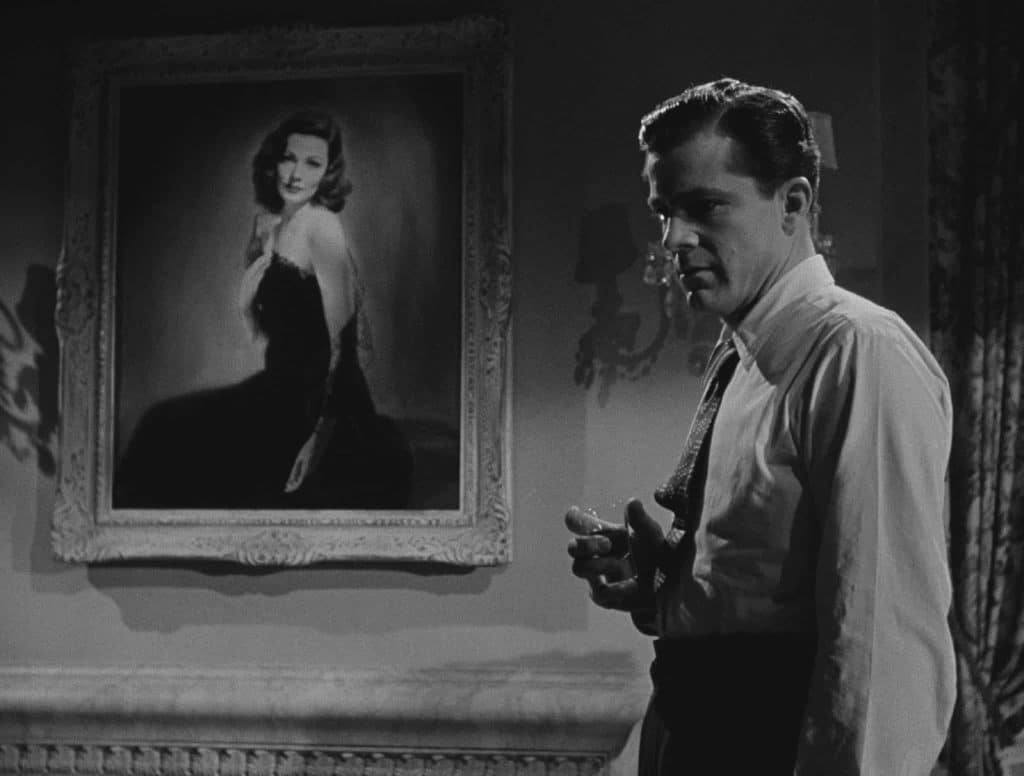
Otto Preminger’s classic 1944 noir mystery screens on 35mm at UW Cinematheque on July 17.
How do portraits help us honor the dead? A painted portrait can display our dearly departed in a most flattering way, but is this the most accurate? A still image of a loved one captures only a small fraction of their life. At best, it allows us to remember them in a positive light, but at worst, it permits us to project distorted memories onto them.
“I shall never forget the weekend Laura died,” is the evocative opening narration of Otto Preminger’s 1944 film, Laura, based on Vera Caspary’s novel of the same name. After the credits superimpose over the eponymous Laura’s portrait on the wall, the voice assumes the form of unreliable narrator and Laura’s mentor, Waldo Lydecker (Clifton Webb), who’s using a typewriter while bathing (icon behavior). He is visited by detective Mark McPherson (Dana Andrews), investigating the murder of Laura Hunt (Gene Tierney).
Preminger’s film is screening on 35mm at UW Cinematheque on Wednesday, July 17, at 7 p.m., as part of a series celebrating the work and memory of the late critic and UW-Madison professor David Bordwell. In 2015, Bordwell wrote about unreliable narrators in film, describing the use of Waldo as the narrator (but be careful, there are spoilers in the article!). Caspary’s novel contains first-person accounts from many different characters, and it proved difficult to reproduce for the screen and might have revealed the final twist too soon. Bordwell elaborates on Laura‘s use of flashbacks within flashbacks, which are seen when Waldo recounts to Mark McPherson how he met and befriended Laura. These flashbacks allow audiences to become enamored with Laura as Mark does over the course of his investigation.
Among the other murder suspects are Laura’s fiancé, Shelby Carpenter (Vincent Price), and Laura’s wealthy aunt, Ann Treadwell (Judith Anderson), who is hopelessly in love with Shelby. In addition to learning about Waldo’s relationship with Laura, Mark attempts to untangle everyone else’s involvement with Laura, and this of course leads to a shocking turn of events.
More than 45 years after its release, Laura‘s influence came through in both the original season of television program Twin Peaks (1990) and in the subversive Greek film Singapore Sling (also 1990). In Twin Peaks, Special Agent Dale Cooper (Kyle MacLachlan) investigates the murder of teenager Laura Palmer, portrayed by Sheryl Lee in flashbacks, and interviews rural townsfolk who are equally kooky and memorable as one Waldo Lydecker.
In the more obscure Singapore Sling—basically, Grey Gardens (1975) for emetophiles—a mysterious man enters the home of an incestuous mother and daughter searching for his lost love, Laura. He discovers that the grown daughter shares a striking resemblance to Laura, including a portrait prominently displayed, like in the film Laura. A version of David Raskin’s theme from Laura (sung by Julie London) even plays on a turntable. This is where the similarities end, but more daring fans of the noir genre will appreciate these nods; beautiful portraits covering up far more sinister happenings.
The influence of Laura does not end with these examples, and moviegoers with affinities for many genres will surely engage with this exemplary portrait in the noir canon. If nothing else, you’ll get to appreciate Webb as Waldo Lydecker, one of cinema’s cattiest queer-coded queens, who utters such incredible lines as, “I don’t use a pen; I use a goose quill dipped in venom,” and “Haven’t you heard of science’s latest triumph: the doorbell?!”
We can publish more
“only on Tone Madison” stories —
but only with your support.
Author
Related Articles
Video: Sizing up local screening events and prominent performances of 2025
A chat with Josiah Wampfler at OCA Media about our favorite movie-going experiences and acting roles of last year.
Stop spotlighting new films by known abusers
Madison boasts a dynamic movie culture, yet still needs programmers and community voices to facilitate change.
“Resurrection” explores human perceptions through the historical labyrinth of cinema
Bi Gan’s latest art-house epic premieres locally at UW Cinematheque on February 5.