
Labor of the mind is still labor
Academic science needs to embrace union organizing, now more than ever.
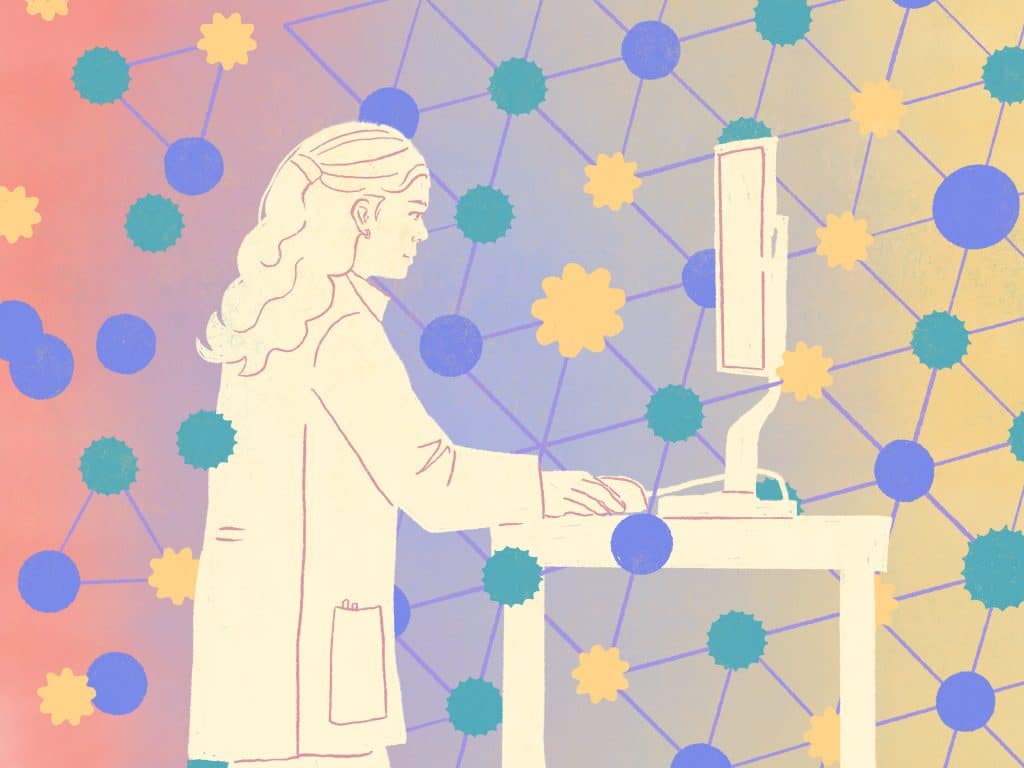
Academic science needs to embrace union organizing, now more than ever.
Academic labor organizing is on the rise. Though many unions cover early career scientists, most only represent teaching assistants, which has left graduate researchers and postdocs without contracts. Faculty unions are also rare, with about 27% of U.S. faculty unionized compared to 48% of grad workers. Even rarer are tenure-track scientific faculty organizers, since the expansion of faculty unions has largely encompassed adjunct or non-tenure track roles. This is not because unions have neglected our scientific community, but because scientists have neglected their unions.
Unions give job security, better pay, benefits, and a network of support. Unions have been shown to improve the advisor-advisee relationship. Collective action is collaborative, a critical skill for scientific discovery. Talented researchers are leaving publicly-funded science for industry in droves, largely because of low pay and poor working conditions, which unions address. So why don’t more scientists organize or join their local union?
As a Ph.D. candidate in Microbiology and co-president of my graduate worker union, I can say one reason scientific workers are hesitant to organize is that we believe we are doing the “work of the mind,” as Dr. Karen Kelsky writes in her book The Professor is In. We have been conditioned to believe our research is not labor. Unpaid labor within the academy is often denoted as service or professional development. As an organizer, I’m constantly confronting the idea that we are somehow so special as to not need basic labor protections. “[J]oining unionization efforts,” Kelsky writes, “means dropping the self-defeating delusion that academic work is somehow separate from labor.”
Another major reason scientists avoid organizing is out of fear of retaliation. A petition led by my union, the Teaching Assistants’ Association (TAA), called for better stipends, student fee relief, and student services in UW-Madison’s microbiology PhD program. The campaign won historic raises and democratic input into program decision-making. However, many tenured faculty who lead laboratory groups retaliated, from expressing their extreme displeasure, to threatening adverse consequences to organizers’ careers. One faculty member insisted they would not take new microbiology graduate students, and others worried organizing would harm the ranking of the program because we were drawing attention (including that of potential students, who laboratory heads depend on to conduct research labor) to workplace concerns. And this was in response to a petition which used the word “demand” in it.
Because we have almost no protections from retaliation, undue dismissal, or discomfort in our lab environment, and because our careers and timeline to degree are in our primary advisors’ hands, graduate workers and postdocs fear rocking the boat. Meanwhile, organizing flips the boat upside down. However, profound retaliation, from an organizer’s perspective, simply illuminates the profound power of collective action. When we come together, we are more powerful than we could imagine.
Although I have experienced my fair share of intimidation and retaliation, time after time my union protected me and pushed back when I faced discipline for organizing. In several instances, asserting my right to a union representative when facing potential discipline helped me avoid one-on-one meetings with administrators I believed wanted to intimidate me. In another case, several students submitted feedback to my program that they were upset after I was rudely dismissed in a seminar which framed graduate stipends as a burden on lab budgets.
More often, I have been told, by those who are threatened, that I should stop organizing—which I ignore. And I have been effective; under my leadership, we have won not only significant raises (10-20%), but paid parental leave and student fee relief. Meanwhile, TAA union membership has grown by 60%. Clearly, hundreds of grad workers are willing to brave their fears to fight for a better world. I hope more scientists, including later-career and tenure-track academics, are inspired to join us.
And ultimately I have never experienced a material threat to my career. My career, in fact, has only been strengthened by the skills I have honed as a union organizer. When I need help for my research project, I have no problem asking for help or sending cold emails. Though naturally shy, I have developed skills in networking, communication and conflict resolution, which I believe are as valuable as my scientific training. It is truly not so scary as it may seem to disagree, or to butt heads on important issues; in fact, it is part of a healthy democracy. I certainly understand it can be difficult when you’re at odds with a superior, but I would argue that being hated by your boss for your union activity is cool. Furthermore, I have made many close friends and community allies through my union.
I write all this not to declare hesitation to collective action unjustified, but to argue that we must all evaluate risk and reward so that we may take on risk when it is too important not to—like right now. We should be less afraid of the bridges we may burn than the ones we will surely destroy for the next generation if we do nothing.
On top of the fear of retaliation, channels for open discussion of systemic issues in science are lacking. Our field prides itself on its values of open debate, new ideas, and new ways of thinking, yet academic science, as an institution, is quite undemocratic. Decisions like hiring, admissions, and stipend rates are often made by unelected committees, where graduate workers have almost no input. No spaces exist without entrenched hierarchy, where we could plot, together, our future; no space, besides the one we create as a union.
I am not given a platform by my University or program administration to educate relevant and potentially affected parties about our union campaigns. Chancellors and UW Regents across the System will not even take a meeting with union members. Shared governance, championed so fervently by administrators that it is suspicious, has lost much of its power, if it ever had it. The UW-Madison Faculty Senate took an entire year to pass a resolution decrying police brutality against peaceful protestors.
Union members have been denied the opportunity by several academic programs to give a 15-minute introduction on what the union even is. TAA posters are taken down regularly across campus. It is virtually impossible to secure agenda time for our union’s campaign in the Biosciences from my Biosciences program’s governance committee, and if I ever did, I would not be allowed to attend the meeting.
Treating the union as an outside group, divorced from our integral function on campus, causes confusion and fear. This allows union busting to run without recourse, and strips the union of its own successes. (I know this is the point.) Yet thousands of campus workers have participated in a union campaign in some way. Paid parental leave for the UW System was obviously driven and won by campus labor unions, but when we aren’t able to tell our story, we lose the power of hope and collective change.
Yes, I realize I am critiquing scientific institutions at a time when our field is on the line, and yes, it would be better if we all worked together and were not at odds. But I don’t believe drawing attention to weaknesses makes us more vulnerable to the fascists—in fact, it helps us beat them.
Our unions will save us, and it is time academic leadership recognizes this. We have been asking to have regular meetings with UW-Madison Chancellor Jennifer Mnookin for over a year, and she has not agreed. The Dean of the Graduate School, Bill Karpus, will not recognize the union. “Of course they won’t, they are our employer,” my organizer-brain thinks. Yet I, and so many who make up the culture of UW, have been let down by my purportedly liberal institution. I thought it would be different here. But it isn’t. Especially as our public universities are run more and more like for-profit businesses.
I hold out hope that we can come together. UW System leadership is afraid of Robin Vos and Wisconsin Republicans. Given their majority, they determine if funding for the system or a new UW-Madison engineering building gets allocated. But Robin Vos will try to destroy science and the public university whether or not the TAA and Mnookin meet for an hour every semester.
As we have seen in just over three months, President Donald Trump and Elon Musk are turning their knives to science. Grant funding has been cut and frozen and significantly delayed, scientific jobs in the federal service have disappeared, and layoffs have swept the National Institute of Health (NIH) and the National Science Foundation (NSF). A directive from the Department of Government Efficiency (DOGE) to slice indirect costs, which public institutions rely on to do research safely, has stalled in court. But UW-Madison is encouraging graduate programs to send fewer offers of admission, as well as recommending that labs delay hiring or major purchases. Regardless of whether or not these proposals go through, they have and will do lasting damage. Funding has already stagnated for far too long, and the most vulnerable scientific workers struggle to make ends meet. Harming graduate workers, who do the majority of the scientific labor, harms new cures, technologies, and the economy.
In order to preserve science as a public good, we must organize. Though scientists have insight into the molecular world, and knowledge most will never attain, we are not unique in our role as workers. We must acknowledge that we are part of an economic system that exploits us and may now dispose of us. Our insights are leveraged by private industry to the tune of trillions of dollars. Our work is political.
Unions leverage power in the political realm. Labor unions representing graduate scientists have won harassment protections inspiring legislation. My union won paid family leave, and Senator Kelda Roys and Representative Francesca Hong wrote personally to me that they are working to make it law. Governor Evers endorsed our meet and confer campaign. Yes, call your representatives, sure, fine—but join your union. Unions won us the weekend, and they can save science.
I cannot imagine what we could accomplish if scientists, who bring in billions of dollars that their universities depend on, organized. I cannot imagine what our political allies could do if the most highly educated, Nobel eligible, American innovation-driving people stood together.
Who has power in Madison,
and what are they doing with it?
Help us create fiercely independent politics coverage that tracks power and policy.
Author

Related Articles

Madison needs a wake-up call
The longer we pretend this City is a progressive haven, the more people will be harmed.
Wisconsin energy utilities sacrifice affordability and sustainability to fuel the AI gold rush
Gas plants used to power data centers increase costs for consumers, risk of exposure to pollutants, and accelerate the harms of climate change.

Stop spotlighting new films by known abusers
Madison boasts a dynamic movie culture, yet still needs programmers and community voices to facilitate change.