
Is Group Health still a Cooperative?
Instead of union-busting, the Board should see union organizing as a gift of collective problem-solving.
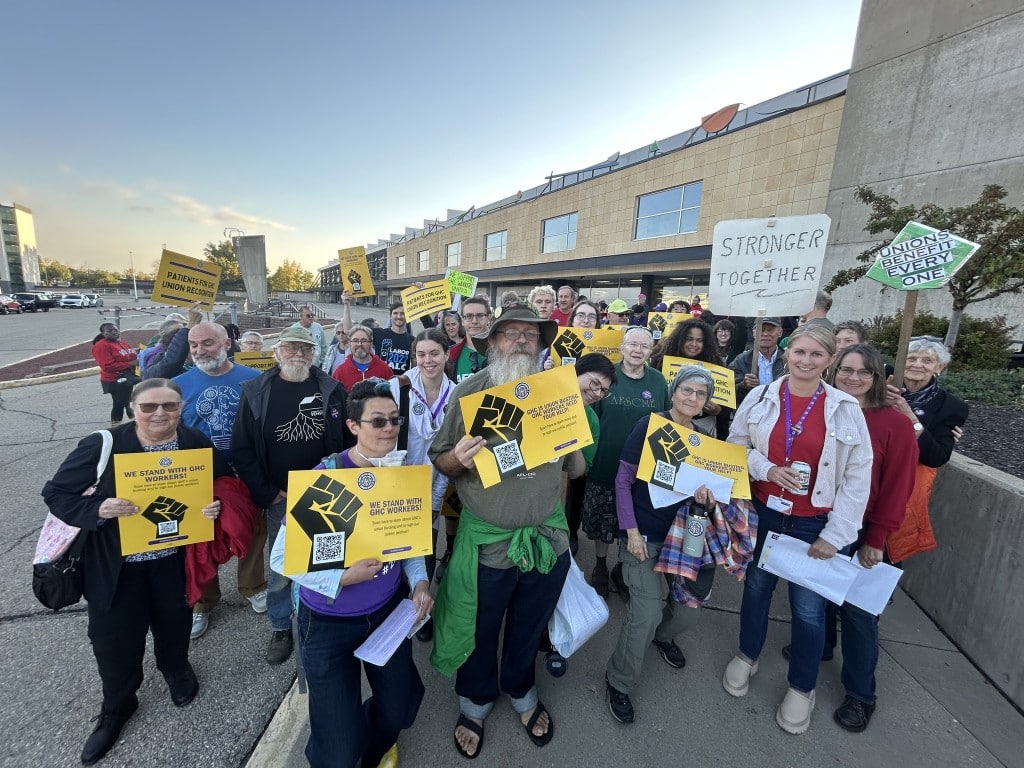
As 30+ year long members of Group Health Cooperative (GHC), we joined the 170+ other GHC members at the Alliant Energy Center for the October 13 membership meeting—one of the largest in the co-op’s history. The meeting was announced to all co-op members weeks in advance, ensuring that everyone could have their say. That night, members passed resolutions supporting unionization efforts of GHC care providers, who have been fighting for a union since December 2024.
Members unanimously approved a resolution that, by October 17, our cooperative “shall notify GHC Workers United and SEIU Wisconsin of the co-op’s intent to voluntarily recognize the bargaining unit democratically chosen by GHC workers.” Members also unanimously passed four other transparency resolutions demanding that GHC share how much it has spent on union-busting lawyers and consultants. Finally, we asked to schedule a member meeting on the democratization of the co-op, signaling membership concerns about the Board and management’s dedication to cooperative principles more broadly.
GHC members and workers left that night feeling that we had participated in an historic event for the co-op. But later that week, the GHC Board of Directors sent an email to members that calls GHC’s cooperative values into question. The Board reminded members that any member vote on the union issue would be advisory, merely “encouraging” the Board to take action.
They went on to say that the unanimous motions would be “reviewed and considered,” but that GHC “continues to believe” in precisely what members had overwhelmingly repudiated just days earlier: GHC’s union-busting stance.
As long-time cooperators in worker, consumer, and financial co-ops, we have experienced how co-ops operate at their worst and at their best. Optimally, co-ops harness the power of collective self-determination grounded in the will of the membership. At their worst, co-op management and directors use crises and difficult external conditions to bypass the will of the membership and make decisions rooted in fear-based arguments and authoritarian logic.
GHC’s innovative model of nonprofit healthcare succeeds precisely because its member-consumers are “at the top of the leadership chart.” For example, GHC members saved the co-op in 2007 when we defeated a privatization effort by management and the Board and elected more experienced cooperators to the new Board. What does it mean to be a co-op if the GHC Board is now going to disregard the unanimous votes at a well-attended and well-noticed meeting of its own membership?
The Board has promised to consider the member motions over the next few weeks. Those of us who have spent decades working to hold the cooperative movement true to internationally recognized and democratically affirmed cooperative identity, values, and principles hope that they will reflect on the great value of allowing care workers to participate more fully in the structure and quality of their workplace.
Our experience as active co-op members has demonstrated to us many times over that when internal or external challenges arise, the best solutions emerge from more democratic participation, not less. The GHC Board could actually consider this union drive to be a gift of collective problem-solving and decision-making in tough times. Frontline care providers are offering to contribute their time and energy to improving the quality of service to members by increasing worker and member satisfaction, and thus reducing costly and disruptive staff turnover.
We urge the Board to stop spending co-op members’ money on costly lawyers and union-busting consultants and instead voluntarily recognize the bargaining unit approved by workers. Then, they can get on with the real work of leading the co-op into honestly embodying the GHC motto: Better Together.
Community members can show support by sending an email to the GHC Board asking them to respect the will of the membership and recognize the union: https://act.seiu.org/a/ghc-board-1.
Who has power in Madison,
and what are they doing with it?
Help us create fiercely independent politics coverage that tracks power and policy.
Authors


Related Articles

Wisconsin communities face scrutiny over data center secrecy
The town of Beloit is the fifth Wisconsin community with an NDA for a possible data center.
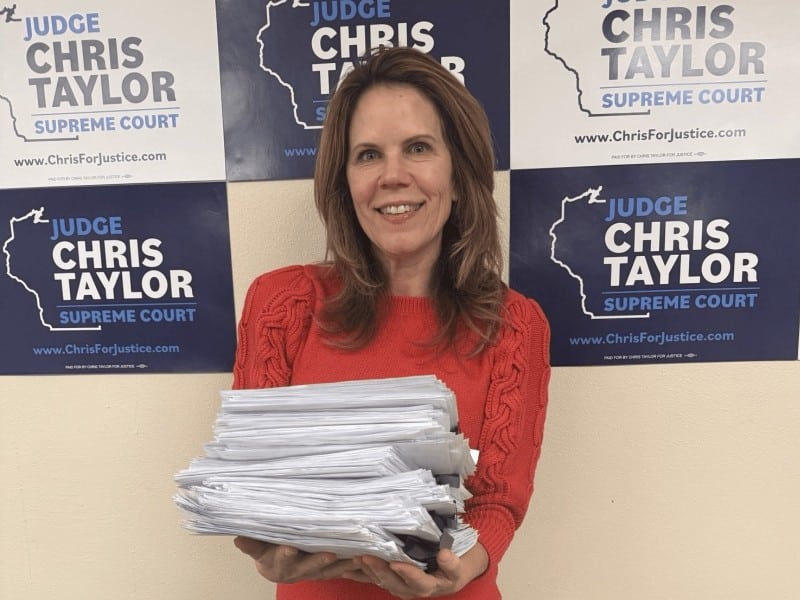
Eyeing voting rights, liberals aim to secure Wisconsin Supreme Court through 2030
In the April election, Wisconsin liberals are hoping to expand their majority on a body that could be a critical backstop for voting rights during the next presidential race.

Police surveillance technology needs proper accountability
Grassroots resistance against Flock cameras are writing the blueprint for comprehensive reform.