
In this house, what does it mean to raise kids with shared values?
An excerpt from Madison-based author Kavin Senapathy’s new book, “The Progressive Parent.”
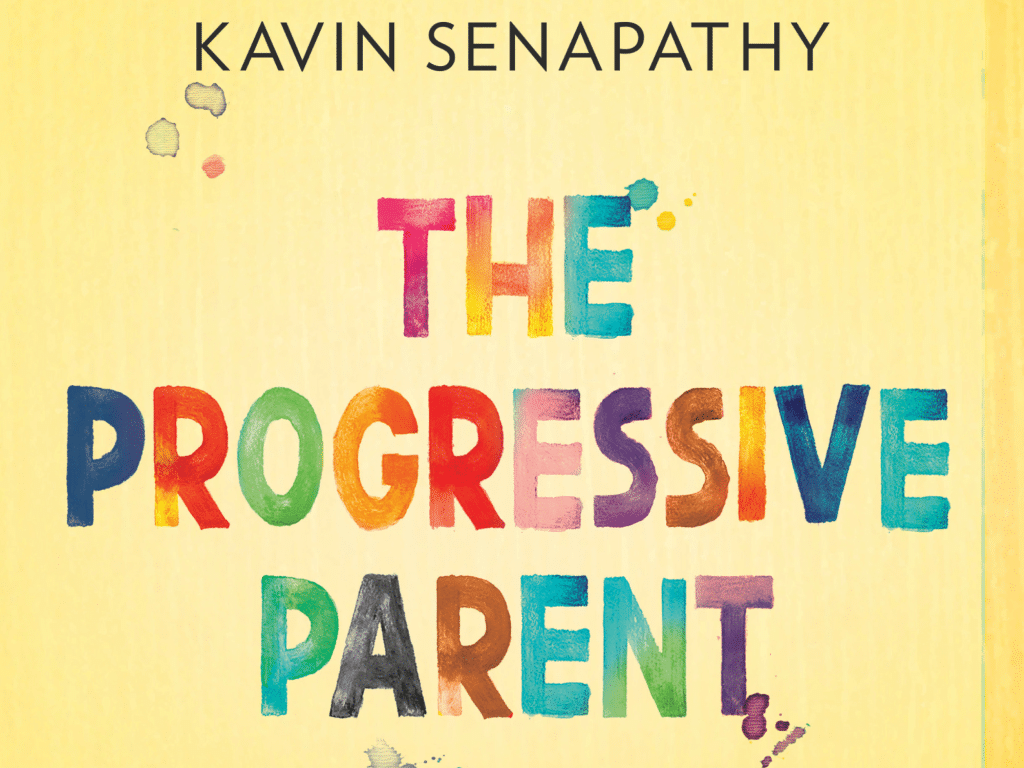
An excerpt from Madison-based author Kavin Senapathy’s new book, “The Progressive Parent.”
Award-winning science journalist and Tone Madison contributor Kavin Senapathy’s book, “The Progressive Parent: Harnessing The Power Of Science And Social Justice To Raise Awesome Kids” will be released August 6. Senapathy and Tone Madison news and politics editor Christina Lieffring talked about some of the book’s main themes on the live radio show “A Public Affair” on WORT-FM on Wednesday, July 31.
A book launch party and discussion with Senapathy and Cassandra Phoenix is scheduled for Sunday, August 11, at 4 p.m. at A Room of One’s Own.
This excerpt from the book’s introduction is being published with permission from HarperCollins/Hanover Square Press.
Where there are neighborhoods with kids and progressive families who feel safe enough displaying it, the yard sign of the ages that proudly declares family values is peppered throughout the nation. It reads: In this house, we believe: Black Lives Matter, women’s rights are human rights, no human is illegal, science is real, love is love, kindness is everything. Three activists in my self-styled progressive hometown of Madison created the sign in 2016 following Trump’s election, with its iconic rainbow all-caps sans-serif font on a black background designed to pop during the snowy, soot-gray winters. They had no idea it would go viral, both online and across neighborhoods in the US, from Austin, Texas, to South Orange, New Jersey. One of the women, a fellow parent who collaborated in launching the iconic sign, activist Jennifer Rosen Heinz, had complicated feelings about it from the beginning. It was right after Trump was elected, “and everybody’s like, ‘What are we going to do?’” she tells me over the phone in 2020. So the sign “became a very accessible form of activism” that started to signal safe spaces, like when someone’s car breaks down, “they look around, and they see one house that has the sign, that’s the house that they’re going to knock on the door,” she explains.
Ultimately, Rosen Heinz says that the sign “encapsulates values.” That can be a good thing, but she adds that it also can be a form of “virtue signaling,” in which people literally stake the claim “I believe in all the right things, I believe in science, I have my NPR tote bag.” She explains that it “becomes a kind of short-hand rather than an example of having done work or continuing to engage in work. It becomes a symbol rather than an active process.”
Nicki Vander Meulen, defense attorney, member of the Madison Metropolitan School District (MMSD) board, disability-rights advocate, and one of the first openly autistic school-board members in the United States, says, “It’s easy to put up a sign” to show support. “The problem is, are you willing to actually fight for what it comes down to?”
I’m chatting with Vander Meulen over coffee in downtown Madison on a summer day in 2022 and say to her, “You and I share the penchant for being very direct in how we talk.”
She nods. I ask her whether she thinks that others’ inability to handle straight talk helps cement the status quo in some way. “One hundred percent. People aren’t comfortable talking” about what’s most important, which is necessary to ultimately make things better, she explains. I’ve heard the sentiment countless times from all kinds of people fighting for the rights of children. I get the feeling that learning to tolerate discomfort is crucial.
All of these feelings about the sign are valid. My feelings are this. It’s true that, in some instances, parents who display a version of the sign are participating in a form of virtue signaling. But whether or not someone chooses to display it around their dwelling, there’s power in its message for parents if we also act intentionally on these shared core values: science, truth, equity, and justice.
Together, the ideas that Black lives matter, that women’s rights are human rights, that no human is illegal, and that love is love are about intersectionality, also known as intersectional feminism. The late Gloria Jean Watkins, the renowned author and feminist best known by the pseudonym bell hooks, famously wrote about intersectionality before there was a word for it in her 1981 book Ain’t I A Woman, titled after Sojourner Truth’s speech by the same name, about the impact of both racism and sexism on Black women. Civil-rights advocate and pioneering scholar Kimberlé Crenshaw later coined the term as a framework for understanding how elements of people’s identities converge as layers of discrimination and privilege. There are multiple elements of advantage and disadvantage, like race, nationality, gender, sexuality, class, faith, disability, weight, and physical appearance, that can serve to either entitle or oppress in dynamic and complex ways. In response to earlier waves of feminism focused on white, middle-class, cisgender women, intersectionality broadens feminism to include, well, all other women and marginalized people. With it comes the view that none of us, including our children, can thrive until all of us, and all of our children, have the most expansive opportunities to do so.
The values on the sign are also about equity, which isn’t the same as equality. While equality assumes that systems automatically treat everyone equally, equity acknowledges that systems were designed to benefit certain groups to the detriment of others. Justice is basically equity in action: it’s when anything is equitable and accessible for all, and these conditions are maintained in the long term. As for kindness, on its surface, the idea that kindness is everything suggests that everyone should always be nice to one another. Benevolence and friendliness are wonderful things but can do a disservice when applied indiscriminately. We often hear that we’re supposed to be kind because everyone is fighting their own battles.
This response resonates with me: Why would I be kind? I will be brutal and relentless. And ride into battle by their side. I first saw it in a comic from Dino Comics, and it stood out for the simple reason that, often, doing the right thing means upsetting some people.
At the heart of this book is the question of how to take stock of our values as we make decisions about our kids’ well-being while also imparting these ideals as they grow up. How do we go about honoring our families’ unique identities while incorporating progressive family values and science-based worldviews?
However you slice us—we are certainly not a monolith—science, equity, and justice are our shared values, the ones that link us together no matter what we might feel about certain issues, no matter where we are in our journeys of learning, knowing better, and doing better. We are parents (and the other members of the villages who raise children) who strive not only to raise our kids in science-based, justice-driven ways but also to apply these values to the stewardship of our communities today and into our children’s adult lives.
Beyond a few basic parenting tips, more fundamental questions underlie this book. What can parenting accomplish? And outside of where we have tangible leverage as parents, is everything else we believe we have to do, from cooking from scratch to avoiding screen time, distracting us from living up to our values? When we stop seeing each and every individual parenting decision as paramount, will we take a deep breath, look up, and see others just like us and realize that we’re in this together? What could we do with that communal power?
Some of those reading this book are in positions of influence, not only within your own families and communities but by virtue of your professional or other roles. As you read on, you may feel the urge to do whatever your position of privilege allows you to do in relative safety in any unjust situation. The concept of positionality refers to how social position and power dynamics shape people’s identities, access to resources, and worldviews. Scholars, educators, and others have increasingly been considering how their own positionality affects their work. I think that the work of parenthood can also benefit from each of us reflecting on and staying cognizant and open about our own positions of privilege. Some people use social-identity wheels or maps that are readily available on the internet with the goal of gaining a clearer picture of how elements of personal and social identity overlap and interact. Despite some of my marginalized identities (I’m an atheist child of immigrants with non-European accents), I’ve spent over a decade learning to recognize and account for my unearned privileges, and we’ve tried our best to bring a keen awareness of these identities to our children. Having an American passport has given me an unearned advantage compared to those who aren’t legal permanent residents or citizens of the nations where they reside. Though my skin color has been a barrier, having a light-to-medium skin shade in the beautiful range of skin tones in my large extended family has conferred a form of privilege in a world where colorism is still prevalent. Though my ancestors were colonized and subjugated, I never take for granted being able to trace my ancestry back several generations. Though my children have a white father, which grants them some privilege, he is also Jewish, which adds another complex dimension to their identities.
Nobody is born understanding any of this. It’s okay to make mistakes. As someone who strives to honor my identity, I can assure you that there is no shame in privilege. When someone recognizes their forms of privilege, they are not necessarily accepting a moral reprimand for the relative lack of difficulty in life. The only shame is in willfully ignoring and hoarding it, and failing to pay privilege forward. Learning to recognize our own intersecting layers of identities can be deeply rewarding, albeit challenging, and a gift to our children as they grow.
How does a parent instill progressive values in our children, who are literally the future, prepare them to take the mantle, and ensure that the Earth and society will be everything they deserve? Obviously this is a huge question and one that I have a few, but not nearly all, of the answers to. Ultimately, the aim is to steer away from progressivism as the type of ideology that lives on a 26-word yard sign and toward progressivism as a necessarily nuanced approach to the complexities of life. And there’s nothing more complicated than parenthood.
Who has power in Madison,
and what are they doing with it?
Help us create fiercely independent politics coverage that tracks power and policy.
Author

Related Articles
Madison needs a wake-up call
The longer we pretend this City is a progressive haven, the more people will be harmed.

Wisconsin energy utilities sacrifice affordability and sustainability to fuel the AI gold rush
Gas plants used to power data centers increase costs for consumers, risk of exposure to pollutants, and accelerate the harms of climate change.
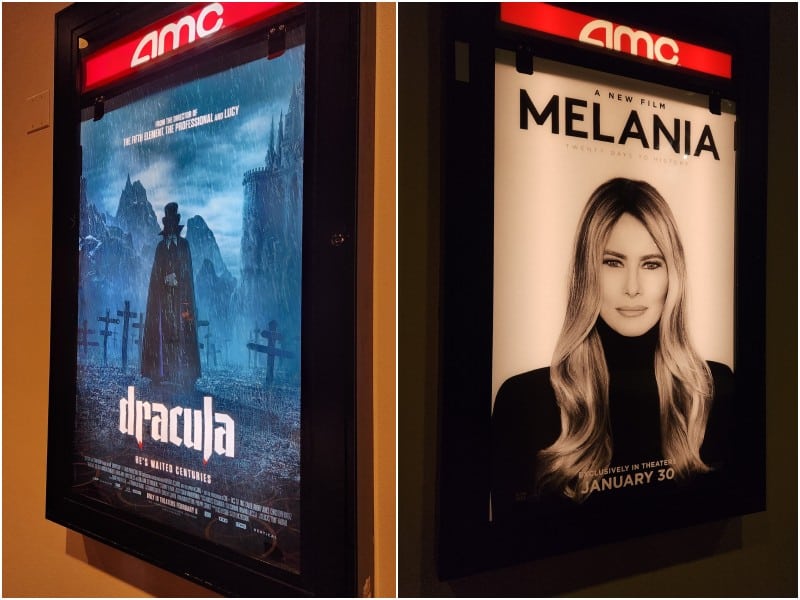
Stop spotlighting new films by known abusers
Madison boasts a dynamic movie culture, yet still needs programmers and community voices to facilitate change.