
Good birding in all seasons with the storied Charles “Chuck” Henrikson
The retired lecturer and winsome ornithologist has been coordinating Tuesday birder hikes at the Arboretum for well over a decade.
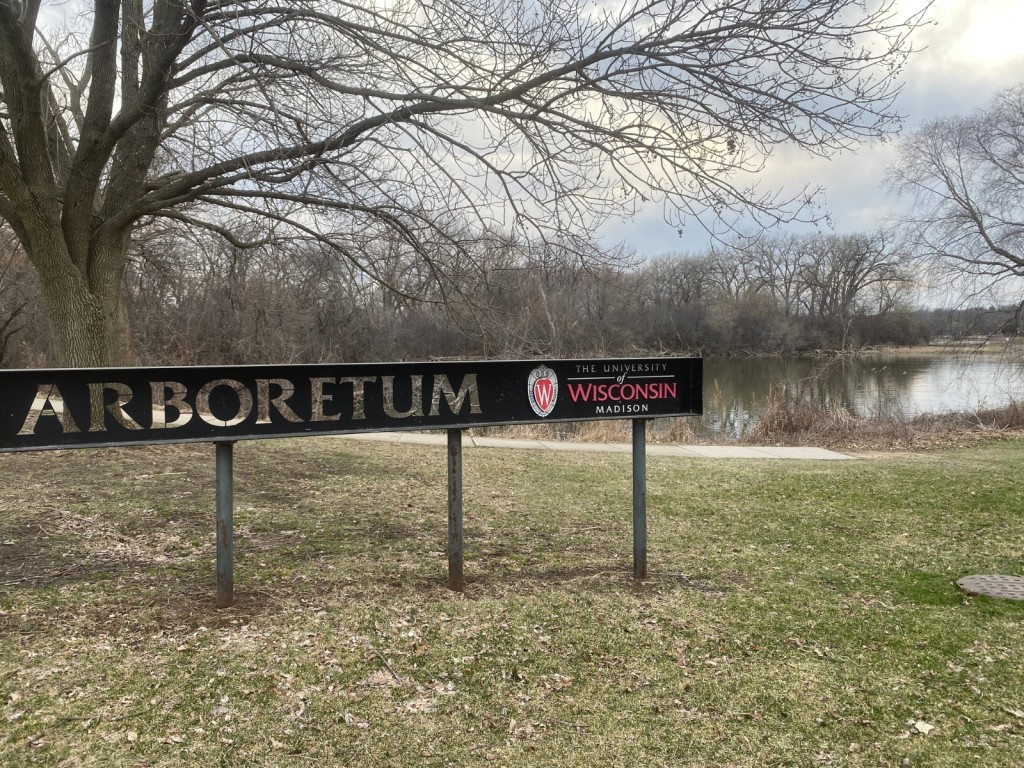
It’s March 24 in Madison, one of those regressively dreary days when everybody dons hats and gloves again even though a few flowers have already sprung up. Despite the chilly weather, and despite the fact that there aren’t many birds out because of it, 18 of us circle up in the parking lot of the UW–Madison Arboretum just before 7:30 a.m., chatting about recent bird sightings as we take binoculars out of our bags.
Our flock is about to go birding with Charles “Chuck” Henrikson, a retired UW School of Veterinary Medicine lecturer and a birder. Henrikson has hosted a beloved weekly bird walk at the Arboretum for about 13 years, and he’s also sent out an accompanying newsletter for the past six. Henrikson’s hikes have become somewhat of a niche institution in the Madison birding world. Henrikson himself has, in turn, become a bit of an icon. (When I went on hikes with UW–Madison’s Audubon Society chapter, members who spotted him in the distance through binoculars would occasionally run off to greet him, yelling, “Chuck!”)
Birding isn’t at all about numbers to Henrikson, but the numbers he’s racked up are so impressive that they need to be shared.
First, a bit of context: many local birders use eBird, an online database, to track the birds they’ve seen. In turn, ornithologists use eBird submissions to gather data on bird distribution, migration, and biodiversity. The website’s leaderboard feature lets users see who’s created the most checklists (or logs of birding sessions) at a specific location. The runner-up at the Arboretum has submitted 519 checklists alone. As for Henrikson, the location’s checklist leader? A whopping 2,258.
Although I’ve been a newsletter subscriber for almost a year now, today is the first time I’ve gone on one of Henrikson’s walks, so he first assigns me a number: 302 (he likes to take attendance). That means over 300 individuals have shown up on his walks. I ask a few people how long they’ve been meeting up with Henrikson, and everybody other than a fellow newcomer says they’ve been attending almost weekly for at least several years. One, who takes on somewhat of a leadership role in the group I split off with, has been coming for 10.
While we wait for more birders to show up, Henrikson gobbles back at a loud rafter of turkeys strutting across the parking lot. “I’m crazy, too,” he says, jokingly encouraging me to include it in my story.
Eventually, we split off into several groups, and ours takes a path through the Wingra Woods. (Henrikson normally seems to split up any sizable group into more manageable subgroups. He tells me he dreads a large number of people showing up for one of his walks. “If I even got 50, I would say, ‘I just can’t today. I’m not feeling well,'” he jokes.)
Henrikson notes that the walks become especially popular during the month of May, when the universally adored warblers migrate through the Midwest. Still, people show up every single week, even if the weather is somewhat hazardous. Maybe it’s because Henrikson himself seems so opposed to ever cancelling a Tuesday walk. In one newsletter that advertised a walk that would occur right after a bout of intense early-January weather, Henrikson noted that “wearing ice cleats may still be a good idea.”
Today, the first spring migrants are just settling in after returning for the season: male red-winged blackbirds defensively perch on reeds, sandhill cranes call in the distance, and Canada geese fly close overhead. We spot a merlin far in the distance, which is particularly exciting for me—I’ve never seen one before, so I get to tell everyone that it’s a “lifer.” Otherwise, we mostly find the often ignored early-spring migrants as well as the usual winter suspects: downy woodpeckers, cardinals, and a young red-tailed hawk. Still, members point each bird out, even if it’s as common as a chickadee.
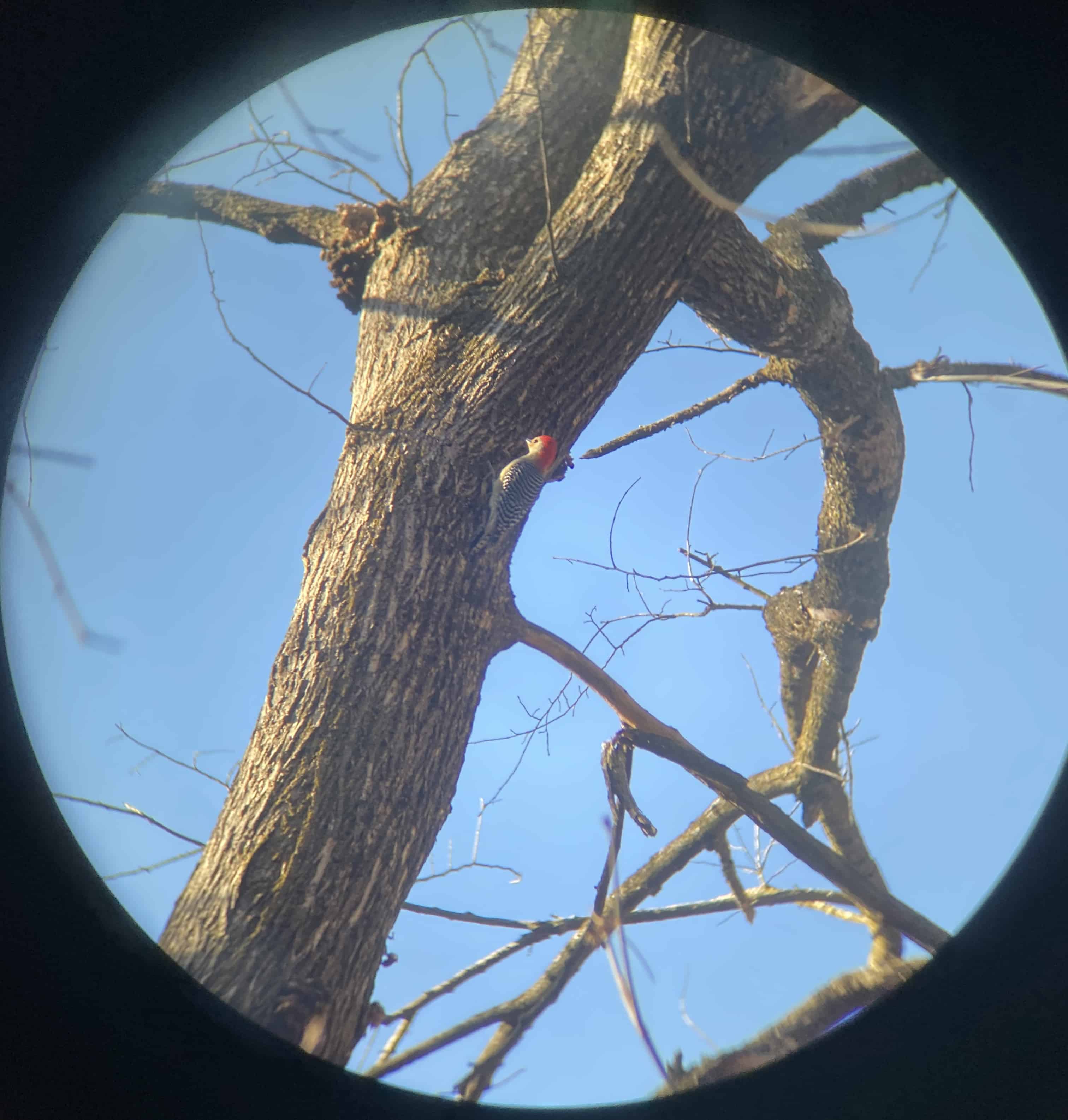
Everybody is eager to relay topical nature knowledge while we walk through sparser bits of forest. I learn that skunk cabbages contain their own sort of antifreeze, female red-bellied woodpeckers have what look like little bald spots on their heads, and a seemingly unnamed spring east of Big Spring is the cleanest one at the Arboretum.
Our groups diverge and converge, sharing updates on the birds we’ve seen. Everyone seems to agree on one phrase: “It’s quiet today.” Despite the lack of any extremely impressive bird sightings, our group pushes on, led by another member while Henrikson trails behind to talk about the hikes.
“There’s always surprises, and you look for treasures,” he tells me when I ask how he stays motivated to birdwatch in the same spot every single week. Even in the winter on particularly birdless days, he enjoys looking at the patterns that ice crystals form and seeing if he can conjure birds in their shapes.
Henrikson has always been especially drawn to nature. He grew up in Minnetonka, Minnesota, and the nearby lake as well as his time as a scout shaped his love of the outdoors that would eventually refine into a passion for birding.
“Growing up, I was in nature all the time,” he says. “My life revolved around the lake.”
When Henrikson retired in 2009, he began birding regularly at the Arboretum. Eventually, he became a volunteer steward there, a practice he keeps up even when he’s not actively patrolling. (He even gives me a tip on safely clearing sticks from the path so I can help him as we chat.)
Henrikson kicked off his weekly bird walks roughly 13 years ago after someone who had just moved to Madison wanted to learn more about the area and encouraged him. When the pandemic began, Henrikson started a newsletter to temporarily share his bird sightings in lieu of inviting others on hikes. The in-person walks returned after the height of Covid, but the newsletters stuck, too—Henrikson initially intended to ditch the newsletter, but when people began forwarding it to friends and asking him to continue it, he obliged. Henrikson now sends an email to just over 1,000 people every Monday night.
The only two ways to get on Henrikson’s mailing list, apparently, are to either run into him in person (where he’ll write your email address down in a notebook) or to have a subscriber ask him to add you. There’s no website or other form to sign up through, which, to me, is wonderfully challenging in an era when everything is almost uncomfortably convenient. It’s like the Berghain of Madison birding. As soon as you do get in, though, Henrikson’s bird walks open a path to an impressively welcoming community.
Each newsletter contains a recap of last week’s bird walk, details on the next walk, more sightings from Henrikson’s solo trips (he goes birding almost every single day!), and bird photos taken by him as well as other Madison birders. His emails are always thoughtful; in one, he sends out his photo of a ruby-crowned kinglet whose red crown appears perfectly heart-shaped, writing: “I send the photos to others and say, ‘I and my close bird friend, the Ruby-crowned Kinglet, send you our heartfelt joy.'” He also always ends each newsletter with the same signoff: “I wish you good health and good birding too.”
Henrikson’s newsletters are also occasionally just charmingly blunt. In a recent one, he notes a photo of a red-winged blackbird that shows the bird’s breath, visible thanks to water vapor in chilly weather, looks like it’s smoking a cigarette. “It is a very cool photo, but it is not smoking a cigarette,” he clarifies.
The optimism Henrikson shows in his newsletters is reflected by the recurring group that joins him on his weekly walks. When our group circles up at the beginning of the hike, Henrikson makes sure he knows everybody’s name. Since it’s my first bird walk, quite a few seasoned members introduce themselves and welcome me to the group. Others check in with me to make sure I can see the birds they’re spotting. But, most of all, the group welcomes me by telling me stories about past hikes.
Henrikson himself finds stories to tell everywhere. As we walk through a circle of European black alders, Henrikson tells me that a pine siskin attracted to the trees’ seeds once landed on his thumb and another on his hat. And when we reach a spring, he points to a log and recalls a time when the area was swarmed with warblers during migration. The group sat and watched them flit about the spring for a long, long time.
But his other stories reflect detrimental changes to the Madison ecosystem.
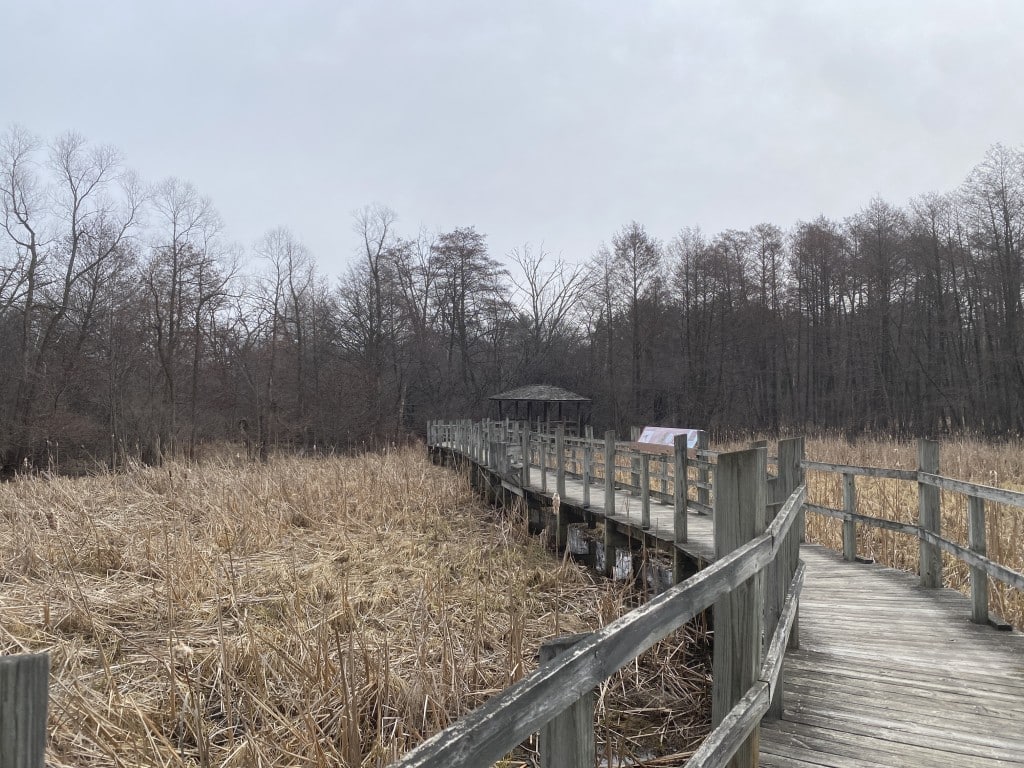
When we stroll over a boardwalk sparsely surrounded by cattails, he tells me about the sandhill cranes that used to nest there but have since moved onto a new site due to the gradual loss of cattails. The sandhill cranes’ eggs became more susceptible to predation by minks and raccoons. Passing a fallen log, he also talks about a time when he found a bald eagle perched there. It was surprisingly still and didn’t seem to mind Henrikson’s presence, a concerning sign that led him to call the Dane County Humane Society. The organization told Henrikson the eagle had lead poisoning, likely from eating a fish that had ingested a lead fishing tackle. The Humane Society took the eagle in, but it was too late. The eagle died five days later.
By birding at the Arboretum over and over again for so many years, Henrikson has grown incredibly familiar with the trails, and all the minutiae he remembers indicate how clearly he cares about the land. Henrikson especially hopes his work with birds inspires people to care about climate change, an issue oftentimes made tangible through sightings on these walks.
“I hope even the people who get the [newsletter] have some interest in stopping global warming,” he says, while adding that he’s concerned about habitat loss in Madison due to the city’s rapid population growth. Henrikson also says that he hopes people will get their children and grandchildren involved to help support the Arboretum.
Henrikson’s work most recently earned him a Bronze Passenger Pigeon award from the Wisconsin Society for Ornithology, which will be presented to him at a local convention in May. When he tells me about it, he admits that he’s embarrassed—to him, it’s not about recognition at all. It’s just about the birds.
After a little over three hours of birding, it’s time to leave my group, which has dwindled down and split off enough that I’m only saying goodbye to Henrikson and one other birder. I get lost on my way out of the Arboretum, and it takes me a comically long time to find my way back, but I finally happen upon the parking lot. But right before I do, I catch a glimpse of the remaining birders. They’re still parsing through the trees for a barred owl nearly four hours after we left, and they’ll be here next week with Henrikson to do it again.
We can publish more
“only on Tone Madison” stories —
but only with your support.
Author

Related Articles
“Limerent Pittsburgh” intricately constructs a folkloric affection of place
Artist Anne Ciecko’s 2025 videopoem is a highlight among the 30 selections of this year’s Midwest Video Poetry Fest at ALL on April 4.
Lea Jacobs sheds new light on an old master in “John Ford At Work”
The UW Professor Emeritus’ new book on the storied American director coincides with a five-film UW Cinematheque series this spring.

Small Bites: How I would fix Madison dining
Going out on Sundays and other thoughts on building a more sustainable food city.