
Fred Really comes out swinging
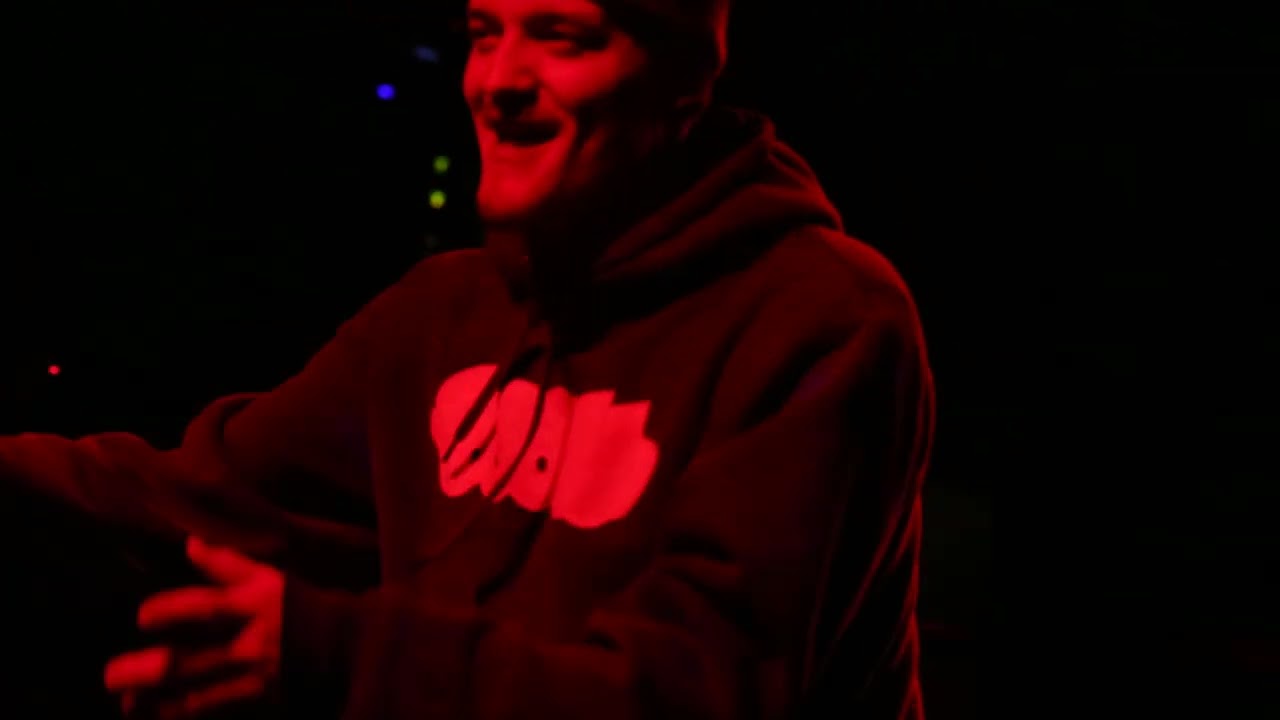
Producer and rapper Alex Driver talks us through his latest project and expanding discography.

Producer and rapper Alex Driver talks us through his latest project and expanding discography.
Alex Driver has been around the block. As a producer and MC, he’s a vital piece of the long-running Madison hip-hop crew Supa Friends. He’s also a standalone force in his own right. It doesn’t matter if Driver’s operating under his Supa Friends moniker (Al D), Ruwa Alien School, Dro Cup, or his new alias, Fred Really, in which he’s the sole producer and rapper. Everything Driver gets his hands on is imbued with a sense of unmistakable curiosity and a level of urgency. He is a person that fundamentally needs to make music, a trait acutely conveyed by a seemingly ceaseless discography.
That balance of curiosity and urgency was on full display when Driver stepped in as a last-minute replacement for the Tone Madison 10-year anniversary party at Gamma Ray Bar last December. In under 24 hours, Driver assembled several new tracks and prepared a startlingly forceful set of warped, aggressive rap. New beats. New transitions. New verses. An abundance of conviction and a whirlwind of raw, unfettered energy. All of it generated with exacting precision and unwavering commitment. A mind-boggling undertaking for any musician, but Driver managed to pull it off with aplomb. The result was a gripping set that registered as a moment, and managed to stick in the memory long after the night came to a close.
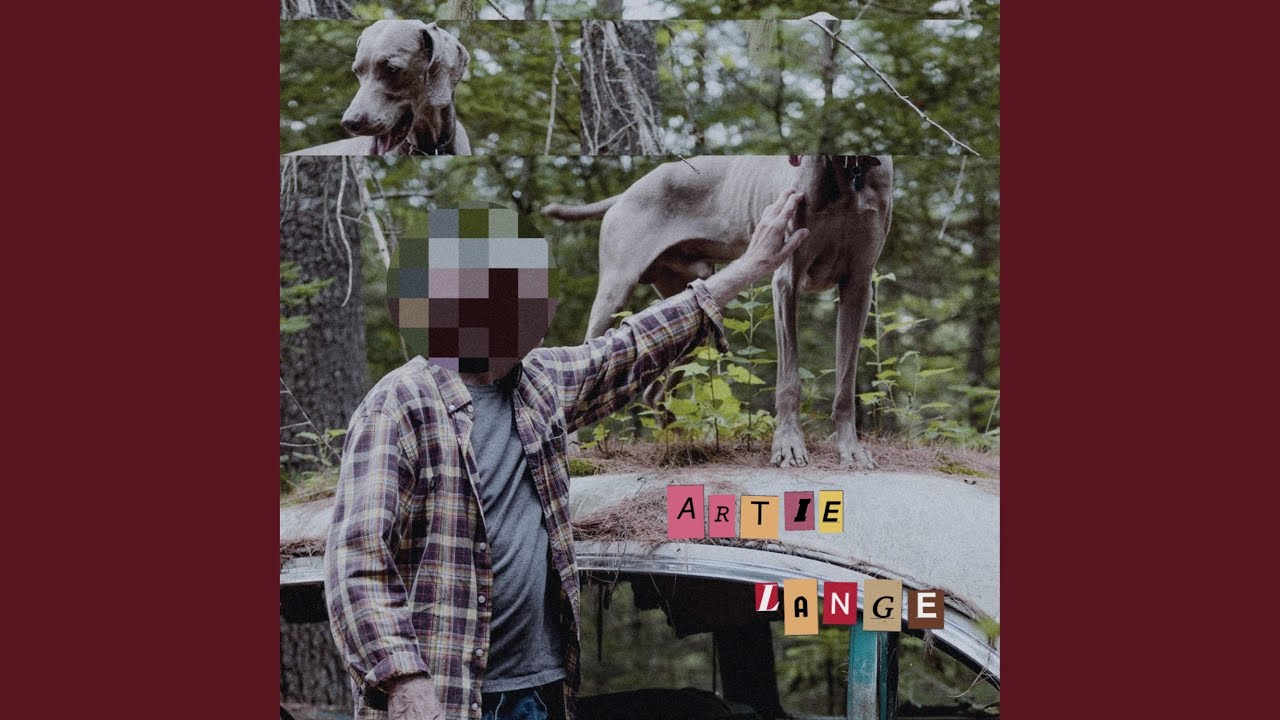
In the months following Driver’s performance at that show, his Fred Really project released the standalone single “Artie Lange,” as well as the single/EP Dog Bridge Suicide. A week prior to the show, he also released the double-single “Mono Heart Death Loaf” and “COVID 2K22.” Next month, Driver will release Fred Really’s debut album, Black Pudding. The crammed release schedule is emblematic of Driver’s tendency to run full tilt at whatever creative project captures his attention. It’s a habit that has been ingrained into the way he approaches writing and recording.
“Very often, I actually like to have full sessions where I’ll just lock in for six hours,” says Driver in a talk with Tone Madison. “And it’s like, ‘OK, I’ve made my beat, let’s write.’ Maybe I’ll take 30 minutes, and then it’s like, boom, let’s get in there. Let’s record.”
All of that recording—for any of Driver’s many ongoing projects—happens in the audio recording program Ableton, with the aid of what he refers to as “a couple really fancy free plugins.” Driver will pull samples from a litany of sources, blend in synth and bass on a MIDI keyboard, and tweak the music until he’s content it sounds complete. Transitions are added for flavor and continuity. Black Pudding is the fullest realization of this dynamic to date, but the ambitious Dog Bridge Suicide isn’t far off.
Musically astute readers will have noted the above reference to Dog Bridge Suicide‘s format as a “Single/EP.” That’s not an error. Driver has assembled an 11-minute EP with four distinct movements that is intended to be consumed in its totality. It is—officially—one song, running an EP’s length. Ambitious and wide-ranging, it also incorporates an impressive array of Driver’s influences. There are moments on “Dog Bridge Suicide” that recall venomous hardcore punk, laid-back boom-bap, the breakbeats of the early 2000s, and Nyquil’d-out, dowtrodden rap haze in the vein of billy woods and Kenny Segal. Against all odds, it is cohesive.
The meticulous nature of Dog Bridge Suicide is itself an extension of Driver’s relentless focus. Tracks ease in and out of each other with a polished grace, informing the overarching vibe, which fluctuates from gentle dream to sinister nightmare. “Everything with the Fred Really project, I call ‘vibe-based,'” admits Driver. He’s acutely aware of the atmospheres he’s creating and how to cultivate and subsequently manipulate them for maximal effect. “Dog Bridge Suicide” is more than enough proof that he’s all but mastered the approach.
But Black Pudding takes it a step further.
Due out on May 2, Fred Really’s debut album is a careening showcase of Driver’s adept production and rapid-fire rapping. Three tracks—”Honey,” “DYBBUK,” and “Artie Lange”—are already available on streaming platforms. Everything else has yet to be heard by a general audience. Driver supplied Tone Madison with an advance, and we can confirm that it’s more than up to the project’s already high standards.
Over 11 tracks, Black Pudding makes its case as a cumulative representation of Driver’s career to date. Ruwa Alien School’s inventiveness, Dro Cup’s effortlessly easygoing sensibilities, Al D’s intuitive mood-setting and jagged rapping, and—of course—Fred Really’s perpetually-warping sense of reality collide beneath an explosive rap showcase. “O.G.s know that I’m grown now / Barely show my face at the show when it’s sold out” spits Driver on “Lean Flap Off The Wing,” before following it up with “Player, you can’t smell nuclear waste / No matter how hard you try / I dwell in the caves / That are formed by my lives / Sipping on codeine / Take a nap on some thighs / Been pumping on shit / Since the age of 1-5 / 1-3-1-2-1-4-1-9 / Tried about everything just the one time / They see it on my skin, in the eyes, I’m fine / Turn buds into trim, turn blood into wine.”
A lot of Black Pudding‘s bars operate in a similar mold, with Driver punching home old-school rap bravado before absolutely going in on layered references, cutting wordplay, and a frantic, wild-eyed flow. Often, the bars circle in on themselves, and wind up as both exceedingly thoughtful and debauchery-prone. The balance is jarring, but it adds to the overall effect in a way that’s easy to sit with but hard to shake. It’s all impressive on first listen, but further investment proves to be exponentially rewarding. Black Pudding is absolutely teeming with minutiae worth dissecting, whether in the musical production or on the mic. It is a carnival-esque ride through delirious, galvanized artistry.
On May 16, COPA Madison will host the album release party for Black Pudding. Driver’s gone to great lengths to make the show a memorable one, from assembling a truly multi-genre bill that boasts emo (Mubus), metal (Cemented), and indie-pop (Mr. Boifriend), as well as what he’s touting as “a couple surprises.” Driver’s Supa Friends bandmate Soup The Fifth will assume the role of host.
Driver talked with Tone Madison over a video call in early April to discuss his extensive musical history, his artistic process and impulses, and Fred Really’s forthcoming debut album.
Tone Madison: Before we really get into it, would you mind giving us a brief timeline of the projects you’ve been involved in? There are a handful at this point, with several overlaps.
Alex Driver: Well, it definitely started with Supa Friends. The hip-hop arc definitely started with Supa Friends. We started throwing the Unite Open Mic in 2017 at this—now I don’t even think it’s there anymore—the Goodman Center. There is still the Goodman Center, but it’s in a different location.
We did that. It was incredible. We had a lot of good nights, and met a lot of rappers that way, and other artists. That kind of opened the doors for us to start messing around with other stuff. During that time, I was also making beats as Dro Cup, and at first that was just kind of like… I had aspirations to do J Dilla-style beat tapes that were very cohesive and put together. But then I think I dropped a couple records that might even still be on my SoundCloud, actually. And I had some pretty ambitious ideas, but nothing ever came to, until like 2021 with the Dro Cup project, because that was when I did Dark Side Of The Doom.
And that one got a fair amount of internet praise. It didn’t blow up or anything, but I got a lot of love for that one. It inspired me to keep messing around with these combo remix albums, which I had a lot of fun doing. And I had the 12-month [idea for a project I was trying]. 12 months, 12 tapes. It got abandoned, because I just couldn’t make that many. I really thought at first [that] I could do it. And there’s probably, like, three of them that are, like, all half done, that have never come out. Maybe one day I’ll drop those, just because. Just random.
And then shit, man, obviously the rapping has just been constant. When I was with Supa Friends, I went by “Al D.” There’s a couple solo Al D tracks, and one album actually out there that I had a lot of fun promoting back in 2020. But my two babies right now [are] definitely Ruwa Alien School and Fred Really. Ruwa is definitely way more of a passion project than Fred. Fred is me trying to get myself out there, and I still love doing it, don’t get me wrong, but it’s definitely more of my commercial push. Whereas Ruwa Alien School is trying to create [something] new, something different. I’m really trying to push the boundaries of sampling and EDM and all the different definitions. So that stuff I have the most fun making, for sure.
That’s why it felt super good when [Tone Madison] had mentioned those [Ruwa Alien School records]. I didn’t know anyone cared about this stuff. I don’t think a lot of people know even about the project in general, but I really was going to try to make it this ARG-esque, fool everybody [project]. [Make them ask] like, “Who is this guy?” kind of thing. So, I was sending cryptic messages to people. It was fun for a little bit. I definitely still have plans in that regard to go that direction. I just don’t think it’s… it’s very hard to keep yourself anonymous. Especially if you’re trying to use all the other connections you already have. Like, “Ah, OK, I guess I gotta tell them my name,” but I have an unfinished—or a completely finished—Ruwa album that I’m waiting for the perfect time to put out. I’m really proud of it. And it’s just silly to have good music sitting around.
And then Fred Really.
I made it so I had the name Fred Really, for a while. That kind of thing will happen with me where I will have an idea, just something I think sounds catchy. I’ll hold on to that in the back of my head. I remember it was June or July of last year, and I cooked up a beat that will be known as “G.I. (The Beginning).” That’s the very first Fred Really song ever made. I made the beat, and I was like, “Man, this beat’s really good. Somebody should rap to it… OK, I’ll rap to it.” And started messing around. I was listening to a bunch of Lil Ugly Mane. He was wearing off on my sound a lot. [“G.I.”] is definitely very Lil Ugly Mane, you can hear the similarities to some of his other stuff, but then I feel like the other songs on the record really kind of start to show my style a little more.
Fred Really is definitely just me trying to dive into my dark side. Stuff I think is cool that’s, like, kind of creepy and out there and weird. Because I’ve always been into abstract, experimental, artsy stuff. But I definitely also really dig metal and punk and [the] imagery that goes along with stuff like that. So I figured it’d be a good way to incorporate both of those fields. That’s why I went multi-genre for my [album release] show coming up. Because I’m not really trying to do a rap show. I wanted it to be a show with some bands where people can get down and have fun. That’s where we’re at.
Tone Madison: Do you think Fred Really as a whole mirrored that “G.I.” arc, in that it sprang out of your need to fill an absence?
Alex Driver: Yeah. I definitely was looking for a new rap outlet. Something to start writing lyrics for, and promote in that regard. Like, really push my face. And that was kind of the trigger pull right then. And I was like, “OK, we’ll just go for it.”
Because my style, especially for this, the aesthetic and all that that I’m going for… I definitely used to want to try to push down the throats of the other guys with Supa Friends. Different ideas of, like, “Oh, what if we did this kind of different? It’s kind of out there.” And you’re met with all sorts of different opinions in a six-person group, [so] you have to meet in the middle somewhere. A lot of those ideas of mine, we didn’t use. But now, it’s my vision. Let’s take it all the way, Whatever happens, happens.
Tone Madison: Sharpening that angle a bit further, has balancing rapping and producing with full creative control altered the way you’re approaching either?
Alex Driver: So, I don’t know if this will entirely answer your question, but everything with the Fred Really project, I call “vibe-based.” I scrutinize a lot of stuff. Especially [with] Ruwa and Dro Cup, I’ll re-listen and re-listen and re-listen and get obsessive. But with Fred Really, I’ve kind of let that guard down. I’m not gonna look for samples for an hour. I’m just gonna find the very first thing that’s kind of catchy and see what I can do with it. And that does, in a way, affect how I’m gonna attack the beat and rap on it and stuff like that.
Because I’m also going for a slower, Memphis—Three 6 Mafia—inspired sound. But I also really like boom-bap. So whatever happens when I sit down and open Ableton is just like… It’s the universe. It’s not even up to me. It’s just like, “OK, whatever happens here is, it’s just my fingertips doing it.” It’s like the brain is absent from that process sometimes, which can be really fun.
Tone Madison: Speaking of Ableton, what does your writing and recording process tend to look like? I know you’ve come up with a good bit of material on very short notice before.
Alex Driver: So, always making the beat first. I very rarely have lyrics ready to go. And that’s because whatever the beat is making me feel is what’s going to come out of me. It’s very hard to just have something ready, but, yeah, I make my beat. I’m looking for my samples. I make my beat, I add my synths and bass and whatever else I want to add.
Very often, I actually like to have full sessions where I’ll just lock in for six hours. And it’s like, “OK, I’ve made my beat, let’s write.” Maybe I’ll take 30 minutes, and then it’s like, boom, let’s get in there. Let’s record. It’s all hot. It’s ready. The ideas are flowing. I’m ready to go.
And, you know, you’ll come back the next day, you’ll change some stuff, and mix it for weeks. It sounds fucking insane, actually. But [that was the process for] every single one of those songs, except maybe “Honey.” “Honey” was a two part process, because I was melding beats together. But all those other ones were like, “OK, I made the beat. OK, now I’m gonna write right here, at my desk, and now I’m going to record. And maybe I’ll save the mixing for the next day.” I could sometimes lock in for a really long time and get it done. Be happy with it. Move on. Next day is a new song.
Tone Madison: At that stage, you’re effectively doing most of your own mixing and mastering, correct?
Alex Driver: Yeah, I am. I still feel like every time you make a new product, you can listen to the last one you made and realize what you have just done better. And vice versa. What was done not as good [as] before. I’m always going to be critical of my own mixing, probably forever. Like, I don’t think I’ve ever made a mix and [thought] “This is 100% perfect.” Other people have their opinions too. But for the most part, you got to remember, you [can] scrutinize things like that all the time. And then you go “Oh, no one even cares.” [Laughing.]
Tone Madison: Is all of that material coming from onboard programming or are you incorporating live instrumentation into that as well?
Alex Driver: So if you consider my MIDI keyboard live instrumentation, then sure. I’ll do some synth lines on there. My bass lines are all done on there. I’ll chop [samples] on there.
I do have—to my left over here—an electronic kit that I’ve sampled some of the sounds from, but I actually haven’t laid down any drum tracks with it. I’m looking to get a better one. And I’ve got my trusty Casio right here to my right. It’s nice. I’ll mess around with that.
Tone Madison: You’ve been recording and releasing multiple records for several years at this point. Is that a pace you’re planning on sustaining, or do you think there’s ever going to be a point where the process slows down a bit?
Alex Driver: I don’t want to slow down. Like, I really enjoy making music. Right now I’m in a bit of a funk. You’re not always going to be on all the time. And you shouldn’t be thinking [about making music exclusively], you should be able to step away, reabsorb some things. Come back [with a] new head.
But I want to make more Fred Really records, and I definitely want to drop the Ruwa Alien School record. I’ve got a lot of ideas for that, a lot of out there ideas. Like, the Fred Really thing is out there, but Ruwa is really out there.
Because I’m just messing with sounds. Just like, fun. I was actually just talking to someone else, about how I really want to do another regional-inspired Dro Cup record. A country, something like that. Somebody recommended Iceland. I don’t know anything about Icelandic music, but I was like, “OK, I’ll look into it.” Greece for Tha Fas Xilo ! really made sense to me because [Greek music] had cool sounds. Cool music, but also slightly untouched. No one’s talking about Greek music or anything like that.
So I’m looking for another bit of inspiration, especially because I love to do it. Dro Cup, to me, is just super fun. I care about it, and I’m happy that I’ve actually seen an OK deal of numbers with that project, but that stuff’s just fun to me. It’s gimmicky, and it’s cool, and I like doing [it]. But you can expect Ruwa and Fred Really albums and whatever else.
Tone Madison: Is there anything beyond catchiness or regional specificity that makes a sample jump out as a potential fit?
From a purely just sound perspective, I definitely look for strange textures. Panning is cool. I definitely love, like, Pharaoh Sanders. [He was] a really great jazz musician, and he’s very texture-full. A lot of his stuff [has] wind chimes going on, and then the saxophone and the bass. It’s just so much layering. But it all feels so good. And I really like to explore that realm of jazz, which is not new to production at all. That’s just classic production shit.
But, you know, [what’s] catchy to me, might not be catchy to someone else. I’m always looking for something that’s kind of gritty, especially for Fred Really. I wanted to potentially evoke a reaction.
Tone Madison: Given how many projects you have going, is finding the demarcation line between them getting easier or becoming more blurred?
Alex Driver: I feel like it used to be a lot more apparent. When I would start making something I would have a clear idea. And lately I feel like I’m not [as certain]. I don’t think this is negative, necessarily, but it’s definitely not the same. So, it’s funny. I don’t know if you’ve seen I have like, on my Spotify, a Fred Really and Dro Cup song.
I have one beat for Fred Really that has a Ruwa Alien School feel. So I was thinking about doing “Fred Really, featuring Ruwa Alien School,” because it’s kind of in the middle. I don’t really know where to place it and lately I’ve been creating a lot. And every day that I’ve been creating, I’ve been noticing [that] I’ve been getting very different results. Whereas sometimes when I’m really in the pocket, I can at least know what I’m trying to make, and then do it.
But this time, it’s just been new. [A] new thing each day. It used to be an easier process, but now I’ll have a beat, and I just kind of will be like… I know I have some [unheard] Dro Cup beats that are going to become some Fred Really beats. So, things definitely work their way through my mind. And I’m like, “Well, what could I do here, too?” Because I’m always looking to progress the Fred Really sound. I want to keep it crazy, but I don’t want anyone to be able to predict what the next track might sound like.
Tone Madison: Listening to those Fred Really tracks, there’s a really heavy emphasis on vocal manipulation. There’s a lot of pitch- and octave-shifting, especially. Was that purely an aesthetic choice, was it meant to establish the Fred Really persona, or are there other purposes the decision serves?
Alex Driver: I think it definitely was to separate this work from my Al D work. I never really thought of it as a persona, but it definitely is, in a way. It also just came out of—like I said—I was listening to a lot of Southern hip-hop, and they are always lowering their voice. So for “GI,” that one’s just fully low-vocal the whole time. So you can tell what I was going for. At that point, I remember being like, “OK, this is probably the sound.” But then with “DYBBUK,” I do the whole first verse regular-toned.
I don’t know how I decided. [It was] just what sounds better to me, I guess. Like, “This is gonna sound better… low. High.” It’s vibe-based.
Tone Madison: Last week you released “Dog Bridge Suicide,” an 11-minute EP that’s also a continuous single. It’s got multiple, clearly-defined movements. What drove the decision to release it that way?
Alex Driver: I’m very cinematic. Everything I do, I always wanted to be planned out. Like, I loved Pink Floyd growing up. And [on] Dark Side Of The Moon, every song’s moving into [the next]. And I love albums. I’m an album guy. I think it’s the best way to listen to music, for the most part. So, once I had it all done, I’m pretty sure I [originally had them all assembled as] different tracks. And then I laid it all [out]. Just four tracks in my Ableton. Then I started adding my transitions just to get a cohesive sound.
I still, at that point, wasn’t locked in on a decision. But then I just listened to it over and over, and it was—I think—the transition from the first one to the second one, where there’s a little voice clip. And then it goes into what I consider the second movement. When I heard that, I was just like, “Man, that’s so good.” Like that has to be how you hear it. And it’s such a quick transition that I was like, “It’s gonna sound like shit on Spotify or whatever.” Like, that little tiny half a second in between songs where it’s messed up.
I was like, “If it’s in my power—and it is—to make sure that [those details aren’t lost, I’ll do what I can.]” I’m not saying everyone’s going to listen to the full 11 minute song, but if they can sit there for that long, they’ll at least hear it the way it’s supposed to be heard. I feel like all the other music fans aren’t necessarily strangers to a little bit of a longer song. [Especially] if it’s something different and creative. No one wants to hear the same thing for 10 minutes, obviously, necessarily. “Oldie” by Odd Future, that’s the same thing for 10 minutes, but it’s a great song.
I think it basically boiled down to [me deciding that] this is one thing. It has four pieces, but it’s one thing. So people are just gonna have to skip through if they don’t wanna hear each whole part.
Tone Madison: Even with material this fresh and extensive, you have Fred Really’s debut album, Black Pudding, slated to come out next month. At what point were you satisfied that the album was complete and ready for release?
Alex Driver: Honestly, I’m not even still sure it is. Honestly, the same thing happened with DBS, where it was [a routine of]: you do stuff, you do stuff, you work, you obsess, and then your brain just kind of tells you. It’s just like “We did it. Mission accomplished. You did it.”
I like a good 40-50-minute long album, but 33 [minutes], or whatever it is, felt right. And I think I got my point across for a first record. I plan on making multiple more. I would say, also, I think once I made [the outro track], I was like, “Man, this is the outro.” The last song I made was shot in the second to last song. After I had that, I [thought Black Pudding had hit] every mark. Like, I don’t need to put another song here just because I want space. Call it a day right here.
Tone Madison: Was there anything we’ve talked about that you’d like to expand on, or anything else you wanted to get across?
Fred Really: The only other thing I wanted to tell you is the story about the last song. Yeah, yeah. So next to me [is] a Casio. And this Casio my mom gave me when I was like four years old. My aunt held on to it for 20-plus years and then gave it back to me only a year or two ago, and it works. It’s [in] perfect condition.
The model is CTK-631, and there’s two demo tracks on it. And the first one, that’s the sample of the last song. And I just called it what it is. It’s “CTK-631 Demo One,” but [the demo is] flipped and slowed down.
Tone Madison: That’s more work than Gorillaz put into “Clint Eastwood.”
Alex Driver: I know, right? [Laughing.] And that is pulled directly from [the Casio]. Like, I found the rip on YouTube, but I was like, “I got the fucking thing right here. I should just pull it straight from,” so [I did]. It’s legit. I’m actually very proud. I think that beat is super sick. The last one and the little intro ditty [are] kind of meaningless, but I thought it sounded cool.
I’m just very excited for people to hear the EP, and then the album.
We can publish more
“only on Tone Madison” stories —
but only with your support.
Author

Related Articles
Madison acts rivetingly ring in 2026
Five local bands offer new songs and projects, and capture a hopeful feeling in the new year.
Achieving a broader focus through music photojournalism in 2025
The fourth installment of our live music photo essay series centers a more personal vantage point.
Tone Madison’s favorite records of 2025
A celebration of 20 local releases that defined the year.