
Fitchburg police killed my friend. Don’t let them control his story
Kevin Price deserves better than the muddled narrative officials and some media outlets have presented.
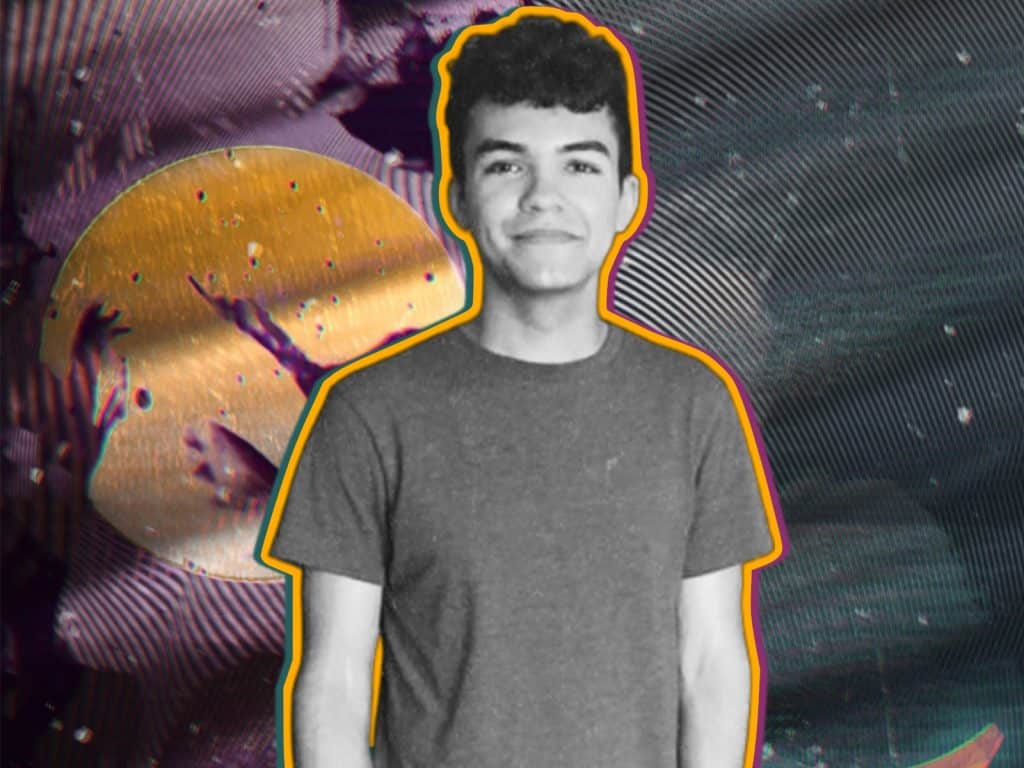
Kevin Price deserves better than the muddled narrative officials and some media outlets have presented.
Editor’s note: The following is a guest essay by PJ Chamberlain, a friend of Kevin Price’s who has been advocating for accountability in the wake of Price’s August 12 shooting at the hands of Fitchburg police. Tone Madison editors have reviewed and fact-checked the records and materials referred to in this piece, including redacted body-camera footage. Price’s death raises a number of questions beyond the scope of this piece; we at Tone Madison hope to keep exploring those in future reporting.
“The hardest thing in this world is just to live in it. Be brave. Live.”
On August 12, 2024, my friend Kevin Price was shot multiple times in the chest by a Fitchburg Police Department (FPD) officer. He was taken to St. Mary’s Hospital, where he died three days later. In the beginning, this was all I knew.
Initial media reports, written with information provided by FPD, were sparse. As the narrative at the time went, the police arrived at a domestic disturbance after a 911 disconnect call. A witness, possibly a neighbor, directed police to the apartment Kevin shared with his boyfriend, their dog Willard, and their roommate. Police entered the premises and allegedly encountered Kevin holding a knife. After officers directed him to put the knife down, Kevin was shot. Reports varied on whether or not Kevin, again allegedly, tried to use the knife against the police. Before Kevin’s funeral, this was all I knew.
Kevin’s memorial service was difficult, but there was comfort in finding bits and pieces of his life there. His drawings were on display, there were pictures of him with friends and family from throughout his life, and I got to meet people for the first time that he’d spoken of endlessly when we were together. While there was a feeling in the room of immense grief and loss, little moments of his presence lingered and for a few fleeting fractions of a second I felt like he was there. His memorial program contained a familiar quote from Buffy The Vampire Slayer that was a favorite of Kevin’s. “The hardest thing in this world is just to live in it. Be brave. Live.”
After his memorial service, a couple of Kevin’s friends and I went nearby to reminisce about Kevin. We uncovered aspects of our time with Kevin that we could only find with each other’s perspectives. Stories I’d heard, but they’d experienced firsthand, and vice-versa. It was during these conversations that a moment that some would refer to as a “canon event” occurred, and I think Kevin would appreciate my use of the phrase here.
During Kevin’s three days in St. Mary’s Hospital, he was alone. His family was never told he was there. They didn’t find out until Fitchburg police knocked on his brother’s door and informed him that Kevin was dead. Kevin, I later learned, had two surgeries while he was in the hospital. As far as we know, from the time he was shot until he died three days later, Kevin never regained consciousness. Oddly, reports from during the time he was in the hospital stated that Kevin was in stable condition and that police expected to take him into custody once he was released.
After learning that Kevin was alone when he died, I had this moment where the pang of grief turned into a resolution to find out everything I could about what really happened to him. It was the first of many moments where I felt the magnitude of how many things went so horribly wrong in the sequence of dominos that led to Kevin’s death.
The past two weeks have brought even more troubling developments in the wake of Kevin’s death. On Friday, December 6, Kevin’s family had a meeting with Dane County District Attorney Ismael Ozanne. At this meeting the family was given the opportunity to ask questions and view the body camera footage. Following this, the family’s lawyer released a statement regarding the contents of the footage, stating that “It is clear that Kevin posed zero threat to anyone.” In further unfortunate developments, Ozanne on December 10 announced his decision not to press charges against the FPD officer involved in the shooting. Concerningly, the statement from the family’s lawyer contradicts Ozanne’s characterization of the footage—in his full statement, Ozanne portrays Kevin as an example of someone who “may pose a threat of great bodily harm and/or death to officers. It also contradicts the officer’s assertion, in a report from the state Department of Justice’s Division of Criminal Investigation (DCI), that he “feared for his life.”
DCI released body-camera footage and other files from the investigation, but only in heavily redacted form, and only on December 9. Up until that point, FPD had continually refused to release the footage at all. And still, local media outlets including the State Journal and WKOW continue to publish stories that rely entirely on statements from Ozanne and DCI.
I believe that it is the responsibility of the District Attorney’s Office and DCI to prove that their statements regarding the body camera footage are true by releasing the unredacted footage to the public. By withholding this footage, they go against the family’s wishes and evade accountability and transparency.
“The horrors persist, but so do I.”
In the months following Kevin’s memorial service, I’ve learned a distressing amount of information about the events surrounding his death. Through a blend of the fearless investigating of some of the journalists who have taken an interest in Kevin’s story, and a bit of my own channeling of the best bits and pieces of Veronica Mars, Jessica Jones, and Olivia Pope combined, the true depth of what happened to Kevin has begun to unravel. While each bit of information feels like a vindication of Kevin and casts his story in a new light, dealing with the grief and trauma of this information has fallen heavily on his loved ones.
In mid-October, a reporter from Isthmus reached out to me. He had taken an interest in what happened to Kevin after seeing his story on social media and asked me if I could identify the voice of the caller who reached out to 911 on the day of Kevin’s death. I was confused as to why the reporter thought I would know who the caller was, but the moment I realized why hit me like a lightning bolt. It was Kevin. I was so overtaken with the shock of hearing his voice that I could only listen to a few seconds of the call.
Initial reports—again, relying heavily upon information provided by FPD—characterized the call as a “911 Disconnect.” These reports provided no further context. They didn’t mention what Kevin told the 911 dispatcher, with some of his final words: “we have no contact orders, and he tried to break my neck.” FPD’s initial press release referred to Kevin’s boyfriend as the “victim in the original incident,” and at least one media outlet, WKOW, repeated that characterization. Kevin’s words, and the fact that he placed the 911 call, suggest a more complicated situation, one that these reports couldn’t be bothered to unpack.
Between the time I found out about the 911 call and the publication of Isthmus’ October 23 story about it, I was in contact with a reporter from the Wisconsin State Journal. She had initially reached out to Kevin’s grandmother, who put me in contact with the reporter. We exchanged text messages about some of the developing information, she told me she had interviewed Kevin’s boyfriend, so I let her know that Isthmus would be publishing a story about the 911 call and gave her some context on it.
The State Journal reporter sent me the sparse details FPD had provided to her—a list of the times Fitchburg police had been in contact with Kevin, with the categorization of each call and any charges that the call led to, if applicable. At first glance, the thing that stuck out the most to me was the amount of charges listed under the August 12 incident that led to Kevin’s death. The amount of charges FPD had “intended” to file against Kevin were laughable. He was already dead, those charges would be dropped. Including them in the list sent to the reporter was just further mudslinging.
“Slay.”
On the morning of October 28, the Wisconsin State Journal article dropped like a log hitting the net. Although I was cautiously optimistic, the story seemed intent from the very beginning on mischaracterizing Kevin and the events surrounding his death. He didn’t even seem to be the main character in an article about his own death. Beyond that, the information in the article seemed to conflict at points with things I had learned up until that point, including the details of the list of calls FPD sent to the reporter.
The Wisconsin State Journal article states that “the majority of [these contacts] involved disorderly conduct, domestic battery and bail jumping charges.” However, the list of calls the reporter provided to me (after FPD provided it to her) does not support this statement. It lists a total of 16 calls dating back to summer 2020 (on some dates it lists multiple calls, including three on the date of Kevin’s death). Of those, five involve disorderly conduct, domestic battery, and/or bail jumping. That is not a majority—a basic factual error the State Journal has yet to correct.
The list includes, from oldest to most recent:
A call that lists Kevin as the victim of an assault; a 911 disconnect call; four calls related to welfare checks on Kevin; two “disturbance” calls where Kevin is mentioned; a domestic abuse and disorderly conduct after which Kevin and his roommate were both arrested; a call for a theft from a vehicle, when Kevin was allegedly trying to get his own belongings out of his boyfriend’s car; a call where Kevin was the victim of disorderly conduct while armed; a call where Kevin was arrested for bail jumping while he himself was the victim of disorderly conduct and battery; and the final call that Kevin placed that led to his own death.
In a majority of these calls, Kevin was not listed as the offender. Three, in fact, list him as a “victim.” These include the event in which both Kevin and his boyfriend were arrested, which lists Kevin as both a victim and an offender. Four alone are for welfare checks. Furthermore, the list of calls FPD sent to the State Journal lists Kevin as “Deceased” on August 12 at 8:40 am, three days before his actual death.
Taking a cue from the Isthmus reporter, I filed open records requests with Dane County Public Safety Communications for details of the other 13 calls in which FPD reported having contact with Kevin, given that the department had denied requests from both Isthmus and the State Journal for information related to the August 12 incident. The details of these calls have added a further layer of grief that could have been avoided had the Wisconsin State Journal researched these calls before publishing its article.
Within these calls I found context to events that I myself had been aware of only in the periphery. This tragic sequence of spiraling victimization left a pit in my stomach. Reading about calls where Kevin’s friends and family had reached out to 911 concerned about his safety, calls where Kevin was the victim of violence, calls where Kevin himself was concerned about his safety—it all continues to be difficult to deal with. Each new piece of information reopens the wound of grief.
After reading the State Journal article on the morning it was released, I had to go into work. I was frustrated, upset, and utterly disrupted. I wasn’t sure how I would be able to face the day.
As I was quickly pulling my bag out of my car to walk across the usually busy street, a pin popped off and rolled onto the pavement. Glancing down both sides of the street, I noticed it was eerily calm and empty. I walked into the street and picked up the pin, flipping it over to look at the front. A manicured hand holding a wooden stake, with the word “Slay” arched over it. The pin referenced a show Kevin and I both enjoyed, and one he loved so much that the aforementioned quote about being brave was included in his memorial program.
In this moment I was reminded of the drive home from Kevin’s funeral. It was late at night. There was a dark patch of interstate between Racine and Milwaukee surrounded by illuminated areas. Further up the road, I could see the twin brake lights of a car flashing in the distance. I, along with other cars around me, slowed to a cautious speed as bits of car parts began to quickly form out of the darkness of the pavement. A completely powerless car suddenly came into view. The accident had knocked out all its lights. Further beyond the view of the two cars in the road, another damaged car was pulled off to the side.
The first car, the one with its flashers on, seemed to be completely uninvolved in the accident. Without its lights, my car, and all the other cars around me, may have smashed into the car that was hidden on the road, camouflaged in darkness. This car acted as a lighthouse, warning us of the danger ahead. Shining a light on what was hidden.
I feel compelled to shine a light on what happened to Kevin, and distraught by the failure of the Wisconsin State Journal to do so. These institutions should be informing the public, presenting them with the truth. Their reach is far and wide, and when they misinform the public, they endanger us all.
Who has power in Madison,
and what are they doing with it?
Help us create fiercely independent politics coverage that tracks power and policy.
Author
Related Articles
Madison needs a wake-up call
The longer we pretend this City is a progressive haven, the more people will be harmed.

Wisconsin energy utilities sacrifice affordability and sustainability to fuel the AI gold rush
Gas plants used to power data centers increase costs for consumers, risk of exposure to pollutants, and accelerate the harms of climate change.
Stop spotlighting new films by known abusers
Madison boasts a dynamic movie culture, yet still needs programmers and community voices to facilitate change.