
Everyday beauty, autofiction, and BDSM: an interview with Joanna Arnow
The Brooklyn-based filmmaker discusses her deadpan comedy, “The Feeling That The Time For Doing Something Has Passed,” which premieres locally at the 2024 Wisconsin Film Festival on April 5 and 6.

The Brooklyn-based filmmaker discusses her deadpan comedy, The Feeling That The Time For Doing Something Has Passed, which premieres locally at the 2024 Wisconsin Film Festival on April 5 and 6.
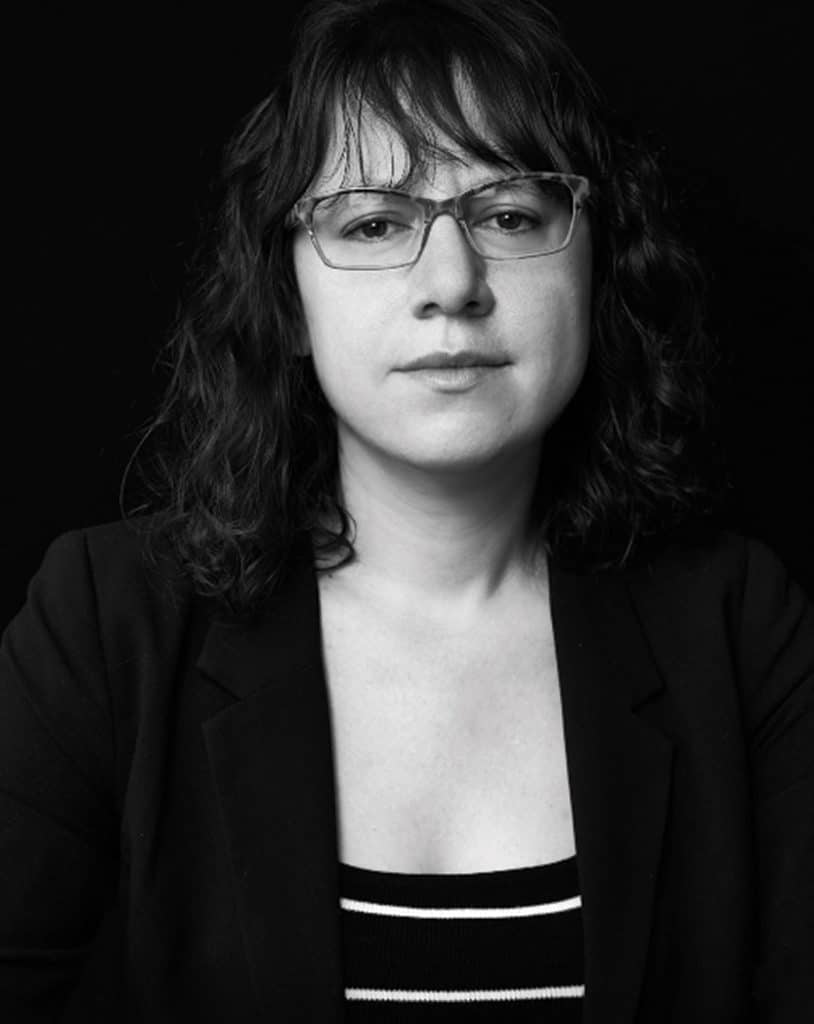
Writer, director, editor, and lead actor Joanna Arnow’s debut narrative feature may be all about kink and one character’s willing self-abasement on the surface, but don’t let those synopses dupe you. The Feeling That The Time For Doing Something Has Passed (2023)—I promise you will inevitably transpose the words of the title at least once—is a deadpan, sort of discreet romantic comedy woven through a satirical portrayal of the work-life imbalance.
Arnow aims to bend traditionally titillating BDSM subject matter into consensual routine as part of a person’s circadian life under late-stage capitalism—to, in a sense, convey the general obstructions to building any relationship in the avatar era while also confronting social constructs of the salacious or taboo.
With deceptive complexity, Arnow portrays Ann, a publicly modest and privately unfettered thirtysomething woman living in Brooklyn, who actively yields control as a submissive in seeking out relationships with dominant, often wealthier men like Allen (Scott Cohen). But Steven Shainberg’s Secretary (2002) this is not. Nor is it anywhere near the materialistic fantasy pablum of E.L. James’ 50 Shades Of Grey.
The dry repartee that Arnow harnesses in the script has a certain ring to it, and the cadence may sound familiar to anyone who’s connected with the pitch-black comedies of Todd Solondz, particularly the arrestingly strained dialogue in Welcome To The Dollhouse (1995). And yet, that comparison, too, seems to be restrictive and reductive. Arnow’s feature wells with a slightly kinder conviction of connection in a social landscape beholden to the algorithm.
Within her film-world’s banally named dating app, it seems possible for the most idiosyncratic and plainspoken people like Ann and a new partner of her peer group, Chris (Babak Tafti), to develop a sincere connection without a preconceived power imbalance—a subject the film shrewdly but still comedically handles.
As the movie industry persistently revives the romantic-comedy formula to be doughy, filmic comfort food, The Feeling That The Time For Doing Something Has Passed is not a porous product for mass consumption in the way it renders self-image. Arnow’s Ann is irrefutably bare and three-dimensional; she isn’t glamorized, hackneyed, oblivious, or tethered to an agenda.
Since Arnow wrote, directed, edited, and starred in the hilariously awkward 11-minute Bad At Dancing (which made its Midwest premiere here in 2015 during the Wisconsin Film Festival), her cringe-comedy tableaux have naturally evolved into this more measured and complex 88-minute feature.
The microbudget The Feeling That The Time For Doing Something Has Passed comes together in a similar, but altogether distinctive, creative spirit to those of fellow New Yorkers Dan Sallitt and Ricky D’Ambose (who’ve both worked with one of this film’s producers, Graham Swon, alongside Sean Baker as an executive producer here), as well as Dustin Guy Defa and Eliza Hittman.
Ahead of the film’s limited theatrical opening on April 26 and two regional premiere screenings during this year’s Wisconsin Film Festival with Arnow in person on April 5 at 6 p.m. and April 6 at 11 a.m. at the Bartell Theatre (advance tickets are still available as of the publication date), Arnow talked with Tone Madison via phone about that lengthy title, defining the film as autofiction, balancing directing and acting, favoring short scenes and concise humor when assembling the screenplay, portraying BDSM and sexuality comedically, building her own art references, and why she’s eager to return to Madison for another installment of the Wisconsin Film Festival.
Tone Madison: To start, I essentially want to ask about your choice for the 10-word movie title.
Joanna Arnow: To me, “The Feeling That The Time For Doing Something Has Passed” felt fitting for a movie that kind of reflects on the ways time goes by in your life: sometimes more quickly, sometimes more slowly. The film kind of plays with ellipses. The passage of time varies according to the emotional temperatures of the relationships, so it felt right in that sense. Also, since it’s a comedy, first and foremost, I felt like the length had a kind of comically self-aware wink. The over-the-top angstiness of it.
Tone Madison: Performance in your films is so central, specifically your own acting. If I’m basing that at least on Bad At Dancing and this feature, you seem pretty well-acclimated to portraying yourself on screen in bold ways. I might describe you as “unflinching,” as a compliment. When I think of a typical Hollywood actor-turned-director, they have a clear sense of how they want to be seen, and then perhaps take up the mantle of director in order to achieve it, more or less. But I’m wondering if that may also sort of describe you; without any negative subtext that I just applied to that Hollywood description there. More directly, what are you after in casting yourself in your own films?
Joanna Arnow: A lot of my work, in some ways, draws upon personal experience. This film, in particular, while not autobiographical, I consider it autofiction. In casting myself, it adds a level of authenticity to the story that I hope allows others to connect to it. As you mentioned, I cast myself in my previous short films, and felt that it worked well so I wanted to continue further exploring the self-deprecating, deadpan humor of the character. I would add that I’m not an actor-turned-director; I’m a director-actor [more accurately].
Tone Madison: There’s a line that Allen delivers to Ann after commanding her to do, let’s just say, something. “Now that is vulnerable.” I feel like that’s what you’re bringing to Ann as an actor, too—vulnerability—despite the deadpan qualities of the dialogue.
Joanna Arnow: Yeah, my hope is that, by being vulnerable and specific in my work, I can push further with the humor and create a story that resonates with other people. It’s things like, not only casting myself, but casting my parents to play a version of themselves. Some friends, who are my friends in real life, Shuchi Talati and Kent Bassett, also play friends [Mira and Charles] in the film. It’s a film that was a labor of love that used lots of elements that were true from these casting choices, locations donated by people I know [from] places I’ve been many times, and also just using sound that I recorded from what I hear [from] the upstairs neighbors, incorporating touches like that in the sound design.
Tone Madison: Oh, OK. That’s interesting. Very DIY, even if that’s not maybe the most applicable word.
Joanna Arnow: The reason I like to call it “autofiction” is that I wanted to add this richness to the fabric of the film and acknowledge the ways it does draw from personal experience. I included things like photos of plants I took when I was working at a corporate job when the character swiped through them. Sometimes it’s just exciting to be able to add these authentic details within a fictional film.
Tone Madison: Continuing with acting/performance, in the credits you have two acting coaches credited, Hye Yun Park and Esy Casey. Could you talk a bit about how they helped shape the dynamics or interplay between you and other characters? You’ve also credited an experimental film cinematographer, Charlotte Hornsby, and I’m wondering what their role is in helping shape that, if any at all.
Joanna Arnow: Charlotte filmed the two films within the film, so had a shoot before the primary shoot. She filmed the singer of the French song that plays [in a scene at Chris’ place with Ann], and she also filmed the experimental film [by a fictitious director, Wilson Everton] that [Chris and Ann] go see on a date. Charlotte’s a very talented cinematographer, and it was exciting to work with her on those two aspects. And, of course, our amazing cinematographer, Bart Cortright, shot everything else in the film. Although, we did have an additional cinematographer, Michael Kohlbrenner, on one day as well. So that takes care of the camera department. [laughs]
Tone Madison: [laughs] Yeah, sorry to leave them out. When I saw “experimental film cinematographer,” I was intrigued, because there’s nothing that you’d pin down as “experimental” in this film, but I figured it had a prominent place in your mind when you were making it.
Joanna Arnow: It refers to the split-screen film that Ann and Chris watch at the movie theater.
Tone Madison: Thanks for clarifying.

Joanna Arnow: And then Hye Yun Park and Esy Casey are two dear friends who weren’t both on set at the same time, but were really wonderful in being my second pair of eyes on my own performance. Directing and acting is definitely a balance. Generally, I get an idea of how it’s going from within the scene. I get to watch back on the monitor sometimes, but they were really wonderful in reflecting back what they saw to me so I didn’t have to check the monitor every time. We rehearse together ahead of time. I worked with Hye Yun as an acting coach on my short film, Bad At Dancing, as well.
Tone Madison: Was there a big difference between making that short and this film, or the developing relationship between you and Hye Yun? The films are separated by eight years, maybe [shooting in 2014 and 2022, as Arnow explains].
Joanna Arnow: Not really. It was maybe a longer shoot. It had a lot of locations, and that was a complicated production factor, especially for a small film like ours. Like I mentioned, the locations were often donated by family, friends, friends of friends, and it took over a year to find them all. I feel very lucky to have been able to make this film with the support of the community that helped with this so much. And, of course, the producing team, particularly our co-producer Daniel Ryniker, who also worked with me on the locations.
Tone Madison: The pacing of this film is pretty interesting. You favor short scenes and a “mosaic” style, as you at least one time described during an interview you did in France last year when this premiered. How did you imagine the rhythm when you devised the concept here? Did this feature originally start out as more of a short idea, like Bad At Dancing, and then it blossomed from there? Or did you have everything very precisely plotted from the beginning?
Joanna Arnow: I have always been interested in concise humor, so I got the idea to push further with that, and write as many short scenes drawing upon personal experience. I was interested in the humor of how people actually talk, and the beauty and art of everyday experience. It was always going to be a feature[-length film]. I got excited about this tone that I developed and the comic rhythm that I had in mind while writing this. After I did this first pass of writing these very short scenes, probably 200 pages of them or more—I didn’t write them in order—then I went back and structured them, developing the rhythm and formal rules that define each of the five sections.
Tone Madison: Oh, wow. You said 200 pages; how long was the finished screenplay?
Joanna Arnow: The finished screenplay was 110, more normal length. I was just writing as much material as I could to then go back and shape it with a second pass.
Tone Madison: I also wanted to mention the sort of montage towards the middle of the film scored with that Philip Glass-like piano, which almost reads like a quasi-trailer for the film itself. A knowing montage parody of sorts. What was your process on developing it and then integrating that into the more muted, slower vibe throughout the rest of the film mainly?
Joanna Arnow: Each of the five sections has their own set of formal rules, and the first two sections often ping back and forth between different plotlines. I saw this end of the second section that ends in this montage as a kind of what those first two sections are building to in a way. So, yeah, I was just interested in using photography, editing, and narrative structure to create an ebb and flow of this character’s patterns and rhythms of her life.
Right after that section, after the feelings that are explored in the montage come to a head, we land in just one location with one character for a while. It was also my thinking as to what the audience needed in terms of getting a break. It’s written into the script as well, but it expanded a little bit in the edit, putting in scenes that weren’t able to fit in other places.
Tone Madison: Next question is about the dynamic represented in the film. According to that French interview, you started writing this film in 2019. Did you once think about, like 50 Shades Of Grey, and maybe eventually come to see your film as an attempt to counter the distorted narrative and vision that those heterosexual or even queer BDSM dynamics sensationalized by the industry? Or was that not at all on your mind? The best way to put it, at least in my initially reading it, is that you’re looking for comedy, while so many of those types of films are looking for psychological drama (and often failing at that).
Joanna Arnow: I write films to tell a story that I’m excited about and make art and make people laugh, not so much to critique other films. However, I do think there are a lot of misconceptions about BDSM and what it means to be submissive, and so I wanted the Ann character to be an active participant in the planning of the sessions in part to counter that. In my experience, people involved in BDSM are triply communicative and respectful, and I wanted the film to convey that as well.
I really wanted to show BDSM and sexuality in a comedic and non-sensational way that I think is truer to real life. There’s so much vulnerability and humanness in the ways we connect with each other in this way. And sometimes I feel like these subjects can be portrayed quite sensationally, so partly that’s why I was interested in using a long-take style. Because when you step back, sometimes sexuality can become quite comic when you look at it from a distance.
Tone Madison: Your mention about communication being vital is maybe lost in the way it’s represented in movies, regardless of what they are. You could find like a Letterboxd list of the “Top BDSM Movies” or something, and they’re all different but all sort of the same. And not at all like this movie.
Joanna Arnow: Often, I do feel like there’s this attempt to pathologize BDSM, which seems very alienating to me. And I hope that’s something that will dwindle and change.
Tone Madison: Well, the more representation that there is, the better chance of that happening.
Last question here is kind of a fun one or a piece of trivia that I’m curious about. Is there an interesting story behind references to art in your film?
Joanna Arnow: Music is expensive, so we composed our own music for this film. I did think it was important to include, partially because I wanted to provide a full portrait of this main character’s life and experience that includes things like music, discussion of politics, and sense of political background, and a variety of different neighborhoods in New York. A large tapestry of characters.
Tone Madison: There’s a line when [Ann] is talking to Chris on the subway, and you mention the name of “Wilson Everton.” Is that an actual artist? I think I tried to see if that’s—
Joanna Arnow: No, it’s not an actual artist.
Tone Madison: I didn’t think so. [laughs] But yeah, I’m wondering if there’s a strategy to doing that. I think that’s really interesting to not reference something or someone who is actively working or something that exists but building your own references in that way.
Joanna Arnow: It was about budget, but I also liked the imperfect, “made-upness” of it. Like, I wanted this film to have a messy quality in some ways that felt true to life. I enjoyed having some artists and films referenced that were just within the world of this film as well.
Tone Madison: You’re planning to be here for the two screenings at the film festival. Is there anything to mention—what you expect audiences to bring to this film here or any final thoughts?
Joanna Arnow: In my screening of Bad At Dancing at the Wisconsin Film Festival in 2015, one of my favorite audience moments happened. Which was that, a couple sitting right behind me during the film’s finale, so to speak, turned to each other. The wife whispered, “We’re gonna talk about this when we go home later.” [laughs] So yeah, I just enjoyed that, and I’m excited to talk to the audience again. That was a really nice screening.
Tone Madison: [laughs] That comment suggests a lot of different things. Sort of ambiguous. Maybe they have a roommate situation like is depicted in your film, and it brought it to the surface.
Joanna Arnow: Maybe. But as a filmmaker, more conversation “when we go home later” is all I ever want, really.
We can publish more
“only on Tone Madison” stories —
but only with your support.
Author
Related Articles
Three video artists tap into personal histories in the 150 Artists x 150 Years exhibition
Chele Isaac, Toby Kaufmann-Buhler, and Aaron Granat reveal the creative depths of their works, which are on display through February 28 at Central Library.
Video: Sizing up local screening events and prominent performances of 2025
A chat with Josiah Wampfler at OCA Media about our favorite movie-going experiences and acting roles of last year.
Stop spotlighting new films by known abusers
Madison boasts a dynamic movie culture, yet still needs programmers and community voices to facilitate change.