
Celebrating the invaluable legacy of the late Les Thimmig, a mainstay of Madison’s jazz community
The UW-Madison professor, multi-instrumentalist, and composer died on April 28.

Les Thimmig made a genuine impact as a professor and musician in Madison, becoming an essential part of the university’s continuously evolving embrace of jazz. He was beloved and respected by students and praised for his expertise. In Thimmig’s 53 years at UW-Madison, he composed new pieces, directed multiple ensembles and departments, created lasting relationships with his students, and gave a slew of memorable performances. On April 28, 2024, Thimmig died of cancer. He was 81.
Thimmig grew up in Illinois, where he would cultivate a love for music that would extend throughout the remainder of his life. Thimmig would spend time as a student at both Eastman School of Music and Yale, going on to teach a year of theory at the latter. He would then spend a short time teaching composition at the University of Victoria (British Columbia) before becoming a decades-long fixture (1971-2024) of UW-Madison’s faculty.
At UW-Madison, Thimmig taught and directed in various capacities under several different titles before the university’s introduction of a full jazz program. After the implementation of that expanded program, Thimmig embraced spearheading UW-Madison’s Jazz Composers Group. In his final decade at UW-Madison, Thimmig thrived in a role that allowed him to demonstrate his expertise in dynamics, structure, and form—all while shaping the musical habits and awareness of incoming generations of players and composers. His contributions to the university and an array of students during that time were both incalculable and invaluable.
All of Thimmig’s lessons were a culmination of a rich life full of lived experience and a keen awareness. As is the case with anyone who dedicates the bulk of their life to jazz at a professorship level, Thimmig’s list of accomplishments, collaborators, and notable experiences is staggeringly dense. There’s no reasonable way to properly convey the weight of meaning embedded into a lifetime of meaningful interactions and contributions.
Over the course of his career, Thimmig would make a name for himself as both a musician—specializing as a saxophonist, clarinetist, and flutist—and as a composer. Thimmig was attached to a number of musical projects and programs in various capacities as a result. To celebrate Thimmig’s legacy and impact, we’ve collected a handful of favorites from his musical journey to further honor a musician and professor who will be greatly missed.
Corrine Heath Interdisciplinary Collaboration
Thimmig was renowned for his gifts as a collaborator, which would occasionally extend beyond the realms of jazz and into interdisciplinary functions. To wit: this August 1994 dance performance, choreographed by Corrine Heath, and set to a live performance from the Les Thimmig 7. Held at Music Hall, the performance also marks one of the select few freely available audio and visual preservations of the Les Thimmig 7, a septet that only performed Thimmig’s originals. Heath proves an able collaborator in her own regard, commanding a septet of trained improvisational dancers. During the performance, fluid movement emerges as a throughline, with Thimmig’s band and Heath’s dancers feeding into a closed loop of symbiotic energy to create a gripping exchange of form. Uploaded to YouTube by Heath in 2008, it’s a document that has only gained vitality and emotional poignancy over time.
Seven Profiles
One of Thimmig’s most acclaimed works, Seven Profiles rose to prominence as one of the four selected finalists for the First Annual Composers String Quartet Composition Contest, which was conducted in the late ’60s. The New England Conservatory and Composers String Quartet sponsored the competition in tandem and the finalists were eventually published on a compilation via New World Records in 2010. Thimmig’s Seven Profiles is a bold work; adventurous and avant-garde, leaning into the type of dissonant tension that evokes an instinctive fight-or-flight response. Only one of the seven movements contained within the full work eclipses the two-minute mark. First published in 1967, it would go on to be performed in multiple high-profile settings, including the 1970 Tanglewood festival, as covered by the New York Times.
Seven Profiles is unmistakably immediate, abrasive, high-impact material. It defies a passive listening experience, demanding the attention of listeners while barrelling through an unnerving gamut of harsh, discordant jazz. Stark in setup but maximalist in impact, Seven Profiles introduced Thimmig to many as an ambitious, emergent voice in the genre. When Thimmig first arrived at UW in 1971, the university’s Pro Arte Quartet added the composition to their repertoire and would regularly perform it in ensuing years. Seven Profiles—a piece Thimmig dedicated to Turkish composer Bülent Arel—would become an integral part of what proved to be an illustrious career.
Steps performance
In 1974, Thimmig performed Steps—a two-part composition authored by his friend and close collaborator William Thomas McKinley—at Jordan Hall in Boston. McKinley wrote Steps specifically for UW-Madison’s New Music Composium II, and the piece was one of a handful that McKinley and Thimmig would connect on in a collaborative partnership that formally extended from 1972 to 2011. Thimmig’s performance of Steps is a lively demonstration of his confidence as a performer. McKinley’s Steps is a deceptively complex piece that calls for the incorporation of pre-recorded materials (also handled by Thimmig) on bass clarinet in its first half.
The second half of Steps extends that complexity further, calling for the inclusion of an assortment of instruments: bass clarinet, basset horn, contrabass clarinet, soprano sax, and tenor sax. In its second part, three pre-recorded tracks are integrated to accompany a live performer, creating demanding shifts that Thimmig navigates with graceful aplomb. It’s a stunning performance that honors what would be a long-held bond between Thimmig and McKinley, lending an additional layer of emotional heft.

“Synthjazz“
Thimmig’s musical career was marked by his penchant for the avant-garde, an openness to harsh noise, and a willingness to shred in an opportune moment. All of this is on full display in an excerpt of a faculty recital uploaded to YouTube by the user Candleblossom, aptly titled “Synthjazz.” In the video’s description, they note that the performance took place “at UW Madison somewhere back in the ’90s.” Little information is available beyond that cursory contextualization, but the recording is strong. Thimmig lets loose over a bouncy synth counterpart, providing ample color to a string of subversively modified scale runs. It’s an enthralling, occasionally challenging listen. And it’s an excellent use of Thimmig’s sense of unyielding musical aggression, which still retains the musician’s commendably sly playfulness.

10-year retrospective performance
On October 7, 2018, Thimmig held the spotlight as the featured composer of a 10-year retrospective. Joined by Jessica Johnson on piano and Alicia Lee on B-flat clarinet at various points throughout the performance, Thimmig performs the first two pairs of his eight-part composition Ballads And Dances. It’s a thoughtful, mesmeric performance, and evidence of Thimmig’s formidable prowess as both composer and performer. During the performance, Thimmig demonstrates a commanding range of mastery, incorporating bass clarinet, E-flat clarinet, and basset horn throughout the performance’s near 90-minute length. It’s an absorbing listen, creating a sense of warmth and comfort as it unfurls. Originally live-streamed, Dave Alcorn’s upload of the performance now stands as an essential preservation.
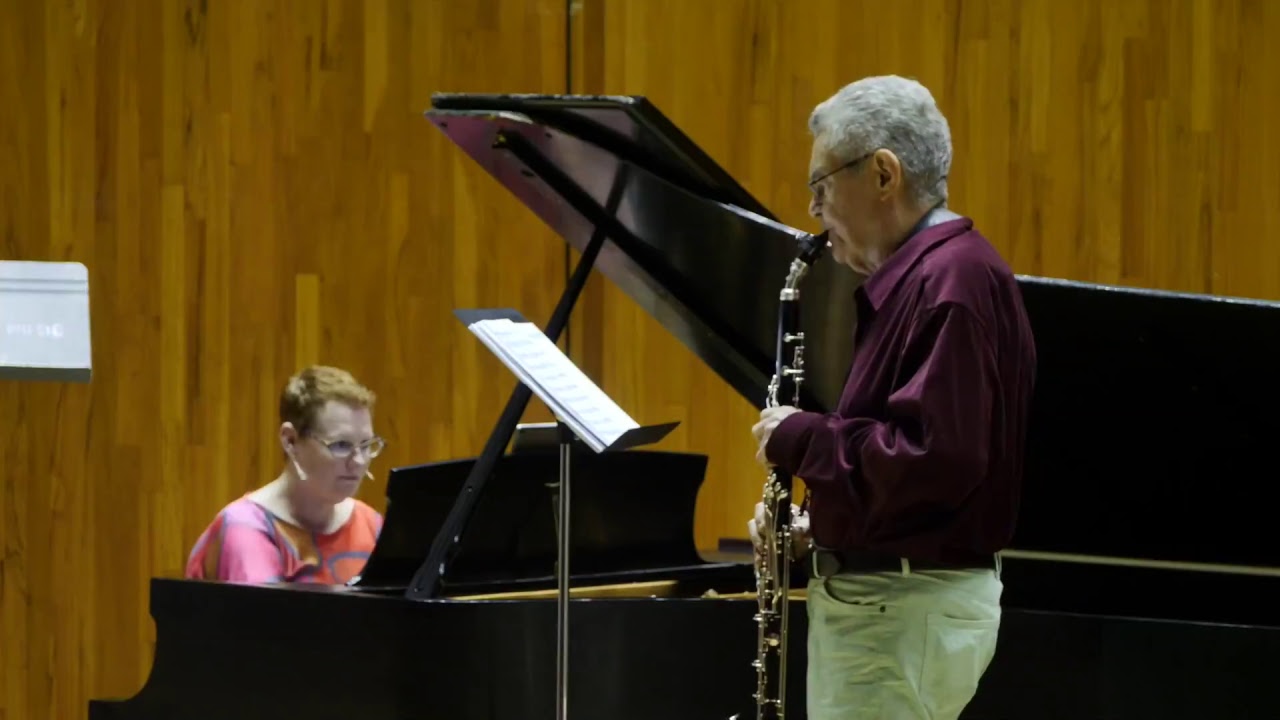
Thimmig was a phenomenal performer, a professor who meant a great deal to many of his students over the years, and a steadfast figure of the jazz community. His voice was unwavering and the body of work he left behind is worthy of scrutiny; there are still lessons to be gleaned from his compositions, performances, and advice. His absence creates a hole that may never be filled to the degree he was able to manage, but his work and his legacy will endure. And the record of those contributions—as well as the contributions themselves—are worth celebrating.
We can publish more
“only on Tone Madison” stories —
but only with your support.
Author

Related Articles
Achieving a broader focus through music photojournalism in 2025
The fourth installment of our live music photo essay series centers a more personal vantage point.
Tone Madison’s favorite records of 2025
A celebration of 20 local releases that defined the year.

Madison’s musical odds and ends of 2025
A meditation on the past year’s musical margins.