
“A Man And A Woman” and the poetic glow of the everyday
Claude Lelouch’s undersung, dizzying romantic drama screens in a new restoration at the UW Cinematheque on June 26.
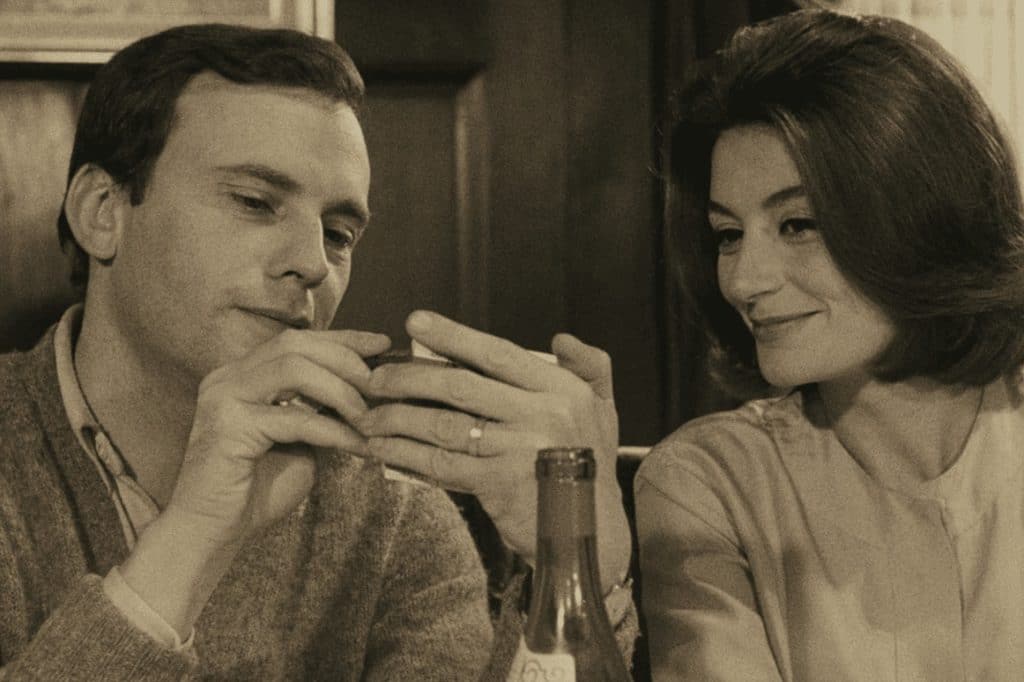
Claude Lelouch’s undersung, dizzying romantic drama screens in a new restoration at the UW Cinematheque on June 26.
Last month, celebrities and filmmakers once again descended on the Croisette for the annual Cannes Film Festival. If the winners are anything to go by, it was another year marked by politically defiant work. The jury awarded the Palme d’Or to veteran Iranian director Jafar Panahi, who has continued to make films in his native country despite being banned from doing so following his 2010 arrest. Other honorees focused on unrest in 1970s Brazil (The Secret Agent) and homes for teen mothers (The Young Mother’s Home).

It’s been a long time since something that could feasibly be called a romantic drama won the top prize (let’s all just forget Blue Is The Warmest Color ever happened), but Madison audiences will have a chance to see one soon: A Man And A Woman (1966), the first feature in a summer-long Thursday series dedicated to French director Claude Lelouch. The film will screen at UW Cinematheque (4070 Vilas Hall) in a new DCP restoration by Rialto Pictures on Thursday, June 26, at 7 p.m.
Its plot is as simple as the title: a thirtysomething widow named Anne (Anouk Aimée) meets a thirtysomething widower named Jean-Louis (Jean-Louis Trintignant) at their children’s boarding school in Deauville. She misses a train to Paris; he offers her a lift. She’s a script supervisor; he’s a racecar driver. Both lost their spouses in tragic circumstances—an accident and a suicide. Amidst these lingering emotional wounds, they embark on a tentative affair in the picturesque port city.
Watching A Man And A Woman again in the thick of superhero season at the box office, it’s striking how mature a work it is. The subject matter is a depressing reminder of how few studios are willing to bankroll films for grown-ups these days. Some of that undoubtedly stems from defects in the romance genre that have sprung up since the 1960s—many such films released today are weighed down by gimmicks like time travel or settle for exploiting established I.P. to goose reactions that should come organically. Anne and Jean-Louis’ stories aren’t straightforwardly told, exactly: past and present interact with an intimacy that makes it all feel immediate. But there’s an emotional directness that’s bracing to experience at a time when cinematic declarations of love often come shrouded in multiple layers of irony.
Where Lelouch and his cast excel is in the vibes, as the kids say. The film was famous for Francis Lai’s lilting bossa nova-inflected score, which envelops the audience in the same warm feelings blossoming between the couple. The hazy cinematography, which slips freely between color, black and white, and sepia tones, adds to this sense of nostalgia, as if we’re viewing a fond memory from a distant time. It’s the “glow [of] poetry” as New York Times critic Bosley Crowther put it, which imbues the everyday with a romanticism that becomes transcendent. And there’s room for several surprises, too. Among the most arresting is the final scene: Lelouch didn’t decide on how it would unfold until he and the actors were filming, which gives it a genuine tension that’s often missing from pre-ordained happy ends.
Audiences responded strongly, making A Man And A Woman the sixth highest grossing in France in 1966. Despite this immense success—including four Oscar nominations in addition to the aforementioned Palme—Lelouch never became one of the marquee names of the French New Wave, at least in America. So it’s wonderful to see the Cinematheque shine a light on his work. But for anyone who’s grown weary of genre clichés, Lelouch’s biggest hit is not to be missed. Sometimes being old-fashioned works, not because it’s predictable but because it’s universal.
We can publish more
“only on Tone Madison” stories —
but only with your support.
Author

Related Articles

Video: Sizing up local screening events and prominent performances of 2025
A chat with Josiah Wampfler at OCA Media about our favorite movie-going experiences and acting roles of last year.
Stop spotlighting new films by known abusers
Madison boasts a dynamic movie culture, yet still needs programmers and community voices to facilitate change.
“Resurrection” explores human perceptions through the historical labyrinth of cinema
Bi Gan’s latest art-house epic premieres locally at UW Cinematheque on February 5.