
Tone Madison’s favorite songs of 2025
A sampling of the local music that helped us get through the year.
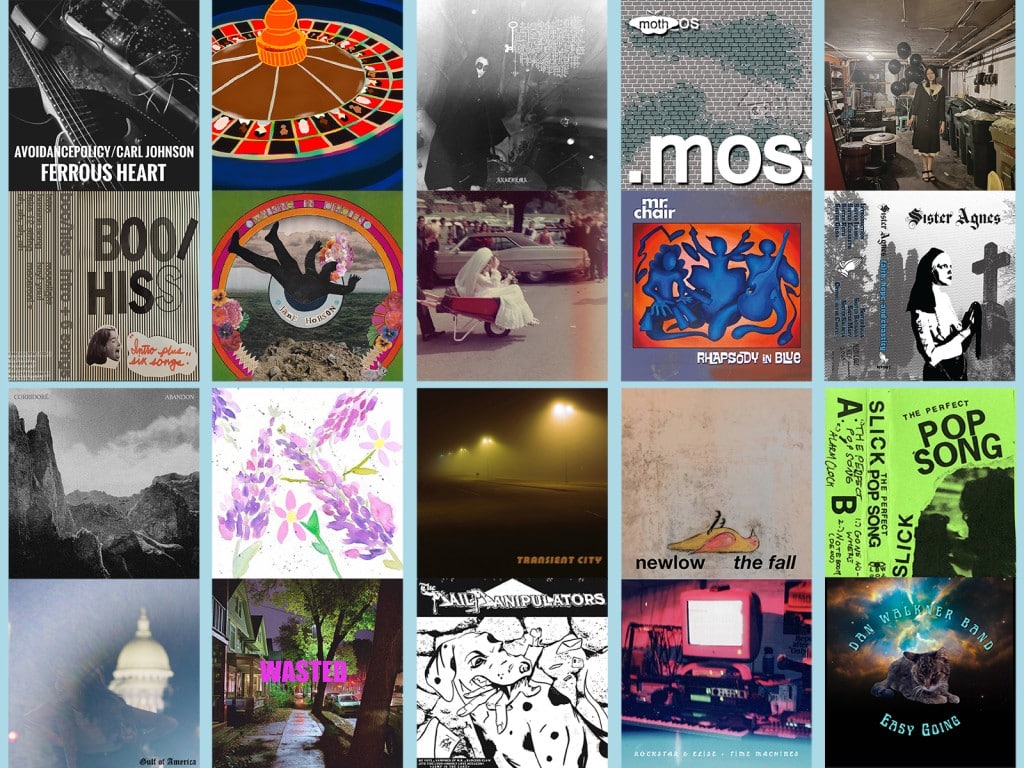
Every year, a new wave of music from local musicians arrives to make an uncertain time slightly more bearable. Over 2025 and 2026, Wisconsinites have stood and borne witness to an emergent fascism that has bloomed into undeniable, unequivocal fascism. While I’m not going to sit here and regurgitate nonsensical platitudes that amount to little more than “at least we got some great art out of all this,” I can and will continue to point to art as a necessity in times of unwieldy unrest.
A core tenet of fascism’s execution rests in intentionally demolishing components of culture that contextualize the world. For years, Madison artists have refused to be quiet. I don’t think any of the people involved in Madison’s music community—myself included—are going to be content to shut up any time soon. To wit: each song featured here is emblematic of an irrepressible humanity. All of these artists had something to say—in some fashion or another—and each of those statements managed to strike a resonant chord.
In the first week of January 2026, we collectively experienced every indication that the lived existence of empathetic people with a conscience will be tested in discomforting ways. Art’s not going to correct the course being laid out ahead of people in Wisconsin, Minnesota, Illinois, or anywhere else. But it can and will continue to act as a salve—a necessary reprieve that operates as a soft reminder of what’s at stake, and what’s worth protecting.
Celebrating superlative work from local artists remains critical. All of these songs meant something to someone here at Tone Madison, and we hope they mean something to you as well. From extended ambient pieces to easygoing roots rockers to incendiary punk rippers, there’s a flurry of flavors worth sampling.
If you want to support these artists, buy their work from Bandcamp, attend their shows, and buy their merch, should it be available. It’s the fastest way to give directly, and that support can make a world of difference. —Steven Spoerl, Music Editor
Avoidancepolicy and Carl Johnson, “Ferrous Heart“
The emergence of the spring season will always closely follow Avoidancepolicy (Tim Russell) and Carl Johnson’s “Ferrous Heart,” the warmest musical beacon locally in a year often beset by tumult. Their grounding, yet celestial-sounding drone harmonizes electric string instruments with modular synth so pristinely, softly undulating over the course over 10 minutes. Though, its gracefulness feels infinite, mirroring the accessibility of its structural presentation.
The atmospheric secret is in the title, as Russell uses the Ferrous magnetic string resonator, which creates an ethereal sine wave that stretches across the heart of the piece’s placid open chords. Russell is best known for dabbling in louder semi-improvised projects as a percussionist and solo-experimenting with icier, dissonant electronics, but this collaboration with Philly-based Johnson brings out something unequivocally soothing and sanguine—signaling perhaps a new chapter in his artistry. —Grant Phipps
Boo/Hiss, “Banana Song“
Heather Sawyer and Josh Biehler’s colorfully scuzzy, mid-fi punk project Boo/Hiss’ debut single, “Banana Song,” makes the best kind of racket. Blown-out aesthetics and a deceptively simple and laid-back tempo combine to generate an outsize, infectious, world-beating energy. “When I look into your eyes / And you know that I realize / You’re not wearing a disguise / All the time,” sing the musical pair, kicking off an ode to connectivity that’s reflected further still by the tight-knit instrumental chemistry. From the hooky lead riff right through to the chaotically disintegrating outro, “Banana Song” is both a joyous blast and a testament to collaboration. —Steven Spoerl
Corridoré, “(Become) Carrion“
One high point of Corridoré’s beautiful and stark 2025 album Abandon, “(Become) Carrion” resonates bleakness into fire. Although the song opens with furious blastbeats, the screamed-and-sung desperation does recede; we ride a gorgeous, hair-raising transition that gracefully leads into chiming guitars. They spiral into a triumphant riff that makes my hair try to leave my body when the drums drop out. As the song returns to blasting, and then the band quietly concludes over fuzzing bass, “After all, it’s all we’ve ever been,” communicating a feeling that’s both subtly hopeful and deeply profound. Corridoré soar from the cliffs and grin as they fall to the ocean. —Dan Fitch
Dicot, “Gulf of America“
“Consequently I am / No longer at peace” opens Dicot’s forceful, shoegaze-tipped “Gulf of America.” As far as opening lines go, it’s likely the most apt and evergreen one that a Madison artist authored in 2025. “Gulf of America” excels in maximizing volatile dynamic interplay to create enormous, cathartic moments, a trait that the project shares with breakout local act Disq. (Fittingly, Disq’s Isaac DeBroux-Slone recorded and mixed “Gulf of America.”) Over an exactly four-minute runtime, Dicot mastermind Edward Hunt Campbell imbues each second with a relatably plaintive sense of ennui. It’s a mesmeric, miniature triumph. —SS
Feestet, “Roulette“
Ever since their inception, the Helen Feest-led, jazz-forward act Feestet have been unspooling a series of impressive moments. Over the years, they’ve performed in various iterations (everything from a duo to a sextet), and the end result has always been worthwhile. In 2025, the band’s finest moment came via the release of original single “Roulette,” which ably showcases the members‘ sharply-honed chops. It’s a winsome romp through a keys-and-backbeat-driven fusion piece that fits in comfortably, and confidently, alongside a number of jazz standards. Modern love might be a roulette, as the chorus suggests, but this type of genre modernity deserves love nonetheless. —SS
Jane Hobson, “Walking In Circles“
Indie rock singer-songwriter Jane Hobson’s penchant for conveying bittersweet self-reflection continues in kind on standalone single “Walking In Circles.” Teeming with warmth—both in the instrumental tones and in the song’s sense of empathy—”Walking In Circles” cuts across as a strong bit of snug reassurance. “A petal in the dark / Becomes a ripened fruit,” sings Hobson at the end of the first verse, concocting a vivid metaphorical image that illuminates our fundamental, underlying need to receive nurturing. Understated, poignant, and hard to forget, “Walking In Circles” is Hobson and her band at their best. —SS
Jenny Again, “The Sun Has Gone Down (On Our Love)“
Every so often, a simple folk song is potent enough to brand itself into listeners’ memory. An acoustic guitar, a wistful melody, an errant harmonica, and a world-weary voice communicating personal anguish create a lasting impact, despite intentional modesty. Personally, I would not hesitate to put Jenny Again’s “The Sun Has Gone Down (On Our Love)” alongside classic-caliber tunes from John Prine, Bright Eyes, Bob Dylan, Adrianne Lenker, Advance Base, or any other emotionally-effective folk-forward songwriter. “You can hold your heart for one who won’t hold back / The purest things in life are the ones that always seem to crack,” goes the track’s best line, perfectly encapsulating the quiet heartache that anchors it all. —SS
Jonathon Millionaire, “Wasted“
Discovering a new song by Jonathon Millionaire, the post-hardcore project led by songwriter Lawrence Gann, is always a consolatory and ecstatic experience. A gem in the local rock scene, the band articulates such raw, sobering emotion in tightly-controlled structures, while at once adding playful, peripheral depth. (Just observe the band’s pervasive capitalist satire and this late-year single’s rainy-night-in-Madison cover photo slapped with a fuchsia font face that evokes Grand Theft Auto.)
“Wasted” extends that dynamic, building sharply in a flurry of staccato rhythm guitars and a titularly sticky two-syllable chorus featuring Gann’s yearning, melodic drawl. Pulling further influence from Midwest emo, the song persuasively pleas for understanding in a world of progressive obfuscation, as Gann’s cuttingly beautiful refrain “I don’t wanna be jaded” elevates and shines virtuous self-worth through time’s distorting prism. —GP
Keys to the Astral Gates and Mystic Doors, “Accursed Hellhounds Loosed Upon Shiv’ring Prey“
Keys To The Astral Gates At Mystic Dawn have been at the forefront of Madison’s DIY black metal scene for several years at this point, and they’ve grown in bounds over time. “Accursed Hellhounds Loosed Upon Shiv’ring Prey” cathartically closes Anathema, the band’s latest EP. Vocalist (and “dark ambience” provider) Ludwig The Bloodsucker and multi-instrumentalist Pit Dweller work in perfect tandem, conjuring up a pulverizing piece of haunted black metal that feels larger than death. Pained, anthemic, and shockingly well-crafted, the track’s yet another indication the band’s future is wide open. —SS
Rianna Marie, “Myself Again“
It was a genuinely strong year for bittersweet, tears-in-your-beer folk numbers in Madison, and Rianna Marie’s “Myself Again” is a potent piece of that emergent lineage. Given a richly-deserved “Song of the Year” accolade by Madison Music Radar, Marie’s track is a beautiful sliver of Americana storytelling. “It’s easy livin’ in my own world / Till it sinks and mine ain’t the only one spinnin’ / Keep swearing that I’ll do better at callin’ up, stoppin’ by, and checkin’ in” sings Marie in the first bit of a chorus that tips from self-loathing to an ultimately brutal moment of self-awareness: “And here I am, thinkin’ about myself again.” An immaculately-written entry into the city’s growing wave of folk tunes that leave a noticeable bruise. —SS
Luke McGovern, “Transient City“
Before leaving Madison for Minneapolis, songwriter Luke McGovern delivered one last Americana-indebted stunner via the Kinks-esque “Transient City.” “Falling in love in a transient city / Is a balancing act,” sings McGovern, who could easily be addressing a prospective romantic partner, or the city itself. Landing somewhere between The Kinks and Sparklehorse is a near-heroic task, yet McGovern does so with a good amount of panache to boot. A rich bassline, tasteful Omnichord, and half-exasperated vocals perfectly underline a sense of half-opaque anguish. Battered, beat-down, and bristling with beauty, “Transient City” is a true gem. —SS
The Mail Manipulators, “Unholy Love Hexagon“
On the penultimate track of The Mail Manipulators’ self-titled debut EP, the punk trio opens up. Guitarist/vocalist Calem Pocernich unmistakably embraces ’90s slacker-punk influence on “Unholy Love Hexagon,” showing off a new dimension of the generally more straight-ahead punk project. Within the context of the EP, it’s a gorgeous moment, but taken on its own, it still conveys genuine emotive heft. Atmospheric lead guitar work and tenacious bass and drum contributions—courtesy of Shelby Len and Luis Acosta Jr., respectively—coalesce into an improbably moving, Pavement-esque piece of punk shrapnel. If “Unholy Love Hexagon” hints at the shape of the project’s future, sign me up for the ride. —SS
moth_OS, “nCryptid“
A cloud of loss hangs over moth_OS’ 2025 EP, moss I/O. Dedicated to the memory of band member Liam McCarty, who died in late 2023, the EP still makes room for thrilling exuberance, a cornerstone element of the chiptune act’s discography. On the penultimate track “nCryptid,” the melancholy punctures through more vividly, and takes on an elegiac sheen, made all the more devastating thanks to McCarty’s own vocal contributions. Eventually, “nCryptid” blooms into the brighter tones and tempos that populate the bulk of moth_OS’ work, but there’s an unmistakable element of sadness taking root, even among the playful aesthetics. It’s a stunning moment that deserves to stand as a magnum opus all its own. —SS
Mr. Chair, “Snow Blown Rag“
Since their last record, and following the departure of longtime trombonist Mark Hetzler, jazz trio Mr. Chair has shifted towards a jazz-fusion sound in live settings. Their latest studio project is more straight-up in its makeup, though, recorded locally with only a core of acoustic instruments that lean on the influence of 20th century classical and other American folk music traditions.
Pianist Jason Kutz’s timeless take on the ragtime style infused with a modicum of Midwestern sensibility, “Snow Blown Rag,” serves as a suitable theme for a winter that landed in Madison with a bit of bluster. The syncopated piano melody gallops with a distinctively satiny flair, carrying the impeccable rhythm section through elegant changes in tempo and mood. Knowing Kutz as a gamer, the tune’s blissful snowy-day verve draws further comparison to a few of Nobuo Uematsu’s arrangements from Final Fantasy IX. —GP
Newlow, “Maybe Tomorrow“
Prominent Madison musician Robin Davies released not one, but two strong albums under his Newlow moniker in the final quarter of 2025. Davies is offering Go Tell Hell and the fall for a name-your-price fee, and both are more than worth scooping. “Maybe Tomorrow,” a clear-cut highlight off the latter of the two records, is a laid-back, trip-hop affair with punk-indebted instrumentation. It’s a fascinating blend of style and genre that works flawlessly, forcing listeners to lean in and actively untangle and consider Davies’ structural methodology. It’s an enrapturing active-listening experience, and a note-perfect example of Davies’ restless artistry. —SS
Rockstar & Elise, “Time Machines“
Emily AF’s self-described “nostalgia pop” project, Rockstar & Elise, has become a cathartic vehicle for her to explore complex feelings of escapism and change post-pandemic. The first of two singles to drop during the spring months, “Time Machines” boasts glossy synthwave-style arpeggios and confessional, “bedroom” lyricism about the timeworn, cinematic premise of travelling into the past.
Though, the tale as relayed by the music engineer-turned-songwriter, isn’t simply one to tread the external idealism of viewing that world through rose-colored glasses or even pursuing justice by righting wrongs; rather, “Time Machines” looks inward towards a self-love that’s more pure and precious, and precipitates trans joy. The core of AF’s songwriting embraces the literal and figurative spaces where we’ve come to belong—an iridescent anthem of queer visibility. —GP
Sigra, “banner year“
One of songwriter Sigra’s sparsest, yet most disquieting compositions, “banner year” finds the chameleonic artist deconstructing her influences of gothic rock and slowcore into a hypnotic dirge on temporality. The tune is delivered with a pitch-black-balloon ironic wink, as the coloratura soprano whisper-chants the chorus like a deadpan wish for the grind of experiential reality to turn on its head into a champagne birthday.
While the song is composed in simple scales with Sigra’s main instrument in mind, the bass guitar, the minor-key piano accompaniment—diverging into the highest and lowest ranges on the instrument—amplifies the sense of internal conflict to fend off what feels like personal desolation. Or just dull embarrassment. This further manifests during the bridge’s brief vocal-jazz scatting—moments laced with fragile, but potent gallows humor. —GP
Sister Agnes, “Sister Barbara“
A Gothic, nun-themed act is a complex prospect, but C Nelson-Lifson has found a way to make it shine with Sister Agnes. How well the conceit works is evidenced via the sinister, cowbell-aided post-punk ripper “Sister Barbara,” which sounds like a haunted funhouse mirror version of La Sera’s excellent, oft-overlooked 2014 album Hour Of The Dawn. “Sister Barbara” is a bit meaner than anything on that record, with a touch more camp, to boot. “I take my most curv’ed blade / Trace around the edge of the nape,” drawls Nelson-Lifson, vamping for their life, before proclaiming “Your death won’t be in vain!” Delirious punk fun of the highest order. —SS
Slick, “The Perfect Pop Song“
There are few structures more endearing to me than a tightly-written, scuzzed-out, sub-90 second indie-punk tune. Slick hit that sweet spot harder than any Madison band has in years with “The Perfect Pop Song.” The track with a sardonic sneer: “The perfect pop song / lasts less than one minute / I don’t think that / Paul McCartney would write it,” laments guitarist/vocalist Nate Opperman. It’s a blisteringly funny opening line elevated by the band’s embrace of lo-fi aesthetics. It’s one hell of a first impression, wrapped in a winsomely modest package. Despite the lackadaisical tone Slick’s music strikes, closer inspection reveals the band to be whip-smart musical architects. —SS
Dan Walkner, “Easy Going“
From the Allman Brothers-indebted slide guitar work that opens Dan Walkner’s feisty roots rocker “Easy Going” straight through to its classic, sharply-executed ending, the song exudes blue-collar charm. “I’m just trying to be / Easy going” wails Walkner on the chorus, meticulously sizing up the important things in life: compassion and freedom chief amongst those prospects. It’s a breezy, charming affair that ultimately registers as being about half as long as its four and a half-minute runtime. It’s easy to understand why Walkner positioned it as both Easy Going‘s title track and opener; it’s hard to imagine hearing this one and not wanting to get on board. —SS
We can publish more
“only on Tone Madison” stories —
but only with your support.
Authors


Related Articles
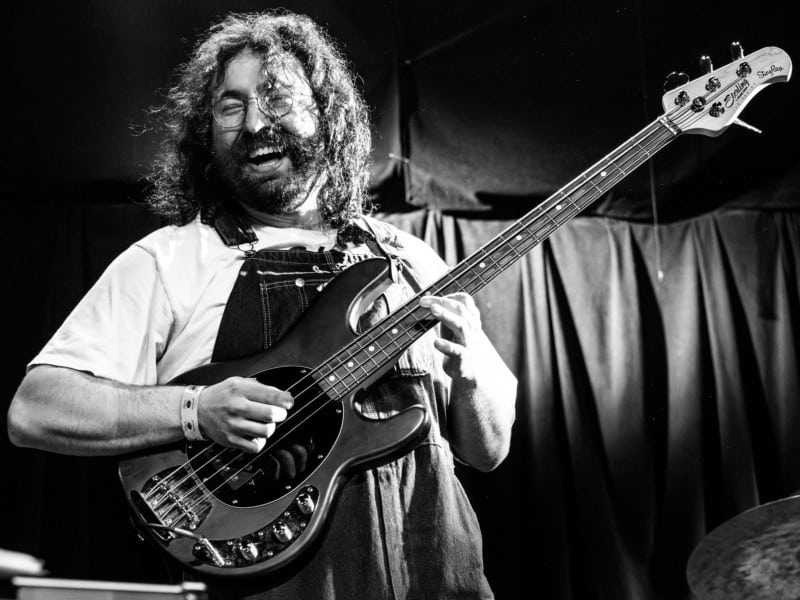
Creating a music community on the isthmus with “Evan’s style”
Musician and arts organizer Evan Fernandez discusses the importance of managing the HQ practice space for local bands and his own ensemble, The Porch Flowers.
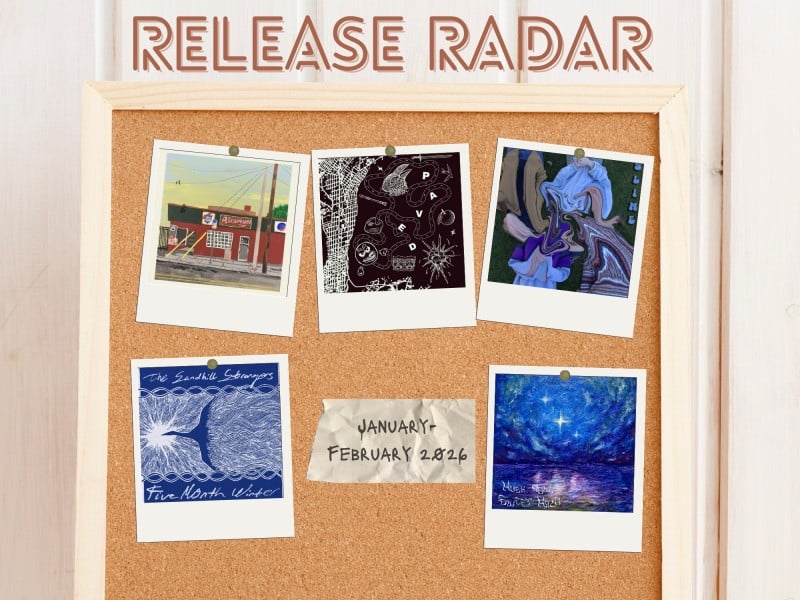
Madison acts rivetingly ring in 2026
Five local bands offer new songs and projects, and capture a hopeful feeling in the new year.
Achieving a broader focus through music photojournalism in 2025
The fourth installment of our live music photo essay series centers a more personal vantage point.