
Madison Alternative Comics Fest showcases a rising art form through diverse voices
Madison’s answer to the alternative comic festival circuit debuts at Aubergine on December 13.
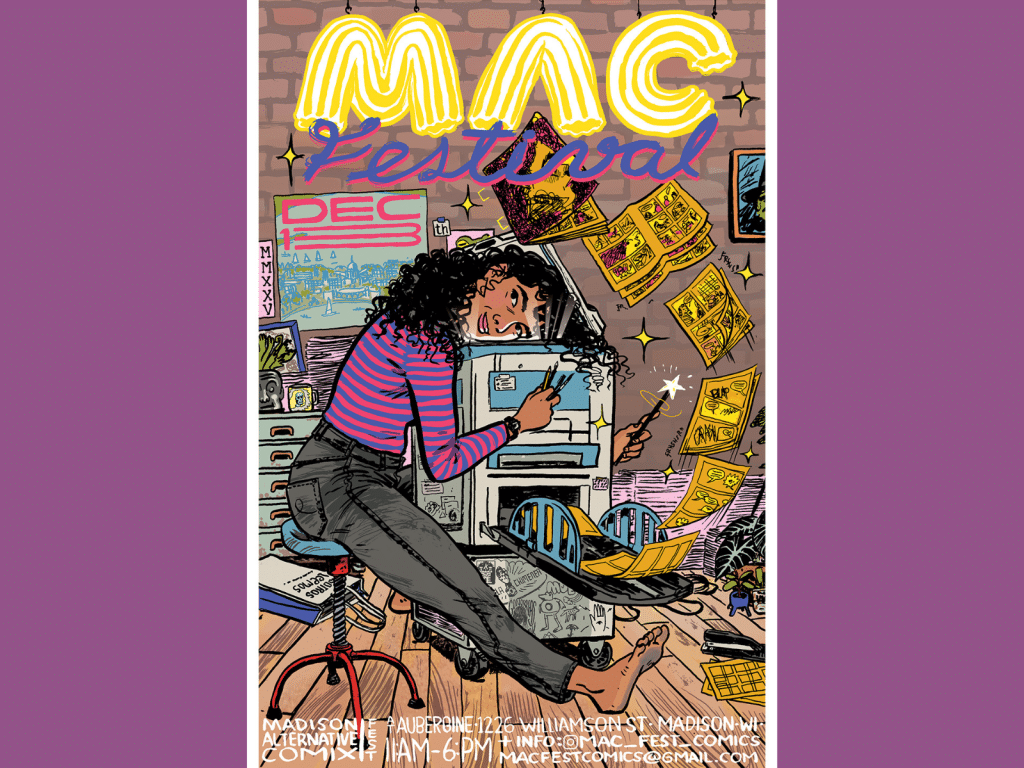
Over 30 artists, publishers, and organizations will gather for the inaugural Madison Alternative Comics (MAC) Fest from 11 a.m. to 6 p.m. on Saturday, December 13, at Aubergine, the Willy Street Co-Op’s community space, located at 1226 Williamson Street. The free event will be full of comic books, graphic novels, and other indie print media on display and available for purchase.
MAC Fest organizers, Vincent Mollica and Luis Echavarría Uribe, originally connected through Madison’s alternative comic community and became closer collaborators while volunteering with Print & Resist Zinefest earlier this year. The duo recognized a mutual passion for alternative comics and an unmet need for a local festival dedicated entirely to the medium.
MAC Fest channels its shared DNA with Madison’s beloved annual zinefest into a more focused celebration in tradition with nearby festivals like Milwaukee Independent Local Comics Fest (MILK) and Chicago Alternative Comics Expo (CAKE). A common thread between these festivals is a focus on styles and perspectives that rarely have a place to shine in the mainstream art world. Like zines, alternative comics have grown in popularity and often include diverse voices due to the accessibility of the medium.
“I think it’s a very accessible art form that a lot of people can pick up pretty easily, so it does bring in a lot of underrepresented artists,” Mollica explains. “A lot of the work, by its nature that it’s like a zine… is going to be political and very personal.”
Further adding to the personal qualities of the work on display, the MAC Fest lineup includes multidisciplinary artists and students, professors, and workers who specialize in unrelated fields. The organizers note this blend is accurate to Madison’s depth of talent, which they partially attribute to Lynda Barry’s Comics Room and her making comics class at the University of Wisconsin–Madison, where countless outsiders fall in love with the medium.
“In my last semester of my last year of college I took a comics class with Lynda Barry, and I was like ‘This is it. This is a craft I can actually continue outside of college, you just need a paper and a pen.’ They’re an extremely accessible form of art that can actually reach who I want it to,” says Comics Room alum Citizen Christensen. Christensen, now best known for comics featuring everyday life with their frog, Gibby, notes buyers of the sculptural work they produced as a UW–Madison student were mostly organizations and trust funds.
“I’ll comic about whatever’s on my mind, and if a comic gets ultra specific, I’ll even see if I can move funds I get from it to a related cause (example: my Mother Maria comic on immigration’s funds going to the Illinois Coalition for Immigrant and Refugee Rights).” Christensen adds that alternative comics have a lot of potential for a wide range of topics. “Gibby’s unexpected popularity has been great too, because it opens a door for me to slide personal and/or political elements into comics with a few more eyes on them.”
Mollica names Bubbler artist-in-residence National Velvet, known for hosting “Fake Bakery” workshops at the Madison Public Library and exploring emotional memories through both cake and comics, and Lori DiPrete Brown, UW-Madison’s director of Global Health and Human Ecology, among the multidisciplinary artists he is excited to host.
“[DiPrete Brown] only started doing cartooning and comics like a year, a year and a half ago. And she’ll be like, ‘Oh, I had this idea and I just want to show you.’ And she’ll show me this whole notebook full of art. And it takes up all this experience from their travels and from the students they work with and everything they do,” Mollica says.
Sketching a foundation for growth
As comic artists themselves, the MAC Fest organizers are using their intimate knowledge of opportunity gaps within the movement to carve out a new space for growth. Embracing an invite-only approach for the event’s pilot year, the lineup was intentionally curated as a “healthy ecosystem” that supports comic artists of all experience levels and walks of life. This includes industry stalwarts, underground local favorites, and new vendors.
“I would love to have vendors that are self-published, know the ropes of the independent business, and could pull a public to come and see them. If we have that, we can have people who have never done a festival before…,” says Echavarría Uribe. “If everybody’s just starting, there’s still a level of the business that is not being developed there… you want people to be connected and be able to learn from each other.”
Representing the most established side of the lineup, MAC Fest’s special guests include John Porcellino, creator of the long-running King-Kat minicomics, Tom Kaczynski, the cartoonist at the helm of Minneapolis-based indie comic publisher Uncivilized Books, and Maxwell James, who has a comic about observing the horrific contradictions of the Gaza genocide as an antique store clerk during peak holiday shopping season. On the opposite end, even newer comic artists who have not yet produced a body of work large enough for festivals are welcome to have work displayed and sold on their behalf at MAC Fest’s community table.
The organizers recognize a truly healthy ecosystem must extend beyond the event into comic shops and bookstores, which usually aren’t connected to the alternative comic scene. Aside from rare exceptions like A Room of One’s Own offering consignment for indie comics, there are few opportunities to sell outside of the festival circuit.
Odin Cabal, the MAC Fest tabler and midwestern Cuban artist behind the all-ages Terry and Dory horror minicomic, notes these rare consignment opportunities require additional time to find and fulfill. “I would say time is the biggest challenge—not just the time it takes to make a comic but time to promote it, look up shops that accept consignment, mailing—it all takes time,” Cabal says. “And when you got kids and work full-time it can be a challenge, but I found the more organized I am with my time the more I accomplish.”
Both Mollica and Uribe hope MAC Fest will generate more local interest in alternative comics that also leads to more retail opportunities, allowing artists to earn more stable income and sustain their practice.
Connecting comics and community
In addition to a cost-effective rental that has kept the event free for vendors and attendees, MAC Fest’s venue offers its own perks to weave together alternative comic artists and the larger Madison community. Aubergine has local recognition through its relationship with the Willy Street Co-op, an existing connection with art through its gallery, and a focus on food distinct from the average festival venue.
Because MAC Fest will use tables from a venue that frequently hosts cooking classes and other food-related events, artists will be displaying work on a mix of what the team calls “conventional festival rectangles” and circular dining tables.
“I think it’s going to be kind of an interesting way for somebody to share a table,” says Mollica. “Somebody was generously talking about this with me the other day and was like, ‘There’s sort of a democratic aspect to a circle table, where it’s like not somebody behind a rectangle looking out, but something you can kind of move around.'”
Another unique point within the alternative comics circuit is the time of year. MAC Fest fills an empty space in the national comic-circuit calendar that also aligns with peak holiday-market season. The organizers encourage attendees to include comics in their gift shopping and make a day of supporting independent local artists and makers at concurrent events like the Mini Crafty Fair at the Goodman Community Center and the Garver Holiday Market.
We can publish more
“only on Tone Madison” stories —
but only with your support.
Author
Related Articles
Creating a music community on the isthmus with “Evan’s style”
Musician and arts organizer Evan Fernandez discusses the importance of managing the HQ practice space for local bands and his own ensemble, The Porch Flowers.
“Limerent Pittsburgh” intricately constructs a folkloric affection of place
Artist Anne Ciecko’s 2025 videopoem is a highlight among the 30 selections of this year’s Midwest Video Poetry Fest at ALL on April 4.
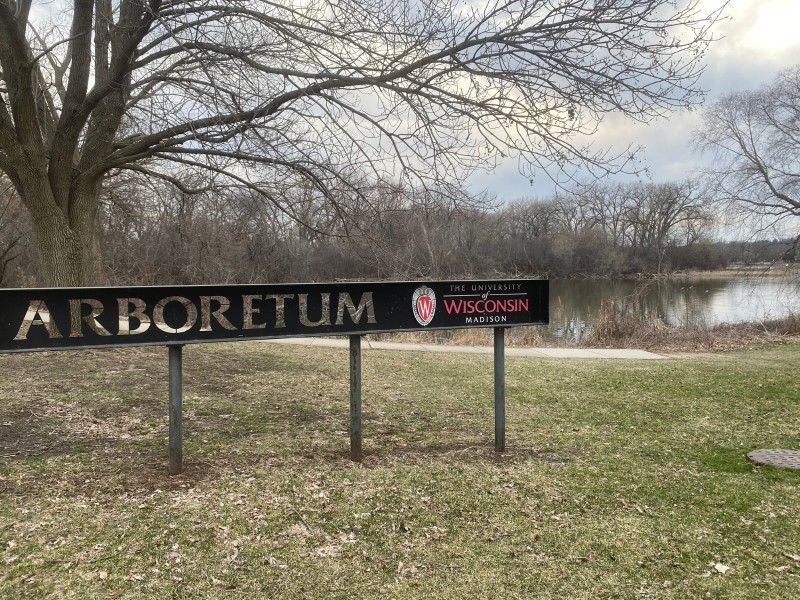
Good birding in all seasons with the storied Charles “Chuck” Henrikson
The retired lecturer and winsome ornithologist has been coordinating Tuesday birder hikes at the Arboretum for well over a decade.