
Wisconsin in film and television: through the looking glass
Perseverance stands out as a common denominator in our state’s cultural representation.

This is our newsletter-first column, Microtones. It runs on the site on Fridays, but you can get it in your inbox on Thursdays by signing up for our email newsletter.
Wisconsin’s relationship to film and television is a fascinating one. In past Microtones, Tone Madison has explored the state’s connections to music and video games, identifying repeating patterns. (For games: enhancing dread. For music: the quality of openness.) Both small- and big-screen presentations of the state and its inhabitants differ in scope. Given the respective mediums’ expansive histories and their relative accessibility to independent creators, that’s not much of a shock. The state’s history is rich, textured, and awash in extremes, ranging from the abject terror of the state’s notorious lineup of serial killers to an emphasis on being neighborly.
Still, Wisconsin is viewed by many as little more than a flyover state—a place either not particularly worth mentioning, or to be hammered in as the punchline to a joke striving for specificity. A great recent example of the latter framing comes via Siobhan Thompson on Adventuring Party, a Dropout talkback program for the network’s wildly successful tabletop roleplaying actual-play show Dimension 20. Cloudward, Ho! is the show’s current season, and there’s a minor plot beat in which the main cast first meets the insular inhabitants of a fabled land. Thinking about the pleasantries exchanged between camps and a sense of vague familiarity, Thompson equates the scenario to “[When] somebody from Wisconsin is like, ‘I’ve met a French person. I’ve never left Wisconsin, but a French guy came here once.'”
It’s an unquestionably funny dig, but one that paints Wisconsinites as quietly incurious and mostly content. There are certainly worse things to be when it comes to generalizations, but it’s a brushstroke that keeps getting painted.
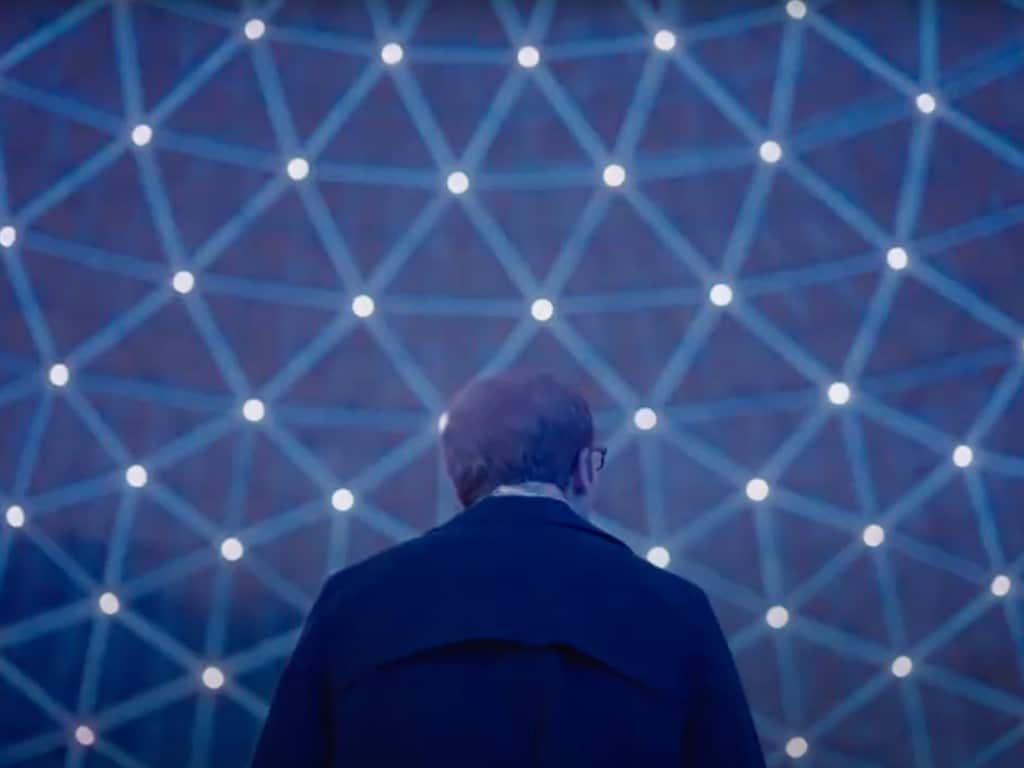
To see another flavor of this form of a plaintive, well-meaning Wisconsin—and in this particular case, Michigan as well—one needs only to go a few years back to a small, extraordinary Adult Swim show called Joe Pera Talks With You. (At any chance I get, I will float the show’s second season as the most perfectly realized run of television I’ve ever seen.) Headlined by Pera playing an exaggerated version of himself, the show’s presentation of both Michigan and Wisconsin takes a healthy amount of cues from regional PBS programming. As a result, it’s quiet, gentle, and teeming with empathy.
In one of the most memorable extended sequences from the short-lived series, Pera is overcome with grief after the death of a loved one. In an effort to begin healing, he meets up with a friend and heads for “the big city”: Milwaukee. In the two-part episode “Joe Pera Shows You How To Do Good Fashion,” the show rams in some deliriously funny, hyper-local referential comedy about the city, but extends it in a way that sticks out as genuinely caring. What the episode achieves doesn’t constitute cruel mockery, but an appreciative reverence—and some brief instances of exceedingly fair criticism—that comes from a base of intimate understanding. Ryan Dann’s exemplary score heightens that warm intimacy even further, evidencing a rare level of both intuition and fondness for the area.
I’ve had multiple out-of-state friends theorize that the state’s brutal winters are the root cause of Wisconsinites’ apparently stereotypical willingness to help, lend support, or accelerate fostering tight-knit bonds. Joe Pera Talks With You nails all of that in a way that is so well-articulated and familiar, the effect transcends nostalgia and becomes surreally transportive.
Not every television or film instance of Wisconsin is as attentive, or as meaningful, but they can still be interesting or instructive. For instance: we have Ethan Hunt, the invulnerable protagonist of the Mission: Impossible series (1996-2025), who was born in Madison and raised on a Middleton dairy farm. Maybe the area’s quietude and rolling hillsides drove the character towards an unhinged adrenaline addiction that demands excessive danger. More likely, it’s a tacked-on character detail that has minimal overarching motive beyond flavorful depth (and perhaps acts as a slight nod to Mission: Impossible‘s original screenwriter, David Koepp, a Pewaukee native and UW–Madison alum).
Hunt’s connection to the state doesn’t account for much screen time in the franchise, but still, somehow, feels like it’s conveying a perception of Wisconsin. The same can be said for Leonardo DiCaprio’s Jack Dawson in Titanic (1997). Even fleeting, cursory mentions can have an impact on broader, national views of the state. It’s also a rare enough occurrence that just about any mention of the state or one of its cities—like the blink-and-you-miss-it UW–Madison reference I caught several years back during an AMC Madison 6 screening of The Shape Of Water (2017)—can lead to ecstatic bursts of theater applause. Even a morsel of recognition can feel like a celebratory feast in times of scarcity.
Outside of documentaries and the work that comes from current or former residents of Wisconsin—which includes everything from student films to low-budget web series to provocative documentaries to animated narrative features to narrative features being mercilessly skewered via acerbic commentary—there’s an impression that not many outsiders know quite what to make of the state. For every instance a title gets it surprisingly right (Joe Pera Talks With You, That ’70s Show, Away We Go, Happy Days), there’s an instance like Lars And The Real Girl (2007), which exacerbates the state’s earnest social tics to the point of disbelief.
In the TV and film presentations of Wisconsin that don’t quite stick the landing, an unsavory uncanny valley effect threatens to uproot any Wisconsin-versed viewer’s buy-in. Those titles may ultimately be worth a look, but the discomfort can be jarring enough to cause emotional and intellectual distance. (A note to aspiring filmmakers: exert the same level of obsession to your setting as you do your characters and plot.)
Going through all of these instances of TV and film representation, whether it’s a fictionalized Wisconsin city—as it is in the case of The X-Files and several others—or a real one, some throughlines begin to emerge. A commitment to community-building is one, contending with grimness is another, and buried within both of those dynamics is a common denominator: perseverance. And when it comes to discussions about TV and film representations of Wisconsin and the topic of perseverance, none of them are complete without a mention of Mark Borchardt.
For better or worse, no person has become more synonymous with “Wisconsin independent filmmaking” than Borchardt, the unlikely star of cult-classic documentary American Movie. (The documentary features Borchardt trying, failing, and succeeding to complete one of two films.) After picking up the Grand Jury Prize for Documentary at the 1999 iteration of Sundance, American Movie rocketed Borchardt’s profile by showcasing his messiness, inherently underlining the amount of sheer determination filmmaking itself requires. Subtextually, American Movie creates a meta-narrative loop and offers a form of self-serving commentary, while still ably centering Borchardt. For his part, Borchardt’s connection to Wisconsin and its arts community remains strong, living up to the implicit promise of perseverance at the root of American Movie.
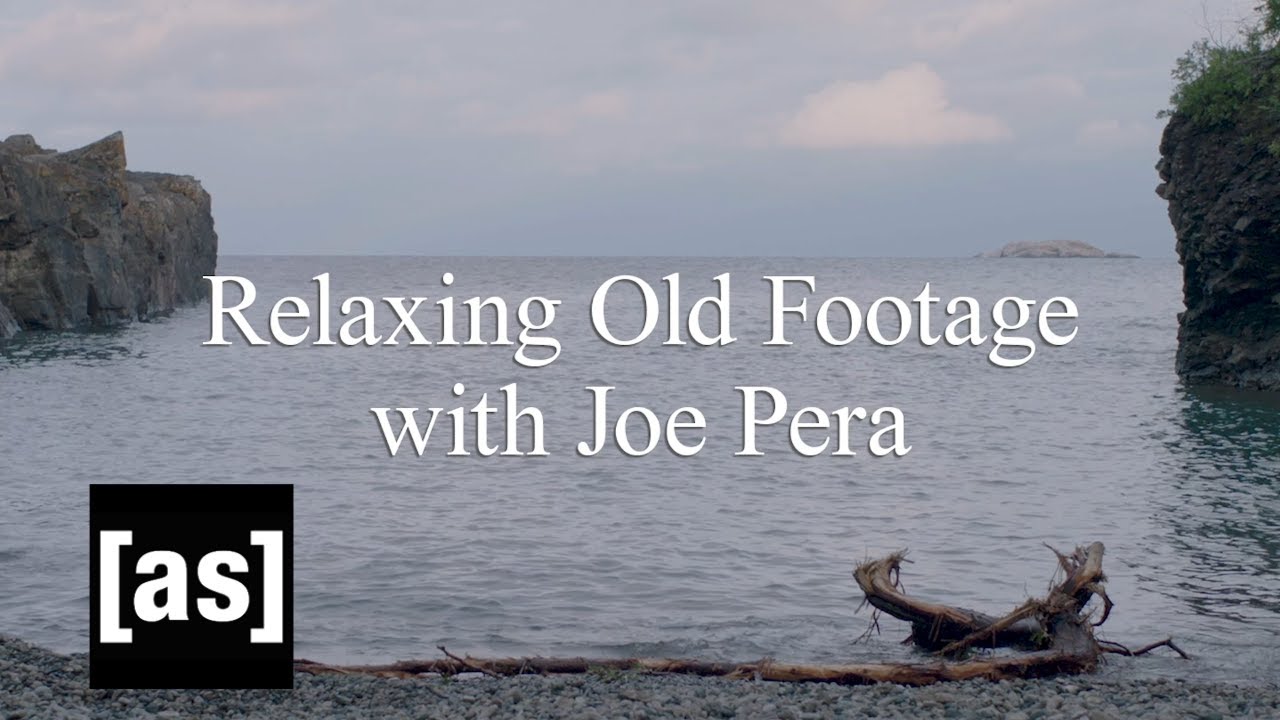
In the metatextual recesses of American Movie, both subject and film ultimately prioritize willful endurance. So does Joe Pera, who makes that distinction fairly clear in the one-off Adult Swim special Relaxing Old Footage With Joe Pera, which aired in the spring of 2020. Pera’s characteristically warm 22-minute meditation on the utility of relaxation in the face of unavoidable hardship culminates with an impossibly heartrending tour of downtown Milwaukee set to Advance Base’s aching “Your Dog.” Taken as a whole, Relaxing Old Footage gracefully extends the legacy of Joe Pera Talks With You and further solidifies his vision of the state as a bastion of perennial endurance. That same vision is likely what led to Borchardt being cast for a cameo appearance in Joe Pera Talks With You‘s first season.
Pera, Borchardt, and the films and filmmakers who best exemplify Wisconsinites’ steadfast perseverance can all serve as a testament to the state’s “Forward” motto. They can be reminders of the harsh winters we’ve collectively survived, and the lush springs that have grown in their absence. A reflection of the communities we’ve formed to be able to grieve, celebrate, and support each other in times that demand togetherness. And right now, that counts more than ever.
As the threat of fascism becomes more unmistakable, those depictions of community, perseveration, and an unwillingness to go quietly feel worth celebrating. May we all live up to those standards.
We can publish more
“only on Tone Madison” stories —
but only with your support.
Author

Related Articles

The meanings of Tone Madison
Current and former editors reflect on the publication’s life and legacy.

Tone Madison is saying goodbye
We are sad, but grateful too.

Police surveillance technology needs proper accountability
Grassroots resistance against Flock cameras are writing the blueprint for comprehensive reform.