
Kat and the Hurricane’s “Got It Out” is a queer/trans battle cry teeming with love
The indie-pop trio talks us through the creation and impact of their new album.

The indie-pop trio talks us through the creation and impact of their new album.
One of the benefits of being part of Madison’s music scene for long enough is getting to witness a band forming, growing, and making their mark. Kat and the Hurricane—a Madison-based, synth-driven indie-pop powerhouse—are a perfect example.
Formed in 2017 by Kat—who will be referred to in mononym throughout this piece—and multi-instrumentalist Benjamin Rose, the act began with a much more emo/folk-oriented sound that lived up to their “Sad Lesbian Music” tagline. Since then, they’ve added Alex Nelson’s confident, hard-hitting presence on drums and have effected one of the most impressive evolutions of a local band in recent memory. Over their run, they’ve developed and refined a genre-spanning, wall-of-sound, cry-while-you-dance experience—both on record and live—that continues to both attract and win over audiences.
The band’s October 2024 full-length, Got It Out, sounds and feels like they’ve stepped things up several levels. It’s a polished and cohesive record with multiple standout tracks, and achieves a particularly enticing combination: anthemic, danceable indie rock that boasts genuine depth while still being fun.
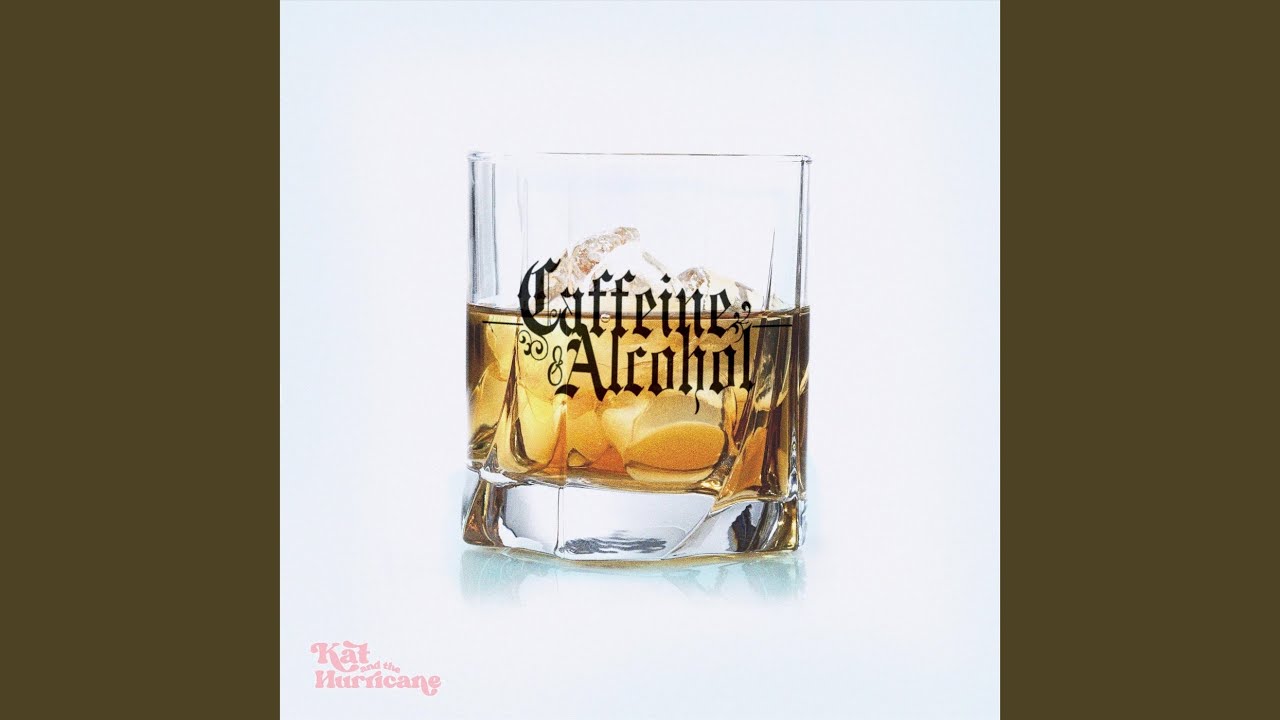
“On My Way Back,” the album’s first single, evidenced a new and exciting chapter for the band. The driving, rock-disco drums, arpeggiated guitar riff, and soaring vocals on the track are reminiscent of the likes of The Killers, Tegan & Sara, and the Yeah Yeah Yeahs. Three more singles followed—”Therapy,” “Caffeine and Alcohol,” and “Smoke”—keeping up a surging momentum.
Given those indie-tipped touch points, it was unsurprising when—during a sit-down interview with the band in January of this year—they noted that they’d told their producer, Matt LaPlant, that the sound they were aiming for with Got It Out was “Hot Fuss by The Killers but make it trans.” Mission accomplished.
LaPlant’s continued involvement with the band proves to be an unexpected blessing. The longtime audio engineer is the owner of Madtown Mix Studio, and was the former Production Manager at Sosonic. Most of his previous work features hip-hop and metal artists, but LaPlant took a liking to the band after running sound for them at a Sosonic event several years ago. (LaPlant would then go on to produce Kat and the Hurricane’s 2020 EP, Libra.) The partnership between the band and the producer has reached full flower on Got It Out, an album that features contributions from a number of the band’s other collaborators as well, including rapper K.I.L.O. aka SkitL’z, singer-songwriter Candace Griffin, and bassists Mega Omega and Aaron Metz.
Tone Madison spoke with Kat and the Hurricane about the process that went into making the new record, how they’ve approached their sonic evolution, what it means to be a band that intentionally leads with their hearts and their queer/trans identity, and where they hope to go next.
The band will be touring the Midwest—with several dates alongside Cleveland’s Biitchseat—throughout May. [Editor’s note: The author of this piece plays drums in LINE, who will be appearing on Kat and the Hurricane’s Madison stop. This development did not impact the piece.]
The following interview has been edited for length and clarity.
Tone Madison: Let’s start from the end. How are you all feeling about the album, now that it’s out in the world?
Kat: Very proud. It was years and years of work just leading up to that moment, that day of releasing it and it’s out in the world and everybody can have it. It just feels really good. It also feels like a blur of all of the years combined that took to get to the day of releasing it. We really put everything that we had into it.
Tone Madison: I think about my own experience with projects that take a long time. Because when you’re not a full-time musician, you have to do other things with your time, life, and money. But you have a really consistent album. It sounds like a whole thing, a very intentional thing. So I’m curious about your thinking from that first single (“On My Way Back”), which I remember hearing and thinking, “Wow, damn, this is a whole level up production- and style-wise.”
Maintaining that and creating something that feels like one whole piece while you’re trying to thread everything together over such a long period of time. What were some of the challenges? How did you think about that in terms of striving for a final product over that much time?
Alex Nelson: That ties in strongly with how we decided to make the album. So we did record “I Wasn’t Ready” in 2021. We thought we were just going to put that out as a single, but we decided to hold onto it. And then throughout the pandemic, we were writing a bunch of new songs. I was writing a bunch of new songs, so we decided we were going to collaborate on writing some songs together.
We started hearing some of Ben’s songs that they wrote and “Caffeine and Alcohol” was among them. We played around with that and finally we were like, “Okay, we’re going to go into the studio and make an album.”
We had all of these songs that were in all various stages of development. We had songs that were completely done. We had a song that we were already working on and had recorded, and we had a bunch of other songs that were just in parts and pieces, and we didn’t know what to do with them. Some of them were just unfinished.
We ended up working with [producer] Matt LaPlant, who we’d worked with for the Libra EP, which we re-released as a deluxe album, full-length, in 2024. We had such a great relationship with Matt. He has an immense amount of experience in the music industry.
Kat: We’re not his typical client, either.
Tone Madison: How did you find him?
Kat: He was renting space at Sosonic and ended up running sound for the Indie Tune-Up event that was held there.
Benjamin Rose: Kat and I played there before Alex was even in the band. It was one of our first shows in Madison. We were playing with recorded tracks on the keyboard, just piano and guitar and vocals. Matt pulled us aside after running sound for that show and was like, “Have you recorded this?” We’d been trying to record the Libra EP on our own at that point, so we said it was in progress, and he asked if we wanted to record it with him.
Ever since then, we’ve worked with him. And like Alex is saying, a lot of the challenges that we felt were smoothed out by Matt’s consistent hand, in all of it. When we went to record this album, it was a little bit of a different process than the last two EPs we had done. Because [with] those EPs, we had already written the songs, we had the track list. It was one of those where it’s like “we’ve practiced it, we know how the song goes.” We’re going into the studio for studio time. With this album, we were very worried about it being disjointed. Because we had one song that I wrote in 2017, we had a song from the first EP that we wanted to redo, and two of our favorite songs from the record—Therapy” and “Smoke”—were both songs that [were unfinished]. So we just asked [Matt], “Will you truly help us produce this thing from the get-go?”
So, being on the other side of it and having people hear it for the first time and be like, “Oh, this sounds so cohesive,” I’m like, “Thank god.” [Laughs.]
And he did. We worked on it from that stage. I remember talking to him about that, saying I was worried that this emo/pop-punk song, this stadium song, “On My Way Back,” was originally a folk guitar song… And I was like, “Do these make sense? Do we need to cut something?” And he was like, “Just trust it. Trust it. It’ll all make sense.”
I thought people were going to be like, “Oh, now someone different is singing. Oh, this song is completely different.” Because “Caffeine and Alcohol” is the single that took off, and it’s like–
Kat: You singing!
Benjamin Rose: Right, it’s me singing, and then most of the rest of the album is led by Kat. And I haven’t heard a single comment about it. No one has said, “Oh, this doesn’t make sense.”
Alex Nelson: There were moments, especially when we were trying to figure out the track list, where we thought about this. But I think parts of it really started to reconcile with each other as we were just designing what the album—front to back and then front to back again—would feel like. Because it cycles a little bit.
And, yeah, I am definitely relieved, because there’s always something you could tweak and improve.
Kat: We had something very unusual happen, which was in August of 2023. Matt had to pick up and leave Wisconsin. He moved to Charlotte, North Carolina. So we had about a week left to get in there and do all the things we needed to do to finish the album, all of a sudden. We did kind of have to rush it, and I think there are things that we could have really hyper-fixated on. The time was crunched, and I feel like there are spots that we could have taken better care of to a degree, but what would even be different? What would be different?
Tone Madison: What would a casual listener notice?
Alex Nelson: How would it even be better?
Kat: Right.
Alex Nelson: These tiny, tiny things. But I think that there’s so many really beautiful, and to me, iconic tiny gems throughout all of this that, yeah, I wouldn’t change for the world.
Tone Madison: I always think of an album as [presenting a single] version of those songs, but they go on to have a whole life beyond that as you play them live.
Benjamin Rose: And we haven’t even had that yet. We’re in this pattern where we haven’t actually really gone and toured the album. I know some of the songs are going to change, because we have songs from our other records that we play differently live than how they started. That’s what I love about live music.
Tone Madison: Let’s talk about what the reception to the album has been so far. What have you been hearing from people?
Benjamin Rose: The album came out early October, so we played a few shows when we had the singles out but before the album was out. I think something we didn’t expect at all was “Caffeine and Alcohol” getting so much traction on streaming, too. [The track currently sits at over 234,000 streams on Spotify.]
That’s the biggest number we’ve ever seen. So having people come to the shows be like, “I found you just because it popped up in my radio or my Discover Weekly,” was really cool. There’s kind of this transformation that we’ve noticed—not all at once, but over the five years that we’ve really been going hard at this—that you start off playing a show, and anyone who is there to see you are people that you know. Here’s this transition that slowly starts to happen where I distinctly remember a show where I asked someone at the merch table who they came to see, and they’re like, “You.” And we were like, “But I don’t know you.” [Laughs.] They just found us on the internet!
Alex Nelson: I’ve definitely had some “wow” moments on this last tour already, especially in the cities we hadn’t been to before or hadn’t been to in a really long time. Being outside of Madison, and seeing people sing along, not only to “Caffeine and Alcohol,” but other songs on the album that we love, like “Smoke” and “Therapy.”
That’s so wild and humbling, because these are some of the songs that like… [with] “Smoke,” we had no idea what it was going to turn into, and “Therapy,” we didn’t know what it was going to turn into when we went into the recording process. For those to be songs that people know how to sing already is just incredible.
Tone Madison: Speaking of lyrics, I’m curious about how it feels to put out songs with some deeply personal themes and messages in them. Especially as a very visibly queer and trans band who speaks directly to that identity, what are the reactions that you’ve gotten, from both this album and audiences?
Kat: We’ve pretty intentionally played in a lot of queer spaces. That’s where we want to be. That’s where the people are. That’s our community. That’s our crowd. This year more than ever.
Beloit, for example, there was one specific person—queer, trans person—who came with a friend. They were scared to go to a show on their own. Came up to us, came up to me after our set, and ended up crying in my arms because it was like, “I found you guys and you gave me the courage to transition, and I was scared to come to the show tonight, but I knew I had to see you. I knew I had to come up and say something to you before I chickened out and started crying.” And I just hugged them and I was like, “You are so important. Thank you so much for being here. Thank you for coming to see me.”
If that was the only person I talked to that entire night, that’s the only person I would need to talk to, you know?
Benjamin Rose: We always say that if there’s even one person that we have that kind of interaction with at a show, then we’ve done our job.
Kat: Somehow, just by creating these spaces, it’s helpful people find the courage to even just tiptoe out and say hi. I think that’s really brave. People just want to be seen and heard, and to see people who they can see themselves in on stage.
Tone Madison: It’s a very straightforward concept and most people want that, but I think it’s something that becomes this sort of big responsibility in some ways, but it’s also like, “Well, this is just who we are and why would we hide it?”
Kat: But it’s been made political.
Benjamin Rose: It might be hard for someone to grasp that, who’s never not had representation of themselves. We don’t waste a lot of breath trying to explain it to the people who aren’t going to get it.
Kat: But we will if we need to.
Benjamin Rose: Yeah, we will. I do love talking to the genre of fans that we’ve made that are really aggressively supportive parents who will come up and be like, “I’m getting your CD for my kid.” Or like…
Kat: “My daughter’s a lesbian. She’d love this.”
Benjamin Rose: I’ll piggyback something that you said… for this album in particular, it’s something that’s been different. I think that’s been true for us for a while, like we learned after having those sorts of interactions, that, “Oh, shit, this is our responsibility.”
But for me, I think doing it with these songs in particular has forced me to embrace a kind of courage that I haven’t had before. Because, like you’re saying, “Caffeine and Alcohol” for me is a deeply, deeply personal song.
“Smoke,” I know, is a deeply personal song for me and for Alex. These are songs that—especially because this is the first album that all three of us have really written from the ground up—we also know what inspired these songs a lot more than in the past. There used to be set lists when we would play a song like “Walls,” which is always a big-feels one in our set. We would be like, “This is the moment for the feels.” And now it’s like the whole set is that.
We can’t not be emotionally vulnerable, because how do you sing a song about depression without having some emotional vulnerability? It’s changed the way that I introduce songs and talk about songs on stage, because I can’t not be as real as possible. I feel like that’s opened up moments for me on stage where I’m like, this is the real.
Alex Nelson: We’ve always said that the reason we do what we do, among so many others, is that we wanted to be the representation we needed growing up. It’s so meaningful and it’s also, like you said, a responsibility.
For me, I not only have to make sure that I’m delivering a really good show when we’re playing and having fun and really connecting and being present, which is one of my favorite things to do ever. But you also have to really take care of yourself. As someone who has social anxiety, being present with people at the merch table can sometimes be really hard. It’s still really important to go out there and do that thing. So finding that balance, especially when you’re on tour and doing it night after night, you’re so tired…
Tone Madison: What are some of the things that you lean on, to maintain your balance as much as you can for those moments at the shows? For being on tour night after night?
Kat: Depending on each other.
Alex Nelson: Exactly.
Benjamin Rose: It’s also knowing each others’ strengths and weaknesses and being able to complement each other.
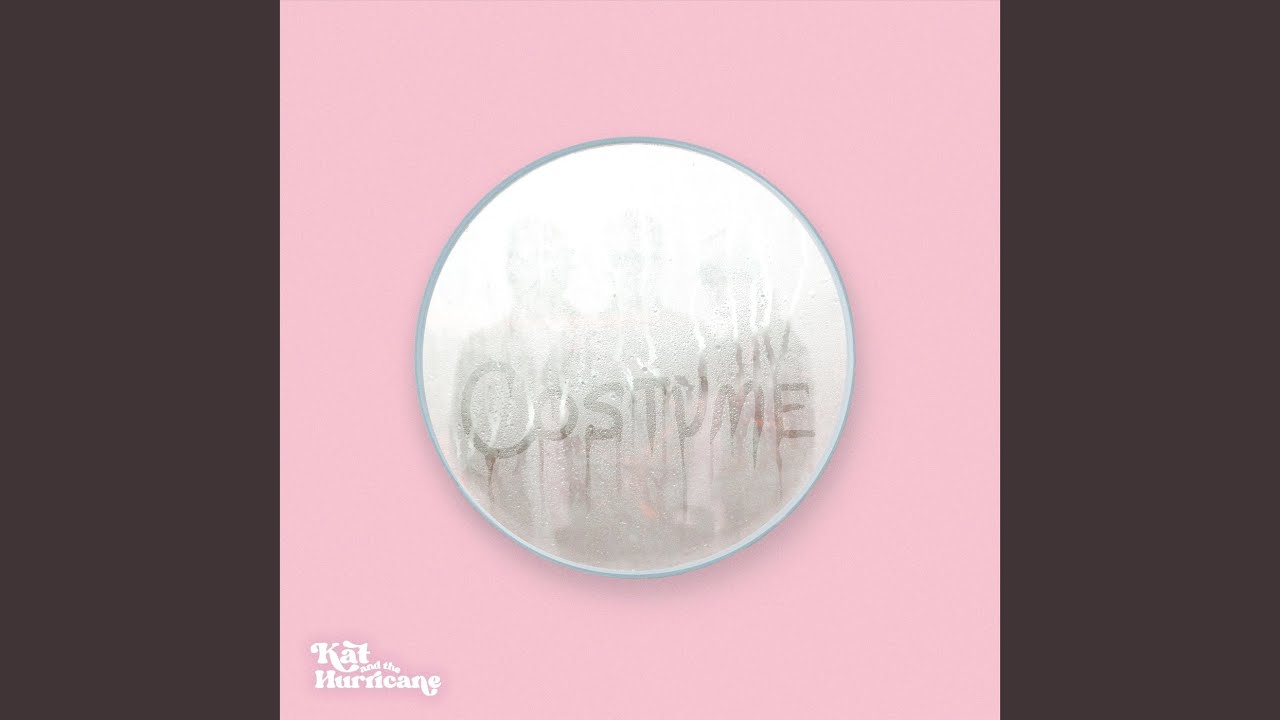
Tone Madison: Let’s talk about your other collaborators. For instance, you’ve got K.I.L.O. on a track, “Costume.” How did that come about?
Benjamin Rose: We’ve been friends with K.I.L.O. for years.
Kat: When we started cooking up “Costume,” it was really Matt that was like, “This needs someone, this needs someone. And that someone is K.I.L.O.”
Benjamin Rose: And hip-hop is more Matt’s space, he’s worked on it a lot. A lot of his projects have been either metal or hip-hop.
Kat: He’s worked with Snoop Dogg.
Benjamin Rose: And Lil’ Jon! So he knows that world. With K.I.L.O., we love her, and she really got what we were trying to do with the song. I wrote the beat with Matt, and the chord progression, and we told K.I.L.O to do her thing with her verse, and it was great.
Kat: We’re hoping to collaborate more with her this year. Sky’s the limit.
Alex Nelson: Then we’ve also got Mega [Omega] on bass and vocals, and Mega tours with us, too. Aaron Metz played bass on a number of tracks.
Benjamin Rose: And then Candace Griffin, who of course has been a dear friend forever, has vocals on some tracks and that was all… It was nice that other than K.I.L.O., who we’ve also known for a long time, it felt very much like keeping it in the family.
Having Matt produce it, who also produced the last two records, it was really sort of the magnum opus so far of what we’ve already been doing, with the people that we’ve already been doing it with.
Tone Madison: Did you have any particular influences for this record?
Benjamin Rose: We did say we wanted to make Hot Fuss by the Killers, but make it trans.
Alex Nelson: Yeah, exactly. Like Hayley Williams had a baby with Hot Fuss by the Killers, but it’s trans triplets.
Kat: That’s why we say, “Every gender, every genre.”
Tone Madison: It’s funny now I’m just thinking about your producer having more experience with hip-hop and metal. Got It Out is not a hip-hop or metal album, but the production of it sounds like one. It’s very crisp, it’s very big.
Kat: We’re secretly Matt’s favorite band.
Alex Nelson: His wife’s favorite band!
Benjamin Rose: Matt used to be contracted with a major label. He worked on a lot of projects as an engineer where they were like, “Here’s this project you’re going to do.” And he’s proud of a lot of the stuff he’s done, but he has told us that he’s worked on a lot of that kind of genre stuff, but he really likes the indie-pop stuff. So we were a project where it was almost the fun side thing he got to do, [which] did not make him as much money as the other stuff he was doing.
Kat: But he did it, because he liked us and he liked what we were doing and he believes in us and we can call him for anything.
Benjamin Rose: Which is such a privilege. And the album sounds as professional and crisp as it does because we wouldn’t have that without him.
Tone Madison: OK, so you have this great record out now. What’s next? What are your plans or hopes for the year ahead?
Benjamin Rose: This is almost for sure going to be the most shows we’ve ever played in a year, in 2025. That’s intentional, because we have been working on making this record for so many years that we have not had a year where we weren’t focused on recording. Because as a band, especially as a live band, it’s like there’s the writing-a-record band, and there’s the performing band, and we’ve been switching between them for so long that we’re like, “Let’s take a year to not record anything.” I mean, we are still recording stuff, but nothing’s new.
We are just hitting the road. We’re going on at least one regional tour. We’re going to be all over Wisconsin, the Midwest. [We’re] going to be doing as many festivals as we can.

We can publish more
“only on Tone Madison” stories —
but only with your support.
Author
Related Articles
Creating a music community on the isthmus with “Evan’s style”
Musician and arts organizer Evan Fernandez discusses the importance of managing the HQ practice space for local bands and his own ensemble, The Porch Flowers.
Madison acts rivetingly ring in 2026
Five local bands offer new songs and projects, and capture a hopeful feeling in the new year.
Achieving a broader focus through music photojournalism in 2025
The fourth installment of our live music photo essay series centers a more personal vantage point.