
Making The Nature Scene: Gimme some sugar
Collecting maple sap from backyard trees yields sweet results and builds connections with nature, family, and communities.
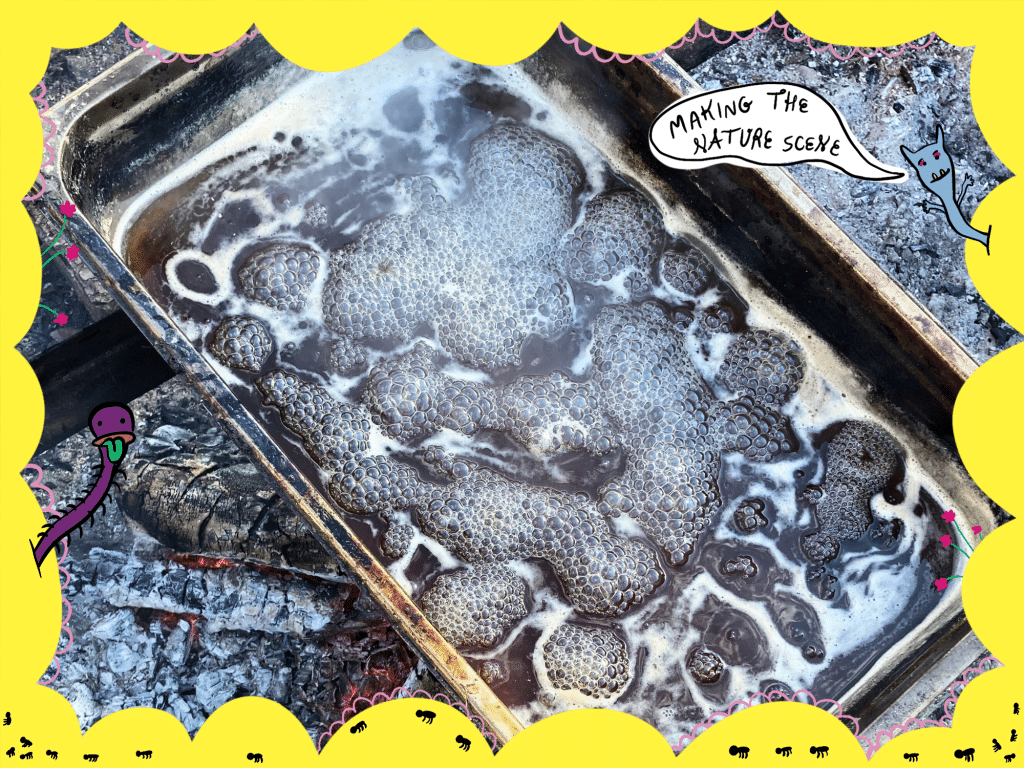
Collecting maple sap from backyard trees yields sweet results and builds connections with nature, family, and communities.
In “Making The Nature Scene,” Tone Madison explores the splendor of the outdoors in the Madison area (and beyond), and encourages Madisonians to think more deeply about their natural and built surroundings.
For some people (*glances towards mirror*), late winter in Wisconsin is a special kind of hell. It’s still cold, a smidgeon less dark, and it seems as though spring will never come. You may also know this timeframe as Smarch.
“[Tapping maple trees and making maple syrup is] my mental sanity through the winter. It is the thing that saves me,” says Alex Hanley, a stay-at-home mom who taps trees in her back yard and has tapped neighbors’ trees too. Hanley says maple syrup season is the precursor to the gardening year in her household.
“February and March are really the hardest months of the year for me so this was amazing,” Hanley says. “We get so many Fool’s Springs that by the time February hits, I’m losing it. [Maple syrup season] gives me a good solid month of projects and forces me and my kids to get outside.”
Ever the pragmatists, Madison’s growing cadre of backyard maple syrup makers are experimenting with science and connecting with nature for a sweet reward that makes memories. And it’s another segment of the gardening-to-foraging-to-backyard-chickens pipeline that has seen a noticeable uptick during the pandemic. It’s also a welcome outdoors social activity during still-chilly weeks preceding spring.
“We have people come over and sit by the fire while it’s bubbling, and it forces us to come together for a purpose, even if it’s just to watch sap boil,” Hanley says.
Maple Syruping Season or “the run,” as it’s called by those in the know, is over for 2025, but it’s never too early to learn about the sweet process and consider tasty, outdoorsy options for next year. Especially since ridiculous on-again, off-again tariffs stand to elevate the price of syrup because large-scale producers buy processing equipment manufactured in Canada. Sorry to have to bring the T word into this, but this is how we live at the moment.
Maple Syruping 101
The maple syrup season, also known as sugaring, kicks off when temperatures rise above freezing in the day and dip back below 32 degrees Fahrenheit at night. The change in pressure circulates the sweet sap from the roots to the trunk and branches of the tree. Trees use the sap for energy to grow branches and form buds for leaves. Trees are ready to be tapped when they’re around 40 years old on average or at least 10 inches in diameter. The time the syrup is flowing is known as the “run.”
Sugaring is delightfully simple. To collect sap from a tree, you simply drill a hole into it with a hand or power drill and insert a spile, which is a small spout that funnels the sap. Attach your preferred collection container—a metal bucket, a blue plastic bag, or even a covered bucket on the ground with a tube that transports the sap. Collect enough to boil—it takes a whopping 40 gallons of sugar maple sap to make one gallon of syrup. It boils for hours until it reaches the legal definition of maple syrup, which is 66% sugar and 34% water, measured by a tool called a hydrometer. Some sugarers boil their syrup completely outside, though many boil it down to a more manageable amount and bring it in to finish it. However, it may leave a little sugary coating on your kitchen from the evaporation process.

As long as they’re alive, sugar maple trees will produce sap for up to 100 years. Maple trees in forest environments live longer than their urban counterparts. Trees can have one to three taps at a time depending on the size of the tree. After syrup season, the hole heals over and sap no longer flows there.
And sugar maples aren’t the only trees you can collect sap from. Sugar maple sap is roughly 5% sugar, red maple is 2-3%, and silver maple is 1.5%. That means you’ll need more sap to make an equivalent amount of syrup. In case you were pondering it, don’t try to tap a city tree! Not in parks, and not along the street. Es prohibido.
“It’s a great hobby for people who have access to maple trees: sugar maple, red maple trees, silver maple. Even a box elder. Unlike silver maple and red maple, there’s a little different [flavor] profile of syrup,” says Tony Johnson, Forestry Outreach Specialist and Maple Syrup Program Manager at the UW-Madison Division of Extension. “It’s common for folks in Dane County to tap black walnut trees. Paper birch or white birch trees can be tapped as well. You have to use a little more energy to remove that water from the sap.”
UW-Madison Division of Extension has an absolute treasure trove of videos, lectures, and guides available for folks interested in making their own maple syrup—from identifying the right trees (which is easiest when they still have leaves), to collecting, boiling, and filtering sap. Other valuable resources include the Wisconsin Maple Syrup Producers Association. Facebook groups like Maple Syrup Producers of Wisconsin and South Wisconsin Maples Syrup offer a community with tips, tricks, and equipment to buy or sell.
“In terms of small-scale production, it seems there are more and more backyard hobbyist producers,” Johnson says. “In the pandemic, there was an uptick in sales of beginner equipment. Anecdotally, I see a lot more and talk to a lot more people who are getting involved.”
Being on the lookout for the right time to tap trees is an important part of the process, particularly due to Wisconsin’s warmer, wetter winters brought on by climate change.
“The big question for a lot of producers is when to be ready…. you can’t rely on the calendar anymore as to when you’re going to start your season. You have to really be following the weather,” Johnson said. “This year, we had another early warm up in January and people were ready to go and then it got cold again and there were a couple of weeks before the sap started to flow.” Local producers pegged the run at about two weeks this year, from early to mid-March.
Arm-in-arm with Mother Nature
Leslie Schroeder, who taps trees on Jenifer Street and some property off of Stoughton Road, has found her way into the community of folks who practice “primitive skills” like foraging mushrooms and ricing. A sugarer for 20 years, she has a notable mark of nature cred: she named one of her daughters Maple.
“Syrup is just one entry point to start having that relationship [with nature],” Schroeder says. “It’s to have that relationship with the trees.” That relationship also extends to other flora and fauna.

Initially, she began collecting syrup in 2.25-gallon metal buckets and industry-standard blue plastic syrup collection bags. The blue tint helps block UV rays and makes the bags easier to see in wooded areas.
“It’s nice to use the blue-bag system because it has the cover for occasional debris, but sooner or later a fly or a spider is gonna die inside there. So we generally run ours through a small mesh filter when it’s on the way to the sap-storage container,” Schroeder says.
Inventively, she piles up snow in a shady spot ahead of time and then stashes the collected sap there to stay cool and avoid bacteria growth until she’s ready to boil. Each year, she reduces 200 to 300 gallons of sap to three to four gallons of maple syrup. She’s also cooked maple syrup into maple sugar, which requires a strong arm to stir it to crystallization, lest it solidify into an unwieldy hunk. Then she gifts some of the final product to neighbors who’ve volunteered their trees.
“I give away a lot of it,” Schroeder says.”I hung around with some Native communities and that’s just what you do if you’re going to go hear someone speak or go to someone’s place.”
Ho-Chunk Nation member Elena Terry told WPR in 2020 that traditionally, tribal members carved wooden spouts to funnel the syrup into birch bark baskets. Then they used special containers to boil the sap down. To this day, Ho-Chunk members build sugar camps in the woods with lodges for folks to gather and socialize while they collect and process sap, Terry says.
Building family memories and a relationship with your backyard
Tim Hansel, who’s been sugaring on Madison’s West Side since 2020, started the annual activity at the insistence of his wife, who tapped trees growing up on her family farm in Northwest Iowa. Now they share the tradition with their daughters, ages six and nine.
“For my wife and for me, there are fond memories of our parents having this connection with producing food from the land. We always talk about permaculture and how to make the most of the little piece of land that you have and [the girls] sort of get into it, so it’s something that will probably follow them along. And they’ll grow up to be weirdos as well and make their neighbors look sideways at them for the weird stuff in their backyard.”
Hansel, Education Coordinator for the Friends of Pheasant Branch Conservancy, has a lighter workload this time of year, so tending to trees and boiling sap fits in well with his schedule. Their red maple produces up to 15 gallons of sap, which yields about a half-gallon of syrup. He’s even added cane sugar to the last part of the boiling process to stretch the yield with no noticeable effect on the taste.
“We learn a new lesson each year as we go about producing this stuff. We think of ourselves as scientists,” he says. Their experimentation has yielded some interesting lessons, like a bust year where bacteria got into the sap and led to stringy syrup. Another year, it started to rain when the sap was boiling down on a hotplate outdoors, ruining the batch.
“It can be a disaster, but that’s just kind of the way of things. At the end of the day, we’re talking about syrup. Have fun with your back yard. There’s cool things you’re doing back there. If you mess it up, you have another season next year,” Hansel says.” “There’s that relationship of putting care into your backyard and having your backyard do something for you.”
Virginia Wiggen, Education Director at Aldo Leopold Nature Center, which held its annual Maple Syrup Fest in mid-March, has been teaching about maple sugaring for 15 years. Wiggen taps as few as 15 to as many as 60 trees each year near Baraboo on her partner’s family land. The amount depends on their schedules. They haul the sap, which weighs in at eight pounds per gallon, out of the woods with a tractor before boiling it over an open fire on the land in a 30-gallon 5’x3′ boiling pan. Family may come to help and spend time together during the up to 24 consecutive hours it takes to boil the sap down into syrup.
“I like that it’s just so simple,” Wiggen says. “You don’t need a lot of investment or a lot of technology to get started on it. You can spend a lot on it if you want to, but it’s cheap and easy and a fun way to be outside in the springtime.”
Growing up as a Central Illinoisan in the ’90s, I was raised on “maple syrup” that was store-bought corn syrup with maple flavoring in a plastic bottle or, at my Great Aunt Leona’s house, Karo, which was straight-up crystal clear corn syrup. My first real experience with maple syrup was splurging on a bottle of Grade B from the health food store for the disaster that is the Master Cleanse—cayenne maple syrup lemonade and nothing else for as long as you could stand it. (I do not recommend.)
Now I’m grateful to be a Wisconsinite with a glass bottle of maple syrup in the fridge to make multiple maple treats. During the writing of this article, I used the concentrated sap in oatmeal, a maple latte (add a touch of maple to the milk or cream before frothing), and maple peanut butter toast. Aside from being delicious, maple syrup boasts essential vitamins and minerals, including manganese, riboflavin, and copper.
And it could all be yours if you can track down the right trees and spend some quality time with them! (Pro tip: The best time to ID those trees is during the summer and fall when the leaves are present.)
“What gets me excited about backyard sugaring is you can take pretty inexpensive equipment and create a world-class product that’s as good as anything a commercial producer can make,” Johnson says. “If you just follow best practices and use clean equipment, you can have a really high-quality gourmet local food product that has an interesting nutritional profile compared to traditional sweeteners.”
We can publish more
“only on Tone Madison” stories —
but only with your support.
Related Articles

Making The Nature Scene: Tick a look at me now
How to minimize Lyme disease exposure by avoiding, spotting, and removing these easy-to-miss bloodsucking arachnids.
Making The Nature Scene: Carve out more space in snowboarding
A Madison non-profit aims to make the sport more inclusive, and has some tips for those who’d like to get started.
Making The Nature Scene: Plan your nature trip now while pining for summer
A guide to dodging competitive park reservations and stressy situations.