
Privatized mental healthcare won’t yield the right leader for Dane County Human Services
The county’s next Human Services Director should be a departure from a disastrous trend of privatization—not a product of it.
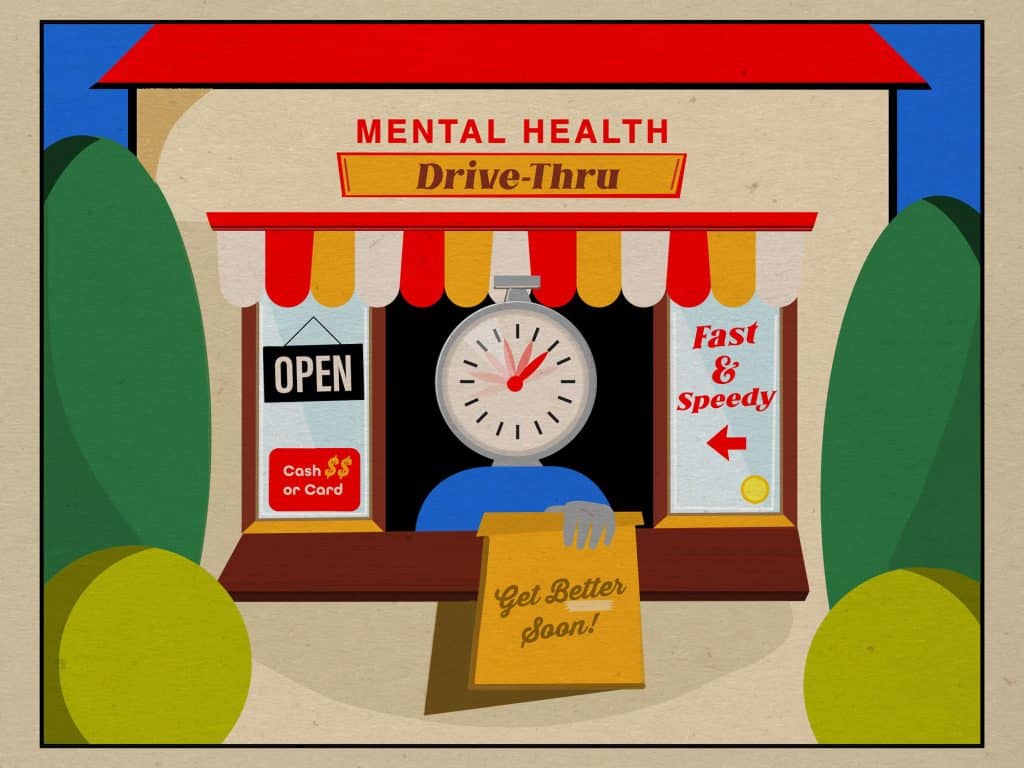
The county’s next Human Services Director should be a departure from a disastrous trend of privatization—not a product of it.
Sigmund Freud wrote, over a century ago, of a problem we still refuse to accept and, as such, still suffer from. A colleague of Freud’s, who had been skeptical of and then later a proponent of psychoanalytic psychotherapy, wrote to Freud about the need for a “short, convenient, out-patient treatment.” At the time, Freud’s practice was to see patients for six days every week for a treatment that typically lasted for about a year. In response to his colleague’s wish, Freud emphasized that “psychoanalysis is always a matter of long periods of time.”
In the time since Freud shared his work on the treatment of neurosis, successive efforts to reduce, standardize, hasten, and ultimately commodify the treatment of mental suffering have failed in their promises. Pharmacological inventions and “evidence-based” therapies that can be conducted in as few as six sessions have succeeded only in fanning the flames of our collective wish to be relieved of our suffering without making any contact with it. More recently in Dane County, another preoccupation of Freud’s has haunted us: If the human condition demands difficult and time-consuming care, who will provide it?
The answer, apparently, is not Amy Everett. Everett was until recently, on track to become Dane County’s next Director of the Department of Human Services (DCDHS). That changed on February 7, when Dane County’s recently-elected County Executive, Melissa Agard, published an aggrieved statement announcing the withdrawal of Everett’s acceptance of the position. The Director of DCDHS has been filled by an interim director since August 2022 and has remained so since District 78 Wisconsin Assembly Rep. Sheila Stubbs was rejected from the position in 2023. Agard’s statement condemned members of the Dane County Board of Supervisors for “upend[ing]” and “disrupting” the process of hiring a new director with “unfair and disingenuous” questions which Everett felt were “oppositional.” For all its consternation, Agard’s statement was underscored with a glaring omission: the questions that were so disruptive and offensive to Everett.
Dane County Board of Supervisors President Patrick Miles and District 2 Supervisor Heidi Wegleitner released a statement the same evening, offering a clearer account of events. While the statement does not describe the specific questions posed to Amy Everett, the board claims to have asked her questions about her former employer, Mind Springs Health in Colorado. Further, Wegleitner states that she asked these questions with the support of the County Executive’s office.
What is so disruptive about speaking of Mind Springs Health? The answer is a problem that overshadows this one candidate and the county’s failure to vet her. For DCDHS to serve our community, its leadership and our elected officials need to understand the damage privatization has done across the American behavioral health landscape, including in our backyard.
Privatizing mental healthcare
Mind Springs Health is “the Western Slope’s largest provider of behavioral health services, covering a 23,000-square mile area in Northwestern Colorado.” Mind Springs boasts 13 locations across an area roughly equivalent to the distance between Madison and the tip of Door County. The company’s flagship facility is West Springs Hospital in Grand Junction, a 48-bed psychiatric hospital with an average admission length of about six days.
Mind Springs positions itself as a nonprofit that provides “award-winning” and evidenced-based care in a neglected region of the country. The structure of Mind Springs is worth noting. Half a century ago, there were relatively few such nonprofits across the country. Up until the 1980s, psychiatric hospitals were primarily public institutions operated by states, while many counties ran modest outpatient services on their own. The shift away from these sorts of institutions was the result of convergent, but independent, historical developments. In the late ’70s a series of court decisions granted greater civil rights to patients (such as Schmidt v. Lessard) while the federal government made historic efforts to bolster the mental health system across the country through measures like the Mental Health Systems Act of 1980. Parallel to these political developments, a wave of psychologists developed and introduced “cognitive therapy” as a form of psychotherapy that could be standardized in step-by-step manuals.
In the long view, these trends wrote a familiar story. The federal funding prioritized outpatient, community-based treatments in an effort to reduce the dependence on restrictive state hospitals which, wrongly, operated on the premise that patients were chronically ill with little to no chance of recovery. The funding for this new vision of a mental health system eventually flagged and fell prey to private opportunism. As a consequence, public institutions have languished—and what remains of the public system has proven grossly inadequate for the demands of the 21st century.
Most Americans receive no or inadequate mental health treatment while prisons deliver more mental healthcare than hospitals. What promised to be an innovative system full of unique answers to localized needs turned instead to a flood of treatments to meet the lowest common denominator. Treatment across the country looks increasingly homogenous, as reimbursement rates for psychotherapy and community-based treatments remain unsustainably low. Instead of the hard work of therapy and community building, treatment centers rely on the discredited view that addictions and mental health problems are strictly biomedical diseases. This premise enables programs to focus on teaching skills or prescribing medications to manage the illness, regardless of whether this meets the needs of any individual patient.
Conveniently, these evidence-based practices are intrinsically repeatable irrespective of the therapist or physician, allowing them to be manufactured with increasingly suspect divisions of labor in order to deliver cheaper, and more profitable, care. From an economic standpoint, the development of “behavioral health” care has neatly fit the development of the Marxian commodity. From the view of patient care, the experience of mental health care is ever more disjointed, scripted, and lifeless. Assessments are now completed by unlicensed staff reading a questionnaire to prospective patients, therapy is delivered as a didactic lesson, and medications are prescribed over Zoom by someone who, after reading the notes of the unlicensed assessor, talked to you for another 10 minutes.
Treatment centers, including outpatient and inpatient mental health programs, are increasingly likely to be owned by conglomerate corporations that span ever-greater distances. Indeed, the behavioral health market is growing and lucrative for venture capital and private equity firms. The structure of these companies evokes David Harvey’s emphatic commentary of a Marxian paradox:
The same laws ‘produce both a growing absolute mass of profit, which the social capital appropriates, and a falling rate of profit.’ How, Marx then asks, ‘should we present this double-edged law of a decline in the rate of profit coupled with a simultaneous increase in the absolute mass of profit arising from the same causes?’
A falling rate of profit prompts capital to employ more labour to stabilize, if not increase, the mass of surplus value generated. Meanwhile, the competitive search for technologies that increase labour productivity serves to make more and more labour power redundant. When invention becomes a business, as Marx suggested it would, then the production of generic technologies—electrification, digitalization, artificial intelligence—generalizes the falling rate of profit.
Unless understood as a fundamental law of liberal economies, the resemblance of the trends in the mental health sector to the trends of other parts of our economy seems uncanny. While mental health treatment is now more likely to be delivered with PowerPoint than the analytic couch, larger amounts of money are extracted by larger and larger corporations.
The questions Dane County didn’t ask
Mind Springs Health is far from unique. Similar companies, “nonprofit” and for-profit, are now ubiquitous across the country while the hegemony of “evidence-based practice” offers a screen that deflects attention away from the actual care on offer. Perhaps this is why Amy Everett’s “disrupted” path to the position of Director of Human Services appears so “unfair.”
Absent from this narrative is any specific discussion of why the County Board might be interested in Mind Springs Health. Of all the media coverage I’ve reviewed of this affair, only a February 10 news story from WORT briefly mentions the specific concerns that might have been at issue.
To discover what might have been troubling, we must thank the employees of Mind Springs Health. In 2022, a group of Mind Springs employees came forward to press with accounts of fraud and malpractice at the company over the span of the preceding decade. This, combined with the outspoken dissatisfaction of community stakeholders in Colorado, prompted a series of audits of Mind Springs from the State of Colorado.
The employee whistleblowers alleged that management required staff who “were not trained in behavioral health care and had no clinical licenses or experience” to “make up diagnoses for patients…diagnose certain patients with disorders they did not have in order to qualify them for costly, Medicaid-funded treatment they did not need… and show progress among all patients they were assigned to assess—including those whose symptoms had not actually improved,” the Colorado News Collective reported in May 2022. One employee pithily remarked, “I’m no legal expert, but I’m pretty sure what we were doing was fraud,” as she explained that she had “doctor[ed] at least 1,000 patient assessments between 2014 and 2018.”
The combination of the whistleblower complaints and community outcry about the failures of Mind Springs Health led to a much-overdue series of state audits of the company. The last of these audits, in what is apparently an unusual “three agency audit” of the system, revealed unsafe prescribing practices and serious issues with access to care. Although the State of Colorado has since removed the audit report from its website, the Colorado Sun summarizes that of 472 records reviewed in one of the earlier state audits, 68 (or 14%) revealed “severe patient risks” while a further 60 (13%) revealed “moderate risks to patient safety.” In other words, the audit revealed that 27% of sampled patient records demonstrated severe or moderate patient safety risks. The successive audits, whistleblower complaints, and community outcry eventually led to corrective action, taken while Everett was working for Mind Springs.
According to her LinkedIn, Amy Everett served as Chief Operating Officer of Mind Springs Health between September and December of 2024, with prior positions as Executive Vice President of Operations and Senior Vice President of Quality and Compliance dating back to December 2022. Prior to this, Everett spent a year and a half working as the Associate Director for Adult Treatment and Recovery with the State of Colorado Department of Human Services. Everett’s LinkedIn profile for this job states that she was responsible for management of grants issued by the department and, among other things, collaboration with the Department of Healthcare Policy and Finance. Everett has moved on from her position at Mind Springs and now works for Summit BHC, a multi-state behavioral health corporation that, according to its website, “operate[s] a network of leading behavioral health and addiction treatment centers throughout the country.”
How is Mind Springs faring since Everett’s time at the company? Last April, Mind Springs announced that it had less than 30 days cash on hand and was considering shuttering its facilities. Mind Springs’ worsening finances eventually led to a buyout from Florida-based Larkin Health System. As Mind Springs moved forward with the acquisition, it blamed the cost of “compliance” for its financial troubles. The new management promptly entered into talks to start contracting with Immigration and Customs Enforcement, although recently paused these talks after community backlash.
Everett’s resumé firmly places her work with Mind Springs in the post-whistleblower, pre-acquisition phase of the company’s history. It would indeed be unfair to even suggest that Amy Everett was responsible for the many troubles of Mind Springs Health. At the same time, it is an unquestionably important matter of Everett’s work history and in no way unreasonable for representatives of Dane County’s government to thoroughly understand her history with the company. As these troubles weren’t mentioned in the county’s public statements about the candidate search, nor covered in the candidate town hall, it is alarming that it was only at the last minute that anyone appeared to have asked for some explanation from Everett.
Privatized mental health care arrives in Madison
The story here is not that Everett worked for a company that committed fraud and malpractice and nearly went bankrupt dragging itself back into compliance. We don’t know what Everett’s story is with Mind Springs, because Dane County officials either didn’t know about it or didn’t want the public to know about it. Rather, the story is about what is happening to mental health services in Dane County.
For years, mental health treatment in Madison was defined by the presence of the Mendota Mental Health Institute, combined with the community hospitals (University Hospital, Meriter, and St. Mary’s), while the county’s community-based services were primarily contracted to Journey Mental Health Center. Indeed, Madison was home to one of the hallmark innovations of the “deinstitutionalization” movement, the Program of Assertive Community Treatment (PACT). The program, originally an experiment of staff from Mendota Mental Health Institute, was described as bringing the support of an inpatient psychiatric hospital to individuals living in the community. The program still operates today, but is no longer typical of the care available in our community. Indications of a shift in the mental health landscape of Madison began in 2010, when Rogers Behavioral Health opened a program in Madison. Rogers, a privately owned treatment program founded in Oconomowoc, rapidly expanded in the 21st century to establish facilities stretching from Florida to California. In 2014, Mendota Mental Health Institute, run by the State of Wisconsin, closed its adult civil treatment unit. The nationwide and decades-in-the-making shift from state-run programs to privately-owned mental health treatment was arriving in Madison.
By 2019, Dane County’s mental health system began to show symptoms of disrepair. The Behavioral Health Needs Assessment commissioned by the county showed that the vast majority of people who needed care were not getting it. In line with the next few years of county politics, during which the debate about the Dane County Jail expansion project loomed large, the county has preoccupied itself with crisis services—such as the still-elusive “Mental Health Crisis Triage Center” or the CARES team—while neglecting the substantial troubles in the wider continuum of care. While crisis services are an undoubtedly important need of our community, they amount to a band aid over the arterial wound that is the rest of our mental health system.
In February 2018, the Dane County chapter of the National Alliance for the Mentally Ill (NAMI) hosted a Q&A with representatives from Strategic Behavioral Health (SBH), a Tennessee-based private behavioral health company with facilities in seven states. The conversation centered around SBH’s intention to build a new psychiatric hospital in Middleton. A manager from SBH’s subsidiary in Green Bay, Willowcreek Behavioral Health—who disclosed having no prior work experience in mental health—awkwardly answered questions from the community. Repeatedly, community members expressed their hope for greater inpatient mental health capacity in Dane County, while SBH’s representatives offered vague responses about the care they provide, admitting that their interest in building a hospital in Middleton was born out of market calculus. Looking at the website of the facility, which now exists as Miramont Behavioral Health, you could be forgiven for thinking you were looking at the website of Mind Springs Health.
Miramont Behavioral Health opened in Middleton in 2021. The facility opened thanks to $1.2 million in tax incremental financing from the City of Middleton, despite its parent company’s track record. The Wisconsin Department of Health Services issued numerous citations to the company’s Green Bay facility, while SBH’s facilities in Nevada, Colorado, and North Carolina were forced to shut down on state orders in response to accounts of gross violations of patient rights. In just a few years, Miramont itself has racked up citations from the Wisconsin Department of Health Services and OSHA while its parent company, Strategic Behavioral Health, sold the facility to Summit BHC in 2022. Summit BHC is a for-profit Tennessee-based company for which Everett now serves as Interim CEO (according to her LinkedIn, but this differs from the information on Summit BHC’s website). Summit BHC, in an appropriately byzantine move, is owned by a pair of Silicon Valley private equity firms.
Joining Miramont is now Shorewood Behavioral Health. Shorewood opened its 120-bed facility on the east side of Madison just last month. Shorewood’s opening should deeply concern our community. Shorewood is owned by Acadia Behavioral Health. By now, you can guess what Acadia is. Based in Tennessee, Acadia boasts that it runs 258 locations in 38 states, operating approximately 11,400 psychiatric beds across its network. Consummate with Acadia’s vast network of facilities is its history of flagrant abuse of its patients and multi-million dollar fraud. Last year, the New York Times published accounts of Acadia’s facilities involuntarily detaining patients in their facilities. This may remind you of Mind Springs’ practice of extending patients’ admissions longer than necessary, but in Acadia’s case, many patients report that they never sought an admission in the first place. People presenting to facilities looking for outpatient therapy or medication adjustments were psychiatrically hospitalized for close to a week.
Between Shorewood’s 120 beds and Miramont’s 72, nearly two-thirds of the 300 psychiatric beds in Dane County are now run by private equity-owned facilities with extensive track records of patient abuse and malpractice. This shift, occurring within just the last four years, sets the scene for whoever will serve as Dane County’s new Director of the Department of Human services. While these facilities have been heralded as a welcome relief to Dane County’s overburdened mental health services, this is clearly a naïve, and dangerous, outlook on the situation. Whatever Amy Everett’s involvement with Mind Springs Health may have been, it seems doubtful that an individual who worked for such a company (and has gone on to work for another) possesses a clear view of the shortcomings, indeed outright threats, of these facilities.
High stakes for vulnerable patients
Sigmund Freud worked to develop psychoanalysis in the last decade of the 19th century. The prevailing opinion of Freud’s contemporaries was that there was no treatment for psychiatric problems, only management by confinement to asylums, isolation from society, or outright brutality. By the eve of World War I, Freud had established the psychoanalytic talking cure not only as a humane alternative, but as a truly effective practice for relieving mental suffering. Freud turned his attention towards training psychoanalysts who could make this treatment widely available, including a concerted effort to offer free treatment at these new psychoanalytic clinics. In doing so Freud found the training of psychoanalysts to be a remarkably time-consuming endeavor, requiring the trainee to undergo not only academic coursework in the theory and practice of psychoanalysis, and have their early therapeutic practice supervised by an experienced analyst, but also to undergo psychoanalytic treatment themselves.
This practice may smack of elitism, but it is born out of a very human limitation. While the goal of the talking cure was to relieve the patient’s suffering, Freud found that the task of doing so required the psychoanalyst to help the patient in fully, deeply, and arduously speaking of that suffering. The task of bringing these traumas into consciousness was made as hazardous in Freud’s day as it is today by the powerful social and psychological forces working to repress and hide human suffering. Listening to other people in this manner requires more than disembodied self-knowledge, so that therapists aren’t caught up in hearing only what they want, it demands constant care and attention from a community. Decades of clinical experience since Freud’s death has shown how therapists can subvert this goal when acting on anything from well-intentioned hopes to help rescue their patients, to their own unexamined fears of hearing what their patients have to say (Donald Winnicott’s classic 1947 essay Hate in the Countertransference remains essential reading on this subject). The idea that we can help others without ever having to listen to them, while only teaching them how not to suffer, is a cruel act of turning away from the people for whom we care.
These shortcuts are not only cruel, but also well-established as ineffective. Despite the common myth that “Freud has been disproven,” substantial evidence developed over the 20th and 21st century proves Freud correct in that there are no shortcuts to mental health. This will seem intuitive to anyone who has ever benefited from mental health treatment, whether it be psychotherapy, case management, peer support, or indeed psychiatric medications. Effective care requires time, patience, commitment, and an enduring relationship that cannot possibly follow a predetermined path. This means that the crisis of care faced by Dane County cannot be solved by turning to private equity-backed facilities offering quick and generic care.
The Director of the Department of Human Services (DHS) is an important role in Dane County government. Dane County’s DHS bears many crucial responsibilities for the communities of the county, including to contract the county’s behavioral health services; run family, youth, and community programs (including Child Protective Services); provide disability and aging care, as well as coordinate resources for economic aid, housing, healthcare, and job supports. Nearly all of the county’s behavioral health services are contracted to private providers, including when it pays for residential and inpatient behavioral health treatment for county residents.
Historically, the county has exercised very little discernment in these contracts, resulting in a fragmented and unaccountable system spread across dozens of agencies. As an example, the county has continued to give millions to Journey Mental Health despite its union-busting labor practices and lackluster services. These problems aren’t unique to the county’s behavioral health services, as evidenced by a recent movement calling on the county to address problems with its homeless services programs.
Although privatization may be the prevailing trend in mental health, it’s not the only option. When Dane County opened its Behavioral Health Resource Center in 2020, it created and ran the program as a government agency. The presence of facilities like Miramont and Shorewood is a result of the gap in services—and corresponding opportunity for profit—caused by the shuttering of public facilities. The county can either sustain the conditions that attract these companies to our community, or we can begin closing these gaps with comprehensive public options.
It is commonplace, but deceiving, to illustrate DHS’ import by pointing out that it has the largest budget of any department of county government. However, the DHS budget heavily relies on intergovernmental revenues to support much of its budget. Measured by allocation of general purpose funds, the Department of Public Safety and Criminal Justice is still the county’s top budget priority. Therein lies much of the structural problem that will be faced by the future director of DCDHS. Wisconsin’s Medicaid reimbursement rates are among the lowest in the nation while the Republican legislature has starved social services across the state. DCDHS, and the programs to which it contracts many of its services, almost entirely depend on these sources of revenue. This places extraordinary pressure on these programs and agencies to extract as much productivity out of staff for bottom-of-the-industry wages. As a result, the most vulnerable in our community are cared for by professionals who are at the beginning of their careers (or even still in training) and receive minimal support or supervision. As the Trump administration’s evisceration of the federal government continues, largely unabated and without serious resistance, these problems are certain to worsen.
Freud is an apropos vehicle for elucidating Dane County’s crisis of care, not only because he labored in opposition to Victorian morality, but also because he did so in spite of violent repression from the fascist Nazi regime. Our community will increasingly be forced up against a wall by the combination of the Trump administration’s “strip it for parts” mentality at the federal level and Robin Vos ceaseless budgetary hostage-taking at the state level. From this position, the cost-effective schemes offered by companies like Summit BHC and Acadia will tempt our economic rationalities while the inner fascist of our collective id has shown that it values incarceration more than any other form of care. As a community, we must refuse these temptations. This will require moral commitment as much as economic fortitude. Undoubtedly, our leaders will need the ability to see these companies, and the pressures that push us into their arms, for what they are.
Melissa Agard’s announcement of Everett turning down the director position ended with a commitment to “swiftly identifying and appointing a new Human Services Director.” The nearly two-year process of selecting Everett, which produced a finalist pool of two candidates—the other being current interim director Astra Iheukumere—was clearly lacking in rigor. I will hope that the process of finding a new Human Services Director is not swift so much as thorough.
Who has power in Madison,
and what are they doing with it?
Help us create fiercely independent politics coverage that tracks power and policy.
Author

Related Articles

Starter homes? No, we need starter apartments
As homeownership continues to be out of reach for too many Madisonians, we should build more owner-occupied, multi-family housing.

The federal war on trans healthcare mirrors that of abortion
Hospitals are folding to anti-trans hate, but the community continues to advocate for trans youth.

Madison needs a wake-up call
The longer we pretend this City is a progressive haven, the more people will be harmed.