
Police accountability is at stake in Madison’s 2025 budget
An inside perspective on the needs and challenges facing the City’s fledgling oversight efforts.
An inside perspective on the needs and challenges facing the City’s fledgling oversight efforts.
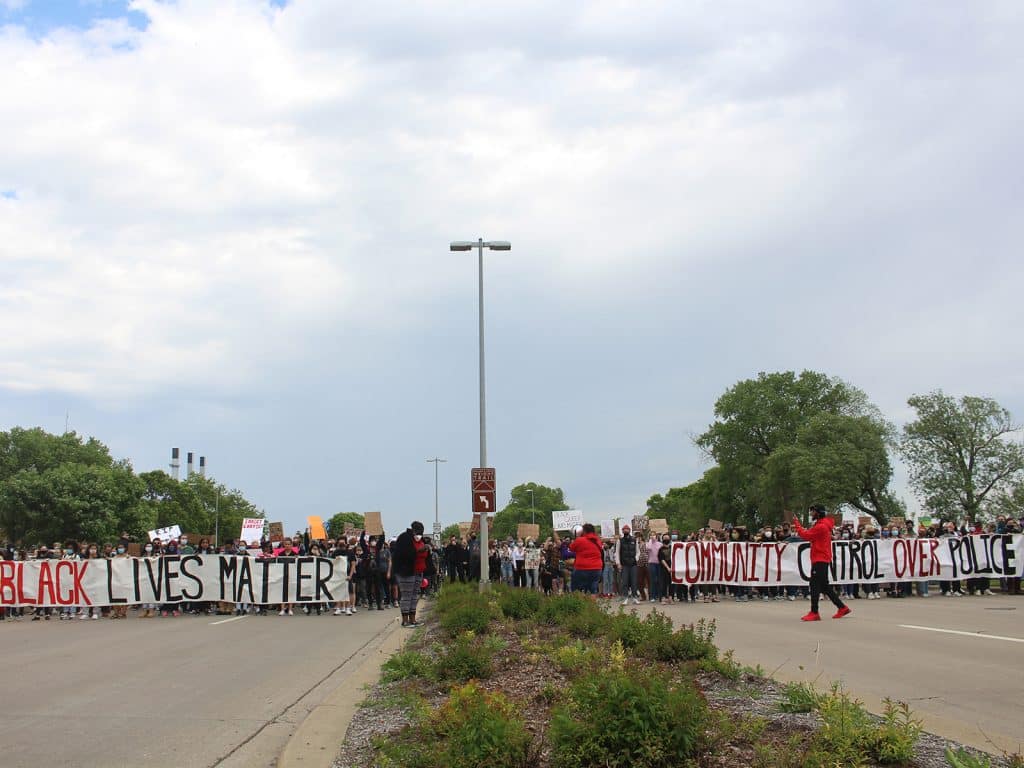
Did you know that Madison has one of the most empowered and independent police oversight agencies in the nation? Created in 2020 amidst the George Floyd protests, our police oversight agency consists of a Police Civilian Oversight Board (PCOB) and associated Office of the Independent Monitor (OIM). The creation of this agency was the culmination of years of community organizing, following a series of fatal officer-involved shootings, including that of Tony Robinson Jr. in 2015. Our Police Civilian Oversight Board is one of only two in the nation for which the majority of members must be nominated by designated community organizations, as recommended by the ACLU. There is much for Madisonians to be proud of here. But it’s important to note that our civilian police oversight agency is still in a nascent and fragile state.
The City of Madison’s 2025 budget has threatened to put a stop to these efforts entirely, or hobble them with severe cuts. As the Madison Common Council works through the final stretch of the budget process, it’s important for Alders and the public to understand why PCOB and OIM exist, and what they need to succeed.
There are many key benefits to civilian oversight of police. For example, the creation of a civilian police oversight agency in a city has been shown to reduce racial disparities in arrests and racial disparities in officer-involved homicides. This is especially important for Madison, given our severe racial disparities in policing outcomes, which are among the worst in the nation. In Madison in 2023, a Black individual was over eight times more likely to be arrested at least once than a white individual, according to the Madison Police Department’s own numbers. Benchmarked to population numbers, a disorderly conduct charge was over 13 times more likely to be against someone who was Black than someone who was white.
Police oversight has also been shown to reduce rates of officer misconduct, including civil rights violations. More generally, reforms that occur following Black Lives Matter protests in a city reduce the rate of officer-involved deaths, and the decline tends to become stronger over at least the next five years. Besides the creation of the OIM and PCOB, reforms that occurred in Madison since 2020 included the creation of an MPD tactical policy for handling people in an altered mental state (to reduce the risk of adverse outcomes) and the implementation of ICAT (Integrating Communications, Assessment, and Tactics) training (a set of strategies that teaches officers to “defuse a range of critical incidents successfully and safely”), and the creation of the CARES mobile crisis response program, which dispatches mental-health professionals and paramedics, not police, to handle behavioral health emergencies.
Madison’s OIM recently released an intake form, to receive complaints (and commendations) regarding MPD officers. However, our work ranges far beyond receiving and investigating complaints. Crucial functions of an Independent Monitor in any city include monitoring a police department, performing analyses, providing constructive criticism, issuing recommendations, and using the bully pulpit of reports and press conferences to bring about systemic departmental reform, with better policing outcomes.
For example, the OIM recently set up a collaboration with a team of econometricians led by M. Keith Chen at UCLA. We will use anonymized smartphone data to determine whether MPD officers are disproportionately patrolling in neighborhoods with a high percentage of BIPOC residents, after taking crime-driven demand for police services into account. Such a pattern of disproportionate police presence (even after controlling for socioeconomic factors and demand for police services) has been found in multiple U.S. cities and appears to be a primary driver of racial disparities in arrests. My own role, as the OIM’s data analyst, is central to such efforts. The sources of the racial disparities need to be understood to be addressed and to move toward social and racial equity.
For effective police oversight, structural independence is crucial. As a 2020 Cardozo Law Review article notes, “Independence is broadly recognized as both a core principle and an essential element of effective civilian oversight. Without independence, accountability systems often fail to meet community expectations, leading to a repetitive cycle of ‘crisis, debate, attempt at reform.'” For example, as the Chicago Tribune’s editorial board pointed out in 2019, “The fatal flaw in Chicago’s police oversight system has been its lack of independence….You [need to] wall it off from City Hall.”
The key problem is institutional conflict of interest. Working within a governmental structure to hold other parts of the same government accountable leaves an agency vulnerable to either overt political or subtle interference. Elected officials may depend on the support of (or at least the absence of opposition from) police, police unions, and members of the public affiliated with police for re-election. And city attorneys’ offices are intermeshed with police departments, with a close working relationship, and thus are often unable to provide suitable advice and representation to police oversight agencies. Moreover, under Wisconsin statute, the Mayor is actually the head of the police department. Thus, Madison’s OIM and PCOB were set up as a structurally independent agency, rather than falling within the Executive branch of city government as with typical city agencies, and were authorized to hire independent counsel when needed.
To further ensure independence, many civilian police oversight agencies have a minimum budget that is mandated to be 1% of the budget of the city’s police department. As the U.S. Department of Justice Office of Community Oriented Policing Services notes in a 2021 report, “an oversight agency whose budget is determined by an apolitical process can have greater independence than an agency whose funds are appropriated through typical discretionary municipal budgeting procedures. Political actors’ control of budgeting can be used to intentionally weaken civilian oversight by starving it of resources necessary for it to work effectively and efficiently.” The amount of funding requested by Madison’s OIM and PCOB for 2025 was less than 0.5% of the amount budgeted for MPD.
Madison’s OIM and PCOB were recently singled out for massive funding cuts. The Mayor’s 2025 Executive Operating Budget proposed complete defunding of civilian police oversight if the city’s recent $22 million tax referendum failed, and a 40% funding cut (eliminating the Data Analyst position and other essential functions) even if the tax referendum passed (as, happily, it did). These are far larger funding cuts by percentage than those faced by any other city agency, but it’s useful to see this in context. A 2023 study of police oversight agencies across Europe found that the more independence an agency has, the fewer resources it is provided. Governments either create agencies that meet the independence requirement but have limited resources, or agencies with significant resources but a lack of independence. The study found no examples of agencies with both independence and adequate resources.
Alders Marsha Rummel, Sabrina Madison, and John Duncan are proposing a budget amendment to restore much of the funding for Madison’s OIM and PCOB. The Madison Common Council will begin deliberating and possibly voting on that amendment during its Tuesday, November 12 meeting.
As Melanie Ochoa, a senior staff attorney with the American Civil Liberties Union of Southern California, notes, “I could not describe the perfect civilian oversight mechanism, because police unions and police departments and (elected officials) would find new and creative ways to subvert it. There are just too many competing interests, and the biggest interests with the most power are the ones that are fundamentally against accountability.”
Who has power in Madison,
and what are they doing with it?
Help us create fiercely independent politics coverage that tracks power and policy.
Author

Related Articles

Madison needs a wake-up call
The longer we pretend this City is a progressive haven, the more people will be harmed.

Wisconsin energy utilities sacrifice affordability and sustainability to fuel the AI gold rush
Gas plants used to power data centers increase costs for consumers, risk of exposure to pollutants, and accelerate the harms of climate change.

Stop spotlighting new films by known abusers
Madison boasts a dynamic movie culture, yet still needs programmers and community voices to facilitate change.